

Hereditary thrombocytopenia, sometimes referred to as inherited thrombocytopenia, is a reduced platelet count rooted in genetic causes — meaning parents passed along genes that make a child more likely to develop the condition. The severity can range from mild to life‑threatening.
Thrombocytopenia denotes a platelet count that’s below the normal range. Platelets are the blood cells responsible for helping blood clot.
A normal platelet range is typically considered to be 150,000 to 450,000 platelets per microliter of blood. Counts under 150,000 are classified as thrombocytopenia.
Scientists first identified a form of inherited thrombocytopenia known as Bernard‑Soulier syndrome in 1948. Since that discovery, numerous types of hereditary thrombocytopenia have been described.
It’s estimated that inherited thrombocytopenia affects roughly 270 individuals per 1 million births.
Continue reading to find out more about hereditary thrombocytopenia, including typical signs, subtypes, and therapeutic approaches.
What symptoms does hereditary thrombocytopenia cause?
Hereditary thrombocytopenia impairs blood clotting. The clinical picture can be very mild or quite severe depending on the underlying disorder and platelet count.
Severe forms of thrombocytopenia may be apparent within weeks of birth, whereas mild cases may not be identified until later in life.
Possible symptoms include:
- frequent nosebleeds
- bruising with minimal trauma
- petechiae — tiny round red or purple spots on the skin from minor bleeding (often seen on the legs)
- prolonged bleeding
- heavy bleeding after cuts or surgery
- blood in the urine
- menstrual bleeding lasting longer than a week (menorrhagia)
Causes and risk factors for inherited thrombocytopenia
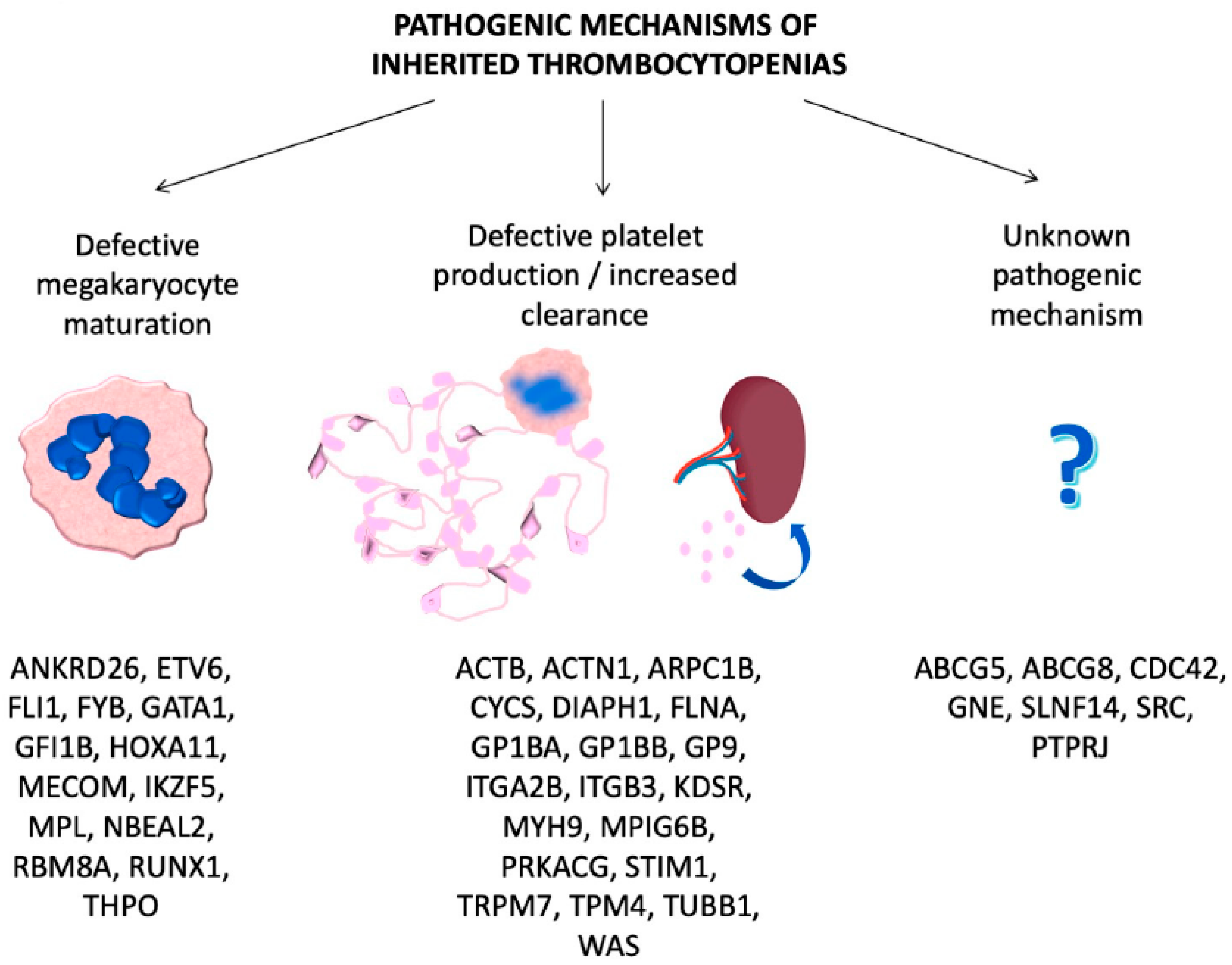
Inherited thrombocytopenia results from genetic mutations present from birth. Researchers have linked at least 40 genes to thrombocytopenia. Examples include the following:
| Gene | Syndrome | Other related conditions |
|---|---|---|
| ANKRD26 | ANKRD26‑related thrombocytopenia | • leukemia |
| GP1BA, GP1BB, GP9 | Bernard‑Soulier syndrome | |
| ETV6 | ETV6‑related thrombocytopenia | • leukemia |
| FL11 | Jacobsen syndrome | • abnormal heart and facial development• intellectual disability |
| WAS | Wiskott‑Aldrich syndrome | • severe immunodeficiency • eczema • cancer • autoimmune disease |
| MYH9 | MYH9‑related disease | • kidney dysfunction • hearing loss • cataracts |
Possible complications of inherited thrombocytopenia
Thrombocytopenia can lead to significant bleeding even after minor injuries. It may cause bleeding inside the brain or other organs, which can be life‑threatening.
Individuals with very low platelet counts are at the highest risk for dangerous bleeding.
Certain inherited syndromes carry additional specific complications. For instance, MYH9‑related disease is associated with:
- sensorineural hearing loss from mild to severe
- kidney problems
- cataracts
Wiskott‑Aldrich syndrome is also linked with:
- eczema
- recurrent infections
- autoimmune disorders such as hemolytic anemia
- lymphoma and leukemia
When to seek medical advice
Contact a healthcare professional if you suspect thrombocytopenia or if you already have a diagnosis and notice a change in your symptoms.
If you haven’t been diagnosed
See a doctor whenever you experience signs like excessive bleeding or unexplained bruising. Thrombocytopenia can be a sign of a serious illness such as leukemia or hepatitis C, and a clinician can help identify the root cause.
If you have an established diagnosis of hereditary thrombocytopenia
Ongoing medical follow‑up is important to monitor treatment effectiveness and to address any changes in symptoms.
How do clinicians diagnose hereditary thrombocytopenia?
Diagnosis begins with a review of personal and family medical history, questions about symptoms, and a physical exam.
Key diagnostic tools are blood tests. Your clinician may request:
- complete blood count (CBC) to determine platelet numbers
- blood smear to examine platelet appearance under a microscope
- genetic testing to identify genes linked to thrombocytopenia
In some cases, bone marrow testing is performed to evaluate whether the marrow cells that produce blood cells are healthy.
Treatment for hereditary thrombocytopenia
Mild cases may not require active treatment beyond precautions to reduce injury risk.
For more severe bleeding, treatments can include:
- Local measures to stop bleeding: Techniques such as nasal packing for nosebleeds or sutures for wounds can control bleeding.
- Platelet transfusions: Transfusing donor platelets into a patient’s bloodstream is the most effective way to stop bleeding but carries risks like infection or graft‑versus‑host disease.
- Medications:Corticosteroids such as prednisone are often used to raise platelet counts. Drugs like eltrombopag and romiplostim can stimulate platelet production.
- Gene therapy: Gene therapy has demonstrated effectiveness in treating Wiskott‑Aldrich syndrome and is being studied for other inherited thrombocytopenias.
Stem cell transplants
Most inherited thrombocytopenias can potentially be cured with a stem cell transplant, with the exception of congenital amegakaryocytic thrombocytopenia. A stem cell transplant replaces the marrow cells that produce blood cells with donor stem cells (source).
Bone marrow transplants are reserved for forms of inherited thrombocytopenia that are life‑threatening if left untreated.
Learn more about bone marrow transplants.
Frequently asked questions about hereditary thrombocytopenia
Below are common questions people have about inherited thrombocytopenia.
Can low platelet counts be inherited?
Yes. Low platelet counts can be caused by genetic mutations passed from parents. Over 40 genes are associated with hereditary thrombocytopenia, and additional genes are likely to be identified.
What is the most common inherited cause of thrombocytopenia?
The most frequent inherited cause is MYH9‑related disease, which arises from mutations in the MYH9 gene.
Can inherited thrombocytopenia be cured?
Many inherited thrombocytopenias are potentially curable with a bone marrow transplant. Transplants are typically used for severe inherited forms.
Takeaway
Hereditary thrombocytopenia is a genetically driven low platelet count passed down from parents. These disorders can present with mild signs that go unnoticed until adulthood or with severe, potentially fatal bleeding.
Treatment for inherited thrombocytopenia that requires intervention often involves platelet transfusion; life‑threatening variations may be treated with stem cell (bone marrow) transplantation.



















Leave a Reply
You must be logged in to post a comment.