

Histrionic and borderline personality disorders frequently show similar symptom patterns. As members of the same diagnostic grouping, both can include heightened, emotional, and unpredictable behaviors.
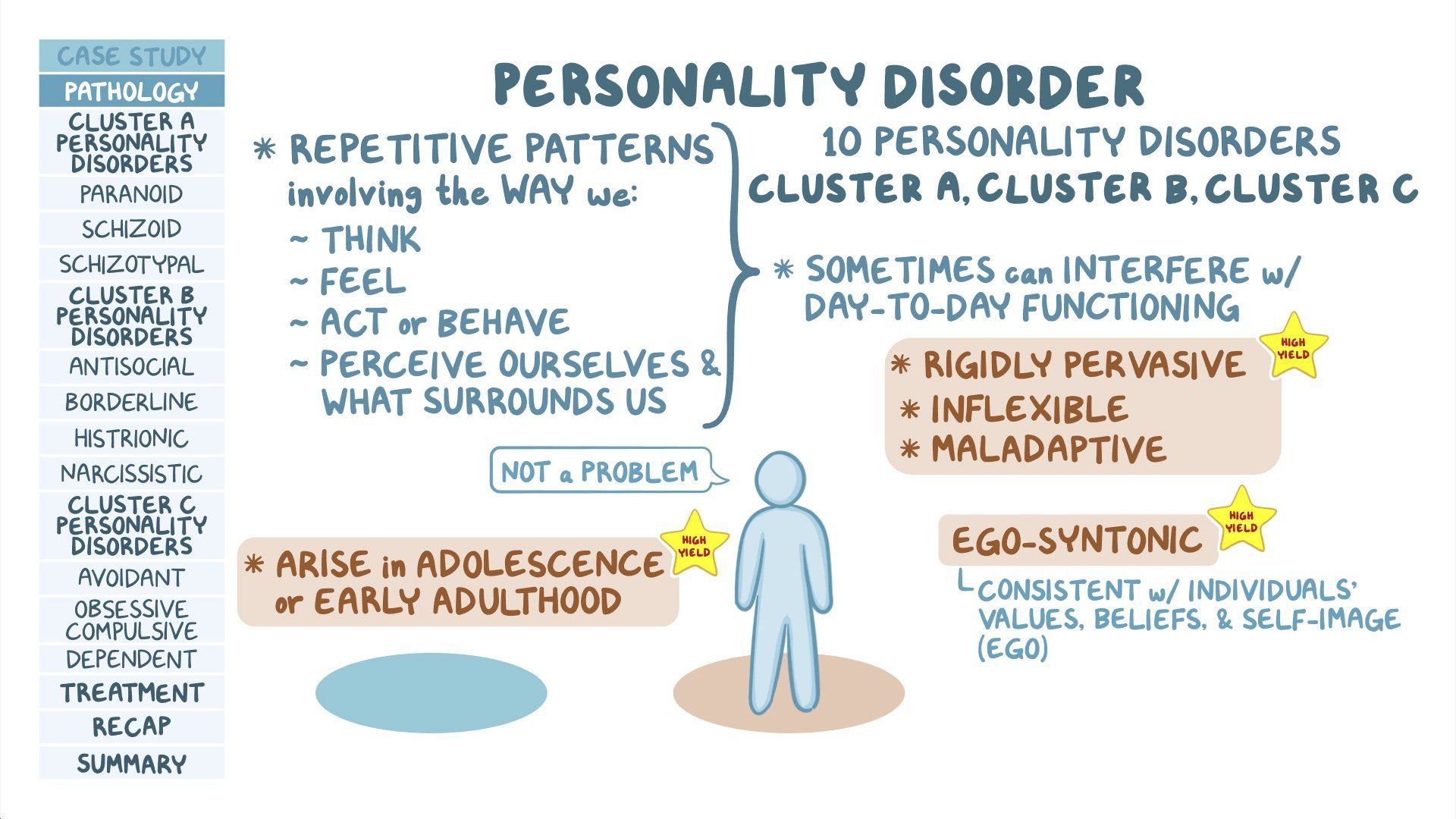
Personality disorders (PDs) are characterized by enduring, rigid patterns of thinking and behaving that diverge markedly from cultural expectations. These conditions involve pervasive, atypical thoughts, feelings, and perceptions that shape an uncommon inner perspective on the world.
This article explores the distinctions between histrionic personality disorder (HPD) and borderline personality disorder (BPD), covering how they’re categorized and how they’re treated.
Understanding mental health classifications
There are many varieties of PDs. Clinically, they are grouped by their dominant features into three principal clusters:
- Cluster A: odd or eccentric behavior
- Cluster B: intense, emotional, or erratic behavior
- Cluster C: anxiety- and fear-driven behavior patterns
Both histrionic personality disorder (HPD) and borderline personality disorder (BPD) are placed in cluster B because they demonstrate behavioral patterns that are frequently volatile and unpredictable.
How are histrionic and borderline personality disorders similar?
Although HPD and BPD are distinct diagnoses, they share certain commonalities.
The Diagnostic and Statistical Manual of Mental Disorders, 5th edition, text revision (DSM-5-TR), a widely used clinical reference for diagnosing mental health conditions, notes that HPD and BPD both commonly involve:
- Emotional instability: intense, often unpredictable mood shifts that lead to marked fluctuation of feelings, sudden emotional displays, and difficulty managing emotions
- Impulsivity: acting on urges without sufficient regard for consequences or outcomes
- Attention-seeking: behaviors intended to attract engagement, approval, or validation from others
- Relationship difficulties: trouble maintaining long-term relationships due to erratic and unpredictable conduct
- Distorted self-image: unstable or inaccurate self-perceptions that can result in identity confusion, abandonment fears, an exaggerated self-view, or disproportionate self-worth
How are histrionic and borderline personality disorders different?
At their core, HPD and BPD have different defining features. HPD is primarily marked by attention-seeking conduct. According to the DSM-5-TR, people with HPD may feel neglected or uneasy when they are not the focal point of attention.
BPD is centered on an intense fear of abandonment, emotional overreactivity, and a fragmented sense of identity. Living with BPD can mean frequently changing values, objectives, and a shifting sense of self. Some individuals may even experience moments of feeling non-existent.
The DSM-5-TR indicates that BPD is chiefly distinguished from HPD by pronounced self-harming tendencies, angry disturbances in close relationships, chronic feelings of profound emptiness, and identity disturbance.
Although HPD and BPD share broad themes like interpersonal instability and emotional turmoil, certain thought and behavior patterns distinguish the two disorders.
Emotional instability
In HPD, emotional instability often appears as high emotional intensity. Feelings may seem superficial and change rapidly, yet be displayed with exaggerated intensity to capture attention.
In BPD, emotional instability primarily manifests as strong emotional reactivity and disproportionately intense, spontaneous responses to both positive and negative events.
Impulsivity
Impulsivity in HPD typically shows up as suggestibility. Individuals with HPD may be readily influenced toward actions and ideas that garner them attention.
In BPD, impulsive acts tend to be self-damaging and can occur independently of others’ influence. Under DSM-5-TR criteria, a BPD diagnosis requires at least two potentially self-harming impulsive behaviors.
Attention-seeking
Attention-seeking is central to HPD; these behaviors arise from the perceived validation that comes with being the center of others’ focus.
For those with BPD, attention-seeking behaviors may stem from intense fears of abandonment.
Relationship challenges
The shifting, often intense emotions of people with HPD can make others perceive them as insincere or “fake,” complicating the formation and maintenance of long-term relationships.
For people with BPD, sudden emotional outbursts and extreme reactivity toward others can harm current relationships and hinder the ability to build lasting connections.
Self-image distortion
In HPD, appearance can be a tool to attract attention. As a result, excessive focus on looks is common, with simultaneous harsh self-criticism and an inflated self-view.
Self-image issues in BPD revolve around identity confusion — lacking a stable sense of self — which is closely tied to abandonment fears. The DSM-5-TR notes that people with BPD may equate feelings of abandonment with being judged by others as “bad.”
Can you have both BPD and HPD?
It’s possible to be diagnosed with more than one PD at the same time, even with PDs within the same cluster. This co-occurrence is known as “comorbidity.”
Older research from 2010, still referenced in current literature, suggests that while HPD’s overall occurrence is low, it frequently co-occurs with other PDs such as BPD, narcissistic, and dependent personality disorders.
How are BPD and HPD treated?
Treating PDs can be difficult. If you’ve spent much of your life thinking and reacting in particular ways, recognizing unhelpful patterns can be challenging.
Choosing to pursue change can feel even harder, but you don’t have to manage it on your own.
Therapy is the primary way to address the thoughts and behaviors linked to PDs. Psychotherapy, or “talk therapy,” involves therapist-led sessions that use conversation to build trust between you and a mental health professional.
Cognitive behavioral therapy (CBT) and dialectical behavior therapy (DBT) are evidence-based psychotherapy approaches commonly used for PDs. CBT targets and restructures maladaptive thoughts and behaviors to foster change, while DBT emphasizes acceptance, mindfulness, and skill-building for coping.
A clinician will develop a treatment plan tailored to the diagnosis and your personal goals. Community support programs and other therapy formats, such as family or group therapy, can also be included.
Learn more about finding the right therapist for you.
Getting a mental health diagnosis
If you’re unsure where to start with mental health care, help is available by phone or online. The resources below can assist you in learning about PDs or finding services in your area:
- Substance Abuse and Mental Health Services Administration’s National Helpline (1-800-662-4357)
- Findtreatment.gov
- Findsupport.gov
- American Psychiatric Association
Takeaway
HPD and BPD are distinct diagnoses that nonetheless overlap in themes of impulsive, intense, and emotional behavior.
Despite these overlaps, their core features differ. HPD centers on attention-seeking behaviors, whereas BPD is characterized by marked emotional reactivity, identity instability, and self-harming impulses.
Tailored psychotherapy can help you develop strategies to change unhelpful thoughts and behaviors linked to personality disorders.





















Leave a Reply
You must be logged in to post a comment.