

Keloids are excessive scar tissue formations that develop where the skin has been injured. They’re a frequent consequence of piercings, and some people are simply more susceptible to them than others.
They aren’t dangerous, but they can be bothersome and sometimes painful.
Keloids most often appear after ear piercings, but they can form after other piercings too, including belly button piercings.

What do keloids look like?
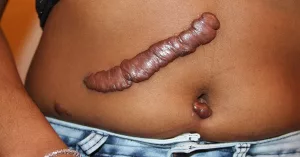
Keloids are essentially raised scar lumps that feel firm and rubbery. They typically form at the site of the wound — for example, a piercing — and can spread beyond the original area. They tend to be:
- glossy
- smooth
- rounded
Their hues may include:
- pink
- purplish
- brownish
“People commonly mistake keloids for other raised scars or bumps that can follow a piercing, such as a hypertrophic scar or an abscess, but they’re distinct,” notes board-certified dermatologist Jessie Cheung, MD.
“Hypertrophic scars remain confined to the injured area, though they can be thick and sensitive. Keloids, by definition, spread beyond the original injury. An infection or abscess may resemble a lump but will be swollen, warm, painful, and possibly drain yellowish fluid,” Cheung explains.
How they happen
Doctors don’t fully understand why some wounds produce excess fibrous tissue, but it usually involves an overabundance of collagen.
Your risk of developing a keloid is higher if you:
- have darker skin
- are aged roughly 10 to 30
- have a close family member (parent, sibling, or child) who forms keloids
Even without these risk factors, the placement of a navel piercing may raise your odds of a keloid, according to Cheung.
“Even for people not generally prone to keloids, the belly button is one site that can form them because of repeated trauma and ongoing friction from clothing,” Cheung says.
How to prevent them
If you’re inclined to keloid scarring, the only guaranteed way to avoid new keloids is to skip skin-injuring procedures like tattoos and piercings.
The Association of Professional Piercers (APP) actually advises people with a history of keloids or problematic scarring to avoid getting pierced.
You might reduce the likelihood of a keloid at your belly button piercing by carefully following your piercer’s aftercare directions. Cheung also suggests minimizing friction on the piercing.
Belly button piercings often require more time to heal and are at higher risk for infection or trauma due to constant movement in the area and chafing from jeans and other clothing.
The navel can also trap bacteria and lint.
During healing — which can take up to a year — keep the site clean and dry and steer clear of snug clothing that can irritate the skin and hold bacteria against the wound.
It’s also smart to cover the piercing with a bandage during activities with high contact, such as sports or sexual activity.
How to get rid of them
If a keloid forms on your belly button piercing, it won’t resolve on its own unless a dermatologist removes it. However, you might halt its progress if you act quickly at the earliest signs.
Monitor your piercing and see a dermatologist promptly if you notice scarring or skin thickening. Early treatment can sometimes prevent progression to a full keloid.
“A dermatologist may use laser treatment to flatten the scar,” says Cheung, “or inject steroids or other medications if tissue thickening is present.”
Other treatment options for keloids include:
- Silicone dressings or gel. Using a silicone sheet or gel over a keloid may help flatten it. Silicone is commonly combined with compression.
- Compression. A compression device custom-fitted by a dermatologist can help limit growth of a belly button keloid.
- Cryotherapy. Freezing the keloid from within without harming the skin beneath can reduce its size and soften it. Cryotherapy is sometimes paired with steroid injections for improved outcomes.
- Surgery. Cutting out a keloid is the only way to remove it entirely, but recurrence is common. To reduce the chance of regrowth, your dermatologist may recommend adjunctive therapies after surgery, such as compression, radiation, or injections.
The bottom line
Proper aftercare and protecting your piercing from irritation are the best strategies to cut your risk of a keloid at the belly button, as well as other issues like infection.
If a keloid does develop, it’s primarily a cosmetic issue rather than a medical emergency, and you’re not required to treat it if you’re not bothered. If it concerns you, consult a dermatologist about treatment choices.
You can locate a board-certified dermatologist near you via the American Academy of Dermatology (AAD).
For more on how keloids differ from other raised scars, see keloid versus hypertrophic scar, and if you’re curious about variations in navels, check belly button types.








Leave a Reply
You must be logged in to post a comment.