
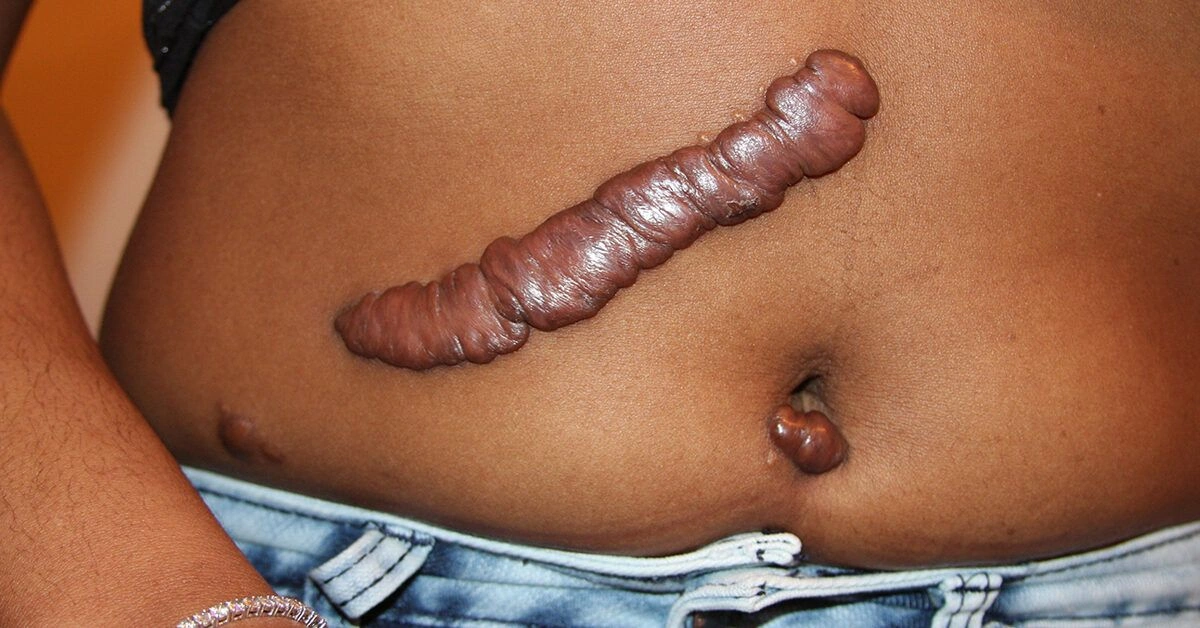
Hypertrophic scars and keloids both arise from an overproduction of collagen during the wound-repair process. The key distinction is that hypertrophic scars remain confined to the original injury, whereas keloids extend beyond it. Keloids are also notably harder to manage.
Both hypertrophic scars and keloids are types of elevated scar tissue that follow skin trauma. They are more prominent than the typical flat, faint scars and result from an excess buildup of scar tissue around the damaged area.
Hypertrophic scars tend to appear soon after a wound heals and stay within the borders of the injury. Keloids, on the other hand, may take longer to show up and can expand past the initial wound.
Hypertrophic scars often improve over time without intervention, while keloids can persist long-term even after attempts to reduce them.
Continue reading to learn more about the similarities and differences between keloids and hypertrophic scars.
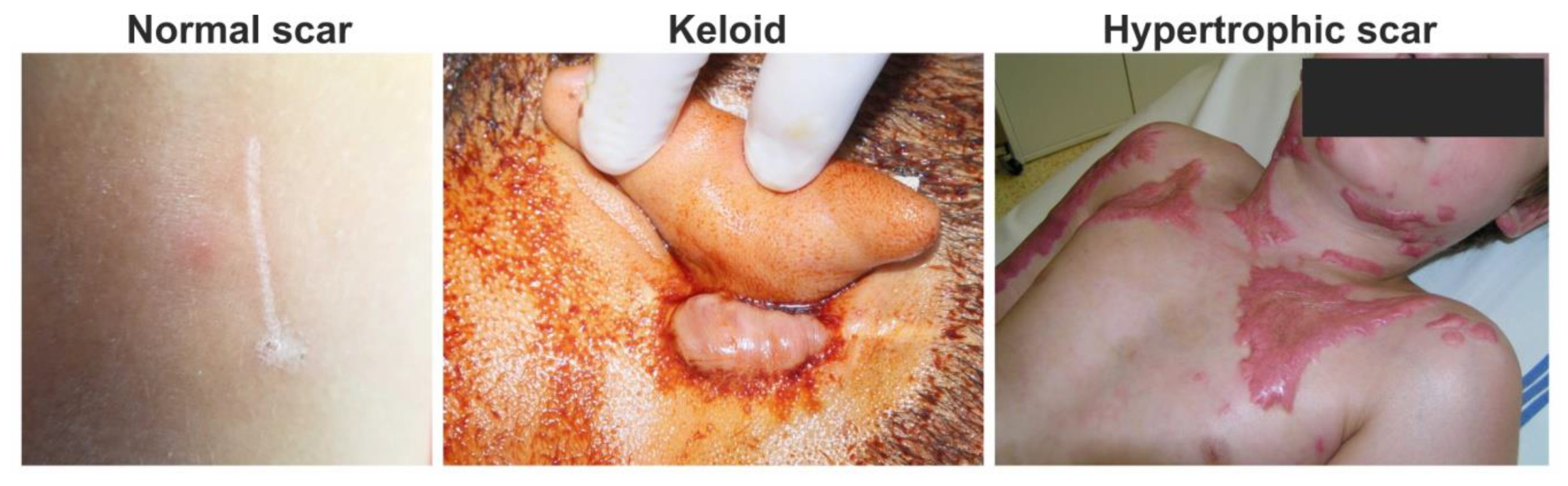
What is a hypertrophic scar?
Hypertrophic scars are raised or thickened scars that form after skin damage. They might be elevated or relatively flat but remain limited to the original wound area.
These scars occur when the body produces excess collagen while repairing the skin. Causes can include infection or heightened tension on the wound. Because collagen is denser than normal skin, hypertrophic scars can feel raised or coarse.
Common triggers for hypertrophic scar formation include:
- cuts
- acne
- insect bites
- burns
- skin infections
What is a keloid?
Keloids are raised, scar-like overgrowths of skin tissue. Unlike hypertrophic scars, keloid connective tissue continues to expand beyond the initial wound. While hypertrophic scars may show roughly threefold the usual collagen production, keloids can have about 20 times more.
The collagen fibers are also organized differently in keloids. In hypertrophic scars, collagen tends to follow an orderly pattern; in keloids, the fibers are arranged more haphazardly.
Clinicians regard keloids as benign growths — they are noncancerous and do not threaten overall health.
Keloids can form after significant skin injuries or even from minor wounds. The same factors that can cause hypertrophic scars may also trigger keloid formation.
The American Osteopathic College of Dermatology estimates that up to 10% of people may develop keloids.
Genetics appear to play a role. The American Academy of Dermatology notes that about one-third of people with keloids have a first-degree relative who also develops them. Keloids are more common in individuals with darker skin tones.
Both men and women are affected at similar rates.
What do hypertrophic scars and keloids look like?
How do you tell the difference between a keloid and a hypertrophic scar?
At first sight, the two can appear similar. They may:
- be elevated above the skin
- cause discomfort
- be itchy
Key differences include:
| Hypertrophic scars | Keloids | |
|---|---|---|
| Size | remain within the limits of the original wound | extend beyond the original wound |
| Onset | start within a month or two after the injury and may grow for several months | can begin months to years after the injury and often enlarge over time |
| Outlook | often reduce in size after about a year | typically do not shrink on their own |
| Color | may be a lighter pink or red | may be a darker purple-red |
| Effect on movement | can restrict joint movement if the scar shortens surrounding tissue | generally do not limit joint motion |
| Incidence | more frequently seen | less commonly seen |
| Location | can form anywhere but often where wounds are infected, irritated, untreated, or where skin moves over joints | prefer certain sites such as the upper chest, earlobes, and cheeks |
Keloids and hypertrophic scars in skin of color
Research indicates that hypertrophic scars and keloids may develop and appear differently on darker skin. Variations can include:
- hyperpigmentation
- scars spreading over larger areas
- faster scar formation, including reports of spontaneous appearance
Can hypertrophic scars turn into keloids?
Although they share features, hypertrophic scars do not transform into keloids.
Current evidence supports the idea that they are distinct entities. A 2020 review found no research showing they are the same condition and recommended treating them separately until new data suggests otherwise.
How do you treat keloids and hypertrophic scars?
Hypertrophic scars may diminish without treatment, though some cases benefit from intervention.
Many of the same approaches can be used for both scar types, but incomplete treatment can allow keloids to enlarge.
To ease discomfort you might try:
- applying topical creams, gels, lotions, or oils
- using silicone sheets over the area for several months
Medical options your provider may recommend include:
- corticosteroid or other injections
- surgical excision
- cryotherapy
- laser treatments
- radiation therapy
Keep in mind treatments are not always successful, and recurrence is a risk for all interventions. Recurrence is most common after surgical removal of keloids.
If you have a keloid from a piercing, for example, you may find information on keloid belly button piercing helpful when weighing options.
How can you prevent keloids and hypertrophic scars?
There are measures you can take to lower the chance of raised scars after skin injury:
- Use a pressure dressing on the wound while it heals.
- Ensure sutures are placed correctly — the needle should enter at a 90-degree angle and form a loop that is equally wide at top and bottom.
- Ask your clinician to minimize the number of stitches or sutures used to close the wound.
- Avoid elective surgeries when possible to reduce unnecessary skin trauma.
What is the outlook for people with keloids and hypertrophic scars?
Neither hypertrophic scars nor keloids pose a risk to overall health, but they can cause pain, irritation, and emotional distress when visible.
Hypertrophic scars generally lessen over time, whereas keloids are more likely to persist.
Consult a healthcare professional if either condition is affecting your physical comfort or mental well-being — there may be treatments that improve their appearance.
Takeaway
Hypertrophic scars and keloids are raised scars that follow skin injury. Hypertrophic scars usually form within a year and often resolve over time. Keloids can arise later and tend to be stubborn and resistant to treatment.
Doctors may suggest home remedies or a combination of medical procedures to reduce their size and symptoms.

















Leave a Reply
You must be logged in to post a comment.