
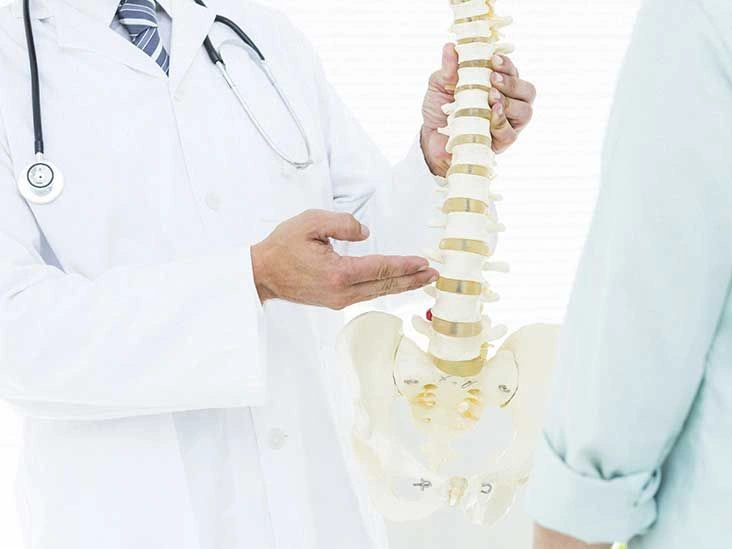
Key takeaways
- Levoscoliosis is a form of scoliosis in which the spine bends toward the left, frequently appearing in the lower back. It’s often not painful unless the curvature is pronounced, and can be noticed by uneven shoulders or hips.
- Most cases have no identifiable cause, though it can arise from congenital spine malformations, neuromuscular or degenerative disorders, or spinal trauma.
- Treatment ranges from careful observation and bracing to chiropractic care and surgery; the chosen strategy depends on age, curve severity and location, and the risk that the curve will progress.
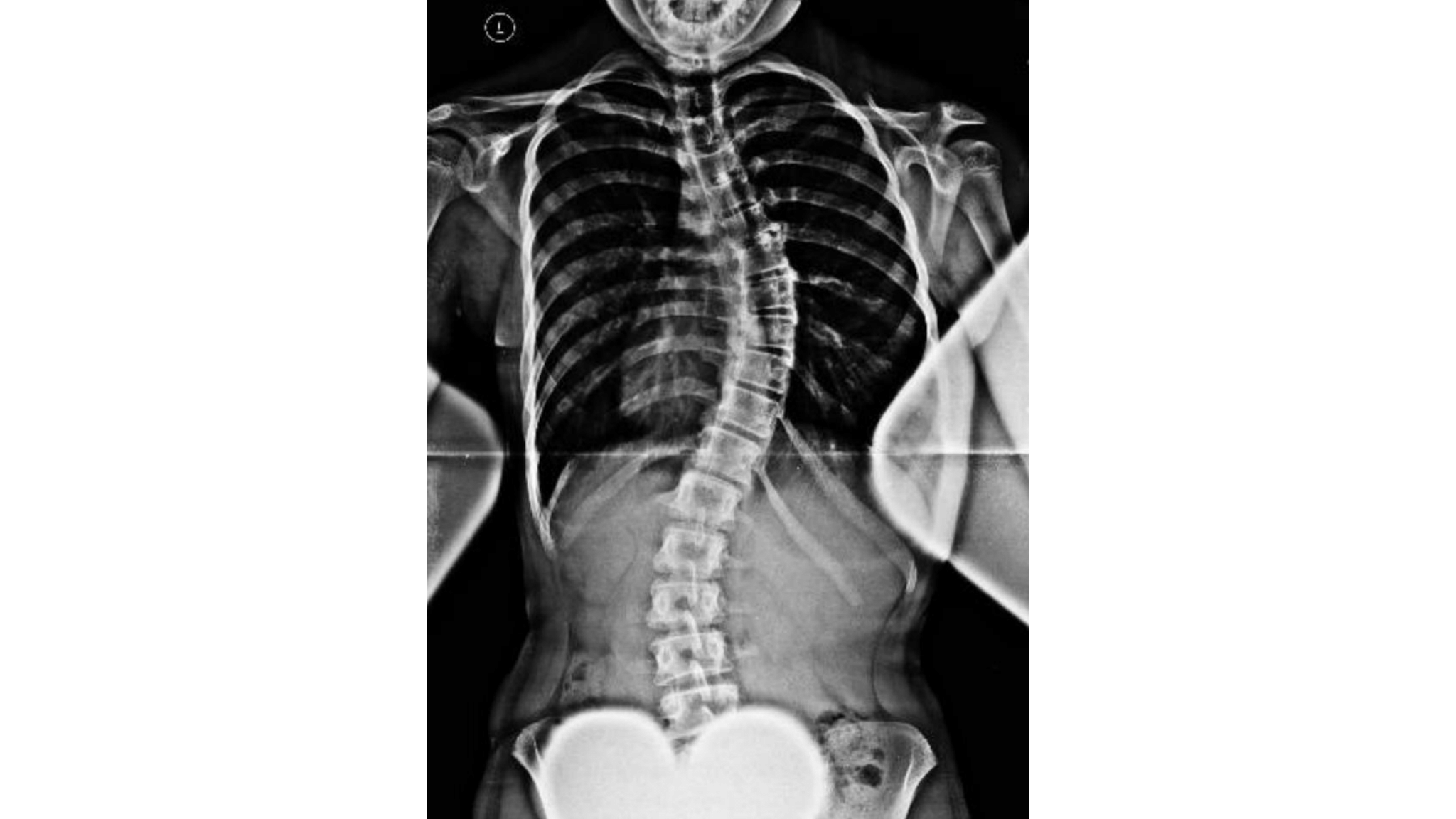
The curvature most commonly occurs in the lumbar (lower) spine but can also affect the thoracic (mid) region. Sometimes the spine assumes an S-shape with a rightward curve (dextroscoliosis) and a leftward curve (levoscoliosis).
Scoliosis can develop at any age, but it’s most frequently observed in adolescents during rapid growth phases, typically between ages 10 and 15.
About 7 million people in the U.S. have some form of scoliosis. The most prevalent varieties aren’t preventable and are not caused by poor posture or exercise.
Continue reading to understand how levoscoliosis appears, its causes, and treatment choices.
What are the symptoms of levoscoliosis?
Mild scoliosis usually produces visible differences in appearance rather than pain. It typically isn’t painful unless the curve is severe; adults tend to experience more discomfort than children.
Signs of mild to moderate scoliosis include:
- uneven shoulders
- uneven hips
- head not centered over the torso
- one arm appearing lower than the other
- one side of the ribs protruding more
- clothes fitting oddly
- noticeable curve along the back
Symptoms of more severe scoliosis may include:
- back pain
- shortness of breath
- chest discomfort
- leg pain
- difficulty controlling bowel or bladder function
What causes levoscoliosis?
Approximately 80 percent of scoliosis cases are idiopathic, meaning no specific cause can be identified.
Less commonly, scoliosis may stem from:
- Congenital problems: When spinal bones don’t form correctly before birth, it’s known as congenital scoliosis.
- Neuromuscular disorders: Conditions such as cerebral palsy or muscular dystrophy can lead to spinal curvature.
- Degenerative issues: Arthritis, osteoporosis, vertebral compression fractures, and disc collapse can all contribute to curvature, especially in older adults.
- Trauma: Injury to the spine can produce scoliosis.
Who’s at risk for levoscoliosis?
Levoscoliosis can affect anyone. Risk factors include family history, age, and sex.
Roughly 30 percent of adolescents with idiopathic scoliosis have relatives with the condition, indicating a genetic component.
Signs typically emerge during the prepubertal growth spurt around ages 10 to 12.
Mild scoliosis affects both sexes similarly, but girls are eight times more likely than boys to develop a curve severe enough to require treatment.
How is levoscoliosis diagnosed?
Mild spinal curvature in young people is often unnoticed by the individual and may be detected during school screenings or routine doctor visits.
If you or a family member observes uneven hips or shoulders, consult your doctor for an evaluation of the spine.
Your clinician will inquire about growth history and any symptoms, then perform a physical exam — often assessing the back while you bend forward with arms hanging down — and may check for muscle weakness or sensory changes.
If a curve is suspected, you may be referred to an orthopedist or spine specialist who will obtain X-rays to measure the curvature.
A curvature of 10 degrees or more meets the definition of scoliosis; treatment is usually considered when the curve reaches about 25 degrees or more.
Levoscoliosis treatment options
If the scoliosis has a specific cause, such as a tumor or trauma, management will focus on treating that underlying issue as part of the scoliosis care.
For idiopathic scoliosis, treatment decisions hinge on age, curve size, and the probability the curve will progress.
Wait and watch
Children who are still growing with mild curves are typically re-evaluated every six months to monitor progression. Many children do not require active treatment.
Back brace
A brace won’t correct an existing curve but can help stop further progression during growth.
A form-fitting plastic brace is generally worn most of the day but can be removed for sports and activities. Bracing is no longer effective once skeletal growth has finished.
Chiropractic treatment
Chiropractic care may help people with scoliosis manage pain and improve flexibility, though it does not cure the curvature.
Evidence is limited, but one older study found that 28 adults with scoliosis reported reductions in pain and other symptoms after chiropractic care and at 24 months follow-up.
It’s crucial to consult a chiropractor experienced in scoliosis, since non-specialized care could potentially worsen the problem.
Surgery
Spinal fusion is a surgical option to correct the curve. The surgeon places bone grafts along the curved section, which fuse over time into a single solid bone.
Metal rods are often attached to hold the spine aligned while fusion occurs. For growing patients, adjustable rods may be used so the hardware can be lengthened as growth continues.
Exercise
Exercise won’t correct the curvature but is important for general health. Avoiding activity because of scoliosis is usually unnecessary unless advised by your doctor.
Treatment considerations
Factors considered when choosing a treatment plan include:
Maturity: If the spine is still growing, monitoring or bracing is often preferred until growth has ceased.
Curve severity: Curves between 10 and 25 degrees are often observed; curves of 25 to 45 degrees should be braced if growth remains; curves of 45 degrees or more commonly require surgery.
Curve location: Thoracic (mid-back) curves are more likely to progress than those in the upper or lower spine.
Sex: Females are significantly more likely to experience worsening curves than males.
Curve pattern: S-shaped curves may progress more readily than simple C-shaped curves.
Possible levoscoliosis complications
A mid-back levoscoliosis can cause the rib cage to press on the heart and lungs, leading to breathing difficulties and fatigue; in rare circumstances it may contribute to heart failure.
If scoliosis was present in childhood, it can be associated with persistent back pain in adulthood.
Outlook for levoscoliosis
Most people with levoscoliosis are able to lead active lives and take part in sports.
After spinal fusion, some movements may be limited, making certain sports more difficult; contact sports like football may be discouraged by your physician.
Spinal fusion does not increase the risks associated with pregnancy or delivery.
Coping with scoliosis, bracing, or surgery can be challenging for some. Support groups may be helpful; your healthcare team might recommend local groups or you can find communities online.




Leave a Reply
You must be logged in to post a comment.