


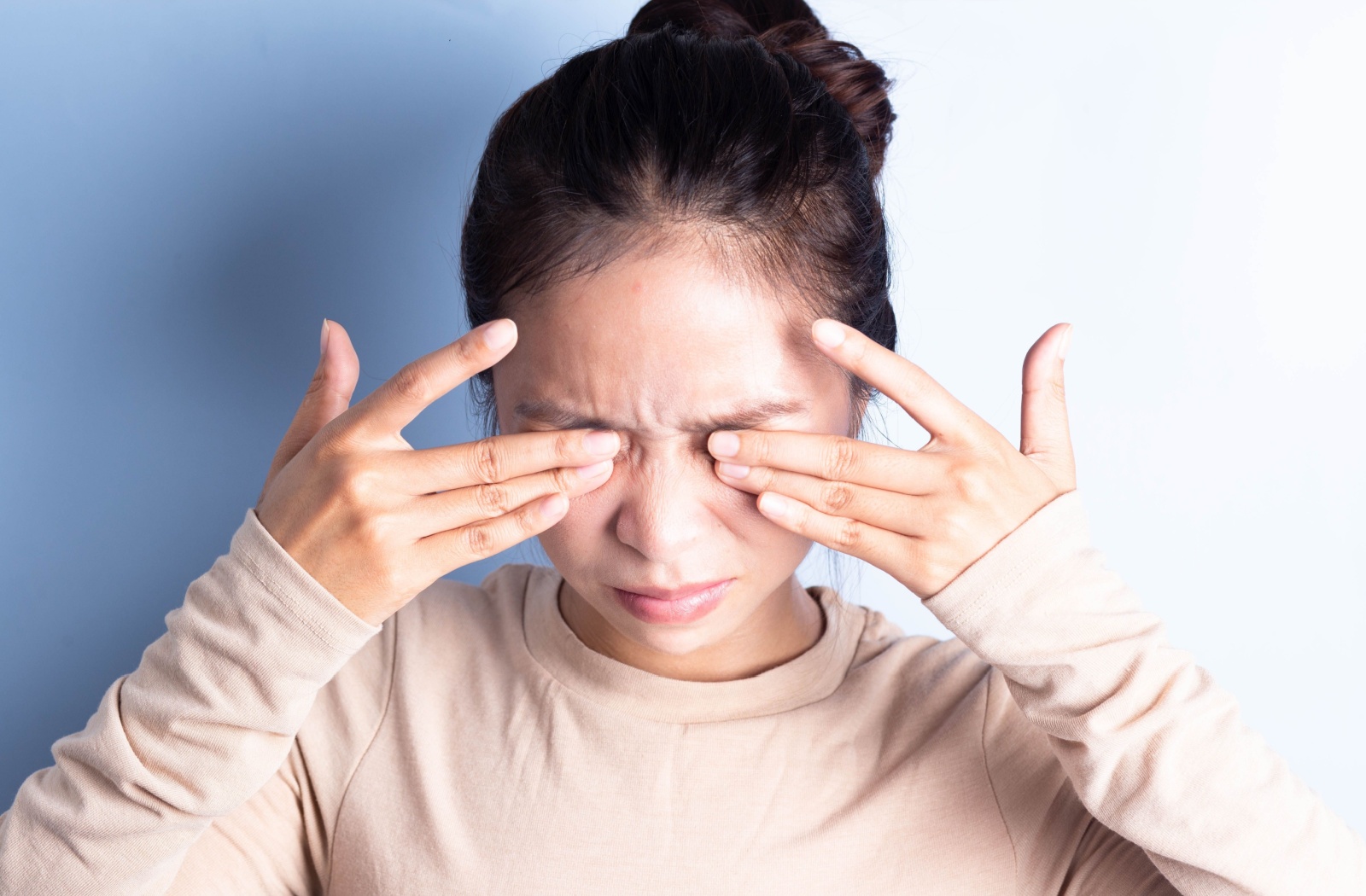
A sensation of pressure or discomfort behind your eyes often doesn’t originate from within the eyes themselves. More commonly, it begins elsewhere in the head.
While eye disorders can produce eye pain and vision changes, they seldom produce a sensation of pressure. Even glaucoma, which involves increased intraocular pressure, typically does not create a feeling of pressure.
Conditions such as conjunctivitis or allergic reactions may cause eye pain, but not a pressure-like feeling. Pain is usually described as sharp, burning, or stinging. Pressure behind the eyes, by contrast, is perceived as a fullness or a pulling/stretching feeling inside the eye sockets.
Read on to find out more about what can cause pressure behind the eye and how it’s managed.
Possible causes
Several problems can lead to a pressure sensation behind the eye, including:
- sinus issues
- headache disorders
- Graves disease
- optic nerve inflammation or injury
- dental or jaw pain
Sinus infection (sinusitis)
Sinusitis occurs when viruses or bacteria invade the air-filled cavities around your nose, eyes, and cheeks. The resulting inflammation makes the sinuses swell and mucus build up. With sinusitis, you’ll often notice pressure in the upper face, including behind the eyes.
Other symptoms of sinusitis may include:
- aching behind the nose, eyes, and cheeks
- nasal congestion
- thick nasal discharge that may be yellow or green
- cough
- bad breath
- headache
- ear discomfort or fullness
- fever
- tiredness
Headaches
Tension-type headaches and cluster headaches are two headache types that can produce a feeling of pressure behind the eyes.
Tension headaches are the most frequent headache form, affecting almost 80 percent of people.
Cluster headaches are intensely painful, episodic headaches. They tend to occur in clusters—days to weeks of frequent attacks followed by long headache-free periods.
Besides pressure behind the eye, headache symptoms can include:
- head pain described as tight, aching, or severe
- tension in the neck and shoulder muscles
- watery or red eyes
- facial flushing or sweating
- swelling on one side of the face
- drooping of the eyelid
Graves disease
Graves disease is an autoimmune disorder in which the immune system targets the thyroid gland, causing it to overproduce thyroid hormone. This condition can affect the muscles around the eyes, causing the eyes to protrude. Many people with Graves disease report a pressure-like sensation behind the eyes that worsens with eye movement. Other signs may include:
- protruding eyes
- eye discomfort
- a gritty or foreign-body feeling in the eye
- puffy eyelids
- red or inflamed eyes
- vision problems
Optic neuritis
Autoimmune conditions such as multiple sclerosis (MS) or lupus can produce inflammation behind the eye that injures the optic nerve. Optic neuritis can lead to pain that may be perceived as pressure or aching behind the eye. You may also notice:
- loss of vision in one eye
- reduced peripheral or color vision
- pain that intensifies with eye movement
- brief flashes of light when moving the eyes
Dental or jaw problems
It may seem surprising, but issues with your bite or jaw alignment can make you clench facial muscles. That muscle tension can trigger a headache that includes a sensation of pressure or pain behind your eyes.
When to call your doctor
Contact your healthcare provider immediately if you develop any of the following serious symptoms:
- very high fever
- sudden vision loss
- intense headache
- numbness or weakness anywhere on your body
How it’s diagnosed
Your primary care clinician can often determine what’s causing the pressure behind your eyes. They might also refer you to a specialist, such as:
- an ear, nose, and throat (ENT) specialist for sinus or allergy issues
- a neurologist for nervous system or headache disorders
- an ophthalmologist for eye-related concerns
The evaluation starts with questions about your symptoms—how the pressure feels, how long it has lasted, and potential triggers. You may undergo tests like:
- Endoscopy. A topical anesthetic is applied inside the nose and a thin, illuminated scope is inserted so the doctor can inspect the sinuses for swelling or abnormal growths.
- MRI. Uses magnets and radio waves to produce images of the brain and surrounding structures.
- CT scan. Uses X-rays to create cross-sectional images of the brain and other areas.
- Ultrasound. High-frequency sound waves generate images of the thyroid or other internal structures.
- Blood tests. May be ordered to assess thyroid hormone levels or detect antibodies associated with autoimmune disease.
- Radioactive iodine uptake test. Evaluates thyroid function by giving a small amount of radioactive iodine and measuring how much the thyroid absorbs with a special camera, useful for diagnosing conditions like Graves disease.
If the doctor suspects the eye itself is the source, an eye exam will be necessary. The eye specialist may shine a light into your eye to assess the optic nerve and internal eye structures.
For suspected dental or jaw causes, you’ll be referred to a dentist, who will examine your bite and jaw alignment to see if misalignment is producing muscle strain and that pressure sensation behind the eye.
Treatment options
The treatment depends on the underlying cause.
For bacterial sinusitis, antibiotics are prescribed. Chronic sinus infections may require three to four weeks of treatment.
Antibiotics do not treat viruses. Viral sinus infections can be managed with saline nasal rinses (saltwater), decongestants, and pain relievers to ease symptoms until the infection resolves.
If sinus symptoms persist despite treatment, surgery to correct sinus issues might be recommended.
For headaches, over-the-counter pain relievers like aspirin (Bufferin, Bayer), acetaminophen (Tylenol), or ibuprofen (Motrin, Advil) can help. Some combination products include aspirin or acetaminophen with caffeine or other agents (for example, Excedrin Migraine combines aspirin, acetaminophen, and caffeine).
Your doctor may prescribe stronger medications, such as opioids in select cases, muscle relaxants, or triptan medications like sumatriptan (Imitrex) or zolmitriptan (Zomig) to prevent or treat severe headaches.
For Graves disease, treatments can include medications that inhibit thyroid hormone production, radioactive iodine therapy, or surgery to remove part or all of the thyroid. After these treatments, you may need lifelong thyroid hormone replacement therapy.
Optic neuritis is often treated with corticosteroids to reduce inflammation of the optic nerve. If MS is the underlying cause, disease-modifying therapies such as interferon-beta-1a (Avonex, Rebif) may be prescribed to prevent further nerve damage.
If a bite or jaw alignment problem is responsible, dental procedures can correct the alignment and relieve the muscle tension causing the pressure.
Prognosis
The outlook depends on the specific cause of the pressure behind your eye. Following your doctor’s guidance and taking prescribed treatments as directed gives you the best chance of easing the pressure and resolving the underlying condition.






















Leave a Reply
You must be logged in to post a comment.