
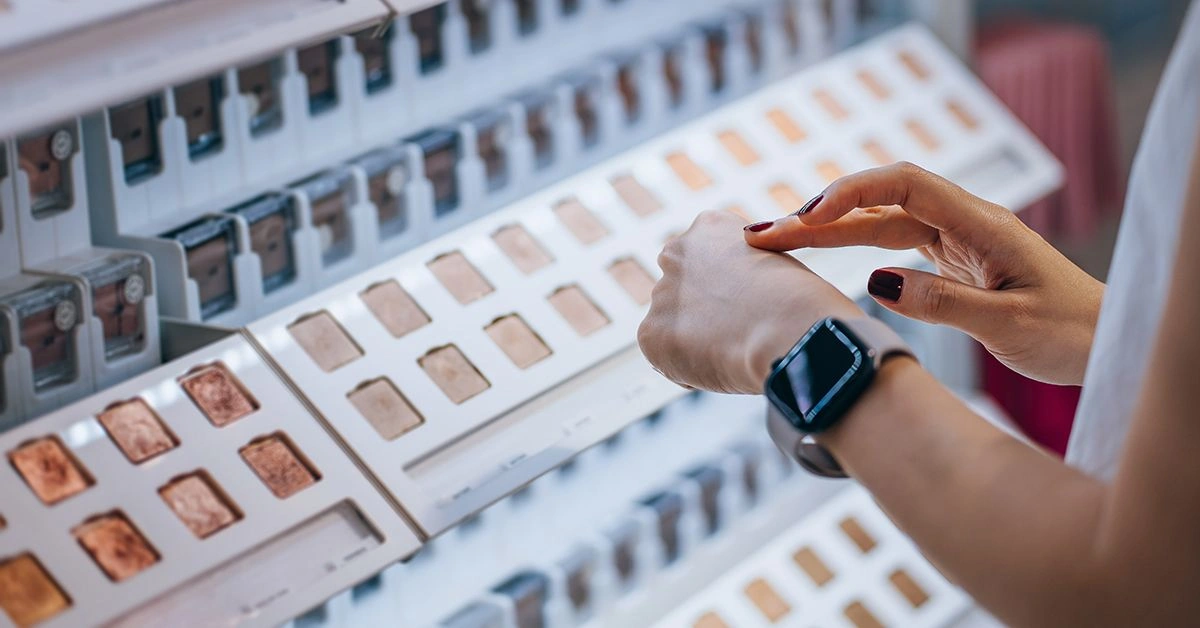
Knowing your skin’s undertone can help you pick foundations and color schemes that flatter your complexion. Typically, undertones fall into cool, warm, or neutral categories.
When shopping for a new lipstick or foundation, color usually draws us in first. It’s common to adore a shade at the counter only to find it doesn’t translate the same way once you wear it at home.
A lot of this comes down to your skin’s undertone — the natural hues sitting beneath the skin’s surface. Recognizing your undertone is essential for selecting the right foundation and the most flattering color palettes for your complexion.
That said, your personal taste overrides any recommendations from a color guide. Ultimately, wear the shade that makes you feel best.
Keep reading to discover how to determine your undertone and apply that knowledge to highlight your natural beauty.
What types of skin undertones are there?
There are three classic undertones: warm, cool, and neutral. Warm undertones include peachy, yellow, and golden shades. Some warm-toned individuals may also have sallow complexions.
Cool undertones feature pink or bluish tones. Neutral undertones mean the undertone closely matches your visible skin color.
It’s important to understand that undertone is not the same as your surface skin tone — the color of your bare skin before makeup. Very pale skin can still possess warm undertones, and deep skin tones can have cool undertones.
This distinction explains why matching makeup to your skin can be tricky: products often don’t harmonize with the subtle hues lying under the surface.
At-home ways to determine your skin undertone
You can figure out your undertone from home using any of the tests below.
If you’re uncertain after trying these methods, consider seeing a medical aesthetician or a beauty specialist at a makeup counter such as Ulta or Clinique. They can help identify your undertone and may swatch several shades until you find the best match.
Examine your veins
Your vein color can offer clues about your undertone if they’re visible.
If your veins look greenish, you likely have warm undertones. Veins that appear blue or purple usually indicate cool undertones.
If your veins seem colorless or blend with your skin, you may have neutral undertones.
Consider which jewelry flatters you
People often prefer silver or gold jewelry based on how it looks against their skin.
If yellow gold complements you best, you probably have warm or olive undertones. Silver, platinum, and rose gold typically flatter cool undertones.
If both silver and gold suit you and your choice usually depends on your outfit rather than your skin, you may be neutral.
Wear a neutral garment
Neutral clothing can help reveal your undertone.
True white tends to favor cool undertones, while off-white is often more flattering on warm undertones. Warm undertones frequently pair well with brown shades, whereas cool undertones usually look sharp in black.
As with jewelry, neutral undertones generally carry off all these colors without altering their effect.
Factor in natural eye and hair color
Your natural hair and eye colors — even if you dye your hair or use different eyeshadows — can hint at your undertone.
Platinum and ash hair shades typically complement cool undertones, while mahogany and golden tones suit warmer undertones better.
This can be a useful consideration when selecting a new hair color.
Watch for ashy or grayish tones
If your skin shows ashy or gray undertones, you might have an olive tone. Olive isn’t as common as warm, cool, or neutral and represents a blend of undertones.
Olive skin contains neutral and warm elements plus a greenish tint, a hue unique to olive complexions. People with olive undertones may find that colors from all three undertone groups can work well for them.

How to use your undertone to select foundation shades
Once you’ve identified your undertone, you can focus on finding a foundation that complements it — though with the wide range of foundations available, expect some trial and error.
Each brand formulates shades differently, so your best match may vary between lines.
If possible, visit a beauty store and have an associate help you swatch options. If you already have a match in one brand, they may be able to suggest the closest equivalent in another brand.
Cool undertone
Foundations for cool undertones often have a subtle pink cast in the bottle. Steer clear of yellow-toned foundations, which can make cool skin appear sallow.
Warm undertone
Warm undertones are usually complemented by foundations with a slight yellow tint.
Neutral undertone
Neutral undertones typically suit foundations that aren’t strongly yellow or pink — look for shades that balance both tones.
Olive undertone
For olive undertones, avoid overly warm (yellow) foundations. Instead, aim for foundations with a faint golden tint.
How to choose clothing colors based on your undertone
Foundation creates a canvas for the colors you’ll wear next.
As a guideline, let clothing, lipstick, and eyeshadow be your most striking colors, while keeping blushes and bronzers more neutral.
There are specific color considerations for each undertone.
Cool undertone
If your undertone is cool, favor pinks and greens, along with purples and reds that lean pink — for instance, choose raspberry over bright fire-engine red.
Warm undertone
Warm undertones benefit from the opposite palette of cool tones: yellow, gold, and peach shades work beautifully on your skin.
Neutral undertone
Neutral undertones have the flexibility to wear both cool and warm palettes, and neutral hues generally suit them very well.
Olive undertone
Olive undertones shine in earthy tones as well as gold and green. Be cautious with warm palettes, as they can sometimes make your skin read too yellow.
The takeaway
Understanding your undertone can guide you toward colors that harmonize with your natural skin tones. Nevertheless, your individual preferences matter more than any color rule.
If you love a color outside your recommended palette, ignore the guidelines and wear it proudly — what matters most is that you feel confident and yourself.





















Leave a Reply
You must be logged in to post a comment.