Riding Out a Panic Attack: What Is Happening in Your Body and What to Do
Your heart is pounding. Your chest feels tight. Your hands tingle, the room feels far away, and a single thought fills your mind: something is terribly wrong.
If you have ever had a panic attack, you know how frightening it can be. Many people are sure they are having a heart attack, losing control, or about to faint. Some go to the emergency department and are told, gently, that their heart is fine.
You are far from alone. The World Health Organization describes anxiety disorders as the world’s most common mental disorders, affecting an estimated 470 million people in 2023, yet only about one in four people with an anxiety disorder receive treatment (WHO, Anxiety disorders fact sheet ). Understanding what a panic attack is, and what to do during one, is a strong first step.
What a panic attack actually is
A panic attack is a sudden rush of intense fear with strong physical symptoms. It is your body’s alarm system, the “fight or flight” response, switching on at full power when there is no real danger in front of you.
That alarm system is designed to protect you. When it fires, your body releases stress hormones, your heart speeds up to pump more blood to your muscles, your breathing quickens, and your senses sharpen. This is helpful if you need to escape a fire. It is confusing and scary when it happens in a supermarket queue or in bed at night.
According to the NHS, common symptoms include a racing heartbeat, feeling faint, sweating, nausea, chest pain, shortness of breath, trembling, hot flushes or chills, a choking sensation, dizziness, numbness or pins and needles, a churning stomach, a feeling of dread, and feeling disconnected from your body (NHS, Panic disorder ).
Two facts that change everything
1. Panic attacks pass. The NHS notes that most panic attacks last between 5 and 20 minutes. The peak usually comes within the first few minutes, then the body begins to settle.
2. Panic attacks are frightening but not dangerous. A panic attack will not cause you physical harm on its own.
Why do these facts matter so much? Because a big part of what keeps panic going is the fear of the symptoms themselves. You notice your heart racing, you think “I’m dying”, that thought makes you more afraid, and the fear makes your heart race faster. The NHS describes how people can end up living “in fear of fear”. Knowing that the wave will peak and pass helps break that cycle.
Important: chest pain, breathlessness and dizziness can also be signs of physical illness. If you have never been checked, if your symptoms feel different from usual, or if you are in any doubt, seek urgent medical help. Once a doctor has ruled out other causes, you can approach future attacks with more confidence.
What to do during a panic attack
Try this simple plan. You may want to save it on your phone so it’s ready when you need it.
Step 1: Name it. Say to yourself, silently or aloud: “This is a panic attack. It is my alarm system. It will pass.” Naming it moves you from “something is terribly wrong” to “I know what this is.”
Step 2: Stay where you are if it’s safe. The urge to run is strong. But leaving teaches your brain that the place was dangerous, which can make future attacks more likely there. If you can, stay put and let the wave move through you.
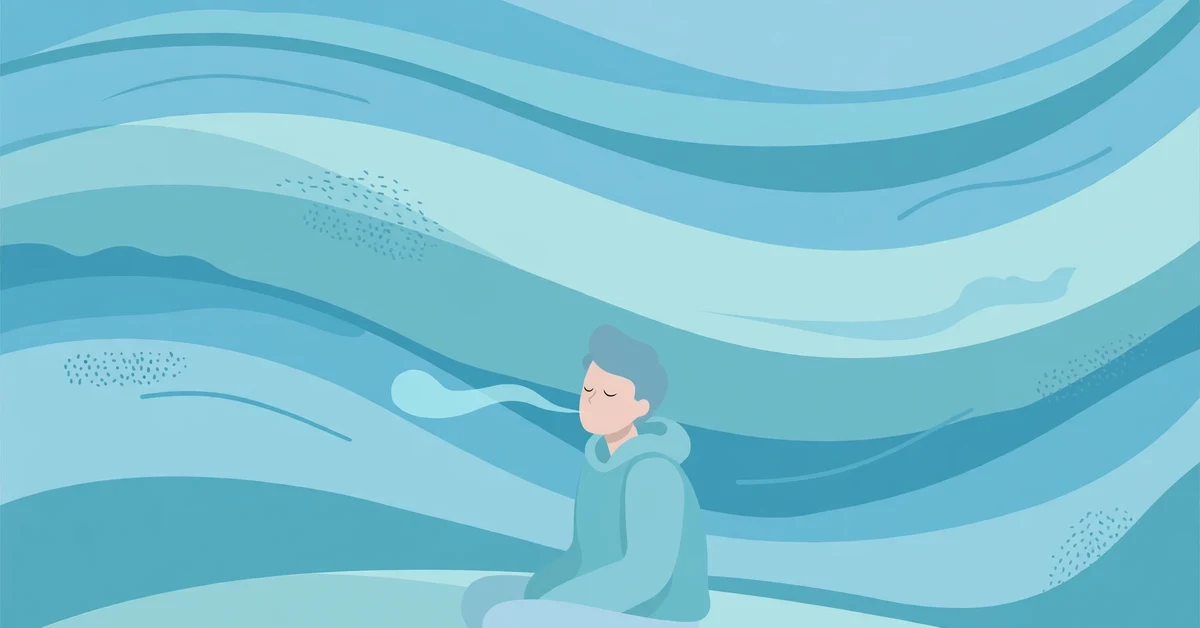
Step 3: Slow your breathing, gently. Fast, shallow breathing adds to dizziness and tingling. Breathe in slowly through your nose, then breathe out slowly through your mouth, letting the out-breath be a little longer than the in-breath. The NHS has a simple breathing exercise for stress you can practise when you feel calm, so it comes naturally during an attack. Don’t force deep gulps of air. Slow and soft is the goal.
Step 4: Ground yourself in your senses. Look around and name five things you can see, four you can touch, three you can hear, two you can smell, and one you can taste. This pulls your attention out of the alarm and back into the present moment.
Step 5: Let the sensations be there. This sounds strange, but fighting the feelings often makes them stronger. Try saying: “My heart is racing. That’s OK. It’s my body doing its job.” Many people find that when they stop fighting, the peak passes sooner.
Step 6: Afterwards, be kind to yourself. Panic attacks are exhausting. Drink some water, rest, and avoid judging yourself. You got through it. That is worth noticing.
What not to do
- Don’t avoid every place where you’ve had an attack. Avoidance shrinks your life and tends to feed panic over time.
- Don’t rely on alcohol or other substances to calm down. They may numb the feeling briefly but can make anxiety worse afterwards.
- Don’t keep searching your symptoms online during an attack. It usually adds fuel to the fear.
Panic attacks vs panic disorder
Having one panic attack does not mean you have panic disorder. Many people have one or two in their lifetime, often during a very stressful period.
Panic disorder is different. The NHS explains that it may be diagnosed when someone has regular, unexpected panic attacks followed by at least a month of continuous worry about having more attacks. People with panic disorder often begin to avoid places or situations, which can slowly limit work, travel and social life.
Getting help: treatment works
If panic attacks are affecting your life, please speak to a doctor or a qualified mental health professional. The NHS lists talking therapies and medicine as the main treatments for panic disorder. Cognitive behavioural therapy (CBT) helps you understand how you react during an attack and what you think about, and teaches you new ways to respond so the fear loses its grip. Medicine may also be suggested, depending on your symptoms.
Treatment is effective, and many people go from frequent attacks to rare ones, or none at all.
The takeaway
A panic attack feels like an emergency, but it is your body’s alarm ringing at the wrong time. It peaks, it passes, and it cannot hurt you on its own. Name it, breathe slowly, ground yourself, and let it move through. And if panic is shaping your daily life, reach out for help. You do not have to keep facing this alone.
This article is for general information and does not replace advice from your own doctor.
References
- World Health Organization. Anxiety disorders fact sheet. https://www.who.int/news-room/fact-sheets/detail/anxiety-disorders
- NHS. Panic disorder. https://www.nhs.uk/mental-health/conditions/panic-disorder/
- NHS. Breathing exercises for stress. https://www.nhs.uk/mental-health/self-help/guides-tools-and-activities/breathing-exercises-for-stress/
Frequently Asked Questions
A panic attack is a sudden rush of intense fear with strong physical symptoms. It is your body’s “fight or flight” alarm switching on at full power when there is no real danger — your heart speeds up, your breathing quickens, and your senses sharpen.
Most panic attacks last between 5 and 20 minutes. The peak usually comes within the first few minutes, then the body begins to settle.
A panic attack is frightening but not dangerous on its own, and it will not cause you physical harm. However, chest pain, breathlessness and dizziness can also be signs of physical illness, so seek urgent medical help if you have never been checked, your symptoms feel different from usual, or you are in any doubt.
Name it (“This is a panic attack. It will pass.”), stay where you are if it is safe, slow your breathing gently, ground yourself with the 5-4-3-2-1 senses exercise, let the sensations be, and be kind to yourself afterwards.
Having one panic attack does not mean you have panic disorder. Panic disorder may be diagnosed when someone has regular, unexpected panic attacks followed by at least a month of continuous worry about having more attacks. People with panic disorder often begin to avoid places or situations, which can slowly limit work, travel and social life.
Yes. The NHS lists talking therapies and medicine as the main treatments for panic disorder. Cognitive behavioural therapy (CBT) helps you understand how you react during an attack and what you think about, and teaches you new ways to respond so the fear loses its grip. Medicine may also be suggested, depending on your symptoms. If panic is affecting your daily life, speak to your doctor about what help is available.


Related Posts

When and How Should You End a Relationship with a Person Diagnosed with Bipolar Disorder?
Sep 2, 2026 • 29 min read
Midlife Crisis or Midlife Myth? What to Know About Going ‘Over the Hill’
Sep 22, 2026 • 11 min read
5 Ways to Reduce Stress-Related Tension in Your Neck and Shoulders
Sep 23, 2026 • 27 min read
What You Need to Know About a Full Liquid Diet
Sep 4, 2026 • 11 min read
The 5 Best Broad-Spectrum CBD Products for 2025: Tried and Tested
Sep 27, 2026 • 22 min read