WBC Blood Test: What Your White Blood Cell Count Means

- Quick Answers
- What a WBC Test Actually Measures
- Why Your Doctor Orders a WBC Test
- What Happens During the Test
- How to Read Your Result
- Normal WBC ranges by age
- The Differential: Which White Cell Moved
- Check Your WBC Result
- What a High WBC Count Means
- What a Low WBC Count Means
- Medicines and Other Things That Skew the Result
- What to Do Next After an Abnormal Result
- Sources
Your lab portal pings at 7 in the morning. One line reads “WBC 12.4” with a little red flag next to it, and nothing else. No explanation, no context, just a number and a color. Most people do the same thing next: they search the number, find a wall of medical jargon, and close the tab feeling worse than before.
This guide covers what the test is, how to read the number on your report, what counts as normal at different ages, and what a high or low result usually means — plus when to pick up the phone instead of waiting.
Quick Answers
What is a WBC blood test? It counts the white blood cells in a sample of your blood. White blood cells, also called leukocytes, are the immune system’s front line against infection.
What is a normal WBC count? For most adults, 4,500 to 11,000 cells per microliter (4.5 to 11.0 × 10⁹/L). Labs set their own reference ranges, so always check the range printed on your report first.
What does a high WBC mean? Most often your body is reacting to something — usually a bacterial infection, inflammation, physical stress, or smoking. A mildly high count is common and often temporary.
What does a low WBC mean? A recent viral illness or a medicine is the usual story. A very low count, especially with a fever, needs prompt medical attention.
Do I need to fast before a WBC test? No. MedlinePlus notes that no special preparation is needed for a white blood count.
What a WBC Test Actually Measures
A WBC test counts every white blood cell in a small blood sample and reports the total as one number. It does not tell you which type of white cell moved — that job belongs to a related test called the differential, covered below.
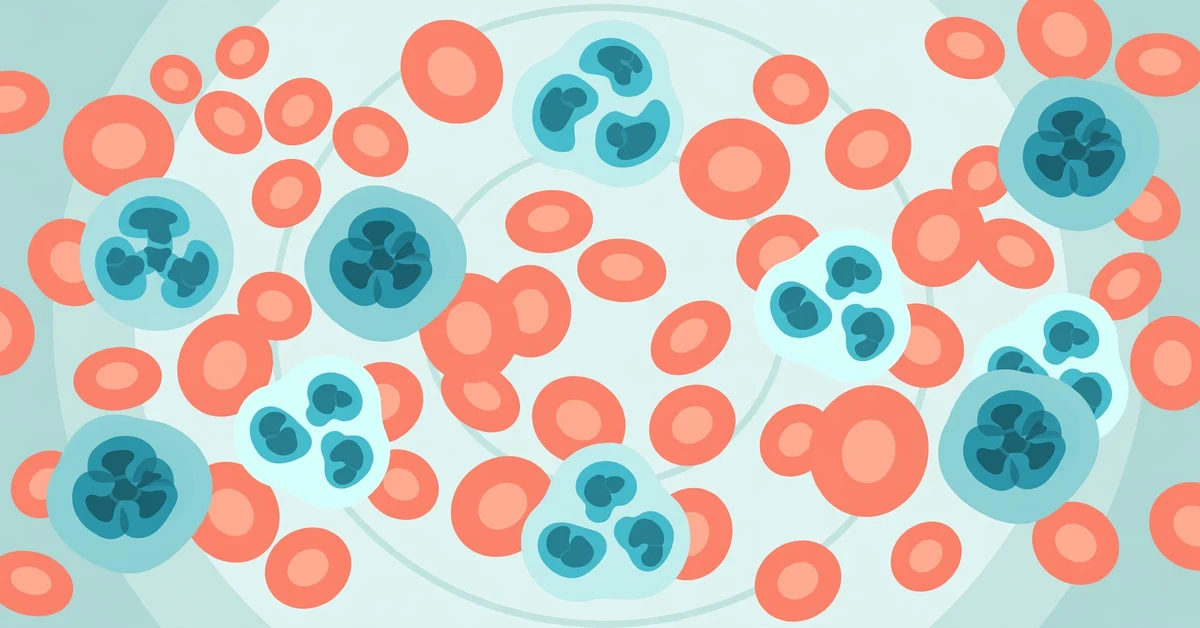
Your bone marrow makes about 100 billion white blood cells a day. Five types share the work: neutrophils, lymphocytes, monocytes, eosinophils, and basophils. Each type handles a different threat, from bacteria to parasites to allergic reactions. Our companion guide on white blood cells explains what each type does and why the numbers shift.
One thing the test cannot do is hand you a diagnosis. MedlinePlus puts it plainly: a white blood count shows your numbers are high or low, but it cannot confirm the cause. Doctors read it alongside your symptoms, your history, and other tests.

Why Your Doctor Orders a WBC Test
The WBC count is almost always ordered as part of a complete blood count (CBC), the standard panel that also measures red blood cells, hemoglobin, and platelets. A doctor may order it to:
- Check for infection or inflammation. A fever, a wound that will not heal, or a cough that lingers for weeks are classic triggers.
- Investigate unexplained symptoms. Fatigue, frequent infections, night sweats, or bruising that appears from nowhere can all prompt a look at white cells.
- Monitor treatment. Chemotherapy, radiation, and medicines that suppress the immune system can all push white cells down, so the count gets checked regularly during treatment.
- Routine screening. A CBC is a common part of an annual physical, which is how many people first learn their count is a little off.
- Follow a known blood or bone marrow condition. Leukemia, lymphoma, and bone marrow disorders are tracked partly through this number.
Children get the test for the same reasons, including routine screening or symptoms that point to a white blood cell problem.
What Happens During the Test
The test itself takes a few minutes. A health care professional draws blood from a vein in your arm, usually from the inside of the elbow, using a small needle. You may feel a brief sting when the needle goes in and out, and a little soreness or a small bruise can follow. Both fade quickly for most people.
For babies, the sample comes from a heel prick; for older children, a fingertip or arm. The site is cleaned, pricked, and bandaged after.
Preparation is simple: none is needed. You can eat, drink, and take your usual medicines. One thing worth doing is telling your clinician about every medicine you take, including over-the-counter drugs and supplements. Some of them change the result, and your doctor needs to know before reading the number. More on that below.
Results usually come back within a day, sometimes within hours.
How to Read Your Result
Your report will show a number and a reference range. The range matters more than any number you read online, because labs use slightly different methods and their ranges shift a bit. If your value sits inside your lab’s printed range, it is normal for that lab — even if it differs slightly from the ranges below.
Reports also come in different units. The same result can appear as 7,500 cells/µL, 7.5 × 10⁹/L, or 7.5 K/µL — all the same number. To convert cells per microliter into × 109/L, divide by 1,000.
Normal WBC ranges by age
Children run much higher than adults, and the range narrows as they grow. The table below uses figures from MedlinePlus and the University of Washington Medicine health library. Your lab’s range is still the one that counts.
| Age group | Normal WBC (cells per microliter) |
|---|---|
| Newborns, 0 to 2 weeks | 9,000 to 30,000 |
| Babies, 2 to 8 weeks | 5,000 to 21,000 |
| Children, 2 months to 6 years | 5,000 to 19,000 |
| Children, 6 to 18 years | 4,800 to 10,800 |
| Adults | 4,500 to 11,000 |
Men and women differ slightly too. Healthline notes that adult women typically run 4,500 to 11,000 per microliter while adult men run about 5,000 to 10,000 — again, your lab’s range wins.
The Differential: Which White Cell Moved
The differential, usually printed right below the total on a CBC report, splits it into the five cell types as percentages or absolute counts. When the total is off, the differential points at the cause.
- Neutrophils (55 to 70 percent): the first responders to bacterial infection. A high neutrophil count with a high total usually means a bacterial infection.
- Lymphocytes (20 to 40 percent): the antibody makers. They rise with viral infections and fall with some immune problems.
- Monocytes (2 to 8 percent): the cleanup crew. They climb during chronic infections and after the body clears dead tissue.
- Eosinophils (1 to 4 percent): the allergy and parasite specialists. High eosinophils point toward allergies, asthma, or a parasitic infection.
- Basophils (under 1 percent): rare cells that release histamine. They rise with allergic reactions and some blood disorders.
If your report flags only one cell type, that pattern often matters more than the total. A high total driven by eosinophils tells a very different story from a high total driven by neutrophils.

Check Your WBC Result
Enter the WBC number from your report. The checker converts units and places your result on the usual adult scale. This is an educational guide, not a diagnosis — your lab’s range and your clinician’s judgment come first.
What a High WBC Count Means
A high count is called leukocytosis. The size of the rise is the first clue, and the cell type behind it is the second.
Mildly high (about 11 to 30 × 109/L). This is the range doctors see most often, and it is usually a reaction rather than a disease. The usual suspects, roughly in order of how often they cause it:
- Bacterial infection. Pneumonia, a urinary tract infection, appendicitis, or a skin infection will push neutrophils up fast.
- Physical or emotional stress. Surgery, injury, burns, a hard workout, and even a rough night can release stress hormones that pull white cells off blood vessel walls and into circulation.
- Smoking. Current smokers run higher counts than non-smokers, and the effect touches all five cell types.
- Inflammation. Rheumatoid arthritis, inflammatory bowel disease, and allergic reactions all raise the count.
- Pregnancy. White cells climb during pregnancy, especially in the third trimester, and stay up for a while after delivery.
- Medicines. Corticosteroids are the classic example, and they can raise the count within hours.
Very high (above 30 × 109/L). A count in this range gets checked rather than watched. Doctors look for a severe infection, a major inflammatory flare, or a bone marrow problem. A count above 100 is almost always linked to leukemia or a related marrow disorder and needs prompt care.
A high WBC on its own rarely causes symptoms. What you feel comes from whatever drives it: fever with pneumonia, joint pain with a flare, breathlessness with an allergic reaction. Doctors treat the cause, not the number.
What a Low WBC Count Means
A low count is called leukopenia. It happens when the bone marrow makes too few white cells, or when white cells get used up or destroyed faster than they can be replaced.
- Viral infections. Flu, HIV, hepatitis, and severe COVID-19 can all suppress the marrow for a while. Counts usually recover as the illness passes.
- Cancer treatment. Chemotherapy and radiation kill fast-dividing cells, and white cells are among them. This is the most common cause of a very low count.
- Autoimmune conditions. Lupus, rheumatoid arthritis, and Sjögren disease can destroy white cells or attack the marrow.
- Bone marrow problems. Aplastic anemia, myelodysplastic syndromes, and cancers that spread to the marrow cut production at the source.
- Enlarged spleen or liver disease. A swollen spleen can trap and remove white cells from circulation.
- Medicines. Some antibiotics, anti-seizure drugs, antithyroid drugs, and antipsychotics lower the count.
- Vitamin deficiency. Severe B12 or folate deficiency can drag all blood cell lines down, not just white cells. If your report also shows a low red cell count, our guide to the anemia blood test explains the usual workup.
- Inherited patterns. Some people, including many with Duffy-null blood type, run a low count their whole lives with no illness at all. Doctors call this benign when the neutrophil count stays safe and there are no infections.
When the count is low, the number that matters most is the absolute neutrophil count, or ANC. Neutrophils do most of the infection fighting, so a low total with a normal ANC is far less worrying than a low total with a low ANC. An ANC under 0.5 × 10⁹/L counts as severe, and a fever on top of it needs same-day care.
Medicines and Other Things That Skew the Result
A WBC count is a snapshot, and plenty of everyday things move the needle. MedlinePlus lists drugs that can raise the count — epinephrine, corticosteroids, heparin, allopurinol, aspirin, quinine, and triamterene — and drugs that can lower it, including antibiotics, anticonvulsants, antihistamines, antithyroid drugs, barbiturates, chemotherapy drugs, diuretics, and sulfonamides.
Beyond medicines, a few factors catch people off guard:
- Exercise. A hard workout can lift the count for a few hours. A test drawn right after a run may read high for no worrying reason.
- Stress and pain. Acute emotional or physical stress raises the count, which is one reason a hospital admission reading can look worse than a calm repeat test a week later.
- Smoking. Smokers average a higher baseline, so a count that looks high against a non-smoker range may be that person's normal.
- Time of day. Counts drift through the day, so compare a repeat test with one taken at a similar time.
- Recent vaccination. A vaccine can bump the count for a short while as the immune system responds.
None of this means you should stop a medicine before a test. It means you should tell your clinician what you take and what you did that day, so the result gets read in context.
What to Do Next After an Abnormal Result
A single abnormal count is a starting point, not a verdict. Here is how doctors usually handle it.
If the count is only slightly off and you feel fine, the usual step is a repeat test in a few days to a few weeks. Mild blips often vanish on their own — a cold clears, a steroid course ends, a stressful week passes.
If the count is off and you have symptoms, the workup goes further: a differential to see which cell type moved, a blood smear to look at the cells under a microscope, and tests aimed at the suspected cause, such as cultures for infection or iron and B12 studies for anemia. A low MCHC result on the same CBC, for instance, points toward iron deficiency and a different set of follow-up tests.
If the count stays abnormal on repeat testing, your clinician may refer you to a hematologist, a blood specialist, for a bone marrow test or a deeper immune workup.
Call your clinician promptly, or seek same-day care, if an abnormal WBC comes with any of these:
- Fever above 100.4 °F (38 °C), especially if your count is low
- Frequent infections, or one that keeps coming back
- Unexplained bruising, bleeding gums, or tiny red spots on the skin
- Night sweats, swollen lymph nodes, or weight loss you cannot explain
- A WBC above 30, or a neutrophil count under 0.5 × 10⁹/L
- A count that stays outside the range on two or more tests with no clear reason
Until you talk to your clinician, skip supplements that promise to "boost" white blood cells. No pill fixes a low count on its own, and some products interfere with prescribed medicines. Sleep, food, and movement support immunity over time, but they are no substitute for finding the cause.
Sources
- MedlinePlus, U.S. National Library of Medicine — White Blood Count (WBC)
- MedlinePlus Medical Encyclopedia — WBC count
- Testing.com — WBC Blood Test: What a White Blood Cell Count Shows
- University of Washington Medicine Health Library — White Blood Cell Count
- Healthline — White Blood Cell Count: Normal, High, and Low Levels
- CU Anschutz Medical Campus — High or Low White Blood Cell Count? Understanding Your CBC Blood Test Results
Frequently Asked Questions
A WBC blood test counts the white blood cells in a sample of your blood. It is almost always done as part of a complete blood count (CBC). Doctors use it to check for infection, inflammation, immune problems, and blood disorders, and to monitor treatments such as chemotherapy.
For most adults, a normal WBC count is 4,500 to 11,000 cells per microliter (4.5 to 11.0 x 10^9/L). Children have higher ranges: newborns run 9,000 to 30,000, and the range narrows with age. Always use the reference range printed on your own lab report, since labs differ slightly.
The most common causes are bacterial infection, inflammation, physical or emotional stress, smoking, pregnancy, and medicines such as corticosteroids. A mildly high count (11 to 30 x 10^9/L) is usually a reaction to something temporary. A count above 30 needs a clinician review, and a count above 100 is usually linked to a blood or bone marrow disorder.
A low count (leukopenia) most often follows a viral illness or a medicine. Other causes include chemotherapy, autoimmune conditions such as lupus, bone marrow disorders, an enlarged spleen, and severe vitamin B12 or folate deficiency. Some people run a low count their whole lives with no illness, a pattern called benign ethnic neutropenia.
No. No special preparation is needed for a white blood count, according to MedlinePlus. You can eat, drink, and take your usual medicines. Tell your clinician about every medicine you take, since some drugs raise or lower the count.
Contact your clinician promptly if your WBC is above 30 or below 2.0, if your neutrophil count is under 0.5 x 10^9/L, if you have a fever with a low count, or if the count stays outside the range on repeat tests with no clear reason. A single slightly abnormal result in a person who feels well is usually repeated in a few days before any further testing.
Read Next

MCH Blood Test High: What It Means, Causes, and What to Do Next

B12 Deficiency Pernicious Anemia Symptoms: Early Signs and Nerve Warnings
NRBC Blood Test: What Nucleated Red Blood Cells Mean

Early Stage Leukemia Rash Pictures: What Petechiae Look Like and When to Worry
Low Lymphocyte Count: What It Means and When to Worry

What Is MCV in a Blood Test? Normal Range and What Your Result Means
Related Posts

What Is RBC in a Blood Test? Ranges, Low and High Results Explained
Nov 24, 2026 • 33 min read
Low MCHC on Your Blood Test: What It Means and What to Do Next
Nov 24, 2026 • 12 min read
High MCV Blood Test: Causes, Symptoms, and What to Do Next
Nov 24, 2026 • 11 min read
All About Xarelto
Oct 5, 2026 • 12 min read
Troponin Test Normal Value: What Your Result Really Means
Nov 24, 2026 • 7 min read