Yoga for Endometriosis: Try These Stretches to Relieve Pain

- How yoga affects endometriosis and pelvic pain
- Which styles of yoga work best
- 8 yoga poses to help with endometriosis
- 1. Restorative Goddess Pose
- 2. Supine Spinal Twist (Supta Matsyendrasana)
- 3. Happy Baby Pose (Ananda Balasana)
- 4. Child’s Pose (Balasana)
- 5. Legs-Up-the-Wall Pose (Viparita Karani)
- 6. Reclined Hero Pose (Supta Virasana)
- 7. Reclined Bound Angle Pose (Supta Baddha Konasana)
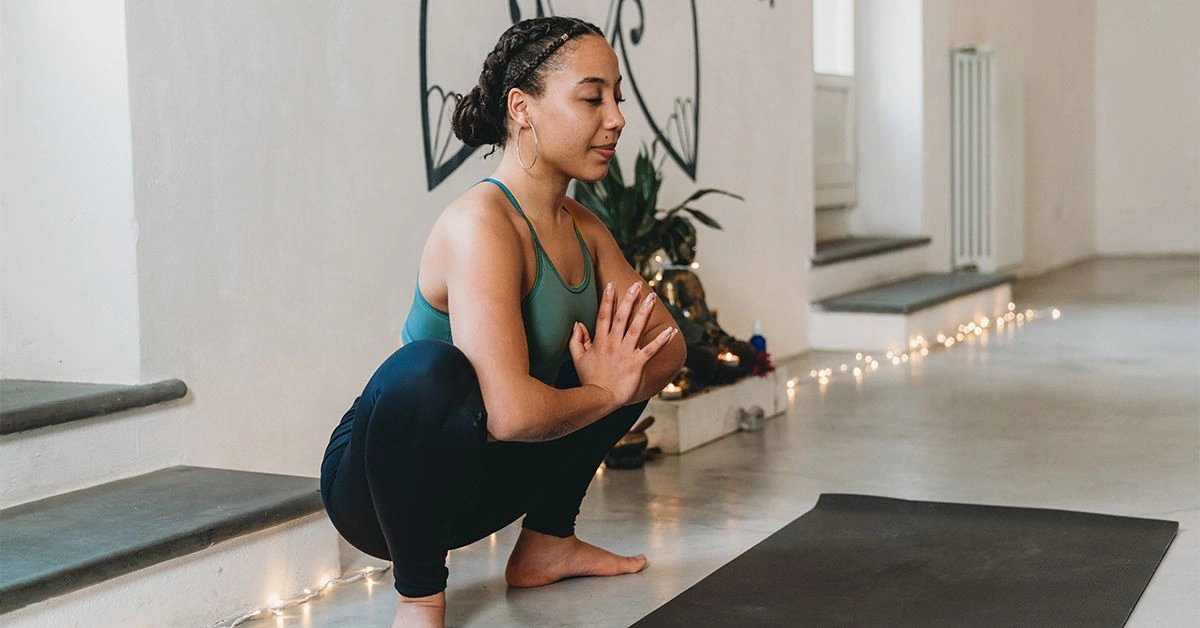
- 8. Garland Pose (Malasana)
- Safety considerations when doing yoga with endometriosis
- Practical tips for a safer, more helpful practice
- The takeaway
Yoga for endometriosis can help ease pelvic discomfort and stress, lower reliance on pain medications, and enhance overall quality of life.
Endometriosis is a long-term gynecologic disorder that impacts roughly 190 million people with a uterus around the globe.
It develops when the tissue that normally lines the uterus appears in other areas of the body, including the ovaries, bladder, bowel, recto-vaginal septum, fallopian tubes, and the pelvic lining.
Pelvic and lower abdominal pain is one of the hallmark symptoms of endometriosis.
Some studies indicate that yoga may reduce pain, tension, and stress linked to endometriosis and boost quality of life.
Read on to discover how yoga might help you manage endometriosis symptoms, which poses to try, and useful practice tips.
Throughout this piece you’ll see language that reports study populations and outcomes in binary terms like “male” and “female” or “men” and “women.” While that phrasing isn’t always ideal, it’s important for accuracy when describing research participants and clinical results.
How yoga affects endometriosis and pelvic pain
Endometriosis can influence physical health as well as mental and emotional well-being.
Yoga can support endometriosis management in multiple ways, says Kasia Gondek, a physical therapist and certified strength and conditioning specialist focused on women’s health and pelvic floor rehabilitation.
“A yoga and mindfulness routine can retrain breathing mechanics, improve posture, and lower discomfort from daily activities,” she explains. “It’s also helpful for reducing and managing symptom flare-ups.”
Some research also shows that yoga for endometriosis may cut down on pain medication use, help manage stress, and raise confidence.
Which styles of yoga work best
Gondek suggests choosing yoga approaches that prioritize mindfulness, slow controlled movement, and longer holds—gentle forms such as Hatha, Yin, and restorative practices tend to be most appropriate.
To reduce endometriosis-related discomfort, she recommends concentrating on restorative postures that release tension and foster relaxation.
“Restorative positions encourage softening of the abdominals, low back muscles, inner thighs, pelvic floor muscles, and chest wall,” she says. “These areas are frequently tight and restricted.”
Yoga Nidra is another deep relaxation technique that may assist with anxiety, depression, stress, chronic pain management, tension release, and improved sleep.
You can practice yoga alone at home using online classes or attend in-person sessions at a neighborhood studio. For digestive symptoms related to endometriosis, consider also exploring yoga for constipation as part of your routine.
8 yoga poses to help with endometriosis
Below are several yoga poses that can help reduce pain and tension if you’re living with endometriosis.
1. Restorative Goddess Pose

“Restorative Goddess Pose supports deep relaxation while opening the chest, hips, and inner thighs,” Gondek says. “It also soothes the dorsal vagus nerve , which helps regulate the fight-or-flight response.”
How to practice:
- Place a bolster under your thighs just beneath your sitting bones. Bring your feet together and allow the knees to fall outward.
- Set up blocks and cushions to form a gentle incline support.
- Lie back so your spine and head rest on the cushions.
- Let your arms relax out to the sides with palms facing up.
- Breathe slowly and deeply.
- Remain in the pose for 3 to 10 minutes.
2. Supine Spinal Twist (Supta Matsyendrasana)

“Supine Spinal Twist helps free lumbosacral and abdominal myofascial restrictions that often accompany endometriosis,” Gondek notes.
“It opens the chest and encourages diaphragmatic breathing and lateral rib expansion. It can also ease digestive symptoms related to endometriosis, such as bloating or constipation.”
How to practice:
- Lie on your back with the left leg extended and the right knee bent, right foot flat on the floor.
- Extend both arms out to the sides with palms down.
- On the inhale, breathe into the belly and lower ribs.
- On the exhale, lower the right knee to the left to twist. For a deeper sensation, place the left hand over the right knee.
- Take five full breaths.
- Notice the stretch along the sides of your ribs.
- Return to center.
- Repeat on the opposite side.
To support your low back and sacrum, tuck a pillow or yoga block between your knees. If knees don’t reach the floor, place a cushion underneath.
3. Happy Baby Pose (Ananda Balasana)
Happy Baby is a calming hip opener that increases flexibility, lowers anxiety, and promotes a sense of ease.
“This pose is excellent for releasing the pelvic floor, low back, inner thighs, and hamstrings,” Gondek says. “Endometriosis often makes these areas tight or sensitive because of altered movement or postural adjustments due to pain.”
If you can’t reach your feet, hold your thighs or calves, or loop a strap over the arches.
- Lie on your back.
- Bend your knees, drawing them toward the outer edges of your chest.
- Turn the soles of your feet toward the ceiling.
- Hold the outsides of your feet with your hands.
- Create resistance by pressing your feet down while pressing up into your hands.
- Allow the hips and pelvic floor to soften.
- Hold up to 1 minute.
4. Child’s Pose (Balasana)

This mild forward fold can encourage relaxation and internal awareness while gently stretching the spine, hips, and glutes to relieve tension, cramping, and stress.
How to practice:
- Begin on hands and knees.
- Lower your hips toward your heels.
- Bring knees together or set them slightly wider than hip distance.
- Hinge at the hips to fold forward.
- Extend your arms forward or rest them alongside your body.
- Stay in the pose for up to 5 minutes.
For additional comfort, place a cushion under your forehead, chest, or legs.
5. Legs-Up-the-Wall Pose (Viparita Karani)

This restorative posture has a calming influence, may boost circulation, relax pelvic muscles, and help ease cramps.
How to practice:
- Sit with your right side touching a wall.
- Swing your legs up the wall as you lie down on your back.
- Position your hips close to the wall or slightly away from it.
- Place your arms beside your body or rest your hands on your belly.
- Remain for up to 15 minutes.
6. Reclined Hero Pose (Supta Virasana)

This pose can tenderly stretch the belly and pelvic region to ease pain, bloating, and discomfort.
To lessen intensity, practice one leg at a time and support the head and neck with blocks or cushions to create an incline.
- Begin kneeling with the insides of your knees together.
- Separate your feet wider than the hips with the tops of the feet on the floor and big toes angled toward the center.
- Sit back between your feet.
- Lean back onto your forearms and elbows for support.
- Gently lower onto your back.
- Rest your arms by your sides at a slight angle.
- Hold up to 1 minute.
- Come back to a seated position slowly.
7. Reclined Bound Angle Pose (Supta Baddha Konasana)

This soothing posture can calm the nervous system and reduce stress. It may ease tightness in the hips, pelvis, and inner thighs and gently stretch the abdomen to reduce pelvic discomfort.
- Sit and press the soles of your feet together, letting the knees fall out to the sides.
- Lie back on your spine.
- Place arms alongside your body or rest your hands on your belly.
- Hold for up to 5 minutes.
Use blocks or bolsters under the knees or chest for added support if desired.
8. Garland Pose (Malasana)

This deep squat strengthens pelvic muscles and can alleviate pain, cramping, and digestive issues. It also gently stretches the lower back, hips, and thighs, enhancing flexibility and blood flow.
How to practice:
- Stand with feet slightly wider than hip distance.
- Bring your palms together in front of your chest.
- Turn your toes slightly outward.
- Bend your knees and descend into a low squat.
- Press your heels into the floor.
- Lift the pelvic floor and lengthen the spine.
- To intensify, press your elbows into your inner thighs.
- Hold up to 1 minute.
For extra help, place a cushion under the heels or sit on a block, or practice with your back against a wall.
Safety considerations when doing yoga with endometriosis
Practicing yoga with endometriosis is generally safe, but vigorous forms like Ashtanga, Vinyasa, or hot yoga can exacerbate symptoms. Tune into your body and avoid poses that increase pain or discomfort.
If you’ve had recent abdominal surgery, consult your surgeon before resuming yoga.
“To protect healing tissues, avoid positions that put pressure on your abdomen or surgical site,” Gondek advises.
Examples include lying on your belly in Sphinx Pose, compressing the abdomen by bringing the thighs toward the belly in Child’s Pose, or heavy abdominal compression in Happy Baby Pose.
Gondek also recommends steering clear of twisting movements until you’ve been cleared by your surgeon.
“Once healed and approved for activity, twists can be very effective for improving scar mobility, strength, flexibility, and posture,” she says.
Practical tips for a safer, more helpful practice
Pay attention to how you feel each day to get the most from your yoga routine.
Note your physical, emotional, and mental reactions to each posture. Use breath awareness to connect with any areas of discomfort or sensation. Skip poses that increase pressure on your abdomen, cause pain, or worsen symptoms.
Gondek encourages using props—bolsters, blankets, and blocks—to adapt poses and provide support.
“Props help reduce muscle guarding that frequently occurs with pain,” she explains. “They gently support joints and muscles so you can relax and release more fully into a posture.”
The takeaway
If you have endometriosis, you can build a plan to manage symptoms and reduce complications.
Yoga is a valuable approach for reducing the impact of endometriosis symptoms, offering physical, mental, and emotional benefits.
Check with your healthcare provider before beginning a new yoga regimen, especially if symptoms are severe. When possible, practice with an experienced yoga teacher who can tailor modifications to your needs.
Frequently Asked Questions
Yoga For Endometriosis refers to gentle, restorative yoga practices and breathing techniques designed to reduce pelvic pain, ease muscle tension, lower stress, and support overall quality of life for people with endometriosis.
Gentle and slow practices such as Hatha, Yin, restorative yoga, and Yoga Nidra tend to be most suitable because they emphasize long holds, relaxation, diaphragmatic breathing, and minimal forceful movement.
Helpful poses include Legs-Up-the-Wall, Child’s Pose, Reclined Bound Angle, Supine Spinal Twist (gentle), and Happy Baby. Avoid vigorous styles, deep belly compression, intense twists, or any pose that increases pain—especially soon after abdominal surgery.
Short, regular sessions (several times per week) can be beneficial. Listen to your body and adapt frequency and duration to your comfort—daily gentle practice or 3–5 sessions weekly often works well for maintaining benefits.
Yes. Check with your healthcare provider—especially if you’ve had recent abdominal surgery, severe symptoms, or other medical concerns—to ensure yoga is safe and to get guidance on appropriate modifications.
Read Next
Ultrasounds Aren't Typically Used to Detect Cervical Cancer: Learn Why
Resistance Band Chest Workout: 7 Exercises You Can Do Anywhere

Best At-Home Iron Test to Check for Iron Deficiency
What Is Cigna Express Scripts for Medicare?

Semaglutide and Phentermine: What to Know About These Weight Loss Drugs
Does Excessive Alcohol Use Cause Rhinophyma?
Related Posts

Does Masturbating Before Sex Affect Your Performance?
Aug 30, 2026 • 18 min read
Is Ovaltine Healthy? All You Need to Know
Aug 5, 2026 • 21 min read
What You Need to Know About Vacuum-Assisted Wound Closure (VAC)
Jul 31, 2026 • 34 min read
What Is Baby Talk and Why Is It So Important?
Aug 10, 2026 • 6 min read
Shea Butter for Your Face: Benefits and Uses
Aug 27, 2026 • 16 min read