How to Get Sugar Out of Your System Fast: What Actually Works in the Next Few Hours

- Can you actually flush sugar out of your system immediately?
- What should you do in the first 15 minutes?
- Does walking after a meal really lower blood sugar within hours?
- What does a realistic timeline look like?
- What should your next meal look like while your blood sugar is high?
- What role does medication play — and what should you never do?
- Which popular “flush” claims actually work?
- When is high blood sugar an emergency?
- The bottom line
You cannot flush sugar out of your system instantly — and any product, tea, or cleanse that promises to do that is not telling you the truth. Sugar is not a toxin sitting in your body waiting to be rinsed away. Once glucose reaches your bloodstream, only three things happen to it: your cells burn it for energy, your liver and muscles store it, or — when levels run very high — your kidneys let some of it spill into your urine. What you can do is help those processes along so a high reading comes down over the next few hours instead of staying high. This page is about that honest version of “fast”: the steps that genuinely lower blood glucose within hours, the popular “flush” claims graded one by one, the timelines you can realistically expect, and the warning signs that mean you should stop managing this at home and get medical help.
Can you actually flush sugar out of your system immediately?
No — and understanding why will save you money and keep you safe. When you eat sugar or refined carbohydrates, digestion breaks them down into glucose, which passes into your blood. As the Mayo Clinic explains, insulin then unlocks your cells so glucose can move out of the blood and be used as fuel, with the extra stored in the liver and muscles. There is no drain to open and no shortcut around that process. In a person without diabetes, the pancreas usually handles a sugary meal or one-off binge on its own and brings glucose back to its usual range within a few hours, which is why most healthy people feel fine again the same day. With diabetes or prediabetes, insulin is missing or works less well, so glucose stays elevated for longer — and that is the situation where the steps below actually matter.
It also helps to know what “back to normal” means numerically. The CDC gives typical blood sugar targets for people with diabetes of 80 to 130 mg/dL before a meal and less than 180 mg/dL two hours after the start of a meal, while a reading below 70 mg/dL counts as low. Those are the reference points this article uses. If your care team has set you different personal targets, yours take priority over any general range printed here.
What should you do in the first 15 minutes?
Start by confirming the situation instead of reacting to a feeling. If you have a meter or a continuous glucose monitor, check your actual number — symptoms alone are unreliable, because feeling shaky, headachy, or tired after a big dessert does not always mean your glucose is dangerously high. Then work through these four steps:

- Stop the inflow. Put the rest of the sugary food or drink aside. Nothing else on this page can outrun glucose that is still coming in, and “correcting” a spike with juice, soda, or a sweet snack only restarts the clock.
- Drink a glass of plain water. The CDC recommends choosing water instead of juice or soda, and staying hydrated supports your kidneys while they clear some excess glucose through urine. Think of water as a supporting step that helps your body do its job — not as a treatment that washes sugar away on its own. Sip steadily rather than forcing down huge volumes at once.
- Check for ketones if your reading is 240 mg/dL or higher. Both the American Diabetes Association (ADA) and the CDC advise checking your urine for ketones at this level. This single check decides what you may safely do next, because it changes whether exercise is a good idea or a dangerous one, as explained below.
- Take any prescribed medication exactly as prescribed — nothing extra. If a dose is due, take it on schedule. Do not double a dose, take an extra tablet, or borrow someone else’s insulin to speed things up. Your medication plan is covered in its own section below because getting it wrong is the easiest way to turn a high into a dangerous low.
Does walking after a meal really lower blood sugar within hours?
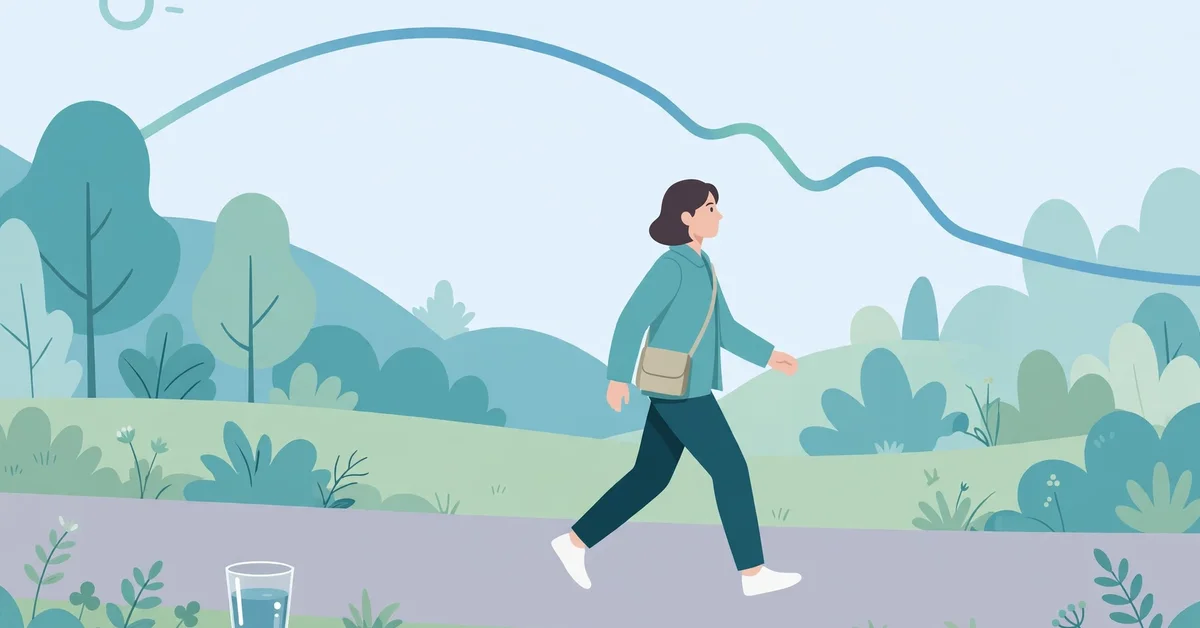
Yes. Of everything you can do at home without medication, moving your muscles is the fastest genuine lever you have. Working muscle pulls glucose out of the bloodstream to fuel itself, and it can start that uptake even before insulin fully catches up — which is exactly why a walk works in the hours after eating rather than tomorrow. The evidence is unusually specific. In a randomized trial published in Diabetes Care, DiPietro and colleagues found that three 15-minute walks taken after meals significantly improved 24-hour glucose control in older adults at risk of glucose intolerance — and the short post-meal walks lowered after-dinner glucose more effectively than a single sustained 45-minute walk. In other words, a quarter of an hour on your feet after eating beat one long workout done at another time of day.

Practically, aim for a comfortable, brisk 10 to 15 minutes of walking once you have finished eating. If you cannot get outside, use the large muscles indoors instead: repeated sit-to-stands, gentle air squats, climbing stairs, or marching in place all ask your legs — your biggest muscle group — to take up glucose. The benefit also outlasts the walk itself: aerobic activity can keep lowering blood glucose for up to 24 hours afterwards, because your muscles stay more sensitive to insulin while they restock their stored glucose.
But there is one non-negotiable safety gate. If your glucose is 240 mg/dL or higher and your ketone test is positive, do not exercise. The ADA states this plainly: exercising when ketones are present may make your blood glucose go even higher and raises the risk of diabetic ketoacidosis. Skip the walk, follow the emergency guidance further down this page, and contact your care team. The opposite edge matters too: the ADA advises that if your glucose is below 100 mg/dL before activity, you should have a small carbohydrate snack of about 15 grams first, so the walk does not push you into a low.
What does a realistic timeline look like?
Most “flush sugar fast” pages dodge this question, because the honest answer is “hours, not minutes.” Here is what to expect, stage by stage, assuming you feel well and have no ketones:
| Time window | What is happening | What to do |
|---|---|---|
| First 15 minutes | Glucose from the meal is still being absorbed; your number may still be rising. | Check your reading, drink water, stop further sugar, test ketones if you are at 240 mg/dL or higher. |
| 15 minutes to 2 hours | Muscle activity starts pulling glucose out of the blood; hydration supports your kidneys. | Take a 10–15 minute post-meal walk (only if ketones are negative), keep sipping water, and take prescribed medication on schedule. |
| Around 2 hours after eating | The usual checkpoint: the CDC target is below 180 mg/dL two hours after the start of a meal for most people with diabetes. | Recheck your glucose and look at the direction of travel, not just the single number. A falling trend usually means your steps are working. |
| 2 to 4 hours | Digestion finishes; glucose should keep trending down as storage and cell uptake continue. | Eat nothing sweet “to celebrate.” If the next meal falls here, build it as described below. Recheck if you feel unwell at any point. |
| The rest of the day | The after-effects of activity can keep glucose lower for up to 24 hours; a poor night’s sleep can push the next morning’s reading up. | Stay normally active, keep added sugar out, and aim for a full night of sleep so tomorrow does not start high. |
| Still high after several hours, or rising | This is no longer a routine post-meal spike. | Contact your diabetes care team the same day. If any DKA warning signs appear, treat it as an emergency (see below). |
Two honest caveats belong with this table. First, no home step comes with a guaranteed number of mg/dL or a guaranteed minute count — anyone who promises you an exact drop is inventing it, because your starting level, medication, meal size, and insulin sensitivity all change the result. Second, if you do not have diabetes, this timeline mostly runs itself: your own insulin response normally clears a one-off sugar load within a few hours, and the walk and water simply make you feel better while it does.
What should your next meal look like while your blood sugar is high?
The next meal is where most people undo their good work, either by eating another fast carbohydrate load or by skipping food entirely and then overeating later. Neither helps. Build the plate the way the CDC suggests with its plate method : half non-starchy vegetables, a quarter lean protein such as fish, chicken, eggs, tofu, or beans, and a quarter slower carbohydrate such as lentils, beans, or a modest portion of a whole grain. Add fiber wherever you can, because fiber is not broken down into glucose and slows how quickly the carbohydrate you do eat reaches your blood. Pairing protein, fiber, and healthy fat with any carbohydrate in the meal blunts the rise far more reliably than eating the carbohydrate alone.

Just as important is what stays off the table while you are still high: no juice or soda (including “healthy” smoothies, which deliver sugar quickly), no dessert to mark the end of the episode, and no alcohol — alcohol interferes with the liver’s glucose handling and can set up a delayed low later, especially if you use insulin or certain diabetes tablets. If you are not actually due a meal, you do not need to eat anything at all; there is no food that actively pulls sugar out of blood that is already circulating. Food choices shape the next rise, not the current one.
For the longer, day-to-day picture — the habits that keep readings lower week after week rather than hour by hour — see our companion guide to 14 ways to lower blood sugar levels naturally. This page deliberately stays on the narrower question of the next few hours.
What role does medication play — and what should you never do?
If you have been prescribed diabetes medication or insulin, that prescription — taken exactly as directed — is your fastest medical tool, and it is the only medical tool you should use. Rapid-acting insulin, when it is part of your own prescribed plan with correction instructions from your prescriber, begins working far faster than any food, drink, or supplement. But the dose and timing in that plan were calculated for you, by someone who knows your regimen. An article cannot recalculate them, and guessing is how people overshoot into hypoglycemia.
So the rules are simple and absolute. Never take a double dose because a reading scared you. Never stack an extra correction on top of insulin that is still working. Never take someone else’s diabetes medicine or insulin. Never double metformin or any other tablet hoping to cancel out a meal — these medicines do not work like an antidote, and extra doses mainly add side effects. And do not fast for a day to “burn off” a binge if you use insulin or a sulfonylurea unless your care team has specifically planned that with you, because fasting on those medicines can drive glucose dangerously low. If high readings keep happening despite taking everything correctly, that is information for your prescriber — bring them the pattern, ideally alongside your longer-term A1C chart readings — rather than quietly escalating doses on your own. A plain-language overview of the main options is in our diabetes medications list.
Which popular “flush” claims actually work?
Search this topic and the same remedies appear on page after page, usually with confident numbers attached and no source in sight. Here is each popular claim, graded honestly:
| Popular claim | Grade | The honest verdict |
|---|---|---|
| A walk after the meal | Works | The best-supported home step: three 15-minute post-meal walks improved 24-hour glucose control in a Diabetes Care trial. |
| Drinking water | Helps a little | Supports your kidneys and replaces sugary drinks, but water alone does not pull a high reading down by itself. |
| Apple cider vinegar before or after eating | Helps a little, at best | Small studies suggest a modest blunting of the post-meal rise; the “up to 40%” figure repeated across blogs is not a flush and not a treatment. It can damage tooth enamel, lower potassium, interact with insulin and diuretics, and is a poor idea if you have gastroparesis. Never use it in place of medication. |
| Cinnamon, lemon water, or “detox” teas | No reliable evidence | Pleasant drinks, but none has been shown to lower an acute high reading in a clinically meaningful way. |
| Juice cleanses and “sugar detox” programmes | Does not work | Juice is itself a fast sugar load — the opposite of what a high reading needs — and multi-day cleanses do not remove glucose from your blood. |
| Sweating it out in a sauna or with intense exercise | Risky | Glucose leaves through your cells and kidneys, not your sweat. Dehydration concentrates the glucose in your blood, and vigorous exercise with ketones present can push levels higher. |
| Taking extra insulin or extra tablets | Dangerous | Unsupervised extra doses are a common route from a manageable high to a severe low. Corrections belong to your prescribed plan only. |
| Skipping food for 24 hours to reset | Risky for many | Unsupervised fasting while using insulin or a sulfonylurea can cause hypoglycemia. If fasting interests you, plan it with your care team first. |
Notice the pattern: the claims that work are boring and mechanical — muscle, water, time, and your own prescription. Everything marketed as a shortcut either does nothing measurable or shifts the risk onto you. If you want to understand why a spike arrives so quickly in the first place, our explainer on how long sugar takes to enter your bloodstream walks through the absorption side of the same story.
When is high blood sugar an emergency?
A single high reading, on its own, is usually not an emergency if you feel well and have no ketones. What turns a high number into an emergency is diabetic ketoacidosis (DKA) — a state in which a lack of insulin forces the body to burn fat and produce ketones that make the blood acidic. The National Institute of Diabetes and Digestive and Kidney Diseases (NIDDK) is blunt about it: DKA is a medical emergency that needs to be treated right away. It most often affects people with type 1 diabetes, but people with type 2 diabetes can develop it too when their body does not produce enough insulin.
Call emergency services or go to the emergency department now if your blood sugar is high and you have any of these DKA warning signs listed by the NIDDK:
- Feeling very tired, weak, or faint, or fainting from dehydration
- Trouble breathing, or breathing that is deep and rapid
- Fruity-smelling breath
- Pain in your abdomen, nausea, or vomiting — especially if you cannot keep fluids down
- Confusion or trouble staying alert
- Moderate-to-large ketones on a urine or blood test, particularly alongside any symptom above
Do not try to exercise these symptoms away, do not wait overnight to see whether they pass, and do not drive yourself if you feel faint or confused. Also contact your care team the same day — even without the symptoms above — if your glucose stays very high (around 300 mg/dL or above) across repeat checks despite following your usual plan, if you are ill and cannot eat or drink normally, or if ketones are present at 240 mg/dL or higher. While you are sick, the CDC’s advice is to keep monitoring, use a ketone test kit when your blood sugar reaches 240 mg/dL or above, and call your doctor if your ketones are high. Having a written sick-day plan agreed with your team before you need one is the single best preparation for days like this.
The bottom line
You cannot get sugar out of your system immediately, and you do not need to: you need it moving in the right direction over the next few hours, safely. Check your number, stop adding more sugar, drink water, test for ketones at 240 mg/dL or higher, and — only if ketones are absent — walk for 10 to 15 minutes so your muscles can do the fastest honest work available. Take prescribed medication exactly as prescribed and nothing more, build the next meal around vegetables, protein, and fiber, and recheck at the two-hour mark against the CDC’s below-180 mg/dL reference point. Grade every “flush” claim against that standard and most of them grade themselves. And if warning signs of ketoacidosis appear, the fastest correct move is not a remedy at all — it is emergency care.
Medical disclaimer: This article is for general education only and is not medical advice. It does not diagnose any condition, set your personal blood sugar targets, or change your medication or insulin doses — those decisions belong to you and your healthcare team. If you have diabetes and your blood sugar is high with vomiting, abdominal pain, rapid or difficult breathing, fruity-smelling breath, confusion, or moderate-to-large ketones, seek emergency care immediately rather than following home steps. Talk with your doctor or diabetes care team about a personal plan for high readings and sick days.
Frequently Asked Questions
No. Glucose is not a toxin that can be rinsed out. Your body lowers blood sugar by moving glucose into cells for energy or storage, and — when levels are very high — by excreting some through urine. A walk, water, time, and prescribed medication can bring a high reading down over a few hours, but nothing safe does it instantly.
If you feel well and have no ketones, a 10 to 15 minute walk after eating is the fastest safe home step, because working muscles pull glucose out of the blood. Drink plain water, stop eating further sugar, and take any prescribed medication exactly on schedule. If ketones are present, skip exercise and contact your care team.
For most people with diabetes, the useful checkpoint is two hours after the start of a meal, when the CDC target is below 180 mg/dL. A post-meal walk can start lowering glucose within that window, and the effect of activity can last up to 24 hours. Without diabetes, your own insulin usually clears a one-off sugar load within a few hours.
The ADA and CDC advise checking your urine for ketones when your blood glucose is 240 mg/dL or higher, and the CDC also recommends a ketone check when you are sick. If ketones are present, do not exercise, because activity can push glucose higher and raise the risk of diabetic ketoacidosis.
No. Small studies suggest vinegar with a meal may modestly blunt the post-meal rise, but it does not flush glucose out and is not a treatment for a high reading. It can harm tooth enamel, lower potassium, and interact with insulin and diuretics, so it should never replace prescribed medication.
When a high reading comes with signs of diabetic ketoacidosis: vomiting or abdominal pain, rapid or difficult breathing, fruity-smelling breath, confusion, extreme tiredness or fainting, or moderate-to-large ketones. The NIDDK classifies DKA as a medical emergency — call emergency services or go to the emergency department instead of trying home remedies.
Never unless your own prescribed plan, written by your prescriber, tells you exactly how to make that correction. Doubling a dose or stacking extra insulin can overshoot into dangerous low blood sugar, and extra tablets such as metformin do not act as an antidote to a meal. If highs keep happening on your usual doses, report the pattern to your care team.
Read Next

When and How Should You End a Relationship with a Person Diagnosed with Bipolar Disorder?
Low Lymphocyte Count: What It Means and When to Worry

8 Alternatives to Leg Extension Exercises

6 Reasons Working from Bed Isn't Doing You Any Favors
Is Coconut Kefir the New Superfood?
UTI Symptoms in the Elderly: Atypical Signs Families Often Miss
Related Posts

Biktarvy and Cost: What You Need to Know
Sep 2, 2026 • 25 min read
A1C Chart: A1C to Blood Sugar Conversion, Normal and Prediabetes Ranges
Nov 8, 2026 • 14 min read
Type 2 Diabetes ICD-10 Codes: The Complete E11 List and What Your Code Means
Nov 14, 2026 • 35 min read
Does Medicare Cover Ozempic? Part D Rules, 2026 Costs and Alternatives
Nov 10, 2026 • 34 min read
Blood Sugar Level Chart: What Your Fasting, After-Meal and Random Readings Mean
Nov 10, 2026 • 5 min read