Derma Roller for Hair Growth: Here’s What You Need to Know

- What is a derma roller?
- Pros and cons of a derma roller
- Pros
- Cons
- Who is a derma roller for?
- Where to get a derma roller
- How to choose the right derma roller for you
- How to use derma rollers for hair regrowth
- Do derma rollers really work?
- Derma roller safety considerations
- Recommended alternatives to derma rollers
- When to see a doctor
- Frequently asked questions
- Is derma rolling safe for your hair?
- Which derma roller size is best for your hair?
- Can derma rolling make hair worse?
- Takeaway
A derma roller is sometimes used to address hair thinning on the beard, face, or scalp. It functions by producing tiny punctures that trigger repair and blood flow. Still, evidence supporting its benefits is limited.

People often use a derma roller at home as an alternative to professional microneedling for hair. It can be applied to the scalp with the aim of encouraging hair regrowth.
Hair loss is widespread, affecting as many as two-thirds of men by age 35. It’s not limited to men — roughly 40 percent of people experiencing hair loss are women.
There are numerous approaches to treating hair loss, though many are expensive or require professional care. Derma rollers have emerged as a popular at-home option touted for aiding hair growth.
Below, we examine whether they truly deliver on those claims.
You’ll note the reporting of statistics and study details often toggles between terms like “male” and “female” or “men” and “women.”
While we tend to avoid binary language, precision matters when describing research subjects and clinical results.
Regrettably, the studies and surveys cited here did not include data on, or enroll, participants who are transgender, nonbinary, gender nonconforming, genderqueer , agender , or genderless.
What is a derma roller?
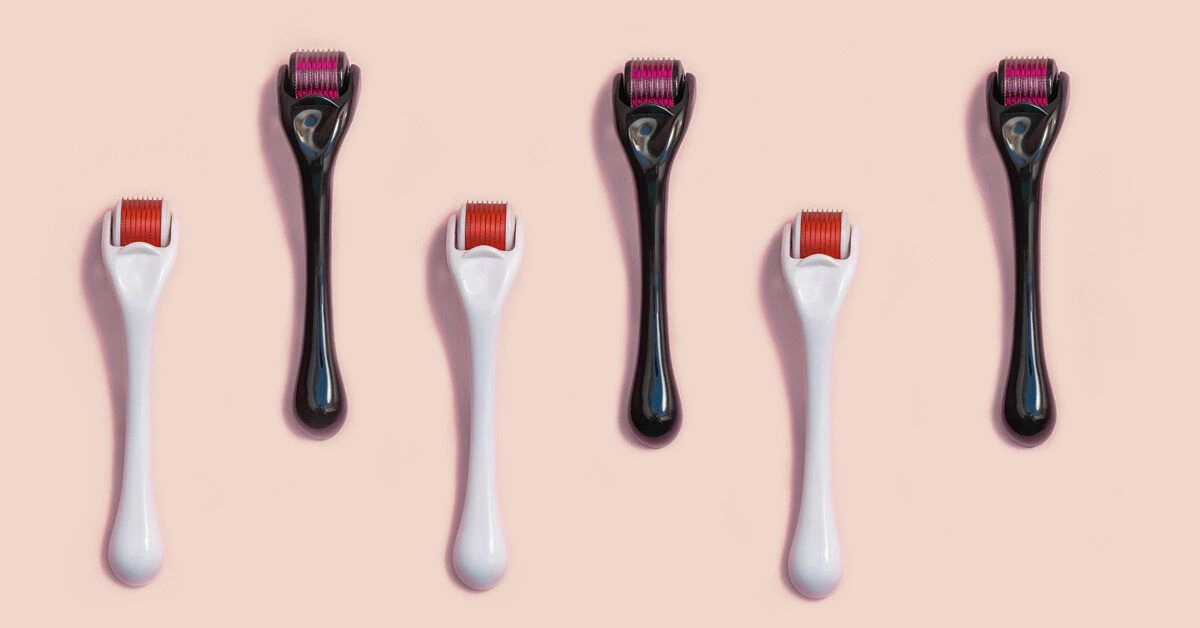
A derma roller is a handheld tool comprised of a handle attached to a cylinder studded with very small needles, typically ranging from 0.2 mm to 1.5 mm in length. Though that may sound daunting, derma rolling generally isn’t painful; you may feel some discomfort, but it should be bearable.
Derma rollers are usable on facial skin, beards, and the scalp. The premise is to boost collagen production, circulation, and cell renewal for improved skin and hair outcomes.
Some individuals with thinning hair try derma rolling to encourage regrowth. Similar to clinical microneedling, at-home derma rolling creates micro-injuries in the skin or scalp, prompting the body to initiate healing. This process increases blood supply and collagen in the treated area.
The FDA classifies derma rollers as medical devices that should be registered with the agency. Although consumer versions are available for home use, the safest approach is to have microneedling performed by a dermatologist.
Pros and cons of a derma roller
Pros
- inexpensive
- usable at home
- straightforward to operate
- may increase hair density and thickness
- targets hair thinning
Cons
- can produce redness, irritation, or discomfort
- has potential side effects
- choosing the correct needle length can be confusing
- hard to reach or view the back of the head when self-treating
Who is a derma roller for?
Derma rollers are aimed at people seeking an at-home approach to hair thinning. They can be a first-line option for trying to stimulate regrowth or used alongside topical treatments like hair serums.
Anyone could use a derma roller, but it’s not appropriate for everyone. Those with skin disorders such as psoriasis or eczema, or a history of clotting issues, should consult a physician or dermatologist before use.
Active acne or warts can spread across the skin via derma rolling, so these conditions make it inadvisable.
Where to get a derma roller
Derma rollers are sold online and in select retailers.
| Bondi Boost Hair Growth Derma Roller | Roselynboutique Derma Roller Beard Growth Kit | ORA Deluxe Microneedle Dermal Roller System | |
| Where to buy | BondiBoost | Amazon | Dermstore |
| Needle length | 1.5 mm | 0.25 mm | 0.25 mm |
| Key characteristic | contains 540 medical-grade stainless steel needles | designed for beards and facial hair as well as skin | also suitable for use on thinning scalp |
How to choose the right derma roller for you
With many derma rollers on the market, pay close attention to needle length. Needles range from 0.2 mm up to 1.5 mm, and shorter lengths are usually safer for home use.
Make sure the model you pick is appropriate for scalp use, as many are intended primarily for facial skin.
How to use derma rollers for hair regrowth
Handling a derma roller requires care because it’s covered in many fine needles.
To treat hair loss, concentrate on the scalp. Move the roller across the scalp in several directions: horizontally, vertically, and diagonally — in that sequence.
Apply enough pressure to feel it, but avoid pressing so hard that it causes pain.
Avoid rolling over the same spot repeatedly; doing so can injure the skin or raise the risk of infection if the skin is broken.
For optimal outcomes, use a derma roller once or twice weekly. Using it more than twice weekly may cause harm rather than help.
Do derma rollers really work?
Home derma rolling may yield some improvements, but it might not be as potent as clinic-based microneedling performed by a dermatologist.
Evidence for derma rollers specifically is limited. Most research focuses on microneedling, which has been demonstrated to encourage hair growth.
Derma rolling could provide similar advantages. A 2013 study reported that combining a derma roller with minoxidil outperformed minoxidil alone for promoting hair growth.
Derma roller safety considerations
A tool with many tiny needles presents safety questions. While derma rolling is generally safe when used correctly, potential side effects include:
- irritation
- stinging
- discomfort
- swelling
Not properly sterilizing and storing your derma roller raises the chance of infection.
Talk to a professional before derma rolling if you:
- have a history of blood clots
- take isotretinoin (Accutane) or other medications
- have skin conditions such as eczema, psoriasis, or rosacea
Never use a derma roller over active acne, inflamed skin, warts, or moles.
To lower the likelihood of adverse effects, opt for the smallest available needle size, such as 0.2 mm.
Recommended alternatives to derma rollers
If derma rolling isn’t right for you, or you’re uncomfortable with the idea of needling your scalp, there are other options.
Other at-home hair loss strategies include:
- over-the-counter minoxidil products (like Rogaine, Hims, and Hers)
- scalp massage
- using rosemary or peppermint essential oils
- nutritional supplements, such as biotin
If home methods fail or you want professional care, a dermatologist can prescribe drugs or offer procedures.
Clinical treatments may include:
- laser hair therapy
- prescription medications, including finasteride or spironolactone
- steroid injections
When to see a doctor
Speak with a physician before derma rolling if you:
- are taking any medications
- have existing skin conditions
- have other health issues
Consult a doctor if you develop pain or side effects after using a derma roller.
If you don’t notice improvement after 2 to 3 months, consider seeing a dermatologist or hair specialist to explore other treatments.
Frequently asked questions
Is derma rolling safe for your hair?
When used properly, derma rolling is relatively safe, though it can cause temporary stinging, redness, or irritation.
Which derma roller size is best for your hair?
Needle lengths span 0.2 mm to 1.5 mm. For home use, shorter needles are generally the safer choice.
Can derma rolling make hair worse?
Improper use of a derma roller can damage the scalp and hair. Avoid repeating strokes over the same area and wait until skin is fully healed before reusing the tool.
Takeaway
Derma rolling offers an accessible, low-cost at-home method to address hair thinning. The technique uses a needle-covered device popular in skincare to create micro-injuries that promote repair and increased circulation.
While it may not match the effectiveness of in-office microneedling, derma rolling could aid hair regrowth. Research specifically on derma rollers is scarce, so keep expectations realistic.
Frequently Asked Questions
When performed correctly with appropriate needle length and proper sterilization, derma rolling is generally safe but may cause temporary redness, irritation, or stinging.
Needle lengths range from 0.2 mm to 1.5 mm. For home use on the scalp, shorter needles (around 0.2–0.5 mm) are typically safer and easier to manage.
Yes — improper technique, excessive pressure, or using the wrong needle length can injure the scalp, increase infection risk, and potentially worsen hair loss.
Most guidance suggests using a derma roller once or twice weekly; more frequent use can harm the skin and impede healing.
People with active acne, psoriasis, eczema, bleeding disorders, or those on certain medications (like isotretinoin) should avoid derma rolling or consult a dermatologist first.




Related Posts
I Tried It: Neutrogena Hydro Boost Water Gel Review
Oct 1, 2026 • 24 min read
Natural Treatment for Seborrheic Dermatitis: What Works?
Sep 28, 2026 • 8 min read
Are There Benefits to Using Almond Oil on Your Face?
Jul 30, 2026 • 22 min read
Can You Use Face Mapping to Improve Your Skin’s Health?
Sep 20, 2026 • 32 min read
Thinking About a Septum Piercing? Here’s What to Expect
Aug 19, 2026 • 36 min read