15 Packaged Pasta Alternatives: Our Tasting Notes Plus a Dietitian’s Take

- A quick look at the types of pasta alternatives we tasted
- Price guide
- HealthEH’s feedback on pasta alternatives
- Now Foods Organic Quinoa Spaghetti
- Pros
- Cons
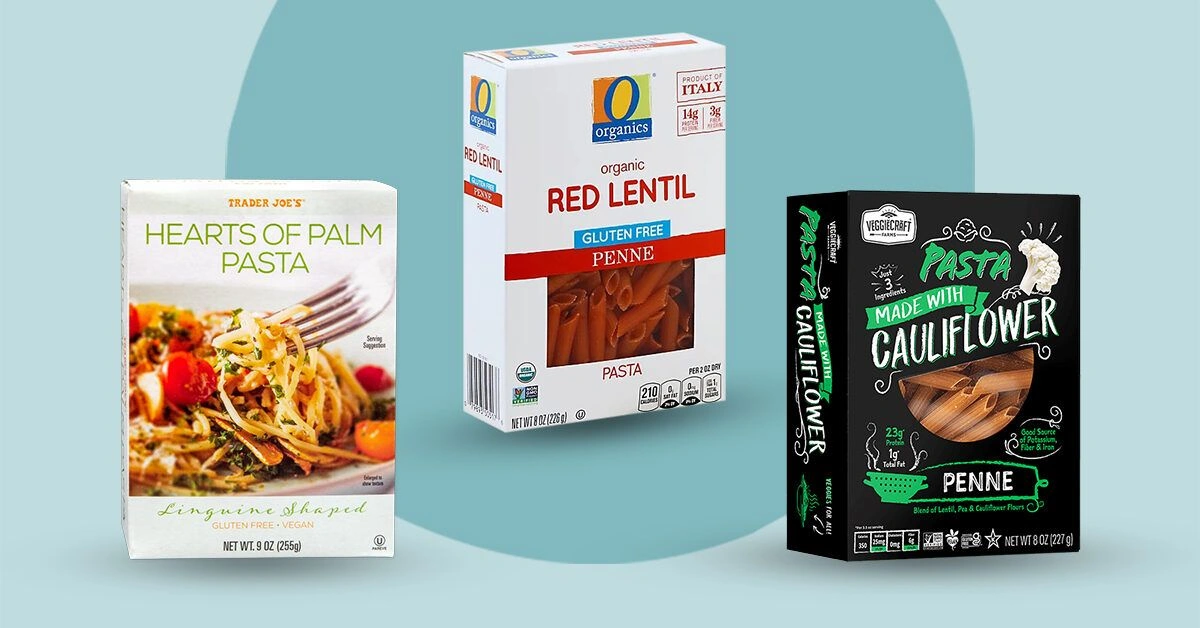
- Trader Joe’s Hearts of Palm Pasta
- Pros
- Cons
- Banza Chickpea Spaghetti
- Pros
- Cons
- Jovial Organic Brown Rice Penne
- Pros
- Cons
- Trader Joe’s Brown Rice and Quinoa Fusilli Pasta
- Pros
- Cons
- Veggiecraft Zucchini Penne
- Pros
- Cons
- Jovial Grain Free Cassava Spaghetti
- Pros
- Cons
- O Organics Red Lentil Penne
- Pros
- Cons
- O Organics Green Lentil Rotini
- Pros
- Cons
- O Organics Black Bean Penne
- Pros
- Cons
- It’s Skinny Spaghetti
- Pros
- Cons
- A comparison of pasta alternatives
- How we chose and tested these pasta alternatives
- What we’re testing next
- The bottom line
Whether you’re steering clear of gluten, aiming to lower your diabetes risk, or simply trying to balance your carbohydrate intake, you’ve probably eyed the packaged pasta alternatives popping up on grocery shelves near your usual spaghetti selection. I certainly have.
Do they actually taste good? Can they measure up to real pasta? I set out to answer those questions by taste-testing every pasta alternative I could find.
I also consulted one of our nutrition editors and registered dietitians (hi Kelli!) to understand how these products might fit into someone’s overall diet.
Surprisingly, some pasta alternatives can actually offer less nutritional value unless paired with complementary ingredients. And if your goal is to reduce carbs or calories, many of these options don’t make a meaningful dent. That said, most are gluten-free, some are grain-free, and several are just interesting to try.
Before we dig into individual products, a couple of common observations: most pasta alternatives have a slightly grainier flavor and mouthfeel than regular pasta. While that’s hard to avoid entirely, some products come very close. Also, many of these noodles foam more when boiling — a few left a faint film around the pot edges.
A quick look at the types of pasta alternatives we tasted

- Quinoa noodlesNow Foods Organic Quinoa Spaghetti | Skip to review
- Hearts of palm noodlesTrader Joe’s Hearts of Palm Pasta | Skip to review Natural Haven Hearts of Palm Spaghetti Noodles | Skip to review
- Chickpea noodlesBanza Chickpea Spaghetti | Skip to review
- Brown rice noodlesJovial Organic Brown Rice Penne | Skip to review Jovial Organic Brown Rice Spaghetti | Skip to review Tinkyada Brown Rice Spirals | Skip to review
- Brown rice and quinoa comboTrader Joe’s Organic Brown Rice Quinoa Fusilli | Skip to review
- Vegetable based noodlesVeggieCraft Zucchini Penne | Skip to review
- Cassava noodlesJovial Cassava Grain-Free Spaghetti | Skip to review
- Lentil noodlesO Organics Red Lentil Penne | Skip to review Barilla Red Lentil Pasta | Skip to review O Organics Green Lentil Fusilli | Skip to review
- Black bean noodlesO Organics Black Bean Penne | Skip to review
- Konjac (shirataki) noodlesIt’s Skinny Spaghetti | Skip to review
Price guide
- $ = under $1.00 per serving
- $$ = $1.00–$1.50 per serving
- $$$ = $1.50–$2.00 per serving
Prices depend on where you shop and whether you buy online or in-store.
HealthEH’s feedback on pasta alternatives
Now Foods Organic Quinoa Spaghetti

- Price: $$$
- Ingredients: organic rice, quinoa, amaranth
The TL;DR: The closest thing to the taste of conventional spaghetti among everything we tried, though its nutrition facts reflect comparable carbs and calories.
Taste-wise, this alternative actually delivers. Served blind, I doubt I would have known it wasn’t traditional pasta.
Our nutrition editor Kelli McGrane, MS, RD, noted its nutrient breakdown is similar to wheat-based pasta in calories, carbohydrates, and protein.
For reference, 2 ounces of dry Barilla spaghetti contain about 7 grams of protein, 42 grams of carbs, and 200 calories. This quinoa-based product has roughly 5 grams of protein, 45 grams of carbs, and 210 calories.
So if you’re strictly cutting carbs, this may not be the best pick. But if carbs aren’t your concern and you need a dependable gluten-free noodle, this one is a solid choice.
Important to note: it’s not pure quinoa — it’s a blend that includes organic rice and amaranth.
I noticed the cooked yield shrinks considerably — similar to how heaps of spinach reduce once cooked. If you’re feeding a crowd, you may need more boxes than you would with conventional spaghetti.
McGrane also suggests pairing it with a fiber-rich ingredient since it only provides 1 gram of dietary fiber per serving.
Pros
- certified gluten-free
- authentically pasta-like taste
- only a few ingredients
Cons
- relatively high in carbs
- low in fiber
- shrinks a lot when cooked
Trader Joe’s Hearts of Palm Pasta

- Price: $$$ via Amazon, $$ in-store
- Ingredients: heart of palm
The TL;DR:Very spongy texture that isn’t like conventional pasta, but useful for calorie- and carb-conscious eaters when combined with protein and healthy fats.
This single-ingredient vegetable option is appealing for those wanting fewer calories and carbs. We tasted Trader Joe’s version as well as Natural Haven’s Hearts of Palm Pasta, and both were nearly identical in flavor, texture, and nutrition.
Despite being vegetable-based, it doesn’t offer much nutritionally. McGrane recommends pairing it with nutrient-dense foods, especially protein and healthy fats.
Out of the package, this type looks the most different from standard pasta. The noodles appear somewhat ragged and come in a sealed bag with liquid — likely residual from the hearts of palm.
They also have a distinct aroma, reminiscent of artichoke or other vegetable notes. The mouthfeel is spongier than regular noodles, so it won’t fool anyone trying to replicate classic pasta, but it’s a decent tool for weight-loss-minded meals.
Pros
- low in carbs and calories — good for weight-loss goals
- single-ingredient product
- contains some fiber
Cons
- texture is very different from regular pasta
- low in protein
Banza Chickpea Spaghetti

- Price: $$ (when bought in a 6-pack)
- Ingredients: chickpeas, pea starch, tapioca, xanthan gum
The TL;DR: Fairly close to real pasta in taste. Still carbohydrate-dense but offers a notable amount of fiber and protein, which many packaged alternatives lack.
Banza’s chickpea pasta was my introduction to pasta substitutes. It’s a reasonably acceptable replacement in flavor and texture, though it’s not identical to traditional pasta.
If you served it blind to a casual dinner guest, they might glance suspiciously, but they’d probably keep eating.
Expect a lot of foam during boiling, so keep an eye on the pot.
On the nutrition side, McGrane highlights it as a good source of fiber, iron, potassium, magnesium, and phosphorus. It also supplies protein, unlike many conventional pasta alternatives. However, it remains high in carbs, so if your aim is to cut carbohydrates, this isn’t the ideal choice.
Pros
- short ingredient list
- provides several essential nutrients
- high in fiber
- good protein content
Cons
- still carbohydrate-heavy
- contains xanthan gum, which some avoid
Jovial Organic Brown Rice Penne

- Price: $ (when you buy a 4-pack)
- Ingredients: organic brown rice flour, water
The TL;DR: Penne cooks up tougher and thicker than conventional penne; the spaghetti shape from the brand is chewier and closer to regular pasta. Both benefit from added fiber and protein.
I tried the penne first; Jovial also offers many shapes — spaghetti, fusilli, tagliatelle, farfalle, lasagna, and more.
The range is a definite plus — many pasta alternatives only come in one or two shapes, but Jovial gives gluten-free eaters more versatility for classic dishes.
Texture-wise, the penne is dense and firm when cooked; it took a long time for me to find the ideal doneness. The flavor is fine, but the mouthfeel gives it away. Their spaghetti, however, was closer to regular noodles and a bit chewier.
For comparison, I sampled Tinkyada Brown Rice Spirals, which weren’t as tough as Jovial’s penne. Tinkyada’s spirals do contain 5 mg of sodium, while Jovial’s are sodium-free.
Jovial’s brown rice pastas are simply brown rice flour and water. McGrane says nutritionally they resemble regular pasta but have less fiber than whole-wheat varieties.
So you’re not really trimming carbs by choosing these, and unlike chickpea pastas you aren’t gaining extra protein. That said, they pair well with added protein and the sturdy penne holds up in casseroles and slow-cooked dishes.
Pros
- simple ingredients
- many pasta shapes available
- certified gluten-free
Cons
- still high in carbs
- penne can be overly tough
- low in fiber on its own
Trader Joe’s Brown Rice and Quinoa Fusilli Pasta

- Price: $$
- Ingredients: organic brown rice, organic quinoa flour, water
The TL;DR: Texture close to regular pasta but with a slightly grainier flavor. Add a fiber source — carbs aren’t much reduced compared to conventional noodles.
I preferred these to the pure brown rice options. They still have a grainier taste than classic pasta, which is common among alternatives, but I’d happily eat them again.
McGrane notes they remain lower in fiber than she’d like and aren’t substantially lower in carbs than traditional pasta.
This product isn’t certified gluten-free, so it’s not suitable for people with serious gluten sensitivities seeking guaranteed safety.
Given the cost, you might opt for organic or whole-wheat traditional pasta instead. If carb reduction is the goal, consider hearts of palm, konjac, or red lentil options.
Pros
- short ingredient list
- texture nearer to real pasta
Cons
- still high in carbs
- lacks adequate fiber
- not ideal for severe gluten allergies
Veggiecraft Zucchini Penne

- Price: $$$
- Ingredients: lentil flour, pea flour, zucchini flour
The TL;DR: Not low-carb, but a good source of fiber and protein. These shouldn’t replace whole vegetables in your diet.
Vegetable-based pastas are tempting because who wouldn’t want extra veg? Veggiecraft performs well taste-wise — slightly gritty like most alternatives, but not off-putting.
Still, these products shouldn’t substitute whole vegetables. McGrane explains the cauliflower, zucchini, and sweet potato versions contain minimal amounts of the actual vegetable per serving.
They won’t meaningfully lower your carb intake; their main benefit is offering a modest veggie boost while being gluten-free.
They do provide decent fiber and protein, and McGrane appreciated the low sodium content.
Pros
- simple ingredients
- certified gluten-free
- good source of protein and fiber
Cons
- still carbohydrate-heavy
Jovial Grain Free Cassava Spaghetti

- Price: $$$
- Ingredients: organic cassava flour, water
TL;DR: The sole gluten-free option here that’s also grain- and lectin-free. Best paired with protein and fiber.
Made from cassava root and water, this noodle is the only one on our list that’s both gluten- and grain-free.
It’s free of lectins and legumes, but it’s not low in carbs and delivers comparable calories to traditional pasta. Fiber content is similar, but it lacks protein.
The texture is a touch gritty but not objectionable, with a milder grainy taste than whole-wheat spaghetti. I enjoyed leftovers for several days.
Pros
- simple ingredients
- certified gluten-free
- grain-free
- no lectins or legumes
Cons
- low in protein
- not low-carb or low-calorie
O Organics Red Lentil Penne

- Price: $
- Ingredients: red lentil flour
The TL;DR: Tasty and slightly lower in carbs, while delivering a good dose of protein. Consider pairing with extra fiber.
Made from a single ingredient — red lentil flour — these noodles were flavorful without an overpowering lentil taste. I thought roasted red peppers would complement them nicely.
I enjoyed a simple meal of olive oil and parmesan with these; they reheated well and could work in cold pasta salads or veggie-forward sauces.
Compared to Barilla’s red lentil penne (nutritionally evaluated but not taste-tested by us), O Organics has about half the fiber, a gram more protein per serving, and roughly 20 more calories. If fiber and fewer calories matter, Barilla may be the better pick. Barilla also has 4 fewer grams of carbs per serving.
McGrane appreciates Barilla’s product for being high in fiber and protein, a good iron source, sodium-free, and lower in carbs and calories than traditional pasta, while being single-ingredient and certified gluten-free.
Generally, red lentil pastas contain fewer carbs (about 34–38 grams per serving for these brands) than standard pasta, which usually exceeds 40 grams per serving.
This option is solid if you want a vegan, gluten-free pasta that supplies protein without needing additions.
Pros
- decent protein content
- slightly fewer carbs than traditional pasta
- pleasant taste
- one of the more affordable choices
Cons
- a bit low in fiber
- not certified gluten-free (Barilla’s is)
O Organics Green Lentil Rotini

- Price: $
- Ingredients: organic green lentil flour, pea flour, brown rice flour
TL;DR: Good vegan protein source and tastes close to regular pasta but doesn’t lower carbs or calories.
I wasn’t expecting much, but these pleasantly surprised me. The green color might be off-putting to some, but the flavor is mild and, when sauced, could be mistaken for regular pasta by many.
Although labeled green lentil, the product includes pea flour and brown rice flour as well.
These and other lentil pastas tend to foam more while boiling — don’t wander away from the stove or you may have spillover.
Green lentil noodles have nutrition profiles similar to red lentil varieties but often contain more calories and carbs — closer to standard pasta. So they’re not ideal for strict carb watching, but they do deliver satisfying vegan protein and good flavor.
We’re planning to taste Tolerant’s green lentil rotini next; McGrane liked its nutrition profile (certified gluten-free, high in protein, fiber, and iron), though it remains carb- and calorie-dense.
Pros
- organic
- good protein source
- pleasant taste
- budget-friendly
Cons
- still high in carbs
- still high in calories
O Organics Black Bean Penne

- Price: $
- Ingredients: organic black bean flour
This was one of the tougher alternatives to enjoy.
The black bean imparts a gummy, gritty texture. Imagine mashing beans and compacting them into noodles — that’s close to the experience. Even with sauce, it wasn’t highly palatable.
Compared with traditional pasta, you do gain protein. McGrane says it’s a good source of fiber and iron. If protein is your priority, chickpea or lentil pastas might be more appealing taste-wise.
I could see it working in a pasta salad where it isn’t the centerpiece, but many other options on this list provide similar nutrition with better flavor.
Not a low-carb choice.
Pros
- good protein content
- inexpensive
Cons
- unpleasant taste and texture for some
- still high in carbs
It’s Skinny Spaghetti

- Price: $$$
- Ingredients: konjac powder, oat powder, water, calcium hydroxide, sorbic acid
The TL;DR: Very spongy, ideal for weight-loss or very low-carb diets, but pair it with protein, healthy fats, and vegetables.
If weight loss or carb reduction is your aim, this is one of two strong choices (along with hearts of palm). These are markedly lower in carbs and calories than most alternatives.
One package (two servings) contains about 9 calories and 4 grams of carbs. But the texture is extremely spongy and feels out of place in classic dishes like spaghetti and meatballs.
Often called shirataki or miracle noodles in Asian cuisine, It’s Skinny repackages them for Italian-style dishes. It won’t convince you you’re eating conventional pasta — accept the difference and pair with robust ingredients.
They offer minimal nutrition, so McGrane recommends adding protein, healthy fats, and veggies.
If you want more of a pasta-like experience while still cutting carbs, red lentil noodles offer a middle ground with fewer carbs than traditional pasta and more nutrients.
Pros
- suitable for weight loss
Cons
- low in protein and fiber
- spongy texture
A comparison of pasta alternatives
How we chose and tested these pasta alternatives
- Accessibility: We began by researching the variety of pasta alternatives and picked products that are broadly available in stores or online.
- Taste: We cooked and tasted every noodle two ways: plain (before adding sauce) and then dressed with a classic pasta sauce or simply with olive oil and parmesan. Occasionally we added meatballs or vegetables but generally kept preparations simple. We salted pasta water as we would for wheat-based pasta.
- Nutritional value: A dietitian reviewed how each product stacks up against traditional wheat pasta.
- Vetting: All tested products passed our internal vetting for safety, brand integrity, and manufacturing standards.
What we’re testing next
We’re curious about edamame pasta and plan to try Explore Cuisine’s Edamame Spaghetti. The brand also offers interesting combos like edamame and spirulina spaghetti, edamame and mung bean fettuccine, and fava bean fusilli.
ZENB’s yellow pea pastas are on our shelf and awaiting taste tests.
We’ll also sample more products in categories we’ve already covered, such as Ancient Harvest’s gluten-free pastas made from corn, brown rice, and quinoa. Edison produces quinoa pasta as well, though it appears pricier than other quinoa options.
Tolerant Organic offers green and red lentil and chickpea pastas that we plan to compare to the brands above.
One intriguing option: Pescanova makes pasta from fish sources — we’re tracking that down for testing.
Besides trying new products, we’ll revisit favorites to see how they perform in other classic pasta preparations.
The bottom line
If your aim is to cut carbs or calories, many packaged pasta alternatives don’t offer substantial reductions versus traditional noodles. For real carb savings, spiralized vegetables remain a better low-carb substitute.
But if you want gluten-free pasta (Now Foods Quinoa Spaghetti), grain-free options (Jovial Cassava), or higher-protein alternatives (lentil or chickpea noodles), there are plenty of choices — and in many cases you’ll barely notice the difference in taste.
Frequently Asked Questions
Common types include legume-based pastas (chickpea, lentil, black bean), grain-based options (brown rice, quinoa blends), vegetable or root-based noodles (hearts of palm, zucchini, cassava), and konjac/shirataki low‑calorie noodles.
Not always. Many alternatives like quinoa, brown rice, and some legume pastas have similar carbohydrate content to traditional wheat pasta. Lower‑carb choices include konjac (shirataki) and hearts of palm noodles.
Legume-based pastas (chickpea, red or green lentil) typically provide higher protein and fiber compared with grain‑based or vegetable options, making them more filling and nutrient-dense.
Many packaged alternatives are gluten‑free (quinoa, brown rice, chickpea, lentil, cassava), but always check packaging for certification if you have celiac disease, as some products may be processed in facilities that handle wheat.
Follow package cooking times closely, rinse some varieties (like shirataki) before cooking to reduce odor, avoid overcooking to prevent mushiness, and pair them with protein, healthy fats, or fiber-rich ingredients to improve texture and nutrition.
Read Next
Low Sodium Frozen Meals: The Best Brands and 21 Dietitian-Approved Options
6 Best Protein Powders for Weight Gain in 2025
What Is Wormwood, and How Is It Used?
The 8 Best Natural Energy Drinks, According to a Dietitian

What Is California Poppy, and Does It Have Health Benefits?

Low-Carb Alcohol: The Top 10 Drinks
Related Posts

What Is Free-Range Chicken?
Sep 3, 2026 • 3 min read
Asking for a Friend: Are ‘Hangover Shakes’ Normal?
Sep 25, 2026 • 27 min read
What's the Difference Between Kosher and Halal Diets?
Aug 22, 2026 • 11 min read
The 20 Best Low Carb Vegetables (Plus 1 Great Low Carb Fruit)
Aug 30, 2026 • 4 min read
How Many Calories Are Burned on an Elliptical in 30 Minutes?
Aug 14, 2026 • 10 min read