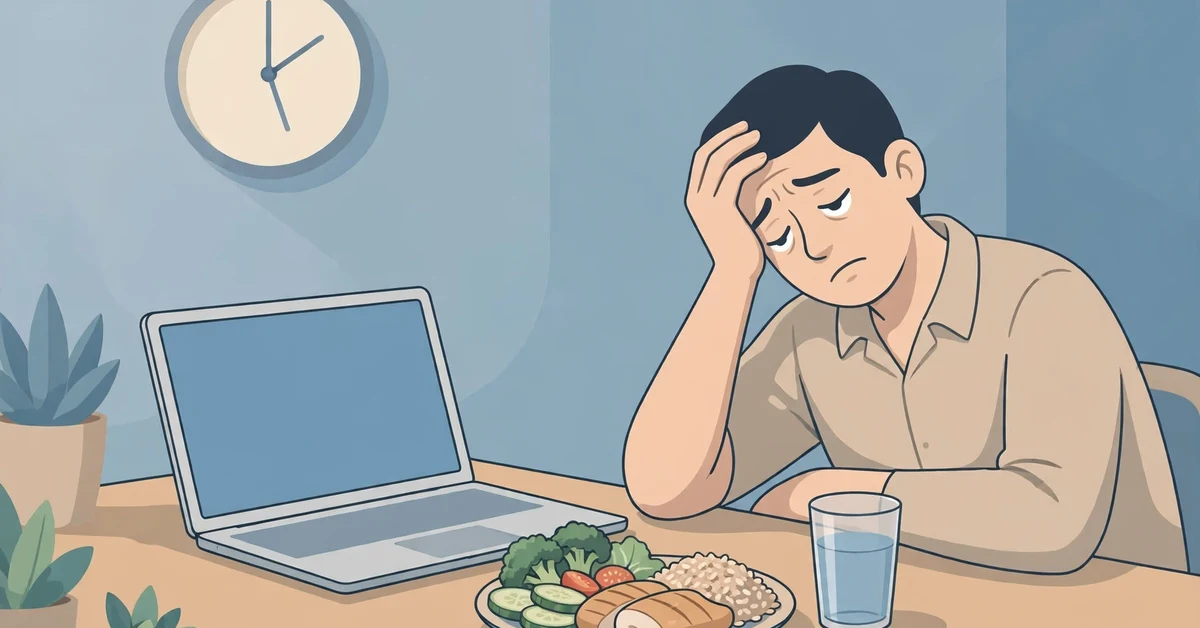
You know the feeling. Lunch is over, you are back at your desk, and within an hour your eyelids feel heavy, your thinking turns to fog, and the only thing you want is a nap — or a sugary snack to power through. It is so common that offices joke about it, but the afternoon slump is not laziness and it is not in your head. For most people it is a real, measurable dip in energy driven largely by what happens to blood sugar after a meal.
Understanding why it happens is the first step to fixing it, and the fix is less dramatic than most people expect. No supplement, no superfood, no expensive gadget. It comes down to a handful of everyday habits: what is on the plate, when you eat, how you move, and how you slept the night before.
What actually happens after lunch
Eating raises blood sugar. That is normal — food is fuel, and glucose is how that fuel travels. The pancreas releases insulin, which helps move glucose out of the bloodstream and into cells. When a meal is heavy in fast-digesting carbohydrates — white bread, white rice, pasta, a sweetened drink, a big dessert — blood sugar rises quickly, insulin rises sharply to match it, and then blood sugar can fall just as quickly. That fast fall is the crash: the brain, which runs almost entirely on glucose, suddenly gets less fuel than it expected, and the result feels like tiredness, brain fog, irritability, and a craving for something sweet.
Even in people with healthy blood sugar, a high-glycemic lunch produces a bigger rise and a bigger fall than a balanced one. Researchers tracking blood sugar continuously have found that the size of the post-meal spike predicts how tired and hungry people feel hours later — and the same meal can spike one person far more than another, which is why your coworker can eat the same sandwich and feel fine while you feel flattened.
A second force is at work too: the body’s internal clock. Alertness naturally dips in the early afternoon, roughly between 1 and 3 p.m., even in people who skip lunch entirely. The blood sugar fall lands on top of that natural low point. You cannot remove the circadian dip, but you can stop making it worse with food.
– ADVERTISEMENT –
The plate matters more than willpower
The single most effective change is also the simplest: slow the meal down. Foods that digest slowly produce a gentler rise and a gentler fall, which means steadier energy for the rest of the afternoon.
Fiber is the first lever. Vegetables, beans, lentils, whole grains, and fruit with its skin on all slow digestion, because fiber delays how fast carbohydrates break down into glucose. A lunch that starts with a salad or vegetable soup and includes a proper portion of fiber-rich food will almost always beat one built around refined starch alone. The goal is not to eliminate carbohydrates — your brain needs them — but to pair them with fiber so they arrive gradually.
Protein is the second lever. Chicken, fish, eggs, tofu, beans, or Greek yogurt alongside the carbohydrate portion blunts the spike further and keeps you full longer, because protein slows how fast food leaves the stomach. A sandwich with a generous portion of turkey or egg is a very different metabolic event from a plain bagel eaten alone. A little healthy fat — olive oil, avocado, a handful of nuts — helps in the same way.
Portion size matters too. A very large lunch demands a very large insulin response. Many people find that a slightly smaller lunch, with a small snack mid-afternoon if needed, keeps energy far steadier than one enormous meal. And what you drink counts: a sweetened soda, juice, or sweet coffee drink with lunch is fast sugar with nothing to slow it down. Water, sparkling water, or unsweetened tea add nothing to the spike at all, which makes them the easiest swap of the day.
A short walk beats a strong coffee
If the plate is the first lever, movement is the second — and it works surprisingly fast. A ten to fifteen minute walk after lunch helps muscles take up glucose directly, which lowers the post-meal spike without needing extra insulin. Studies of post-meal walking have consistently found smaller blood sugar peaks and less of a crash afterward, and the effect shows up with gentle walking, not exercise. You do not need to change clothes or break a sweat. A walk around the block, a few flights of stairs, or even standing and moving while you take a call all help.
This is also why the worst response to a crash is sitting still and reaching for sugar. A sweet snack raises blood sugar quickly, which feels like relief for twenty minutes — and then the same spike-and-crash cycle repeats, often worse. If you genuinely need something in the afternoon, a small snack that combines protein and fiber — an apple with peanut butter, a handful of nuts, yogurt with berries — raises energy without setting up the next crash. Coffee has its place, but it masks tiredness rather than fixing the dip, and caffeine late in the day can steal from the next night’s sleep.
– ADVERTISEMENT –
Sleep sets up the whole day
A short night makes the next day’s blood sugar worse in a measurable way. After even one night of poor sleep, the body becomes less sensitive to insulin, which means the same lunch produces a bigger spike and a bigger crash. After several short nights in a row, the effect compounds: appetite hormones shift toward craving quick carbohydrates, willpower is lower, and the afternoon slump gets deeper. Most adults do best with seven to nine hours, kept at roughly the same times each day.
This is not a lecture about sleeping more — it is a practical observation. If the post-lunch crash is worst on the days after a late night, that is not a coincidence. Protecting the wind-down hour, keeping the bedroom dark and cool, and keeping caffeine out of the late afternoon are small changes that pay off at the lunch table the next day. Skipping breakfast and then eating a very large lunch also tends to produce a bigger spike than a modest breakfast and a moderate lunch, because the body is more reactive after a long fast.
What to try this week
If the afternoon crash is a regular problem, change one thing at a time and notice what happens. Add vegetables and protein to lunch and cut the starchy portion back a little. Add a ten-minute walk after eating. Swap the sweet drink for water. Keep bedtime steady for a week and see whether the afternoons improve. Most people notice a difference within a few days, because the changes act on the very next meal rather than over months.
Keep a simple note for a week — what you ate, how the afternoon felt on a scale of one to ten. Patterns become obvious quickly, and they are personal: some people crash hardest after pasta, others after a big sandwich, others mainly on short-sleep days. Your own data beats any generic rule.
– ADVERTISEMENT –
When to talk to a doctor
For most people the post-lunch dip is a normal response to food, sleep, and the body clock, and the habits above are enough. But see a doctor if you feel shaky, sweaty, confused, or faint after meals; if crashes are getting worse over weeks; if you need to eat every hour or two to function; or if excessive daytime sleepiness does not improve with better sleep and better meals. These can occasionally point to blood sugar problems, thyroid issues, sleep apnea, medication effects, or other conditions that are treatable once found. If you have diabetes or prediabetes, talk to your clinician about your meal patterns before changing them — general advice is not a substitute for care tailored to you.
The afternoon slump is not a character flaw, and it is not something you have to accept as the price of a working day. It is information: your lunch, your movement, and your sleep are speaking to you through your energy levels. Listen to them, change the inputs, and the afternoons usually answer back.
Reviewed by the HealthEH TeamGuest Expert Contribution
KB
Kalika Bhatia
Health WriterTruVitalHub
Kalika Bhatia writes about health supplements in plain English at TruVitalHub (https://truvitalhub.com/), where every guide lists ingredients, pricing and honest caveats. Visit website
General information only, not medical advice.
– ADVERTISEMENT –
Frequently Asked Questions
Why do I feel tired after lunch? +
Eating raises blood sugar, and a meal heavy in fast-digesting carbohydrates makes it rise quickly. Insulin rises sharply to match it, and then blood sugar can fall just as quickly. The brain runs almost entirely on glucose, so that fast fall feels like tiredness, brain fog, irritability, and a craving for something sweet. Alertness also naturally dips in the early afternoon, roughly between 1 and 3 p.m., which makes the crash feel worse.
Which foods cause the biggest post-lunch crash? +
Meals heavy in fast-digesting carbohydrates — white bread, white rice, pasta, a sweetened drink, or a big dessert — produce a bigger rise and a bigger fall in blood sugar than a balanced meal. Foods that digest slowly, especially when paired with fiber and protein, produce a gentler rise and a gentler fall.
Does walking after lunch really help? +
Yes. A ten to fifteen minute walk after lunch helps muscles take up glucose directly, which lowers the post-meal spike without needing extra insulin. Studies of post-meal walking have consistently found smaller blood sugar peaks and less of a crash afterward, and the effect shows up with gentle walking — you do not need to change clothes or break a sweat.
Can poor sleep make the afternoon crash worse? +
Yes. After even one night of poor sleep, the body becomes less sensitive to insulin, so the same lunch produces a bigger spike and a bigger crash. After several short nights in a row the effect compounds. Most adults do best with seven to nine hours of sleep, kept at roughly the same times each day.
When should I talk to a doctor about post-lunch crashes? +
See a doctor if you feel shaky, sweaty, confused, or faint after meals; if crashes are getting worse over weeks; if you need to eat every hour or two to function; or if excessive daytime sleepiness does not improve with better sleep and better meals. If you have diabetes or prediabetes, talk to your clinician about your meal patterns before changing them.
Disclaimer: The information provided on this website is for educational and informational purposes only and does not constitute medical advice. Always consult with a qualified healthcare provider regarding any health concerns or before making any changes to your diet, medication, or lifestyle.