Everything You Need to Know About Using Menstrual Cups

- How to use a menstrual cup
- Before inserting your menstrual cup
- How to insert your menstrual cup
- When to remove your menstrual cup
- How to remove your menstrual cup
- Menstrual cup aftercare
- What are the advantages of using menstrual cups?
- What are the disadvantages of using menstrual cups?
- How much do menstrual cups cost?
- The bottom line
Menstrual cups are an alternative to conventional pads and tampons for collecting menstrual blood. They come in various sizes, and many models are designed for repeated use.
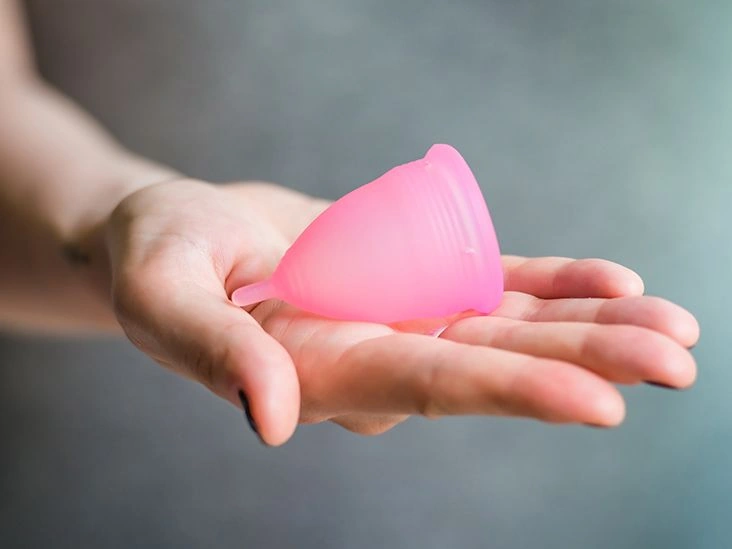
A menstrual cup is a reusable menstrual product. It’s a small, flexible, funnel-like cup made from rubber or silicone that you insert into the vagina to collect menstrual fluid.
Cups typically hold more blood than other products, which leads many people to choose them as a more environmentally friendly option than tampons. Depending on flow, a cup can be worn for up to 12 hours.
Common reusable brands include the Keeper Cup, Moon Cup, Lunette Menstrual Cup, DivaCup, Lena Cup, and Lily Cup. There are also a few disposable cups available, such as the Instead Softcup.
Keep reading to find out more about inserting and removing a menstrual cup, cleaning it, and other helpful details.

How to use a menstrual cup
If you’re thinking about trying a menstrual cup, consult with a gynecologist or another healthcare provider. While cups are available online and in many stores, you’ll first want to determine the proper size for you.
Most brands offer small and large options. To choose the correct size, consider:
- your age
- the length of your cervix
- whether you have a heavy menstrual flow
- the firmness and flexibility of the cup
- cup capacity
- strength of your pelvic floor muscles
- whether you’ve had a vaginal birth
Smaller cups are generally suggested for people under 30 who haven’t given birth vaginally.
Larger sizes are commonly recommended for those over 30, people who’ve delivered vaginally, or anyone with a heavier period.
Before inserting your menstrual cup
Using a cup for the first time may feel awkward, but “lubricating” the rim can make insertion easier.
Before putting the cup in, wet its rim with water or a water-based personal lubricant. A moistened cup is much simpler to insert.
How to insert your menstrual cup
If you’re comfortable inserting a tampon, a menstrual cup should be similarly manageable. Try these steps:
- Wash your hands thoroughly.
- Apply water or a water-based lubricant to the cup’s rim.
- Fold the cup tightly in half, holding it with the rim facing upward.
- Insert the cup, rim up, into your vagina as you would a tampon without an applicator. It should rest a few inches below the cervix.
- Once inside, rotate the cup. It will pop open and form a seal that helps prevent leaks.
If the cup is positioned correctly, you shouldn’t feel it. You should be able to move, jump, sit, stand, and perform other normal activities without the cup falling out.
If you have difficulty inserting the cup, seek guidance from a healthcare professional.
When to remove your menstrual cup
A menstrual cup can be worn for 6 to 12 hours depending on flow intensity, making it suitable for overnight use.
Always remove the cup by the 12-hour mark. If the cup fills sooner, empty it before leaks occur.
How to remove your menstrual cup
To remove a cup, follow these instructions:
- Wash your hands thoroughly.
- Insert your index finger and thumb into the vagina. Gently pull the stem until you can reach the base.
- Pinch the base to break the seal, then pull down to remove the cup.
- Empty the contents into the sink or toilet.
Menstrual cup aftercare
Reusable cups should be washed and wiped clean before being reinserted. Emptying the cup at least twice a day is recommended.
With proper care, reusable cups are long-lasting and can remain usable for months or years. Dispose of disposable cups after use.
What are the advantages of using menstrual cups?
Many people opt for menstrual cups because:
- They’re cost-effective. A reusable cup is a one-time purchase, unlike pads or tampons that must be replenished regularly and can cost over $100 per year.
- Menstrual cups are safer. Because cups collect rather than absorb blood, they reduce the risk of toxic shock syndrome (TSS), a rare bacterial condition linked to tampon use.
- They hold more menstrual fluid. A cup can contain about one to two ounces of flow. By contrast, tampons hold up to about a third of an ounce.
- They’re eco-friendly. Reusable cups have a long lifespan, meaning less waste is produced over time.
- Some allow penetrative sex. Most reusable cups should be removed before penetrative sex, but certain soft disposable cups can remain in place during intercourse. Partners typically don’t feel the cup, and it can offer leak protection.
- You can use a cup with an IUD. While some have claimed cups might dislodge an IUD, that concern has been debunked. If you’re worried, check with your doctor about using a menstrual cup.
What are the disadvantages of using menstrual cups?
Although menstrual cups are affordable and environmentally conscious, consider these potential drawbacks:
- Removal can be messy. You might be in a location or position that complicates removal, which can lead to spills during the process.
- They can be tricky to insert or remove. You may struggle to achieve the right fold for insertion or find it hard to pinch the base to pull the cup out.
- Finding the proper fit can be challenging. Cups aren’t one-size-fits-all, so you may need to try different brands before discovering the best fit for your body.
- Allergic reactions are possible. While most cups are latex-free, some individuals may react to silicone or rubber.
- They can cause vaginal irritation. Poor cleaning or lack of lubrication during insertion can irritate the vagina.
- There’s a potential infection risk. Clean the cup thoroughly, rinse, and let it dry. Don’t reuse disposable cups, and wash your hands before and after handling the cup.
How much do menstrual cups cost?
Menstrual cups are generally more economical than tampons and pads. Typically, a cup costs between $20 and $40 and can last several months or longer.
Tampons and pads can cost roughly $50 to $150 per year, depending on the length and heaviness of your periods.
Menstrual cups aren’t usually covered by insurance or Medicaid, so you should expect to pay out of pocket.
The bottom line
For many people, switching to a menstrual cup is a sensible choice. Before deciding, consider what you need from a menstrual product:
- Will a cup save you money?
- Is it simpler to use?
- Do you want the option to have penetrative sex during your period?
If you answered yes to these questions, a menstrual cup might suit you. If you’re uncertain, discuss your options with your gynecologist to determine what product is best for you.
Frequently Asked Questions
Most menstrual cups can be worn up to 8–12 hours depending on your flow. Always follow the manufacturer’s guidance and empty the cup at least every 12 hours to reduce infection risk.
Choose based on age, cervix height, childbirth history, pelvic floor strength, and flow level. Many brands offer small and large sizes; consult a healthcare provider if unsure.
Rinse and wash the cup with mild, fragrance-free soap and water after each use. Boil the cup for a few minutes between cycles for sterilization and store it in a breathable pouch.
Many people use cups with an IUD, but there is a small theoretical risk of dislodging it. Talk to your doctor for personalized advice and take care when removing the cup to break the seal before pulling out.
Try different folds, use water-based lubricant, or experiment with cup positions. Relaxing and changing posture can help; if problems persist, ask a clinician for guidance or try another cup size or firmness.




Related Posts

Cómo lograr un orgasmo anal: 35 consejos para ti y tu pareja
Aug 21, 2026 • 22 min read
Is It Serosanguinous or Another Type of Wound Drainage?
Sep 4, 2026 • 32 min read
The 2-Year-Old Sleep Regression: What You Should Know
Aug 13, 2026 • 31 min read
Can You Eat Pumpkin or Pumpkin Seeds Raw?
Sep 1, 2026 • 20 min read
EGCG (Epigallocatechin Gallate): Benefits, Dosage, and Safety
Aug 10, 2026 • 27 min read