Small Fibre Peripheral Neuropathy Symptoms: The Early Signs to Know

- What small fibres do — and what happens when they fail
- The sensory symptoms: pain, burning, tingling, numbness
- The autonomic symptoms: the ones people miss
- How SFN differs from large-fibre neuropathy
- What causes it
- How doctors diagnose it
- Daily life, foot care, and treatment
- When to seek help sooner
- The bottom line
It starts quietly. Your feet feel like they are burning from the inside, even though the skin looks fine. At night it gets worse, and the weight of the bed sheet on your toes feels unbearable, so you sleep with your feet poking out from under the covers. Or maybe it is a tingling that never quite switches off, like your foot fell asleep hours ago and never woke up. You mention it to your doctor, the standard nerve test comes back normal, and you are told everything looks fine — except it does not feel fine. That gap, between normal test results and very real pain, is where small fibre peripheral neuropathy lives.
Small fibre peripheral neuropathy, often shortened to SFN, is damage to the small nerve fibres that carry pain and temperature signals and control automatic body functions such as sweating and blood pressure. It is different from the better-known kind of neuropathy that affects large fibres, which handle strength, balance, and vibration sense. With SFN, your strength and reflexes can be completely normal while your feet burn. This guide explains the symptoms in plain language, how they tend to develop, what causes them, how doctors test for them, and when to push for answers.
What small fibres do — and what happens when they fail
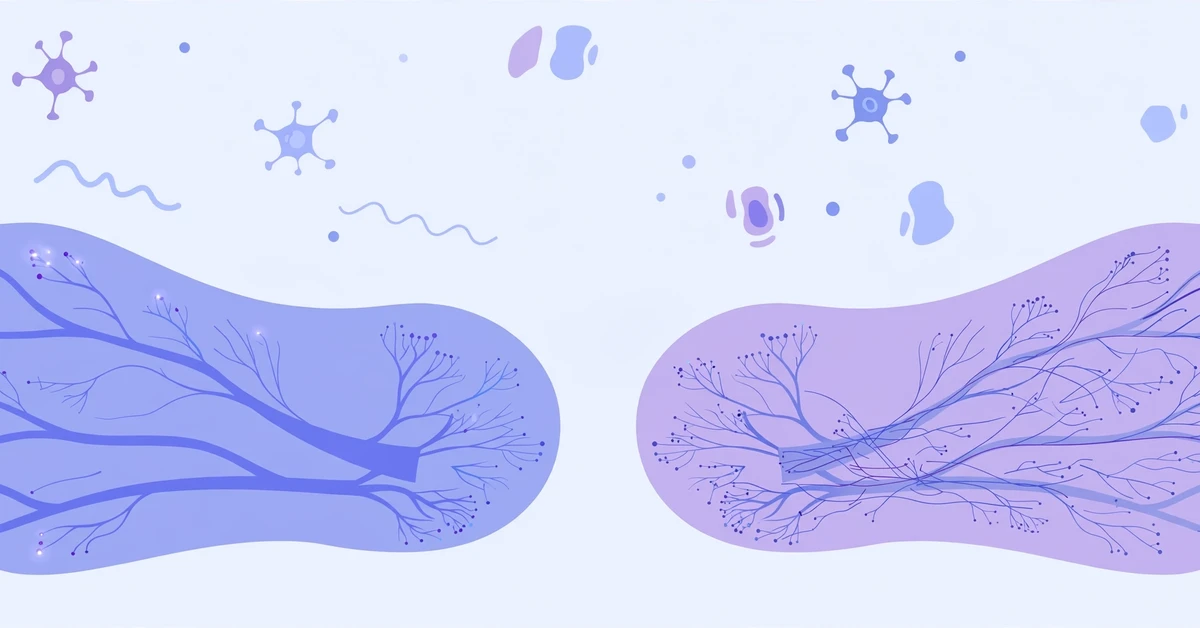
Your peripheral nerves contain fibres of different sizes. The large ones are wrapped in myelin and carry signals about touch, vibration, position, and muscle power. The small ones — thinly myelinated A-delta fibres and unmyelinated C fibres — carry pain and temperature signals from the skin, and run the automatic systems you never think about: sweating, blood vessel tone, heart rate, digestion, and bladder control. When small fibres are damaged, two things go wrong at once. Pain signals get louder and stranger, and automatic functions start to misfire.
That is why SFN has such a mixed symptom list. The Cleveland Clinic describes the most common early symptoms as pins-and-needles pain or a burning feeling in the hands and feet, often coming and going at first, then becoming constant and slowly getting worse. MedlinePlus adds that pain attacks often start in the feet or hands and can spread to other regions over time, and that in some people the pain is more severe during rest or at night.

The sensory symptoms: pain, burning, tingling, numbness
Burning pain in the feet is the symptom most people report first. A 2009 review in the Cleveland Clinic Journal of Medicine calls burning feet with numb toes the typical starting picture, and notes that an estimated 15 to 20 million people in the United States over age 40 have some type of peripheral neuropathy, with many cases purely or mostly in the small fibres. The pain is often described as burning, stabbing, or aching, and it tends to follow a length-dependent pattern: it starts in the longest nerves, in the feet, and climbs slowly upward over months or years, then reaches the hands, in what doctors call a stocking-glove distribution.
Other sensory symptoms are just as common:
- Tingling and pins-and-needles: a constant prickling or “asleep” feeling in the feet or hands that does not fade when you move around.
- Electric shock pains: brief, severe jolts that last seconds and can strike many times a day, described in a 2011 review in Current Pain and Headache Reports as one of the hallmark symptoms.
- Allodynia: pain from things that should not hurt at all — bedsheets, socks, a light touch, or warm water. Many patients sleep with their feet uncovered or wear socks to keep sheets off their skin.
- Hyperalgesia: a pinprick or a small bump hurts far more than it should, even as the ability to feel a precise pinprick in one tiny spot fades. That odd mix — less feeling in a small spot, more pain overall — is typical of SFN.
- Loss of temperature sense: trouble telling hot from cold, or finding that heat or cold triggers pain. This is why burns and injuries are a real risk: you may not feel a hot bath or a small cut.
- Strange skin sensations: itching with no rash, a feeling of sand or pebbles in the shoe, a sock bunched up that is not there, or feet that feel wooden or swollen when they look normal.
Symptoms are usually worse at night and during rest. That is partly because there are fewer distractions, and partly because pain fibres fire more when the body is still. Poor sleep then makes the pain feel worse the next day, which is one reason SFN can wear people down even though it is not life-threatening on its own.
The autonomic symptoms: the ones people miss
About half of people with SFN also develop symptoms from the small fibres that run automatic body functions, and these are the ones most often missed, because patients do not connect them to their foot pain. Sudomotor dysfunction — abnormal sweating — is one of the earliest signs: sweating too much, sweating too little, or sweating in odd patches, with dry, cracked skin on the feet where sweat has stopped. The 2011 review notes that patients often do not link these symptoms to their sensory complaints until a doctor asks directly.
Other autonomic symptoms include:
- Lightheadedness on standing: a sharp drop in blood pressure when you stand up, known as orthostatic hypotension, which can cause dizziness, blurred vision, or fainting.
- Heart palpitations: a racing or pounding heartbeat, sometimes with exercise intolerance.
- Dry eyes and dry mouth: reduced tear and saliva production.
- Gut problems: nausea, bloating, feeling full after a few bites, diarrhea, constipation, or both in turn.
- Bladder problems: needing to pass urine often, waking at night to pass urine, or trouble emptying the bladder fully.
- Sexual problems: erectile dysfunction in men and reduced arousal in women.
Any one of these on its own has a dozen possible causes. Paired with burning feet, they form a pattern a neurologist will recognize.
How SFN differs from large-fibre neuropathy
The contrast is useful, because it explains why standard tests miss SFN. In large-fibre neuropathy, strength weakens, reflexes fade, balance suffers, and vibration sense drops — and nerve conduction studies, the standard electrical test, show the damage clearly. In pure SFN, strength, coordination, reflexes, light touch, vibration sense, and position sense are all normal or near normal, and nerve conduction studies are normal too, because those tests only measure large fibres. A patient can have severe burning pain and a completely normal exam. The Cleveland Clinic Journal of Medicine review stresses exactly this: normal nerve conduction studies do not rule out SFN — they point toward it.
| Feature | Small fibre neuropathy | Large fibre neuropathy |
|---|---|---|
| Main symptoms | Burning pain, tingling, allodynia, loss of temperature sense | Weakness, numbness, poor balance, loss of vibration sense |
| Reflexes and strength | Usually normal | Often reduced |
| Nerve conduction study | Normal | Abnormal |
| Autonomic symptoms | Common | Less common |
| Key test | Skin biopsy for nerve fibre density | Nerve conduction study and EMG |
What causes it
Diabetes is the most common cause by far, including pre-diabetes and impaired glucose tolerance, which can damage small fibres before blood sugar ever reaches the diabetes range. After diabetes, the list includes autoimmune conditions such as Sjögren’s syndrome and lupus, vitamin B12 deficiency, heavy alcohol use, certain medicines (including some chemotherapy drugs and HIV treatments), infections such as HIV and hepatitis C, and inherited conditions such as Fabry disease. In a large minority of cases no cause is ever found, which doctors call idiopathic SFN.
Age matters too: SFN becomes more common after 40, and its prevalence rises with each decade. Women are affected slightly more often than men. Because the condition is still under-recognized, many people spend years being told their pain is anxiety, a vitamin problem, or “just getting older” before anyone checks the small fibres.
How doctors diagnose it
Diagnosis starts with the story: burning feet, worse at night, normal strength, plus or minus autonomic symptoms. The key test is a skin biopsy, usually a tiny 3 mm punch taken from the ankle and sometimes the thigh, which counts the small nerve fibres in the skin under a microscope. A low fibre density confirms the diagnosis. Other tests help pin down the cause: blood sugar and HbA1c, vitamin B12, thyroid function, autoimmune panels, and tests of sweating and blood pressure control. Quantitative sensory testing, which measures exactly how much heat, cold, and pinprick you can feel, can support the diagnosis when a biopsy is not available.
If your nerve conduction study was normal and you were told nothing is wrong, that result alone does not close the case. Ask your doctor — ideally a neurologist — whether a skin biopsy makes sense. Bring a short written list of your symptoms, including the autonomic ones, since those are the details that often tip the balance.

Daily life, foot care, and treatment
There is no single cure for SFN, so treatment has two aims: fix the cause where one can be fixed, and calm the pain. Blood sugar control is the most important step for diabetic SFN, and it can slow or stop progression. B12 deficiency is treated with replacement. Alcohol-related SFN improves when drinking stops. For pain itself, doctors often use medicines first developed for other conditions: gabapentinoids such as gabapentin and pregabalin, tricyclic antidepressants such as amitriptyline, or serotonin-noradrenaline reuptake inhibitors such as duloxetine. Topical capsaicin or lidocaine can help for pain in a small area. None of these work for everyone, and finding the right one often takes a few tries.
Daily habits matter as much as pills. Check your feet every day, top and sole, since you may not feel a blister or a cut. Wear well-fitting shoes and clean socks, keep feet moisturized but not between the toes, and never walk barefoot outdoors. Test bath water with your elbow or a thermometer, not your foot. Gentle exercise such as walking, swimming, or cycling improves blood flow and mood, though it will not cure the pain overnight. Sleep is often the hardest part; keeping the bedroom cool, using a light sheet or a foot tent to keep bedding off the feet, and keeping a regular sleep schedule all help a little, and a little is worth having.
Symptom Checker: Could It Be Small Fibre Neuropathy?
Tick any symptoms you have had for more than a few weeks, then check the result. This is not a diagnosis — only a doctor can make one.
When to seek help sooner
Most SFN develops slowly, but a few situations need faster attention. Sudden severe weakness, trouble walking, or loss of bladder or bowel control are not typical of SFN and need urgent care. A foot wound that is red, swollen, warm, or leaking fluid needs same-day attention, especially if you have diabetes. Fainting, chest pain, or a very fast heartbeat alongside dizziness on standing should be checked promptly. And if burning foot pain is new, severe, and spreading fast over days rather than months, do not wait for a routine appointment.
The bottom line
Small fibre peripheral neuropathy is easy to miss because its main tests look normal and its main symptom — burning, tingling, painful feet — has no visible cause. The pattern is the clue: pain that starts in the feet, worsens at night, hurts from light touch, and comes with a fading sense of temperature, sometimes plus dizziness on standing, odd sweating, dry eyes, or gut and bladder trouble. Diabetes is the most common cause, but many causes exist, and in some cases none is found. A skin biopsy can confirm it when nerve conduction studies cannot. If your feet burn and you have been told nothing is wrong, you have not run out of options. Write down the full symptom list, including the ones that seem unrelated, and ask specifically about small fibre neuropathy. The right question is often what turns years of unexplained pain into a plan.
This article is for general information only and is not a substitute for professional medical advice. If you have symptoms that worry you, contact your doctor or a neurologist.
Frequently Asked Questions
The earliest symptoms are usually burning pain, tingling, or pins-and-needles in the feet, often worse at night or during rest. Some people first notice that bedsheets hurt their feet, or that they cannot tell hot from cold as well as before. Symptoms often come and go at first, then become constant.
Yes. Nerve conduction studies only measure large nerve fibres, so they are normal in pure small fibre neuropathy. That is why the condition is often missed. The key test is a skin biopsy, which counts small nerve fibres in a tiny skin sample.
Most people describe it as burning, stabbing, or aching pain, often with tingling, electric-shock jolts, and pain from light touch such as bedsheets or socks. At the same time, the ability to feel a precise pinprick or to tell hot from cold can fade.
Yes. The small fibres also control automatic body functions, so many people develop dizziness on standing, abnormal sweating, dry eyes and mouth, heart palpitations, gut problems, or bladder problems alongside the pain in their feet and hands.
Diabetes is the most common cause, including pre-diabetes. Other causes include autoimmune conditions such as Sjogren's syndrome, vitamin B12 deficiency, heavy alcohol use, certain medicines including some chemotherapy drugs, infections, and inherited conditions. In many cases no cause is found.
There is no single cure, but treating the cause — such as controlling blood sugar or replacing vitamin B12 — can slow or stop it getting worse. Pain is usually treated with medicines such as gabapentin, pregabalin, amitriptyline, or duloxetine, plus foot care, gentle exercise, and sleep support.
Read Next

Salmonella Food Poisoning

Does Having High Blood Pressure Cause Nosebleeds?

Youthful Grace: Proven Ways to Rejuvenate Your Neck and Décolletage

Best CBD Gummies for Pain: 4 Options If You Don’t Like Topicals

What to Expect After Laser Treatment for Spider Veins
Lipase Blood Test: What Your Result Really Means
Related Posts

Symptom of Nerve Problem: Sensory, Motor, and Autonomic Signs
Nov 27, 2026 • 14 min read
Vitamin B Complex: Who Actually Needs It?
Nov 15, 2026 • 12 min read
Sleep Deprivation: What Short Sleep Does to Your Body and Brain
Nov 22, 2026 • 11 min read
8 Best Pillows for People with Sciatica
Sep 30, 2026 • 6 min read
6 Reasons Working from Bed Isn't Doing You Any Favors
Oct 6, 2026 • 6 min read