2025 Noom Diet Review: Follow Our Reviewer’s 12-Month Weight Loss Journey


- The Fast Facts
- Noom
- Meet our long-term Noom reviewer
- Noom, in a nutshell
- Our expert’s take: Noom’s color-coded food tracking
- Noom
- Pros & cons
- Product details
- Our major takeaways on Noom
- Our long-term tester’s experience, month by month
- Daily calorie allowance
- Our experts’ take: Don’t stress about the calorie budget
- Food logging and color categories
- Repetitions with healthy habits
- How to get started
- 1. Take the online quiz
- 2. Set your goals
- 3. Start using the app
- Check-ins with Noom: How it works
- Bodyscan data: Month 10
- How does Noom work?
- Reduces calorie intake
- Promotes other healthy habits
- How much does Noom cost?
- Available add-ons
- Our experts’ take: Noom addresses the bigger picture
- Can Noom help you lose weight?
- What the research says
- Heads-up
- Customer reviews and brand reputation
- How does Noom compare with other weight loss programs?
- Who is Noom good for?
- Frequently asked questions
- Is Noom really worth it?
- What’s the average monthly cost of Noom?
- What’s the average amount of weight people lose using Noom?
- What’s the downside of Noom?
- The bottom line
The Fast Facts
- Our reviewer committed to using Noom for a full year.
- Noom emphasizes behavior change and frames itself as a lifestyle program rather than a traditional diet.
- Noom features include Noom Vibe, a support app offering live coaching throughout the day, community interaction, habit tracking, and on-demand workouts.
Noom has been operating for more than 15 years and is one of the most talked-about weight-loss platforms. It blends dieting and fitness communities, professional support, and psychological principles to form a three-pronged approach aimed at sustainable weight management.
Noom states that users who engage with the program and adopt healthier habits can expect to lose about 1 to 2 pounds (lb) (0.5 to 1 kilogram [kg]) each week.
You might be wondering whether Noom is a worthwhile investment or if it actually helps people lose weight in a healthy, maintainable way.
One of our newest testers signed up for 12 months to evaluate Noom’s claims of lasting weight loss and its ability to change how you relate to food. A registered dietitian on our team also reviewed Noom’s method.
Below are their viewpoints and everything you should know about Noom: what it offers, how it operates, what our tester and experts appreciated, and areas they felt could improve. See how the program’s features perform in practice.
* All images provided by our tester Kimberly Currin
Noom
Meet our long-term Noom reviewer
Noom, in a nutshell
Noom is a mobile application you install on a smartphone or tablet. Since it centers on behavior change, Noom describes itself as a lifestyle solution rather than a diet.
The app uses a color-coded framework to categorize what you eat across the day.
It nudges you toward more “green” choices, typically vegetables and whole grains — foods that are lower in calories but higher in nutrients.
“Yellow” items are those Noom recommends in moderation; these often include lean proteins and starchy foods.
“Orange” items — think sweets and certain red meats — are the most calorie-dense and are suggested in smaller portions and less often.
Noom breaks down your green, yellow, and orange choices from breakfast, lunch, and dinner each day to give you a picture of your intake.
Our expert’s take: Noom’s color-coded food tracking

“While tracking food can sometimes encourage obsessive behaviors or an unhealthy fixation on eating, I like that Noom’s color system moves the focus away from calories as the only measure of healthy eating and weight loss.
“Also, many people find it simpler to connect a food to a color than to tally calories or macros. That said, no system is flawless, and some nutrient-rich foods can end up labeled as orange or yellow.”
To facilitate behavior change, the app provides access to the following:
- Progress-tracking tools: Noom lets you log meals, create an exercise plan, and monitor body weight. To avoid overwhelming new users, Noom unfolds new programs and sub-apps as you complete daily lessons. Offerings include Noom 360 Body Scan, Noom Success Kit, Noom Vibe, and Noom Mood.
- A virtual coaching network: Noom Communities and guides are intended to support you through video calls, phone conversations, and in-app messaging. One-on-one behavior-change coaching is also available via phone or Zoom for an extra charge.
- Biometric monitoring: These tools allow tracking of blood sugar and blood pressure metrics.
- Weekly challenges and educational content: Topics cover nutrition basics, stress handling, goal-setting, and building healthy routines.
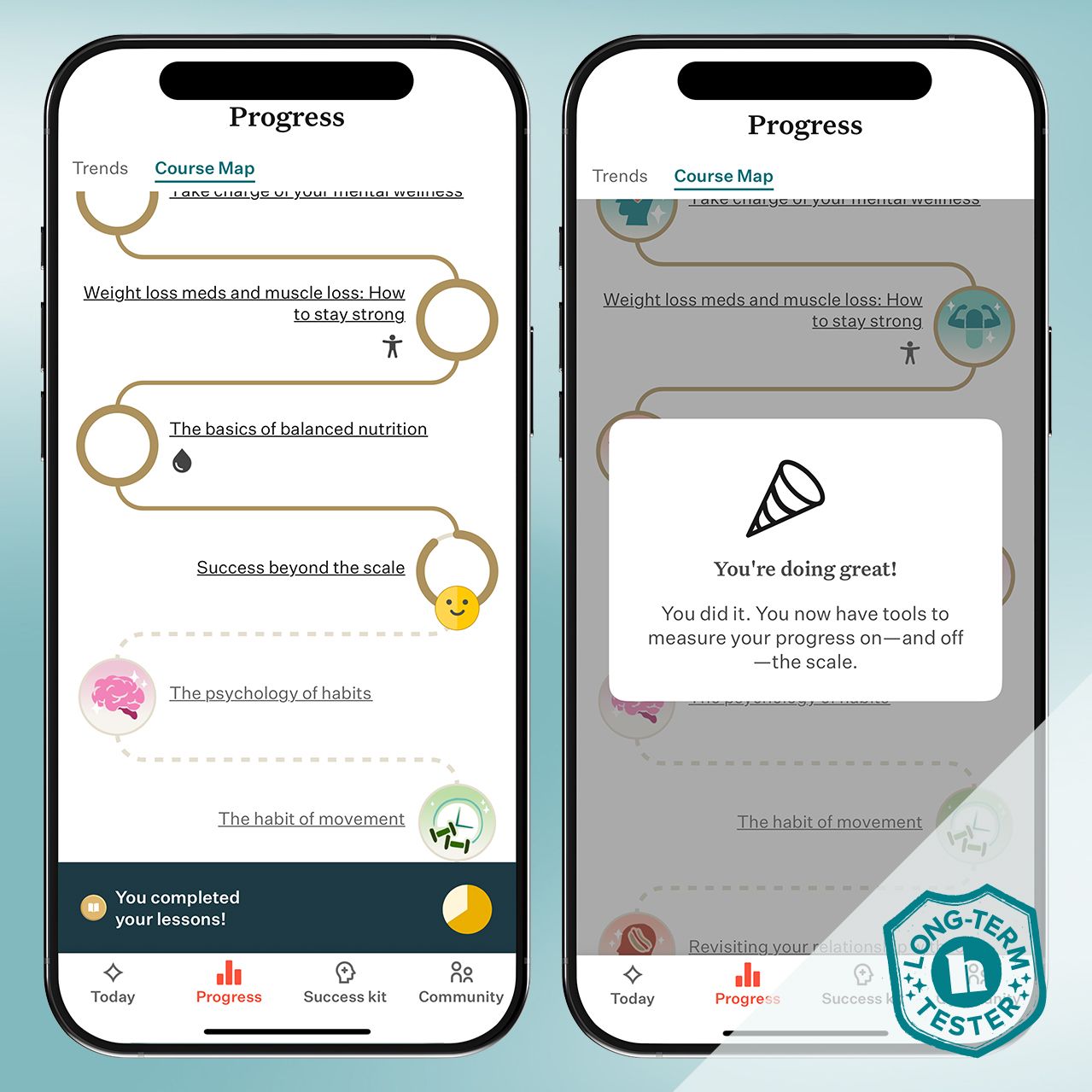
Noom provides a 7-day trial so you can explore the app before committing to a paid plan.
Noom
- Subscription cost:$70 per month or $209 per year
- iPhone rating:4.7
- Android rating:4.4
- Price:$59.00
*Price may vary.
wp:heading
New features
Noom has introduced features to better personalize whole-body wellness. This year it has added:
/wp:paragraph wp:paragraph
- AI-driven tools, like a new assistant called Welli, for food logging and the Noom 360 Body Scan
- Noom Vibe, a habit tracker and wellness community where you can compete with friends and redeem in-app currency for rewards
- Noom Mood, a 16-week program focusing on stress and anxiety management and building emotional awareness
- Noom Success Kit, a collection of tools to help you stay on course with wellness goals in real time
- Muscle Defense, a GLP-1 companion program designed to help prevent losing muscle mass during rapid weight loss
- Noom Move, an on-demand library of stretches, workouts, and meditations to keep users active.
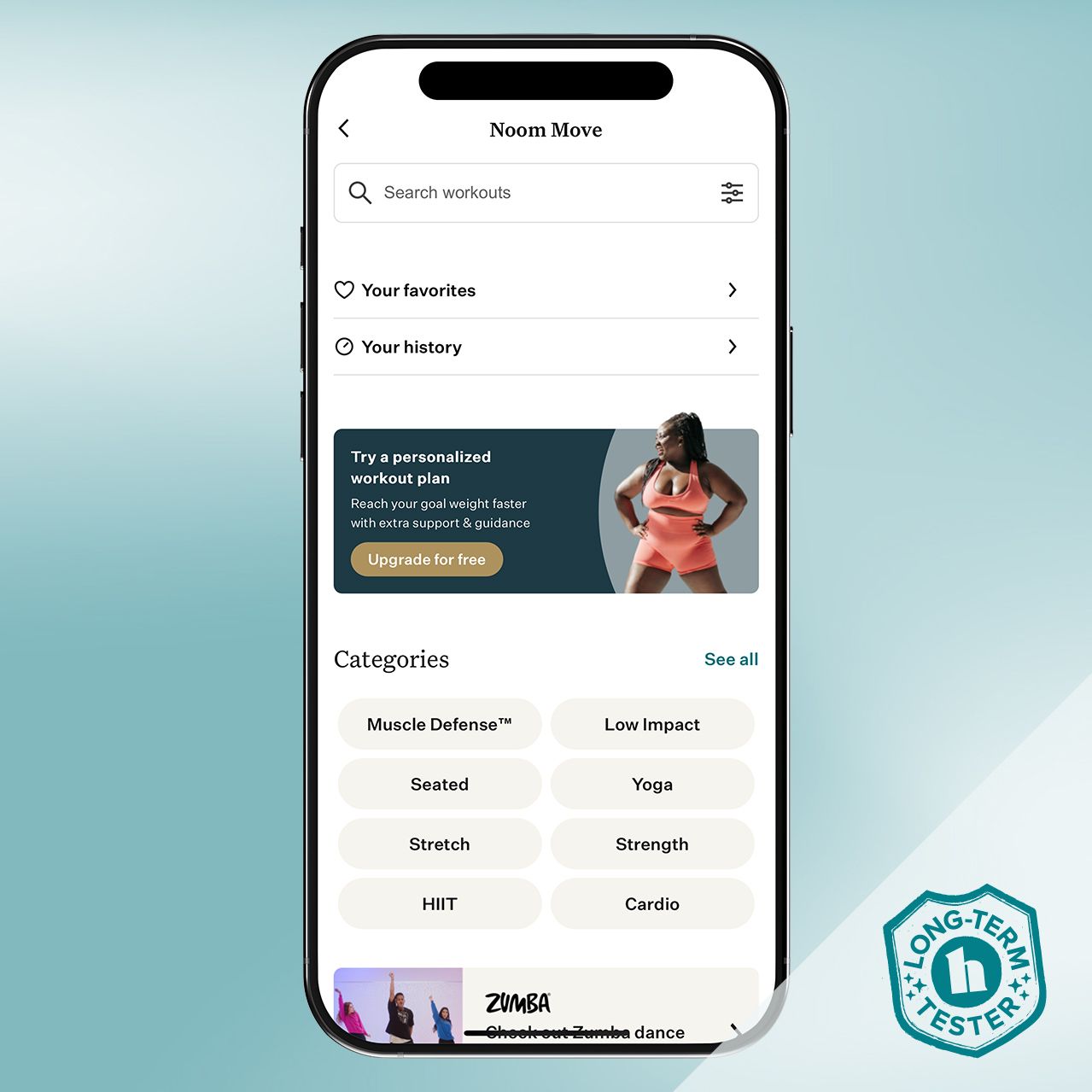
Noom has also refined other elements, including updates for:
- women’s health
- smart device syncing
- suggestions for healthier ingredient swaps in meals
/wp:paragraph
Pros & cons
- uses a psychology-focused method
- employs an easy color-coded approach to favor low calorie-density foods
- doesn’t ban any specific foods or food groups outright
- encourages behavior change over fad diets
- offers virtual support with optional one-on-one coaching for an additional fee
- provides customizable features
- can be available as an employee wellness benefit at some workplaces
- requires coaches to complete comprehensive Noomiversity training and certification
- Noom Med makes prescription medications available for eligible people
- Noom Move introduces fitness tracking and movement encouragement for broader health goals
- cost
- time investment
- needs a smartphone or tablet
- suggested calorie targets may be too low for some individuals
- food color coding can sometimes be inconsistent
- limited specific portion-control guidance
- uses a psychology-focused method
- employs an easy color-coded approach to favor low calorie-density foods
- doesn’t ban any specific foods or food groups outright
- encourages behavior change over fad diets
- offers virtual support with optional one-on-one coaching for an additional fee
- provides customizable features
- can be available as an employee wellness benefit at some workplaces
- requires coaches to complete comprehensive Noomiversity training and certification
- Noom Med makes prescription medications available for eligible people
- Noom Move introduces fitness tracking and movement encouragement for broader health goals
- cost
- time investment
- needs a smartphone or tablet
- suggested calorie targets may be too low for some individuals
- food color coding can sometimes be inconsistent
- limited specific portion-control guidance
Product details
- Supported devices :Apple, Android
- Number of users per account :1
- Food tracking :yes
- Support :community tools, health coaching, app features, meal plans, recipes, goal tracking
- Nutritional quality :largely centered on whole foods
- Physical activity encouraged :yes
- International availability :yes
AAPI-Founded
- Supported devices :Apple, Android
- Number of users per account :1
- Food tracking :yes
- Support :community tools, health coaching, app features, meal plans, recipes, goal tracking
- Nutritional quality :largely centered on whole foods
- Physical activity encouraged :yes
- International availability :yes
AAPI-Founded
Our major takeaways on Noom
Our long-term tester’s experience, month by month
- Month 1: Kim Currin returned to Noom after several years away and benefited from shifts in mindset and better eating habits.
- Month 2: Kim used Noom for meal planning, workouts, and weight loss, seeing health improvements without medications.
- Month 3: Kim made steady weight-loss progress with Noom’s tools and community encouragement.
- Month 4: Kim used Noom’s behavior-change programs to support her continued weight-loss journey.
- Month 5: Kim navigated weight fluctuations and health issues like fibroids, PCOS, and endometriosis with Noom’s guidance.
- Month 6: After six months, Kim felt more confident thanks to education and lifestyle adjustments facilitated by Noom.
- Month 7: Following a month of weight gain and a check-in with her doctor, Kim explored whether GLP-1 medications were appropriate and appreciated that Noom offers a GLP-1 plan addressing specific nutritional needs for those taking Ozempic or Wegovy.
- Month 8: Kim felt energized by GLP-1 support, and some weight loss enabled her to do more exercise through Noom Move.
- Month 9: Kim celebrated additional weight-loss milestones and welcomed improved appetite control with Noom’s GLP-1 assistance.
- Month 10: Kim kept progressing with Noom’s education and new eating patterns, reaching her lowest weight of the year.
Daily calorie allowance
When starting out, your daily calorie target might seem quite low.
Our experts’ take: Don’t stress about the calorie budget
“Because Noom is a weight-loss tool, its algorithm may initially assign a calorie goal that’s too small for your actual needs. Many people assume lower is always better for weight loss, but that’s not universally true.
“Eating too few calories can actually hinder progress. Check your goals and adjust them so you’re getting enough energy to support your daily life.”
Food logging and color categories
The color labels are not determined solely by calories; they also reflect the overall health impact of a food. The same item may receive a different color depending on how it’s prepared — for example, fried versus air-fried or steamed.
Noom explains that certain preparations often require ingredients that shift a food into a higher color category, like added sugar, extra salt, cream, or oil.
The Noom app has added features to streamline food logging. Nutrition details and food data are now more visible so users can see calorie counts and color categories beside the item name without opening it.
Our long-term tester, Kim Currin, noted that while some people may find logging tedious, the updated app supports barcode scanning and, like her, you might enjoy keeping a food record.
“I often wonder how I ended up with extra weight, but when I can view my own habits, I can better understand my behaviors and figure out where to begin,” she said.
Repetitions with healthy habits
Kim added, “I love seeing infographics that clarify my eating patterns. Logging food and then reviewing charts that break calories into green, yellow, and orange feels almost like a game. When my orange section looks full, I’m motivated to add more green.”
How to get started
If you’re ready to try Noom, follow these steps to begin.
1. Take the online quiz
To start, complete a brief quiz on Noom’s website or within the app.
The questionnaire gathers information about your age, weight, health background, and fitness aims. It also asks about your current eating, activity levels, and habits that could influence your health.
2. Set your goals
Noom uses your quiz responses to generate a personalized plan and set realistic timelines for achieving your objectives.
The app adjusts its weight-loss timeline estimates based on your answers.
3. Start using the app
Noom asks users to spend just a few minutes daily within the app. It delivers daily lessons, tips, and activities you can work through at your own pace.
Kim said the interface is user-friendly, and as you progress through lessons you discover sub-communities and supplemental apps.
“Whenever I wished the app had a feature, I found Noom often already offered it. For example, when I wanted healthier alternatives to an item like Oreos, the Success Kit suggested several satisfying substitutions,” she said.
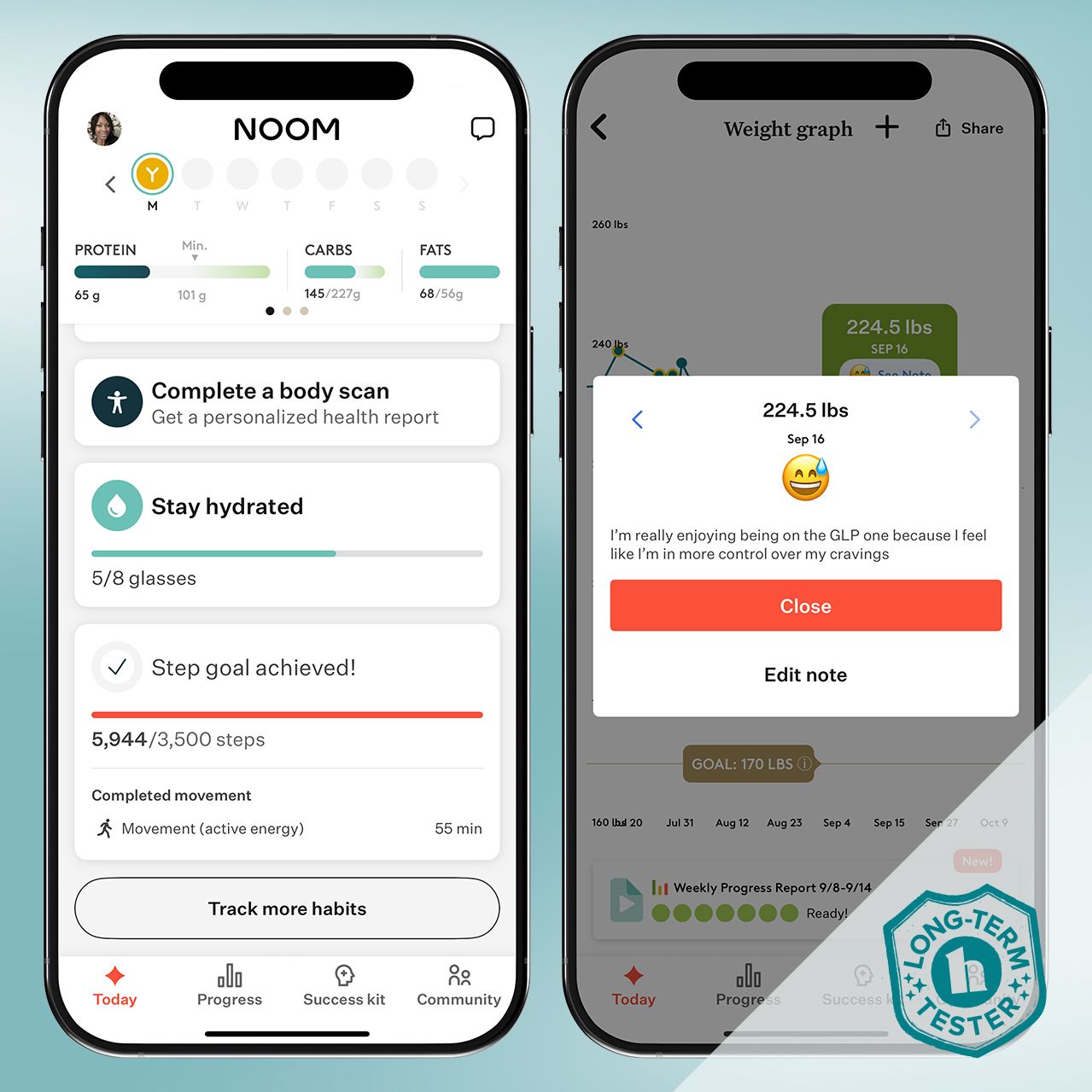
The app also prompts you to log meals, workouts, weigh-ins, message your Noom guide, and join Noom Communities — coach-led groups centered on shared interests for extra support.
Noom includes an in-app reward system called Noomcoin designed to increase motivation to complete daily tasks.
You can tailor how much time you spend on Noom lessons each day, choosing from ranges such as:
- 1 to 4 minutes
- 5 to 8 minutes
- 9 to 12 minutes
Check-ins with Noom: How it works
Each day, your dashboard lists tasks to log your progress, including:
- body scan to capture measurements
- logging weekly commitments and sharing them with an accountability partner
- logging meals
- weighing in
- tracking water intake
Our tester opted to use the body scan once a month, as Noom notes weight and measurements can vary day to day due to bloating, time of day, and other factors.
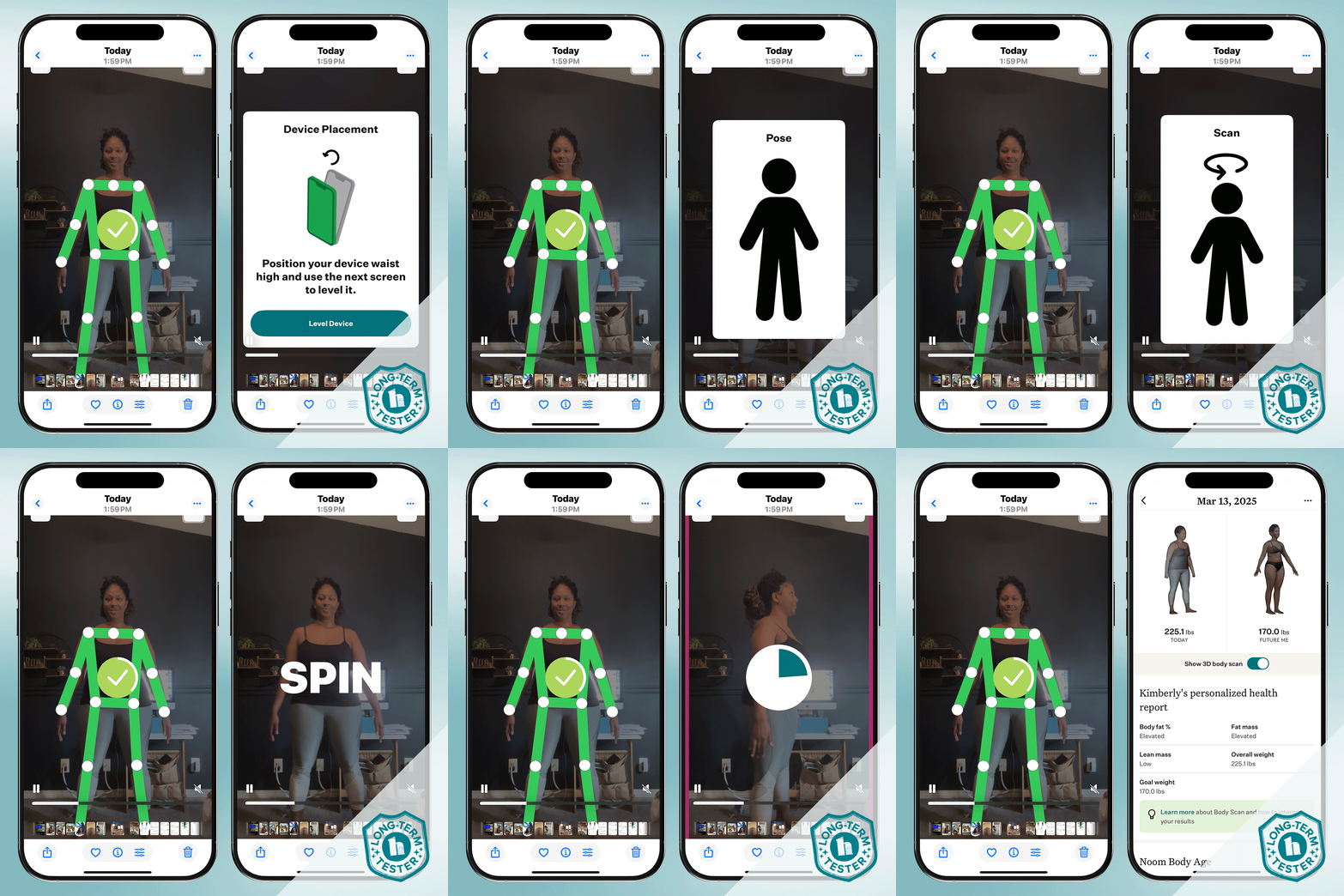
“The body scan is part of my personalized health report. I really like this because it digs into multiple aspects of what’s happening with my body during my progress. It not only scans and provides precise measurements but also reports basal metabolic rate, body fat mass, lean mass, and weight-to-height ratio.
Bodyscan data: Month 10
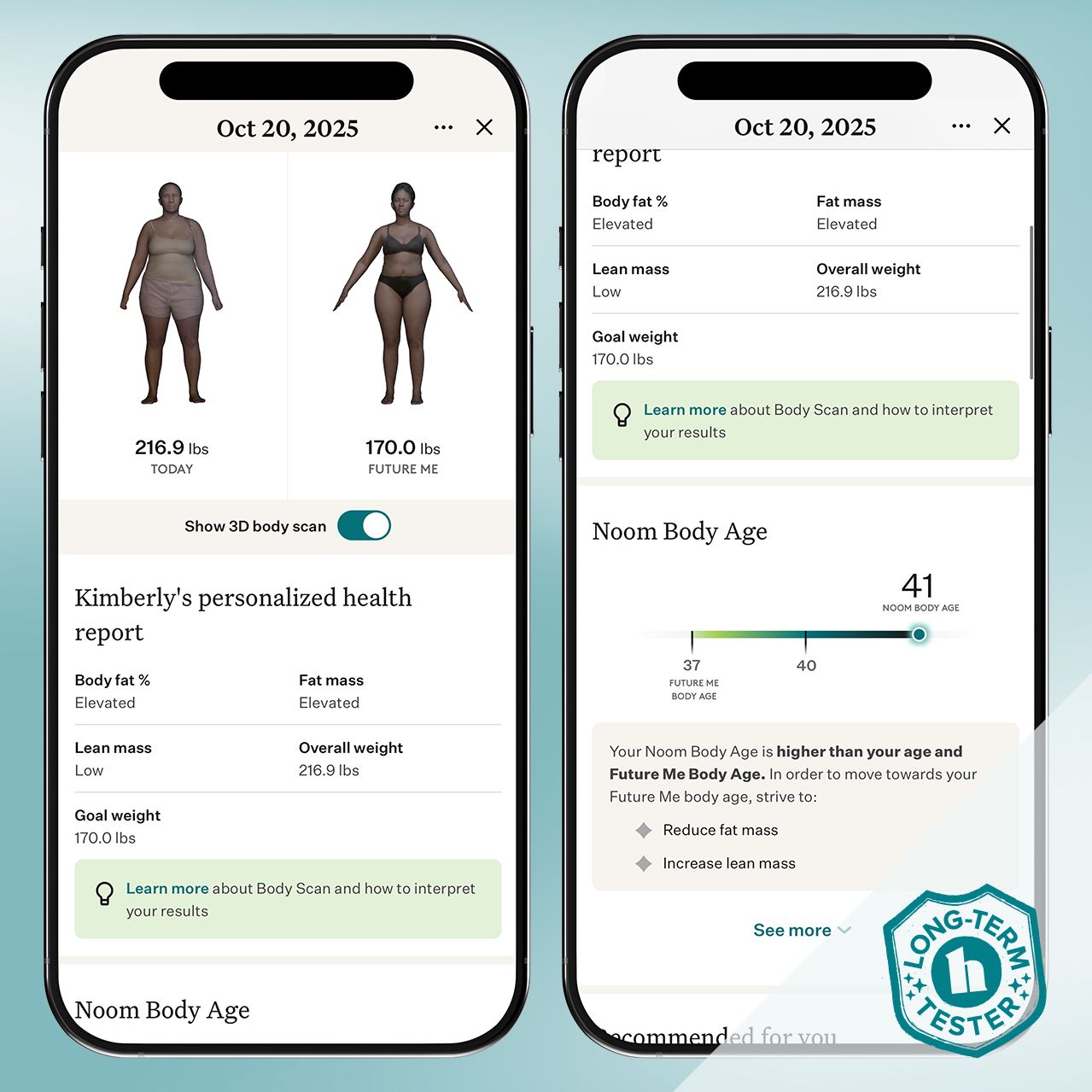
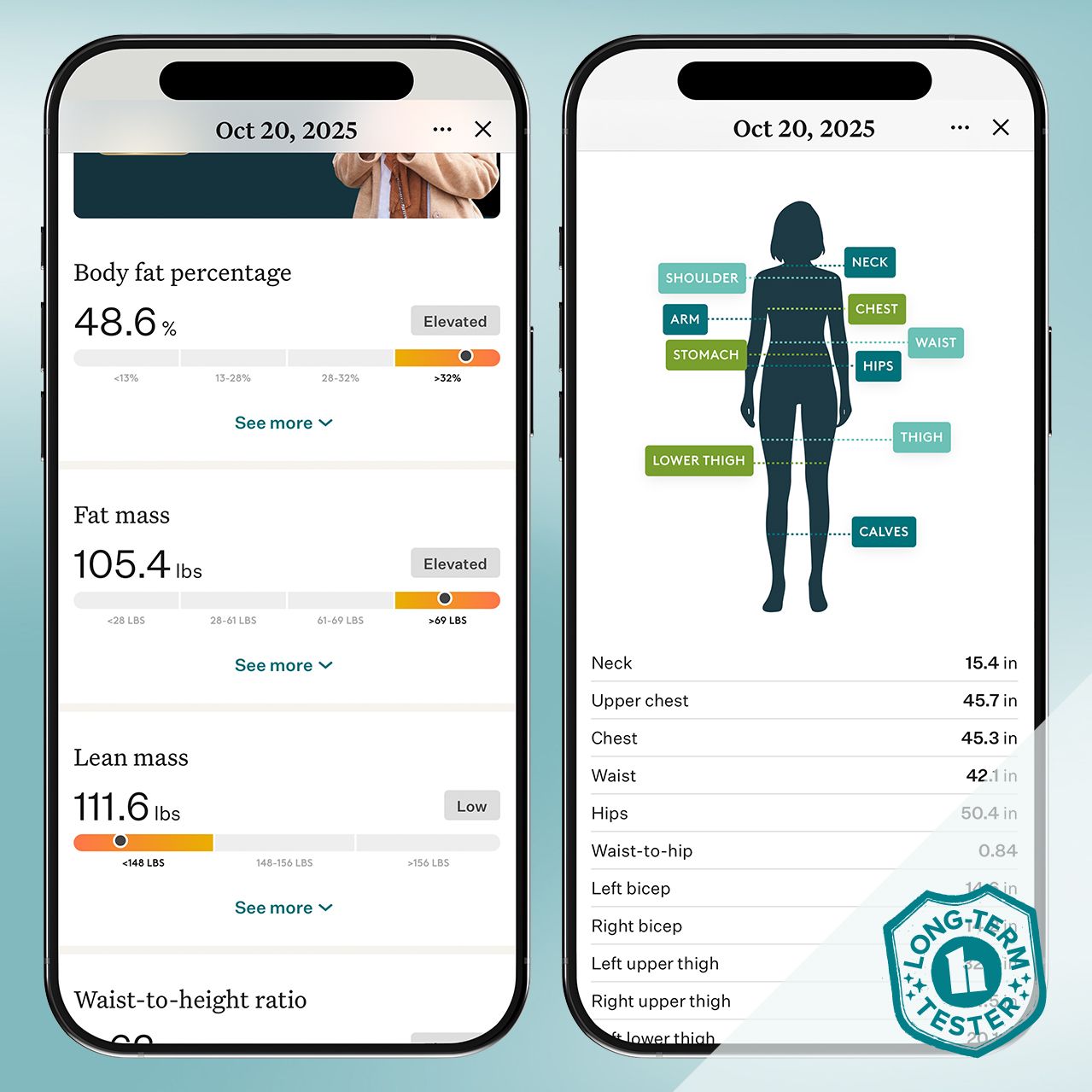
“I appreciate this because I’d never examined my body beyond the scale. … Seeing detailed metrics changes how I think about food; the educational content is helping me.”
Kim also noted that Noom emphasizes how weight fluctuates for many reasons, so it helps her not to fixate on the scale when her weight increases or bloating occurs due to endometriosis.
How does Noom work?
Here’s a closer look at how Noom functions and how it might support weight loss.
Reduces calorie intake
Noom aims to help you lose weight in a manner similar to other commercial programs by creating a calorie deficit .
The app’s algorithm estimates daily calorie needs using sex, age, height, weight, and lifestyle responses from the quiz.
Noom promotes logging food and weekly weigh-ins — two self-monitoring behaviors that are linked with weight loss and long-term weight maintenance.
Promotes other healthy habits
Noom encourages regular activity by setting daily step goals and offering general workout guidance. Users can record physical activity in the app from an extensive exercise list.
Noom Vibe and Noom Communities add a social element to exercise, and friendly competition can help sustain motivation.
Users may also opt to enable notifications for meal reminders at chosen times throughout the day.
How much does Noom cost?
Noom provides several subscription options:
- Monthly auto-renewing plan: $70
- 2-month auto-renewing plan: $129
- 3-month auto-renewing plan: $159
- 4-month auto-renewing plan: $169
- 5-month auto-renewing plan: $174
- 6-month auto-renewing plan: $179
- 7-month auto-renewing plan: $184
- 8-month auto-renewing plan: $189
- 9-month auto-renewing plan: $195
- 10-month auto-renewing plan: $199
- 11-month auto-renewing plan: $205
- Annual auto-renewing plan: $209
Noom also runs discounts at various times throughout the year.
If your employer offers a workplace wellness program, check with HR to see if you might receive incentives for participating in a program like Noom.
That said, with the monthly plan beginning at $70, Noom may be pricier than some people want to pay.
Note: Noom Med — the medication service for GLP-1 treatments — costs an extra $49 per month, not including the price of any prescribed medications.
Available add-ons
Noom offers optional add-ons for an additional fee.
Options include:
- personalized meal plans (PDF)
- tailored workout plans (PDF)
- a metabolism test kit via Everlywell
- a mental-wellness course called Noom Mood
- behavior-change coaching
- prescription weight-loss medications
Our experts’ take: Noom addresses the bigger picture
“Compared with other weight-loss options, Noom stands out for accessibility and a fairly balanced approach to wellness.
“Although I’d welcome even more emphasis on whole-body health, Noom largely does well at promoting non-scale victories, which can be just as — if not more — meaningful indicators of health.”
Can Noom help you lose weight?
Any reduced-calorie program can help you shed weight if you adhere to it, but maintaining a diet is often challenging for many people. Most diets fail because they’re hard to sustain.
What the research says
A 2023 study reported that many overweight Noom users sustained weight maintenance for one to two years after using a digital behavior-change program. (This research received funding from Noom.)
A 2016 study with nearly 36,000 Noom users found that about 78% lost weight while using the app for an average of nine months, with 23% losing more than 10% of their starting weight.
The research also indicated that frequent tracking of diet and weight was associated with greater success.
A 2020 study involving 225 adults with binge-eating disorder found Noom reduced binge-eating days over 52 weeks more effectively than standard care. However, while standard care participants were given access to eating-disorder services through insurance, very few actually received those services during the study.
Note that some of these studies received Noom funding and involved authors with ties to the company. More independent, comprehensive research is still needed.
Heads-up
Trying to “do everything right” with nutrition can become counterproductive. If you find yourself preoccupied with food or weight, feeling guilty about food choices, or repeatedly restricting intake, consider seeking support. Those behaviors can indicate a disordered relationship with food or an eating disorder.
Eating disorders and disordered eating can affect anyone, regardless of gender identity, race, age, socioeconomic status, or other identities.
Biological, social, cultural, and environmental factors — not just exposure to diet culture — can contribute to the development of eating disorders.
It’s appropriate and wise to consult a qualified healthcare professional, such as a registered dietitian, if you’re concerned.
Customer reviews and brand reputation
As with many weight-loss apps, Noom’s user reviews are mixed.
Positive feedback often highlights strong guidance, motivation, and supportive features that help with long-term weight loss.
Negative reviews commonly mention frustrations with the food tracker, occasional app glitches, and dissatisfaction with how responsive or helpful Noom guides can be.
How does Noom compare with other weight loss programs?
Many well-known weight-loss plans share similarities with Noom.
Below is a brief comparison of how Noom measures up to competitors like Calibrate and WeightWatchers.
Who is Noom good for?
Noom may suit people who:
- want to lose weight but don’t know how to begin
- benefit from motivation via coaches or peer support
- seek sustainable habit-building instead of short-term fad diets
However, Noom may not be ideal for people who:
- cook mostly from scratch, since logging each ingredient may be tedious
- eat a wide variety of cultural cuisines or use uncommon ingredients that may be poorly represented in the app’s food database
- are highly active or have elevated calorie requirements, as Noom’s suggested calories can be low
If you have medical conditions like type 2 diabetes or kidney disease, talk with a healthcare provider before changing your diet.
Frequently asked questions
Is Noom really worth it?
Noom emphasizes choosing foods with low calorie density, which can be an effective approach to weight loss.
A 2016 study reported Noom was effective for weight loss in nearly 78% of users, though whether it will work for you depends on many factors, including diet and activity.
Noom emphasizes choosing foods with low calorie density, which can be an effective approach to weight loss.
A 2016 study reported Noom was effective for weight loss in nearly 78% of users, though whether it will work for you depends on many factors, including diet and activity.
What’s the average monthly cost of Noom?
The monthly auto-renewing Noom subscription costs $70. The annual auto-renewing plan is $209, which breaks down to about $17.42 per month.
These prices don’t include optional extras like personalized coaching, medications, custom meal plans, or workout plans.
The monthly auto-renewing Noom subscription costs $70. The annual auto-renewing plan is $209, which breaks down to about $17.42 per month.
These prices don’t include optional extras like personalized coaching, medications, custom meal plans, or workout plans.
What’s the average amount of weight people lose using Noom?
Noom reports users can expect an average loss of 1 to 2 lb (0.5 to 1 kg) per week while using the app, though results vary depending on diet, lifestyle, health status, and activity level.
Noom reports users can expect an average loss of 1 to 2 lb (0.5 to 1 kg) per week while using the app, though results vary depending on diet, lifestyle, health status, and activity level.
What’s the downside of Noom?
Noom can be a good fit for many, but there are drawbacks. The app doesn’t provide in-person coaching or group sessions. Cost, potentially low calorie targets, and the risks of obsessive food tracking are other possible negatives.
Noom can be a good fit for many, but there are drawbacks. The app doesn’t provide in-person coaching or group sessions. Cost, potentially low calorie targets, and the risks of obsessive food tracking are other possible negatives.
The bottom line
Noom is a mobile app accessible on smartphones and tablets.
The app may support weight loss by encouraging lower-calorie, nutrient-dense foods and promoting sustainable lifestyle changes.
If you’re comfortable with the price, the time needed for tracking, and the requirement to use a mobile device, Noom may be worth trying.
Frequently Asked Questions
Both programs can support long-term weight loss, but they take different approaches. Noom focuses on psychology and habit change with color-coded food tracking and virtual coaching, while Weight Watchers (WW) emphasizes point-based food tracking, flexible meal choices, and group support. Effectiveness depends on which approach fits your preferences and lifestyle.
Cost varies by plan and region. Noom typically charges monthly or annual app subscription fees and offers add-ons for coaching or medical services. WW offers tiered memberships that may include workshops or one-on-one coaching. Compare current pricing and features to decide which offers better value for your needs.
Noom provides one-on-one behavior-change coaching via the app plus community groups and Noom Vibe. WW offers in-person and virtual workshops, group meetings, and community-based tools. If live group meetings are important, WW may be stronger; for personalized daily coaching, Noom could be preferable.
Yes. Noom uses a color-coded system (green, yellow, orange) to encourage lower calorie-density foods alongside calorie estimates, while WW uses a points system (SmartPoints) that assigns values to foods based on calories and nutrients. Both aim to simplify choices but appeal to different tracking preferences.
People with medical conditions or high calorie needs should consult a healthcare provider. WW may offer more flexibility for higher-calorie needs due to its points system, while Noom’s calorie targets can sometimes be low for very active individuals. Both platforms can be adapted, but professional guidance is recommended.
Read Next

Spinach 101: Nutrition Facts and Health Benefits

Agave Nectar: A Sweetener That’s Even Worse Than Sugar?

Calorie Counts for Fried Rice: Vegetable, Beef, Chicken, Pork, and Shrimp

Is Polypropylene a Safe Plastic to Use in Your Home?

Is Cheesecake Healthy? Nutrition and Recipe Tips

Apretude Injection Price: What You Need to Know
Related Posts

What Is Annatto? Uses, Benefits, and Side Effects
Aug 8, 2026 • 25 min read
What Is Acerola Cherry?
Sep 9, 2026 • 34 min read
Barley Tea: Nutrition, Benefits, and Side Effects
Aug 18, 2026 • 8 min read
Carob Powder: 9 Nutrition Facts and Health Benefits
Aug 31, 2026 • 22 min read
How Many Calories Are Burned on an Elliptical in 30 Minutes?
Aug 14, 2026 • 32 min read