What Type of Hairbrush is Best for Your Hair?

- Do different hair brushes make a difference?
- Best brush type for fine hair
- Best type of brush for thick hair
- Best hairbrush type for long hair
- Best hairbrush for thinning hair
- Best hairbrush for curly hair
- Best hairbrush for straight hair
- Best hairbrush to prevent breakage
- What are the benefits of brushing your hair?
- Takeaway
Do different hair brushes make a difference?
Everyone with hair brushes it, although you might not have spent much time thinking about which brush you reach for. Selecting the suitable hair brush for your hair type and styling goals can influence your hair’s condition and look.
The ideal brush for someone with long, curly locks will be markedly different from the right choice for fine or thinning hair.
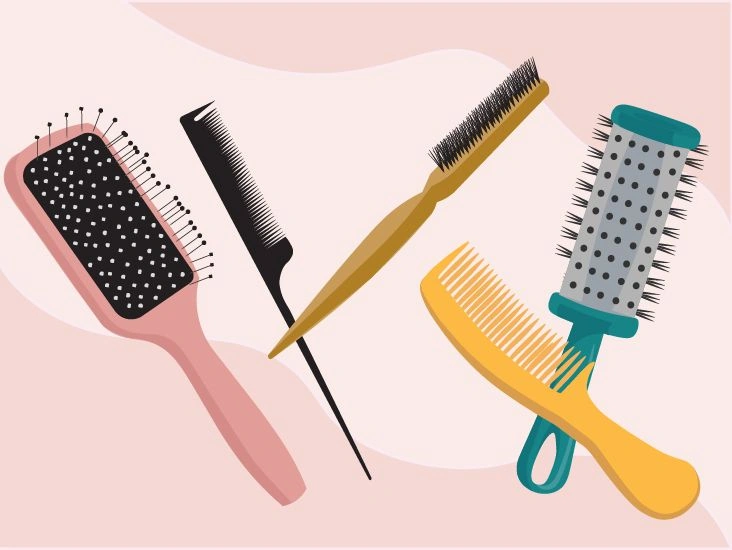
Certain brushes, such as round or vented styles, excel at styling, while others focus on detangling, and some can even tackle static and frizz. Below we’ll explore various brush types and what they do for your hair.

Best brush type for fine hair
Extra-soft boar-bristle brushes are the top pick for fine hair; they’re gentle on both strands and scalp and enhance natural shine. Their firmer bristles help ease out tangles without yanking hair.
Best type of brush for thick hair
For thick hair, a paddle brush is an excellent option. Choose one that blends boar bristles with nylon pins; the nylon pins handle dense hair efficiently while the boar bristles boost shine by spreading natural oils.
Best hairbrush type for long hair
Paddle brushes are also effective for long hair because they let you brush through a large section at once, removing knots and distributing oil evenly.

Best hairbrush for thinning hair
A soft-bristle brush is preferable for thinning hair since it’s gentle and less likely to pull hairs out. If you want extra lift at the crown, consider a teasing brush, which is smaller and made to reach the roots.
Best hairbrush for curly hair
Those with curly hair often find a sturdy, wide-toothed comb helpful while showering. This can minimize frizz and breakage that may occur when combing dry curls. Stiff-bristled detangling brushes can also be effective.
Best hairbrush for straight hair
Paddle brushes perform well on straight, long hair because they process large amounts of hair and spread oils evenly. Brushes with a rubber pad are useful for straight hair that tends toward static.
Best hairbrush to prevent breakage
If your hair becomes knotted, opt for a detangling brush with flexible bristles that bend with the hair to avoid damage and snapping.
For fragile or brittle hair, use a soft boar-bristle brush (or a quality synthetic alternative) featuring gentle bristles that minimize stress on strands.
What are the benefits of brushing your hair?
Brushing does more than free up tangles.
It moves oil from the scalp down the shaft, which helps moisturize drier ends; it stimulates the scalp with a massage that may encourage hair growth; and it helps lift loose hairs from the head (which is why you often find hairs caught in your brush).
Just be sure to keep your brush clean and avoid excessive brushing. More than about 100 strokes per day can contribute to split ends.
Takeaway
There are numerous brush options, yet many people give little consideration to the comb or brush they use. Picking the right brush for your hair type can significantly affect how your hair looks and feels.
Some are geared toward styling, while others are designed specifically to detangle, reduce static, or add shine. It’s wise to select a brush with your particular hair type in mind.
Frequently Asked Questions
Extra-soft boar-bristle brushes are ideal for fine hair because they gently detangle while distributing natural oils and minimizing breakage.
Paddle brushes with a mix of boar bristles and nylon pins work well for thick or long hair, allowing you to smooth large sections and manage tangles efficiently.
Use a wide-toothed comb or a sturdy detangling brush on wet hair to minimize frizz and breakage; avoid vigorous brushing when curls are dry.
Detangling brushes with flexible bristles and soft boar-bristle brushes reduce snapping by bending with knots instead of pulling harshly on strands.
Soft-bristle brushes are best for thinning hair since they’re gentle on the scalp and hair; a small teasing brush can add lift at the crown without excessive pulling.
Read Next

Related Posts
How to Treat an Inverted Nipple
Aug 10, 2026 • 8 min read
Shea Butter for Your Face: Benefits and Uses
Aug 27, 2026 • 21 min read
Green Tea for Hair: A Complete Guide
Aug 4, 2026 • 25 min read
Is Microblading Your Eyebrows Painful?
Aug 9, 2026 • 12 min read
The Ultimate Skin Care Routine for Combination Skin
Sep 20, 2026 • 12 min read