
What Are the Most Common Breast Shapes?

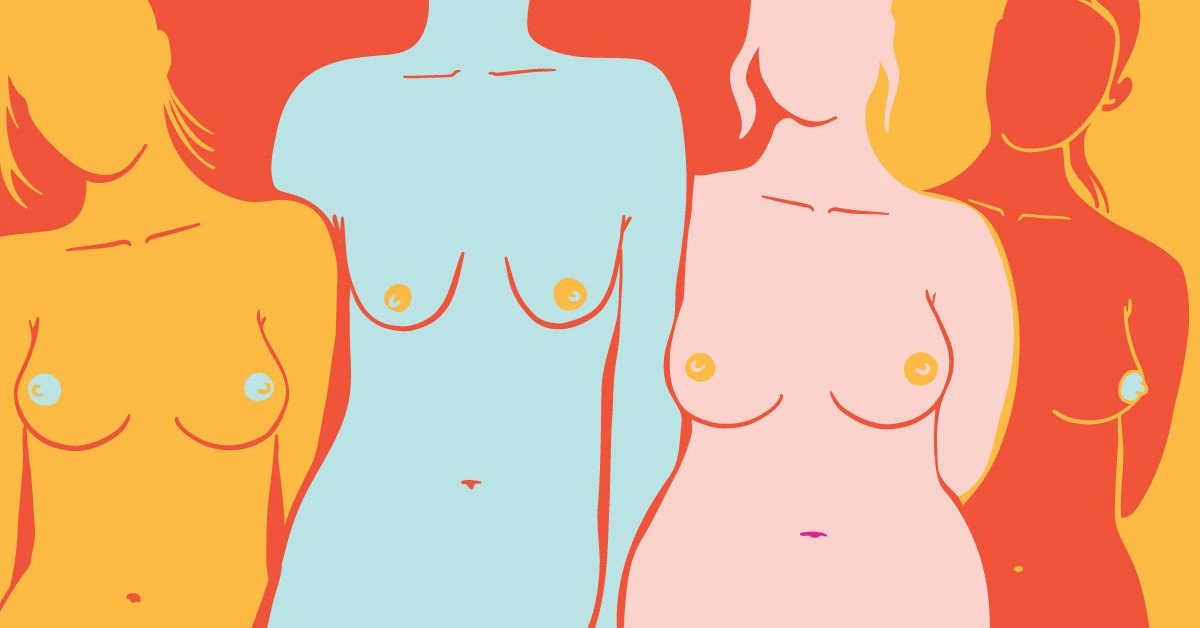
- Breasts vary widely in form and scale. No two pairs look exactly alike.
- What’s the most typical shape?
- Archetype
- Asymmetrical
- Athletic
- Bell shape
- Close set
- Conical
- East West
- Relaxed
- Round
- Side set
- Slender
- Teardrop
- What influences breast shape?
- What about the areolae?
- What about the nipples?
- When to seek medical advice
The classic breast — round and full with a subtle point at the nipple — is often thought of as the most familiar. Still, many individuals have breasts with other outlines, such as bell-shaped or conical, among several variations.
Breasts vary widely in form and scale. No two pairs look exactly alike.
So, what counts as “normal” when talking about breasts? How do yours compare?
The reality is that your breasts are one of a kind, and it’s completely normal for them to have their own particular silhouette and size.
The only thing that isn’t typical is unexplained pain or marked sensitivity.
If you want more assurance, continue reading to discover the many breast shapes and how to recognize which category yours falls into.
What’s the most typical shape?
Even if your breasts resemble a common “type,” they likely have nuances that differentiate them from someone else’s.
Some breasts exhibit traits linked to several categories and don’t fit neatly into just one box.
Want to take a closer look? Put on something comfortable, find a private spot and a mirror.
Use this moment to examine your own anatomy and get to know your body better.
Archetype

The archetypal breast — round, full, and with a small projection at the nipple — is often regarded as the “standard” breast form.
It’s thought to be the most prevalent shape, which is why many bra makers base their patterns on it.
Asymmetrical

Asymmetrical breasts are unequal in size. It’s quite normal for breasts to differ by about a cup size or less, and more than half of people show some degree of size variation between breasts.
Athletic

Athletic breasts are broader, with more muscle and comparatively less glandular tissue.
Bell shape

Bell-shaped breasts have a narrow upper portion and a rounder, fuller lower portion, resembling a bell.
Close set

Close-set breasts have minimal or no gap between them. They sit nearer the center of the chest, making the distance from the underarm to the breast greater.
Conical

Conical breasts are more cone-shaped than round. This contour tends to be more prevalent among smaller-breasted individuals.
East West

If your nipples point outward, away from the body’s midline, your breast type is considered East West.
Relaxed

Relaxed breasts have looser tissue and nipples that tend to point downward.
Round

Round breasts show similar fullness at both the top and bottom.
Side set

Side-set breasts sit farther apart, showing more space between them.
Slender

Slender breasts are narrow and elongated, with nipples that point downward.
Teardrop

Teardrop breasts are round overall but have slightly more fullness at the bottom than the top.
What influences breast shape?
After identifying your breast type, you may ask: how did they end up this way?
Several elements help determine breast appearance.
Genetics play the largest role by far. Your genes affect breast density, tissue composition, size, and more.
Other contributors to breast form include:
- Weight.Fat comprises a significant portion of breast tissue and density, so gaining or losing weight can alter breast shape.
- Exercise.Developing the chest muscles beneath the breasts by strengthening pecs can make breasts appear firmer or perkier.
- Age.Breasts naturally sag with time, becoming longer and tending to point downward as you get older.
- Pregnancy and breastfeeding.Hormonal shifts during pregnancy and lactation can cause breasts to enlarge and redistribute fat and glandular tissue.
What about the areolae?
The areola is the darker circle around the nipple. Like the rest of your breasts, it’s unique and rarely identical between people.
The average areola measures about 4 centimeters across, though some are much smaller and others substantially larger.
Areolae often change size across time or during events such as pregnancy and breastfeeding.
They also vary in color.
While people with darker skin tend to have darker areolae compared with those who have lighter skin, exceptions are common.
Areola shapes can be uneven or irregular, so there’s no need to worry if your areolae aren’t perfectly circular — asymmetry is fairly common.
What about the nipples?
Like breast shape and areolae, your nipples are distinct to you.
They differ in shape, dimension, color, orientation, and more.
Some frequent nipple types include:
- Bumpy.Small bumps called Montgomery glands around the areola are more pronounced on some nipples.
- Everted.Everted nipples project outward even without stimulation.
- Inverted.Inverted nipples retract inward rather than protruding.
- Flat.Flat nipples sit flush with the areola but may become erect with stimulation.
- Hairy.It’s normal to have hair around the nipples; the amount varies by person.
- Protruding.Protruding nipples extend further outward, even without arousal.
- Puffy.The areola and nipple together form a raised mound.
- Supernumerary.Meaning an extra nipple is present — a fairly common and normal variation.
- Unilateral inverted.One nipple is inverted while the other projects outward — they don’t always match.
When to seek medical advice
You might notice alterations in breast size, contour, or color over time.
Often these shifts relate to hormone changes, aging, or other natural processes.
However, certain signs could indicate an underlying medical issue.
Contact a healthcare professional if you experience any of the following:
- unexplained tenderness or persistent pain
- unexplained redness or unexplained bruising
- abnormal or bloody nipple discharge
- new lumps or swelling within breast tissue
- a sudden change such as a previously protruding nipple becoming retracted
Your clinician will evaluate your symptoms alongside your medical history to identify the cause of these changes.
Frequently Asked Questions
Common breast shapes include round, teardrop, conical, bell-shaped, athletic, relaxed, and asymmetrical forms; many people show traits of multiple types.
Stand in front of a mirror and observe overall contour, fullness at the top vs bottom, nipple direction, and spacing between breasts to identify the closest shape.
Yes. Factors like age, weight fluctuations, pregnancy, breastfeeding, and changes in chest muscle can all alter breast shape and position.
Yes. Mild asymmetry is common—often up to about a cup size difference—and usually does not indicate a medical problem.
Seek medical advice for unexplained lumps, persistent pain, new nipple retraction, abnormal discharge, sudden redness, or other sudden changes in size or shape.





Related Posts

The 7 Best Mattresses for Pregnancy
Sep 17, 2026 • 6 min read
Do Tattoos Always Stretch? What to Know Before Getting Inked
Sep 23, 2026 • 27 min read
Everything You Need to Know About Glycerin Soap
Aug 3, 2026 • 20 min read
Everything You Need to Know About Mini Dental Implants
Aug 24, 2026 • 3 min read
What Is the Webster Method?
Aug 13, 2026 • 5 min read