Can Amoxicillin Cause a Yeast Infection? Yes — Why It Happens and What to Do

- Why amoxicillin can trigger a yeast infection
- How common is it, and when does it start?
- Who is at higher risk?
- Symptoms: is it yeast, or something else?
- Not only vaginal: thrush and skin yeast after amoxicillin
- What to do if you think amoxicillin gave you a yeast infection
- Can you prevent a yeast infection while taking amoxicillin?
- Red flags: when a yeast infection needs a clinician promptly
- The bottom line
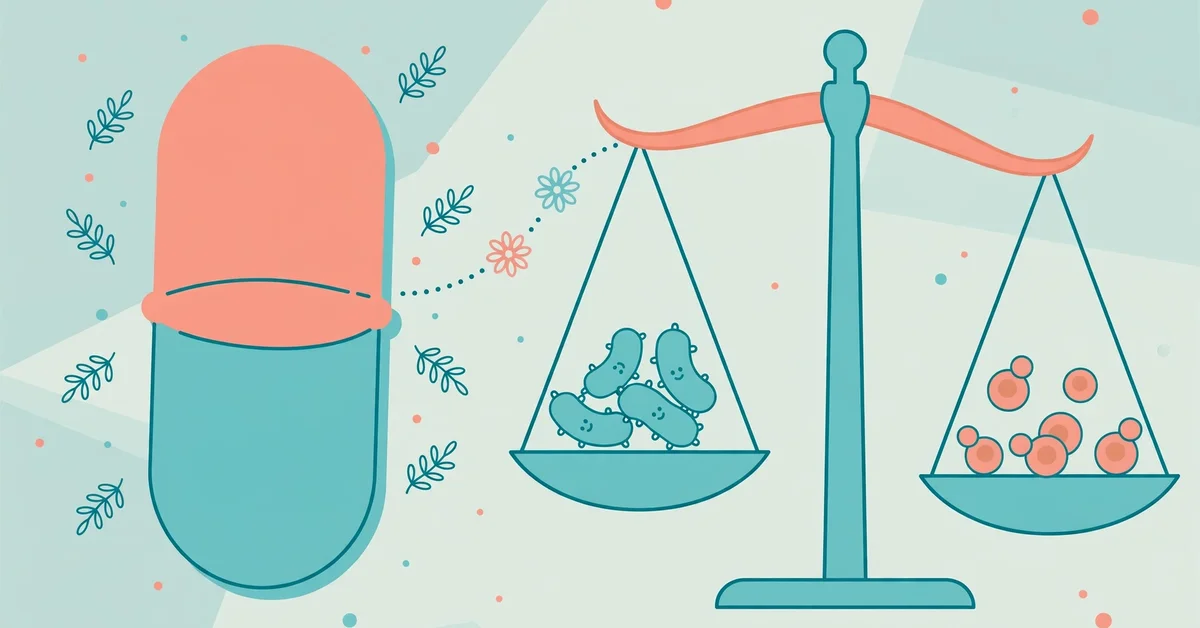
Yes — amoxicillin can cause a yeast infection. It does not happen to everyone who takes it, and it is not an allergic reaction. It happens because amoxicillin, like other antibiotics, reduces the protective bacteria that normally keep Candida yeast under control. With fewer of those bacteria in the way, the yeast can multiply and cause the itching, soreness and discharge of a vaginal yeast infection — known medically as vulvovaginal candidiasis (VVC). The infection usually appears during the antibiotic course or in the days shortly after it ends, it is treatable with standard antifungal medicines, and you should keep taking your amoxicillin while you treat it.
This article answers that one question in depth. If you want the complete catalogue of amoxicillin reactions — stomach upset, rash, allergic reactions and the rest — see our full guide to the side effects of amoxicillin (Amoxil, Trimox). Here, we stay on the yeast question only: why it happens, who it happens to, how to tell it apart from other problems that can follow antibiotics, and what actually helps.
Why amoxicillin can trigger a yeast infection
Candida — most often the species Candida albicans — is a normal resident of the vagina, mouth, gut and skin. In a healthy vaginal environment it causes no symptoms, because it is held in check by the surrounding community of bacteria, dominated by Lactobacillus species. Lactobacilli help maintain the vagina’s normally acidic pH and compete with yeast for space and nutrients.

Amoxicillin is a penicillin antibiotic. It kills bacteria by disrupting their cell walls — and it cannot tell the difference between the bacteria causing your sinus, ear, chest, dental or urinary infection and the protective lactobacilli in the vagina. As the antibiotic lowers the bacterial population, the yeast faces less competition. Antibiotics do not harm fungi at all, so Candida survives the course untouched while its bacterial competitors are knocked back. That imbalance is the opening the yeast needs to overgrow and irritate the vulva and vagina.
Two honest qualifications matter. First, researchers still debate how much of the effect runs directly through lactobacilli: reviews of the evidence note that women prone to recurrent yeast infections do not always have lactobacilli-poor microbiomes, so other antibiotic effects on the vaginal environment may also play a part. The broad picture — antibiotics disturb the normal flora and yeast overgrows — is well established; the fine detail is still being worked out. Second, spectrum matters. Amoxicillin-clavulanate (Augmentin), which adds clavulanate to widen amoxicillin’s reach, disrupts more bacteria than plain amoxicillin and is linked to yeast infections at least as often. Longer courses and repeated courses give yeast more opportunity than a short course does.
How common is it, and when does it start?
There is no exact, amoxicillin-specific percentage, and any source that gives you a precise figure for this one drug is overstating what the evidence shows. What the research does support is this: post-antibiotic yeast infections are common enough to be a recognised, predictable side effect of antibiotic treatment in general. In the best-known randomised trial on the question — an Australian trial of women taking a short course of oral antibiotics for a non-gynaecological infection — 55 of 235 women (about 23%) developed post-antibiotic vulvovaginitis during treatment or in the days that followed it. That is one trial population, not a universal rate: your own risk depends on the risk factors in the next section, and many people finish amoxicillin with no yeast symptoms at all.
Timing follows the mechanism. The yeast needs the bacterial population to fall first, so symptoms typically begin during the course — often toward its end — or shortly after the last dose. If you have had a yeast infection after antibiotics before, symptoms may show up faster on a later course. Itching that starts weeks after you finished, with no other trigger, is less typical of the antibiotic and is worth discussing with a clinician rather than assuming the cause. The Centers for Disease Control and Prevention (CDC) also notes that roughly 10%–20% of women with VVC have complicated disease — recurrent, severe, caused by a non-albicans species, or occurring alongside diabetes or immune suppression — which needs a different treatment approach, covered in the red-flag section below. You can read the CDC’s full recommendations in its Sexually Transmitted Infections Treatment Guidelines, 2021 , which include the vulvovaginal candidiasis section this article draws on.
Who is at higher risk?
A course of amoxicillin is more likely to end in a yeast infection if one or more of the following apply to you:
- You have had a post-antibiotic yeast infection before. A previous episode is one of the strongest practical predictors of another one.
- The course is long, repeated, or broad. Amoxicillin-clavulanate, higher doses, and back-to-back courses disturb more flora than a short, single course of plain amoxicillin. Our overview of the antibiotics that cause yeast infections shows where amoxicillin sits in that wider picture.
- You are pregnant, or your oestrogen level is high — for example with some hormonal contraception or hormone therapy. Higher oestrogen makes the vaginal environment more favourable to Candida.
- You have diabetes, especially if blood sugar is poorly controlled. Extra glucose and impaired immune responses both favour yeast growth, and diabetes also moves an episode into the CDC’s “complicated” category.
- Your immune system is weakened — by illness, by medicines such as corticosteroids or other immunosuppressants, or by HIV infection.
- Candida already colonises your vagina. Many women carry the yeast without symptoms; antibiotics can tip that silent carriage into an active infection.
None of these factors makes a yeast infection certain, and a yeast infection can also occur with none of them present. They simply shift the odds — which is why telling your prescriber “I always get a yeast infection on antibiotics” before the course starts is worthwhile: for people with that history, a clinician may plan antifungal treatment alongside the antibiotic.
Symptoms: is it yeast, or something else?
The classic symptoms of a vaginal yeast infection are vulvar and vaginal itching (often intense), soreness, burning, redness and swelling, pain during sex, burning when urine passes over the inflamed skin, and a thick, white, curd-like discharge that usually has little or no smell. The CDC’s candidiasis guidance makes an important point, though: none of these symptoms is specific to a yeast infection. Several other conditions feel similar, need different treatment, and can also appear around the time of an antibiotic course. This comparison is the part most short answers skip:

| Feature | Yeast infection (VVC) | Bacterial vaginosis (BV) | Urinary tract infection (UTI) |
|---|---|---|---|
| Main complaint | Itching and soreness of vulva/vagina | Discharge and odour more than itching | Burning from inside when passing urine, urgency |
| Discharge | Thick, white, curd-like; little smell | Thin, grey-white; fishy smell | None typical |
| Vaginal pH | Usually normal (below 4.5) | Usually raised (above 4.5) | Not applicable |
| Treatment class | Antifungal (azole) | Antibiotic — a different one | Antibiotic |
Sexually transmitted infections such as trichomoniasis and chlamydia can also cause discharge, soreness and burning, and simple skin irritation from scented products can mimic mild yeast symptoms. One more post-antibiotic problem belongs in a different category entirely: watery diarrhoea during or after amoxicillin is a gut side effect, not a yeast infection — and severe, persistent or bloody diarrhoea needs prompt medical assessment in its own right, because antibiotics can occasionally allow a serious bowel infection to take hold.
Because the symptoms overlap so much, the CDC advises that a diagnosis should rest on more than a guess where possible: a clinician can examine the discharge, check vaginal pH, and look for yeast under the microscope or send a culture, which remains the reference standard. That matters most for a first-ever episode. If you have never had a yeast infection confirmed before, get this first one checked rather than self-diagnosing — studies and guidelines alike show self-diagnosis is unreliable, and treating BV or an STI with a yeast cream wastes time while the real problem continues.
Not only vaginal: thrush and skin yeast after amoxicillin
The same overgrowth can happen in other warm, protected places where Candida normally lives. Oral thrush causes creamy white patches on the tongue, inner cheeks or throat, soreness, and sometimes cracking at the corners of the mouth; it is more likely in people who use inhaled steroids, wear dentures, smoke, have diabetes, or have a weakened immune system. Skin candidiasis appears as an itchy red rash in skin folds. Men can also develop yeast inflammation of the head of the penis, with itching, redness and soreness, particularly if uncircumcised or diabetic. The mechanism is identical — bacteria suppressed, yeast unbothered — and so is the treatment principle: an antifungal, not more antibiotic. An overview of how yeast infections present and are confirmed is available from InformedHealth.org on NCBI Bookshelf .

What to do if you think amoxicillin gave you a yeast infection
1. Keep taking the amoxicillin. Do not stop the antibiotic early because of yeast symptoms. Stopping early risks the original bacterial infection returning and contributes to antibiotic resistance. The yeast infection is treated separately, at the same time — antifungals and antibiotics target completely different organisms and do not cancel each other out. Our companion article explains the timing question in detail: can you treat a yeast infection while on antibiotics?
2. If the pattern is familiar, treat with an over-the-counter azole antifungal. For an uncomplicated episode in someone who has had a clinician-confirmed yeast infection before and recognises the same symptoms, first-line treatment is an azole antifungal — the class that includes vaginal clotrimazole and miconazole creams and suppositories, used for the number of days on the product (short courses of 1–3 days treat most uncomplicated cases; some regimens run longer). The CDC notes that short-course topical azoles relieve symptoms and clear the infection in most patients who complete therapy. A single-dose oral azole (fluconazole) also exists but is prescription-only in many places, can interact with other medicines, and is not used in pregnancy — so it belongs in a conversation with a clinician or pharmacist, not self-selection. If you are pregnant, use only what your clinician advises: topical treatment is the usual route in pregnancy, and oral fluconazole is avoided.
3. If it is your first episode, or you are unsure, get it confirmed first. As above, a first episode needs a clinician’s confirmation before treatment, because the look-alike conditions need different medicines. The same applies if you are under 16, if symptoms include pelvic pain, fever, or a foul-smelling discharge, or if an over-the-counter course finishes and symptoms have not improved — or return within two months.
4. Soothe, don’t scrub. Plain water washing, loose cotton underwear, and changing out of wet swimwear or sweaty clothing reduce irritation while treatment works. Skip scented washes, vaginal deodorants and home-remedy insertions (garlic, oils, yoghurt and similar have no reliable evidence and can worsen irritation). Do not douche — douching disturbs the flora further and is consistently advised against.
Can you prevent a yeast infection while taking amoxicillin?
Prevention claims need grading honestly, because this is where marketing usually outruns the evidence.
Reasonable, low-risk habits (sensible, though not proven cures): wear breathable cotton underwear; avoid long periods in tight, damp clothing; change promptly out of wet or sweaty clothes; do not douche; avoid scented intimate products. These reduce the warm, moist, irritated conditions yeast prefers.
Probiotics — evidence mixed to negative: it sounds logical to replace lactobacilli with a Lactobacillus probiotic, but the direct test of that idea failed. In the randomised, placebo-controlled Pirotta trial, oral or vaginal lactobacillus preparations did not prevent post-antibiotic vulvovaginal candidiasis — the researchers concluded their use for this purpose is not supported (Pirotta et al., BMJ 2004 ). The CDC’s guideline review likewise states there is no substantial evidence supporting probiotics for treating VVC. Some later reviews of probiotics alongside antifungal treatment report modest short-term benefits, so the fair summary is: a probiotic is unlikely to harm most people, but do not rely on one to prevent a yeast infection, and do not let it substitute for antifungal treatment if symptoms appear.
Not supported: “candida diets”, sugar cleanses and herbal anti-candida products have no good evidence for preventing a post-antibiotic vaginal yeast infection. And boric acid — sometimes used under clinician direction for stubborn, non-albicans infections — is not a preventive, must never be swallowed, and must not be used in pregnancy.
The one preventive step with a real mechanism: if you reliably develop a yeast infection with every antibiotic course, tell the prescriber before you start. They may prescribe an antifungal to have ready, or in some cases alongside the antibiotic — a decision that depends on your history, pregnancy status and other medicines. Planning ahead beats suffering through the pattern again.
Red flags: when a yeast infection needs a clinician promptly
- Recurrent episodes — three or more symptomatic episodes in under a year meets the CDC definition of recurrent VVC. Recurrence needs culture confirmation (non-albicans species respond differently), a check for underlying causes, and often a longer treatment plan rather than repeated single courses.
- Diabetes — especially if blood sugar is poorly controlled, or if yeast infections keep recurring, which can be a clue that diabetes is undiagnosed or uncontrolled.
- A weakened immune system — HIV infection, immune-suppressing medicines, chemotherapy, or severe or widespread symptoms of any kind.
- Pregnancy with a first episode, severe symptoms, or symptoms that do not settle with the treatment your clinician recommended.
- Symptoms that are not yeast-shaped — fever, pelvic or lower abdominal pain, sores or blisters, a strong or fishy odour, or bleeding. These point elsewhere and need assessment, not another antifungal.
- No improvement after a complete over-the-counter course, or symptoms that return within two months of treatment.
The bottom line
Yes, amoxicillin can cause a yeast infection: by suppressing the lactobacilli and other bacteria that keep Candida in check, it gives a normally harmless yeast room to overgrow — most often during the course or shortly after it ends, and more often in people who are pregnant, diabetic, immunocompromised, on longer or broader courses, or who have had one before. The fix is an azole antifungal, not stopping the antibiotic; a first-ever episode should be confirmed by a clinician because several look-alike conditions need different treatment; and probiotics, despite their popularity, have not been shown to prevent it. Recurrent, severe, or non-resolving episodes are a signal to investigate, not to keep self-treating.
This article is educational information from the HealthEH Team and is not medical advice. It does not replace the judgement of your own clinician or pharmacist, who knows your history and medicines. If you are pregnant, diabetic, immunocompromised, or unsure what you are treating, seek individual medical advice before self-treating.
Frequently Asked Questions
Yes. Amoxicillin reduces the protective Lactobacillus bacteria that keep Candida yeast in check, so the yeast can overgrow and cause vulvovaginal candidiasis. It typically appears during the course or shortly after it ends, and it is treated with an antifungal — not by stopping the antibiotic.
Symptoms usually begin during the course, often toward its end, or in the days shortly after the last dose, once bacterial levels have fallen enough for yeast to overgrow. People who have had a post-antibiotic yeast infection before may notice symptoms sooner on a later course.
No. Keep taking the amoxicillin as prescribed and treat the yeast infection separately at the same time. Stopping an antibiotic early risks the original infection returning and contributes to antibiotic resistance. Antifungals and antibiotics target different organisms and can be used together.
For an uncomplicated episode with familiar, previously confirmed symptoms, an over-the-counter azole antifungal — such as clotrimazole or miconazole vaginal cream or suppositories — is first-line. A single-dose oral azole (fluconazole) is prescription-only in many places and is not used in pregnancy. A first-ever episode should be confirmed by a clinician before treatment.
The evidence is mixed to negative. In a randomised placebo-controlled trial (Pirotta et al., BMJ 2004), oral or vaginal lactobacillus did not prevent post-antibiotic vulvovaginal candidiasis, and CDC guidance finds no substantial evidence supporting probiotics for this purpose. They are unlikely to harm most people, but should not be relied on for prevention.
See a clinician if it is your first episode or you are unsure of the diagnosis, if you are pregnant, diabetic or immunocompromised, if you have fever, pelvic pain or a foul-smelling discharge, if symptoms do not improve after a full over-the-counter course, or if you have three or more episodes in under a year (recurrent VVC).
Read Next

8 Underwear Rules to Live by for a Healthy Vagina

Low-Carb Alcohol: The Top 10 Drinks

5 Best Vitamin B Complex Supplements for 2025, According to Our Dietitians

Which Is Better — Using Free Weights or Machines?

How to Reduce the Appearance of 'Man Boobs' with Exercise and Diet

What’s the Difference Between THC Lotion and CBD Lotion?
Related Posts

Ballistic Stretching: Is It Safe?
Oct 3, 2026 • 15 min read
7 Stretches for Shin Splints
Sep 15, 2026 • 11 min read
Bedsore Stages in Pictures: What Each Pressure Ulcer Stage Looks Like
Nov 9, 2026 • 23 min read
All About Aristada
Oct 6, 2026 • 32 min read
Resting Heart Rate Chart by Age: What's Normal for Men, Women and Children
Nov 11, 2026 • 18 min read