Medicated Eye Injections for Diabetic Retinopathy: What To Know


- Are there medications for diabetic retinopathy?
- What types of eye injections are used to treat diabetic retinopathy?
- How are injections delivered into the eye?
- Do eye injections for diabetic retinopathy hurt?
- Why might injections be chosen over laser therapy for diabetic retinopathy?
- How frequently are injections needed for diabetic retinopathy?
- What is the effectiveness of eye injections for diabetic retinopathy?
- Are there eye drops for diabetic retinopathy?
- What other non-injection treatments are being researched for diabetic retinopathy?
- Takeaway
Intravitreal injections are the only medications currently used to treat retinopathy caused by diabetes. Contemporary eye injections are generally not painful and have relatively few adverse effects.
Diabetic retinopathy affects more than one in three people with diabetes and is a major contributor to vision loss in this population.
Once your diabetic retinopathy reaches a stage that requires intervention, medicated eye injections may be recommended to help prevent further deterioration and preserve sight.
This article outlines what you should know about injections for diabetic retinopathy, why they may be chosen over laser therapy in some situations, and what to expect during and after treatment.
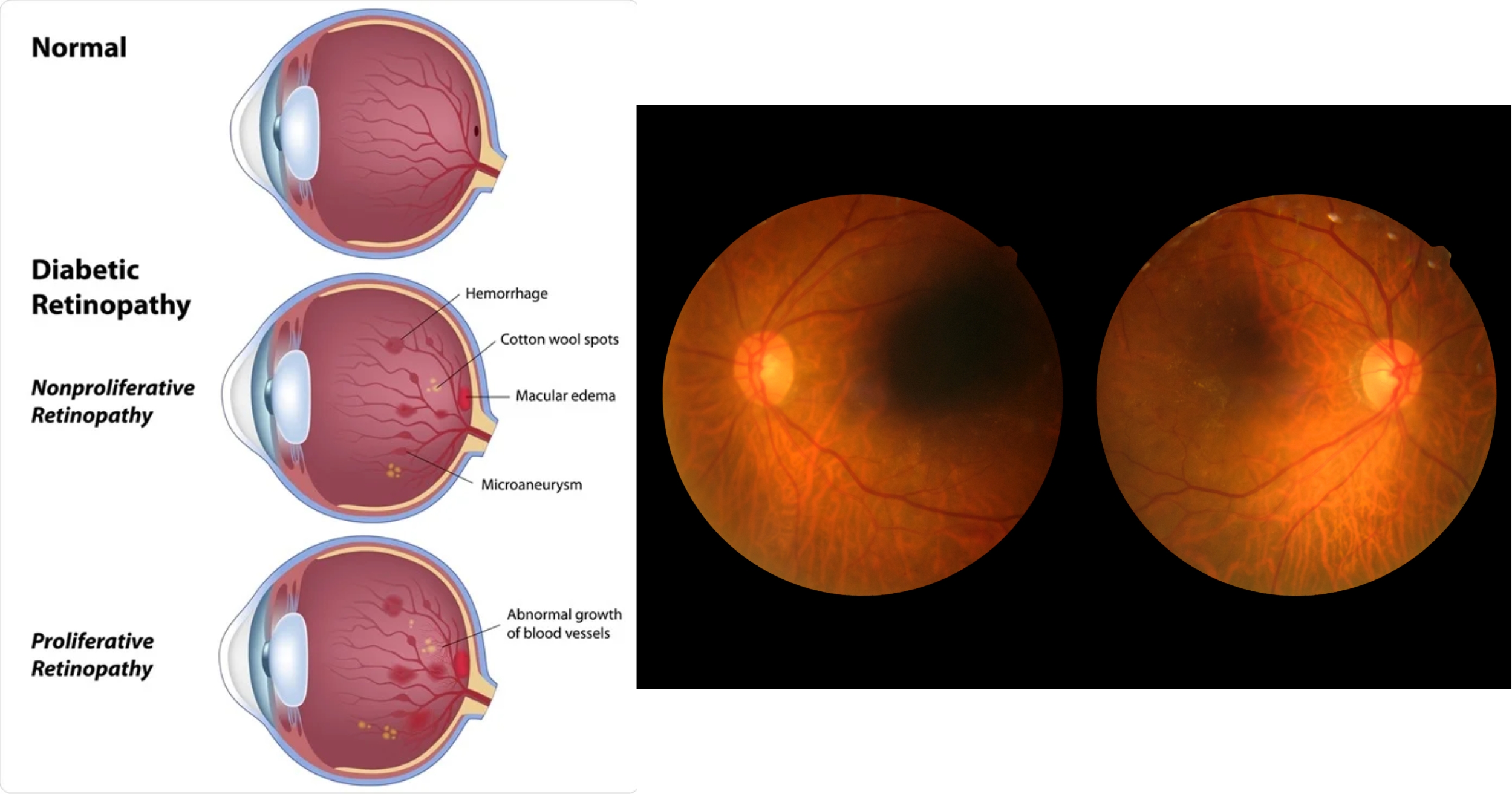
Are there medications for diabetic retinopathy?
Intravitreal injections are presently the only medications specifically designed to treat more advanced forms of retinopathy (for example, proliferative diabetic retinopathy).
Symptoms of diabetic retinopathy can include:
- blurred vision
- floaters or dark spots
- trouble distinguishing colors
If left untreated, diabetic retinopathy can progress to blindness.
What types of eye injections are used to treat diabetic retinopathy?
Anti-VEGF (vascular endothelial growth factor) agents represent the primary class of injections for diabetic retinopathy. These drugs inhibit the formation of abnormal retinal blood vessels and reduce leakage from those vessels.
Abnormal vessel growth in diabetic retinopathy is driven by the protein VEGF. By blocking VEGF’s effects — including preventing leakage from fragile vessels — these treatments help slow disease progression and can improve visual outcomes.
There are four principal anti-VEGF agents in clinical use.
- Lucentis (ranibizumab) was the first anti-VEGF cleared for both diabetic retinopathy and diabetic macular edema. It’s an engineered antibody fragment derived from a humanized anti-VEGF monoclonal antibody.
- Eylea (aflibercept) is a recombinant fusion protein combining the VEGF-binding portions of VEGF receptors 1 and 2 with the Fc portion of human IgG1.
- Beovu (brolucizumab) is a humanized single-chain variable fragment , the smallest active antibody fragment approved for intravitreal administration.
- Avastin (bevacizumab) is a commonly used option for diabetic retinopathy despite being used off-label for this indication. First used in 2005, many retinal specialists opt for Avastin as an initial treatment because it is effective, generally safe, and often less expensive for patients and insurers.
Steroids may also be injected into the eye to reduce inflammation and symptoms. These often require repeat administrations to maintain their benefit and be most effective .
How are injections delivered into the eye?
Prior to an injection, the eye care professional will clean the area around your eye and drape it with a sterile cloth.
Your clinician may hold your eyelids open manually or use small speculums to keep the eye steady. Local anesthetic drops will be applied to numb the surface of the eye.
Then a very fine needle is inserted into the eyeball to administer the medication. Once you are prepared and positioned, the actual injection typically takes only a few minutes.
You may require multiple injections, depending on your doctor’s recommendations and how your retinopathy responds to therapy.
Injections might be given monthly or at other intervals as needed. As your condition stabilizes, the frequency may be reduced or treatments discontinued.
Do eye injections for diabetic retinopathy hurt?
These procedures are usually not painful because the eye surface is anesthetized first.
To minimize any discomfort associated with anti-VEGF injections, some physicians administer a subconjunctival lidocaine injection prior to the intravitreal shot.
Anxiety and fear are common before the procedure; for many people the worry leading up to the injection is worse than the injection itself. For example, HealthEH’s Mike Hoskins, who has had dozens of treatments including injections and laser therapy, described the anticipation as more stressful than the procedure.
After the injection you may notice itching, mild irritation, or a sense of heaviness in the eye; these sensations usually subside within a day or two.
Contact your eye care provider promptly if you experience severe pain, significant vision changes, or other concerning signs after treatment, as these may indicate complications that need urgent attention.
Why might injections be chosen over laser therapy for diabetic retinopathy?
Retina specialists often prefer injections when there’s active leakage or bleeding that needs immediate control, while laser therapy is commonly used for targeted coagulation and long-term management of abnormal vessels and areas of ischemia.
You may receive laser therapy instead of injections, or a combination of both, depending on the nature and extent of your retinopathy.
The decision on the optimal treatment approach is made jointly by you and your ophthalmologist based on your individual circumstances.
How frequently are injections needed for diabetic retinopathy?
In many cases, injections are administered monthly until the eye condition stabilizes.
Once stability is achieved, your eye doctor may extend the intervals between injections or stop them entirely.
Exact timing depends on your medical history and how your retinopathy evolves under treatment.
What is the effectiveness of eye injections for diabetic retinopathy?
A 2021 study reported that injections lowered the risk of vision-threatening events by about 75% over two years in people who already had diabetic retinopathy.
Another 2021 study indicates that anti-VEGF injections can lessen the severity of diabetic retinopathy and reduce the chance it will progress to diabetic macular edema.
Are there eye drops for diabetic retinopathy?
Currently there are no eye drops approved to treat diabetic retinopathy, although research is investigating this possibility for the future.
The ongoing DR:EAM study is testing a novel topical drop that might slow or reverse diabetic retinopathy progression.
OTT166 is an investigational small-molecule selective integrin inhibitor that targets integrin proteins influenced by VEGF; blocking them could potentially halt or reverse disease progression.
What other non-injection treatments are being researched for diabetic retinopathy?
Investigations are underway into options such as oral therapies, non-invasive laser techniques, and surgical approaches. There is no set timeline for completion of this research, and no guarantee these approaches will ultimately gain approval.
Takeaway
Diabetic retinopathy is a frequent complication of diabetes, and medicated intravitreal injections provide a generally painless and effective treatment for its more advanced stages.
Injections can slow disease progression and help preserve vision. You may receive injections monthly until your condition stabilizes, after which treatments may be spaced out or stopped.
These procedures are performed in an ophthalmologist’s office; numbing drops reduce discomfort and most people experience only minimal side effects afterward.
Frequently Asked Questions
Diabetic retinopathy medication refers mainly to intravitreal injections—most commonly anti-VEGF agents and sometimes steroids—used to reduce abnormal vessel growth, control leakage, and slow disease progression.
The principal injections are anti-VEGF drugs such as ranibizumab (Lucentis), aflibercept (Eylea), brolucizumab (Beovu), and off-label bevacizumab (Avastin). Steroid injections may also be used in certain cases.
Frequency varies by response, but many patients start with monthly injections until stability is achieved, after which intervals may be extended or treatment paused based on clinical evaluation.
Most patients experience minimal pain because the eye surface is anesthetized beforehand. Some minor irritation or heaviness may occur afterward and typically resolves within a day or two.
Alternatives include laser therapy, which is often used for targeted coagulation, and combined approaches. Research is ongoing into eye drops, oral therapies, and noninvasive treatments, but none are yet standard replacements for injections.






Related Posts

Cherries for Diabetes: Should They Be Part of Your Diet?
Aug 15, 2026 • 10 min read
Biktarvy and Cost: What You Need to Know
Sep 2, 2026 • 35 min readSide Effects of Trulicity: What You Need to Know
Aug 16, 2026 • 30 min read
What Is Cigna Express Scripts for Medicare?
Sep 5, 2026 • 33 min read
4 Herbs for Sickle Cell Anemia
Aug 20, 2026 • 29 min read