Hiya Vitamins Review By a Mom Who Is a Dietitian

- Key takeaways
- Kelli’s tl;dr
- Pros and cons of Hiya vitamins
- Pros
- Cons
- Ingredient quality and testing
- Why trust Kelli’s Hiya vitamins review
- Hiya Vitamins products
- Hiya Kids Daily Multivitamin
- HealthEH’s review
- What our tester says
- Pros & cons
- Product details
- Hiya Kids Daily Iron+
- HealthEH’s review
- Pros & cons
- Product details
- Hiya Kids Bedtime Essentials
- HealthEH’s review
- What our tester says
- Pros & cons
- Product details
- Hiya Kids Daily Probiotic
- HealthEH’s review
- Pros & cons
- Product details
- Hiya Kids Daily Greens + Superfoods
- HealthEH’s review
- What our tester says
- Pros & cons
- Product details
- Potential downsides
- Important safety concerns
- Alternatives to Hiya vitamins
- Pricing guide:
- Hiya vitamins: Where to buy
- Signing up for Hiya
- Frequently asked questions
- Is Hiya better than Olly?
- Are Hiya vitamins FDA approved?
- Are Hiya vitamins natural?
- Does Hiya use synthetic vitamins?
- Are Hiya vitamins actually good?
- The bottom line
Key takeaways
- Hiya makes children’s supplements using primarily whole food ingredients and contains no added sugar.
- The brand is best-known for its multivitamin and also offers a probiotic, a bedtime formula, an iron option, and a greens powder.
- For this Hiya Vitamins review, registered dietitian and parent Kelli McGrane evaluated multiple items with her toddler — with varied outcomes.
Even when you try hard, getting a toddler to eat a balanced diet can be challenging. Whether your child is picky or won’t stay at the table for long, a multivitamin can help ensure they get key nutrients — though it shouldn’t replace a varied diet.
As a dietitian and parent of a 3-year-old, Kelli McGrane was attracted to Hiya as a cleaner alternative to the gummy vitamins her child had been taking. Hiya was launched by a father who wanted kids’ vitamins without added sugar or artificial components.
So, are they worthwhile? Continue reading for Kelli’s dietitian perspective and to learn whether her toddler liked the products she tested.
Kelli’s tl;dr
- The Daily Multivitamin worked well for our family — my toddler used it for about a year without complaint. He grew bored after that, but I’d consider subscribing again.
- The Bedtime Essentials didn’t end up helping our child, though it may benefit other kids; its ingredients appear to be high quality.
- The Greens+Superfoods Powder was a hit in dessert-style smoothies, and my toddler enjoyed it.
Pros and cons of Hiya vitamins
Pros
- no added sugar, gluten, dairy, or artificial dyes and additives
- independently tested for heavy metals, allergens, and pathogens
- sweetened with monk fruit extract
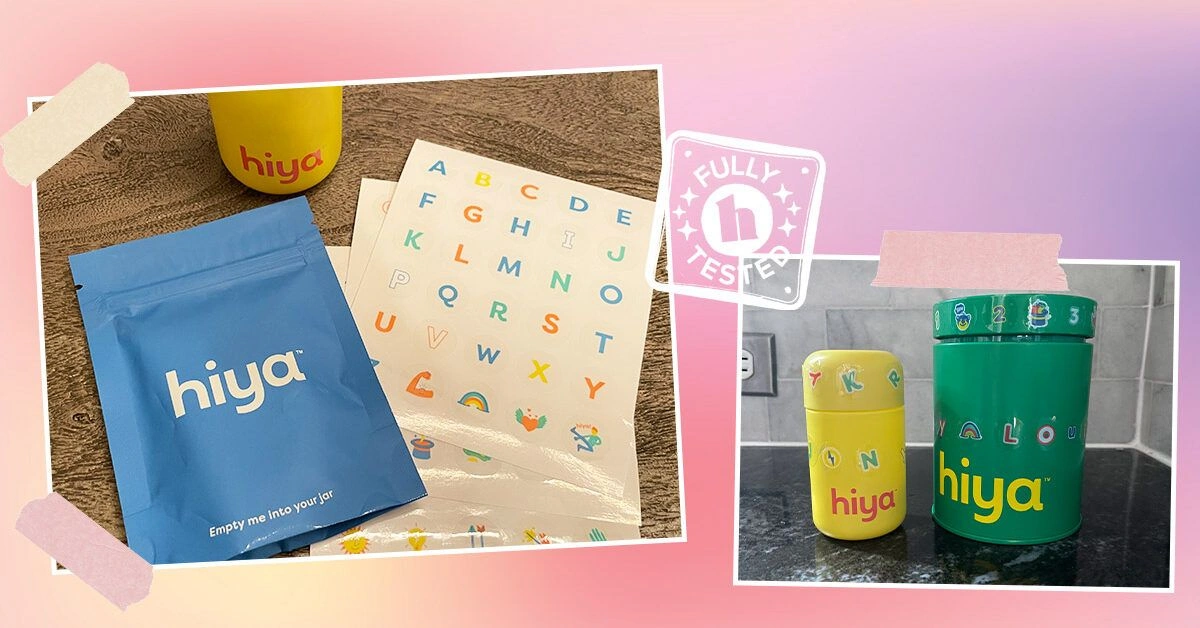
- first delivery includes a reusable glass jar and decorative stickers
- refills arrive in plastic-free pouches for subsequent shipments
- subscription plans available for households with one to five children
Cons
- pricey compared with some alternatives
- not intended for children under 2 years old
- available only via subscription
- no dedicated omega-3 product
- some kids may struggle to move away from gummy vitamins
Ingredient quality and testing
Hiya formulates supplements with whole food–derived ingredients. Products are naturally sweetened with monk fruit extract and mannitol, a sugar alcohol that provides sweetness without being metabolized by oral bacteria into cavities.
Beyond being sugar-free, Hiya’s offerings exclude artificial dyes, additives, and preservatives. They’re free from major allergens and made in a peanut-free facility.
Hiya’s manufacturing sites follow current good manufacturing practices (CGMP) and are U.S.-based. The company also sends products to independent, accredited labs to test for heavy metals, allergens, pathogens, and to confirm ingredient purity and potency.
Why trust Kelli’s Hiya vitamins review

“I’m Kelli McGrane, a registered dietitian and cookbook author. I reviewed the ingredient lists of Hiya’s children’s supplements and tried several items with my own toddler.
I earned my Bachelor’s and Master’s degrees in Nutritional Science from Boston University.
I’ve worked as a nutrition editor, clinical dietitian in two Boston hospitals, and as a nutrition researcher at the University of Colorado and Children’s Hospital.
I’ve also freelanced as a writer and editor for multiple online outlets.”
Hiya Vitamins products
Hiya Kids Daily Multivitamin
- Form:chewable tablet
- Number of servings:30 per container
- Dose:1 tablet daily
- Recommended age:2 years and up
- Price:$30.00
*Price may vary.
HealthEH’s review
Hiya Kids Daily Multivitamin is the brand’s signature item. Unlike candy-like gummy vitamins, these chewable tablets contain no added sugar, gelatin, dyes, or artificial additives.
Because monk fruit and mannitol are used for sweetness instead of sugar, the tablets are less likely to promote cavities.
Each 1-tablet serving supplies 15 vitamins and minerals to support growth, development, and general health.
These include:
- vitamins A, C, D, and E
- B vitamins (folate, thiamin, riboflavin, biotin, pantothenic acid, and B12)
- calcium
- iodine
- zinc
- selenium
- manganese
Iron is notably absent from the formula. While iron is vital for many children, too much iron from supplements can cause iron poisoning.
For children with anemia or those unable to meet iron needs through food, a pediatrician may recommend an iron supplement.
What our tester says
“As a dietitian and parent of a fussy, active toddler, I’ve spent a lot of time looking into toddler vitamins.
I first gave my son a multivitamin with omega-3s because we don’t eat much fish. It worked at first, but he began calling the supplement ‘candy’ and trying to get more — a safety worry. Wanting a sugar-free option led me to Hiya.
My son has used Hiya off and on for about a year. Since he loved gummies, I was surprised at how readily he accepted the chewable tablets. He had no trouble taking one daily and enjoyed decorating the bottle with stickers.
As a busy parent, I liked the monthly automatic deliveries and that the tablets usually arrived intact — although one or two were occasionally broken.
After roughly 11 months, my toddler said he was bored with the flavor and refused to take them. Not wanting excess stock, I canceled the subscription after a year.
Overall, I’m impressed with the vitamins and would consider subscribing again. I’d also like Hiya to offer an omega-3 option; while I can buy one separately, it would be convenient to get both from the same brand.”

Pros & cons
- independently tested for purity
- no added sugar
- free from gluten, dairy, GMOs, and artificial additives
- once-daily dosing
- kid-approved flavor
- sustainable, reusable bottle with stickers
- on the pricier side
- subscription required
- child lost interest after about a year
Product details
- Active ingredient(s) (serving strength) :(% DV for kids 2 to 3 years) vitamin A 360 mcg (120% DV), vitamin C 40 mg (267% DV), vitamin D 25 mcg (167% DV), vitamin E 3.5 mg (58% DV), thiamin 0.5 mg (100% DV), riboflavin 0.6 mg (120% DV), folate 200 mcg DFE (133% DV), vitamin B12 2 mcg (222% DV), biotin 25 mcg (313% DV), pantothenic acid 2.5 mg (125% DV), calcium 20 mg (3% DV), iodine 50 mcg (56% DV), zinc 3 mg (100% DV), selenium 15 mcg (75% DV), manganese 1.5 mg (125% DV), vitamin K2 8 mcg, Fruit and Vegetable Blend 25 mg (apple, beet, blueberry, broccoli, carrot, green cabbage, kale, parsley, raspberry, spinach, strawberry, tomato)
Hiya Kids Daily Iron+
- Form:chewable tablet
- Number of servings:30 per container
- Dose:1 tablet daily
- Recommended age:2 years and up
- Price:$30.00
*Price may vary.
HealthEH’s review
Hiya Kids Daily Iron+ supplies 7 mg of iron carbonyl, a type of iron that may cause fewer GI side effects than other forms. It also has vitamin C, which can enhance iron absorption.
One tablet provides 100% of the daily value (DV) for iron for children under 4 years, and 39% of the DV for older kids.
Like other Hiya products, Kids Daily Iron+ contains no added sugar, gluten, dairy, or artificial additives, and it’s vegan-friendly.
Iron helps transport oxygen throughout the body, and iron deficiency can negatively affect growth and development. Many children get enough iron from foods like meats, poultry, fish, beans, and fortified cereals.
Children unable to meet iron needs through diet might benefit from an iron supplement like this one. Because kids are more vulnerable to iron toxicity , consult a pediatrician first.
Pros & cons
- independently tested for heavy metals, pathogens, and allergens
- contains a gentler iron form
- includes vitamin C to aid absorption
- eco-friendly, refillable glass jar
- no added sugar, gluten, dairy, GMO, or artificial additives
- vegan-friendly
- costly
- subscription required
- 100% DV for kids under 4 may be more than some diets need
Product details
- Active ingredients (serving strength) :(% DV for kids < 4 years) total carbohydrate < 1 g (<1% DV), vitamin C 25 mg (167% DV), iron 7 mg (100% DV)
- Returns :returns of unopened containers within 10 days
- Shipping :free shipping on first order
Hiya Kids Bedtime Essentials
- Form:chewable tablet
- Number of servings:30 per container
- Dose:1 tablet nightly, or per pediatrician guidance
- Recommended age:2 years and up
- Price:$35.00
*Price may vary.
HealthEH’s review
Hiya Kids Bedtime Essentials aims to help children relax and sleep more soundly. It contains seven vitamins and compounds that may support relaxation and sleep, including:
- vitamin B6
- calcium
- magnesium
- L-theanine
- choline
- gamma-aminobutyric acid (GABA)
- chamomile flower extract
Noticeably absent is melatonin. Although melatonin is generally considered safe for short-term (and possibly longer-term) use in adults and teens, its safety in young children is less clear. Concerns include potential overdose and uncertain habit-forming effects in young kids.
Bedtime Essentials has thousands of five-star reviews from parents who say it helps their children wind down. Still, the supplement’s effectiveness hasn’t been rigorously studied and will likely differ between children.
Importantly, the Bedtime Essentials ingredients don’t overlap with the multivitamin, so children can take both unless a pediatrician advises otherwise.
What our tester says
“I added Bedtime Essentials after months of bedtime struggles with my son. Although many toddlers have nighttime energy, my son had a particularly hard time calming down.
I tried changes to his evening meals, adjusted screen time and his routine, and tried more comforting hugs, and then decided to test a supplement.
Adding the supplement to my subscription was simple, and I liked the refillable bottle. My son also liked the flavor.
However, it didn’t seem to help him. After a month there was no improvement; he actually seemed more energetic at times after taking it.
This could have been coincidental, yet I prefer not to give supplements unnecessarily, so I canceled the subscription.”
Pros & cons
- independently tested for heavy metals, allergens, and pathogens
- does not include melatonin
- no added sugar, dairy, gluten, GMOs, or artificial additives
- formulated to avoid habit-forming ingredients
- kid-approved taste
- can be combined with Hiya Kids Daily Multivitamin
- pricey
- may not help every child
- subscription required
Product details
- Active ingredients (serving strength) :(% DV for kids 2 to 3 years) carbohydrate <1 g (<1 % DV), total sugars 0 g, vitamin B6 3 mg (600% DV), calcium 20 mg (3% DV), magnesium 5 mg (6% DV), L-theanine 50 mg, gamma-aminobutyric acid 5 mg, chamomile flower extract 5 mg
- Returns :returns within 10 days (unopened containers)
- Shipping :free shipping on first order
Hiya Kids Daily Probiotic
- Form:chewable tablet
- Number of servings:30 per container
- Dose:1 tablet daily
- Recommended age:2 years and up
- Price:$30.00
*Price may vary.
HealthEH’s review
Hiya Kids Daily Probiotic delivers 10 billion colony-forming units (CFU) per chewable to support gut and immune health. It includes two probiotic strains: Lactobacillus rhamnosus (GG) and Lactobacillus paracasei (Lpc-37).
Lactobacillus rhamnosus is well-studied and can help treat acute diarrhea and promote gut wellness. Lactobacillus paracasei is less researched but some evidence indicates it may support immunity and guard against common colds.
The formula also contains Bacillus lactis as a prebiotic fiber to nourish beneficial bacteria.
Probiotics can be useful in certain cases, especially for kids with GI issues, but they’re not necessary for every child. Always consult a pediatrician before starting a new supplement.
Pros & cons
- independently tested for heavy metals, allergens, and pathogens
- no added sugar, gluten, dairy, GMOs, or artificial additives
- vegan-friendly
- includes two research-backed probiotic strains
- contains prebiotic fiber
- subscription required
- comparatively costly
Product details
- Active ingredients (serving strength) :Prebiotic & Probiotic Blend (Lactobacillus rhamnosus (GG), Lactobacillus paracasei, Bacillus lactis (BI-04), Larch arabinogalactan) 10 billion CFU
- Returns :returns within 10 days (unopened containers)
- Shipping :free shipping on first order
Hiya Kids Daily Greens + Superfoods
- Form:powder
- Number of servings:30 per container
- Dose:1 scoop (7.5 g)
- Recommended age:2 years and up
- Price:$58.00
*Price may vary.
HealthEH’s review
Hiya Kids Daily Greens + Superfoods contains 55 whole-food–derived ingredients — like broccoli, spinach, cucumber, and flaxseed — to introduce more nutrient variety in a creamy, chocolate-flavored drink.
Unlike most adult-oriented greens powders, Hiya’s formula is tailored for children with ingredient types and amounts that are appropriate for younger ages.
The powder is organized into blends (Essential Greens, Digestion, Superfoods, and Core Development) and supplies 50% of the DV for vitamin D for 2–3 year olds.
To serve, mix 1 scoop into milk, or add to smoothies, yogurt, or oatmeal.
Remember, this powder is a supplementary boost and not a substitute for whole fruits and vegetables.
What our tester says
“Although I don’t use it daily, I’ve been pleasantly surprised by Hiya Kids Daily Greens + Superfoods. I’m not a fan of adult greens powders, but I appreciate that this one is made for kids and uses recognizable whole foods like Brussels sprouts and beets.
The powder blends fairly easily into milk, but I prefer adding it to smoothies. I make ‘dessert’ smoothies for my son with milk, frozen banana, spinach, peanut butter, frozen blueberries, and a scoop of this powder — he loves them!
The flavor is a mild chocolate that isn’t overly sweet, and it’s an easy way to add nutrients my child might otherwise miss.
My only reservations are the $58 price and the subscription requirement. If it were less expensive or available as an occasional purchase, I’d be more likely to keep it stocked.”

Pros & cons
- 55 whole-food-derived ingredients
- formulated specifically for children
- independently tested for heavy metals, allergens, and pathogens
- no added sugar, dairy, gluten, GMOs, or artificial additives
- vegan-friendly
- eco-friendly refillable container
- expensive
- subscription required
- not suitable for those with chocolate allergies
Product details
- Active ingredients (serving strength) :(% DV for kids 2 to 3 years) calories 20, total fat 1 g (2% DV), saturated fat 1 g (7% DV), total carbohydrate 4 g (3% DV), fiber 2 g (13% DV), protein 1 g (0% DV), vitamin D 8 mcg (50% DV), calcium 38 mg (5% DV), phosphorus 86 mg (19% DV), magnesium 50 mg (63% DV), sodium 30 mg (2% DV), Nutrient Blend 1.5 g (Essential Greens Blend, Kids’ Superfoods Blend), Core Development Blend 135 mg (aquamin AG calcareous marine algae, vitamin D2 mushroom powder)
- Returns :returns within 10 days (unopened containers)
- Shipping :free shipping on first order
Potential downsides
The main drawback of Hiya is cost, with many supplements running $1 or more per serving. Also, Hiya is only sold via subscription on the company website.
Hiya products are aimed at children 2 years and older, but since nutrient needs change with age, Hiya may be less suitable as kids approach 9 years old.
Finally, not every child requires a multivitamin or other supplements. If you’re unsure whether your child meets their nutrient needs, consult a registered dietitian, pediatrician, or other healthcare professional first.
Important safety concerns
When selecting kids’ supplements, remember children process nutrients differently than adults and are more prone to overdoses.
Tips to limit vitamin toxicity risk:
- Choose supplements formulated for your child’s age.
- If multiple supplements are used, check for overlapping nutrients.
- Keep bottles tightly closed and stored out of reach.
- Follow dosing instructions on the label unless a pediatrician advises otherwise.
- If your child takes medications, ask a pediatrician about possible interactions.
Although Hiya indicates limited nutrient overlap across its products, confirm with your pediatrician.
Hiya manufactures in a peanut-free facility and avoids major allergens, but cross-contamination risks remain for other allergens, so it may not be ideal for children with severe food allergies.
Alternatives to Hiya vitamins
If Hiya is too costly or doesn’t fit your child’s needs, several other children’s vitamin brands are available. Below is a brief look at notable alternatives.
Keep in mind that serving sizes and recommended daily servings may vary by age, which can affect monthly cost.
Pricing guide:
- $ = under $0.30 per serving
- $$ = $0.30 to $1.00 per serving
- $$$ = over $1.00 per serving
Hiya vitamins: Where to buy
Hiya operates as a subscription service that ships vitamins directly to your home. You can tailor your order to the number of children in your family, and shipments are monthly.
Hiya isn’t sold in retail stores, so its website is currently the only place to purchase.
Signing up for Hiya
To begin, choose the products you want in your subscription and indicate how many children you’re purchasing for.
Your first delivery includes a 30-day supply in a reusable glass bottle plus stickers. Monthly refills arrive in recyclable pouches.
You can manage your subscription online or by emailing customer support. Kelli needed to modify her subscription several times, and customer service responded promptly to make changes.
Frequently asked questions
Is Hiya better than Olly?
Hiya and Olly are both well-known kids’ vitamin brands but differ in ingredients and sugar content.
Hiya provides chewable tablets rather than gummies and contains no added sugar, with fewer extra ingredients and suitability for households with peanut allergies.
Olly products tend to be less expensive and are easier to find both online and in stores. Olly products are NSF-certified for purity and potency, while Hiya relies on third-party testing for potency and contaminants.
Are Hiya vitamins FDA approved?
The Food and Drug Administration (FDA) does not approve dietary supplement brands or individual products.
To promote quality and safety, Hiya manufactures in CGMP-compliant facilities and has products tested by independent labs for heavy metals, allergens, and pathogens.
Are Hiya vitamins natural?
Hiya’s supplements are made with primarily whole-food ingredients and exclude artificial dyes, flavors, sweeteners, fillers, and preservatives.
Does Hiya use synthetic vitamins?
Most of Hiya’s nutrients are sourced from whole foods. Some nutrients (for example, calcium) do not list a food source and may be synthetic.
The company states the greens powder contains no synthetic ingredients and that Hiya tablets use whole food sources where available.
Are Hiya vitamins actually good?
Hiya vitamins may be a solid choice for some families, but whether they’re “good” depends on your child’s needs and tastes.
Our tester found the multivitamin to be “a great solution for us,” with their toddler taking it for a year before losing interest. They also called the greens powder “a great addition to dessert smoothies,” which their child enjoyed.
They aren’t a universal fix. As with any supplement, review ingredients and consult a pediatrician to confirm appropriateness for your child.
The bottom line
Overall, Hiya provides high-quality, sugar-free supplements that avoid many artificial additives found in other kids’ brands.
The products ship in refillable glass jars and are automatically refilled monthly. Several items passed the toddler taste test.
That said, Hiya may not suit everyone due to cost, subscription-only availability, and a more limited product range than some competitors (though the lineup could expand). Before starting any new supplement, check with your pediatrician to ensure it meets your child’s nutritional needs.
Frequently Asked Questions
Yes. Hiya products are made without added sugar, artificial dyes, or common allergens like dairy and gluten, and they’re produced in a peanut-free facility.
Hiya formulations are designed for children aged 2 years and older; they aren’t intended for infants and may be less appropriate as children near older childhood without adjusting doses.
Hiya sends products to independent, accredited labs to check for heavy metals, allergens, pathogens, and to verify potency and purity, in addition to manufacturing in CGMP-compliant facilities.
Many Hiya products are formulated to avoid overlapping nutrients so they can be combined (for example, multivitamin with Bedtime Essentials), but you should confirm with a pediatrician before combining supplements.
Hiya is sold via subscription on the company website and is not typically available in retail stores; first deliveries include a reusable glass jar and later refills come in recyclable pouches.
Read Next


Related Posts

What Are Deer Antler Supplements? Health Effects and Safety
Aug 15, 2026 • 19 min read
The 5 Best Broad-Spectrum CBD Products for 2025: Tried and Tested
Sep 27, 2026 • 9 min read
5 Best Vitamin B Complex Supplements for 2025, According to Our Dietitians
Oct 2, 2026 • 13 min read
What Are Licorice Root's Benefits and Downsides?
Aug 31, 2026 • 10 min read
The 10 Best Selenium Supplements, According to a Dietitian
Oct 6, 2026 • 14 min read