Homemade Bug Spray Recipes for Your Skin, Home, and Yard


- Which natural ingredients can repel insects?
- Citrus-based oils
- Garlic oil
- Thyme essential oil
- Oil of lemon eucalyptus
- Dill essential oil
- Cinnamon oil
- Lavender essential oil
- Peppermint oil
- Safety considerations
- DIY bug spray recipe for skin
- DIY bug spray for home and yard
- Homemade bug spray for plants
- Additional ways to avoid bug bites
- Frequently asked questions
- Is vinegar and water an effective insect repellent?
- Which natural repellent works best?
- Can you spray vinegar on plants?
- The takeaway
Oils derived from plants such as peppermint, garlic, lemon, and thyme might help deter insects. Still, additional studies are necessary to conclusively confirm the advantages of DIY bug sprays.
Many people prefer to avoid synthetic pesticides and chemical insect repellents.
As a result, more folks are choosing eco-friendly, natural alternatives, and homemade insect sprays are a convenient option. They’re often safe for people to use and can be effective as well.
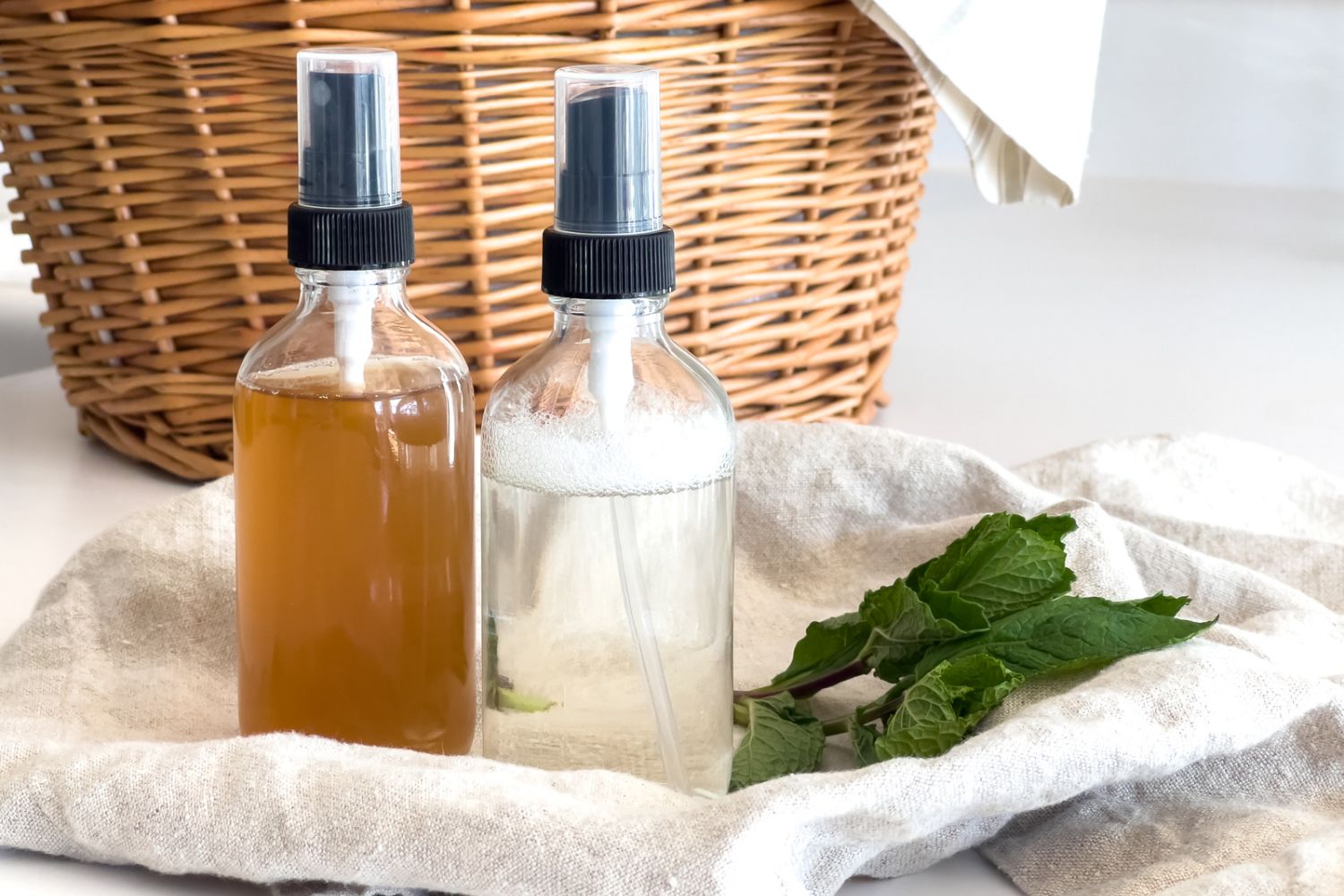
Read on to discover several natural ingredients that could help repel pests and learn how to craft your own bug spray.
Which natural ingredients can repel insects?
The Environmental Protection Agency (EPA) requires most repellents applied to skin to be registered, ensuring both human safety and a degree of proven effectiveness.
The EPA also classifies some natural substances as minimum-risk pesticides, including oils from:
- citronella
- cedar
- geranium
- peppermint
- soybean
Keep in mind that while these substances are typically safe for people, the EPA does not evaluate them for how well they work.
Below are commonly used natural ingredients that may help keep insects away in and around your home.
Citrus-based oils
Citronella and citrus-derived oils like limonene are widely recognized for repelling insects and are often used in candles and other products designed to deter pests.
Research indicates citronella can help repel mosquitoes, as well as fleas, aphids, mites, and flies.
Garlic oil
Studies from 2024 and 2015 suggest garlic oil may be useful in repelling ticks and reducing tick infestations.
The EPA also mentions garlic oil as a natural tick deterrent suitable for yards and garden areas.
Thyme essential oil
Some studies indicate thyme essential oil could help repel mosquitoes, ticks, and fleas.
However, thyme oil is not recommended for undiluted skin application and should be used with caution.
Oil of lemon eucalyptus
Oil of lemon eucalyptus (OLE) is a frequently EPA-approved ingredient found in many insect repellents.
A 2018 review suggests OLE may repel mosquitoes comparably to DEET, which has its own health and environmental concerns. Research from 2022 also found citrus oils can deter ants.
The Centers for Disease Control and Prevention (CDC) advises against using undiluted OLE (“pure” OLE), since it isn’t EPA-registered and lacks formal safety and efficacy testing.
Note that OLE is distinct from lemon eucalyptus essential oil, which does not offer the same mosquito-repelling benefits.
Dill essential oil
Some research suggests dill essential oil may deter Lone Star ticks, which can spread illnesses such as Lyme disease.
A 2023 study reported that dill oil used in an industrial setting helped keep insects that damage food production away.
There is limited evidence regarding dill oil’s insect-repellent effects on humans, and it should be diluted before any topical use.
Cinnamon oil
Cinnamon oil appears to have mosquito-repelling properties. A 2019 study found cinnamon oil effective against mosquitoes in both laboratory and field conditions.
Another 2017 study suggested cinnamon oil might also kill mosquito larvae.
Because cinnamon oil can irritate skin, dilute it for topical use or limit its application to yard treatments.
Lavender essential oil
Lavender oil is well known for promoting relaxation and sleep, and some studies indicate it may also work to repel mosquitoes.
Lavender is generally regarded as safe for topical use even without dilution in many cases.
Peppermint oil
The EPA lists peppermint and peppermint oil as natural ingredients with relatively low risk.
Research indicates peppermint may help deter a range of pests including mosquitoes, ants, flies, and lice.
Additional work found peppermint oil could also discourage spiders. Peppermint is an accessible option and can be paired with essential oil for bug bites advice when deciding on topical remedies.
Safety considerations
Although many plant-derived oils are viewed as safe for humans, not every essential oil is suitable for direct skin use.
If you plan to apply essential oils topically, dilute them with an appropriate carrier oil first.
Some oils, including certain citrus-based oils , can be phototoxic when placed on skin, meaning sun exposure could cause severe irritation or burns.
DIY bug spray recipe for skin
When formulating a bug spray for skin, select essential oils known to be safe and suitable for topical use.
For a simple, natural mosquito repellent for skin, gather:
- a glass spray bottle
- oil of lemon eucalyptus or lavender essential oil
- witch hazel
Follow these steps:
- Combine 1 part oil of lemon eucalyptus or lavender essential oil with 10 parts witch hazel in the bottle. (Use 1 drop of oil to every 10 drops of witch hazel.)
- Gently shake to blend.
- Spritz to apply.
DIY bug spray for home and yard
You can also make a homemade spray to use indoors and outdoors.
Keep in mind that while many essential oils are effective at deterring pests, not all are appropriate for use on skin.
To craft a spray for around the house or garden, you’ll need:
- a glass spray bottle
- lavender essential oil
- oil of lemon eucalyptus
- citronella essential oil
- distilled water
- white vinegar
Then do the following:
- Mix 10 to 20 drops of each essential oil with 2 ounces (oz) of distilled water and 2 oz of white vinegar.
- Shake gently to combine.
- Spray as needed.
Homemade bug spray for plants
Certain DIY sprays can help protect plants from pests.
However, some oils, such as cinnamon essential oil , might damage plants. Still, cinnamon can suppress weeds and may offer other gardening benefits.
For a plant-safe mixture, dilute a few drops of thyme essential oil, garlic oil, or oil of lemon eucalyptus in distilled water. Mix in a glass spray bottle and mist your plants lightly.

Additional ways to avoid bug bites
Beyond using repellents, take these precautions to reduce your risk of bug bites:
- Wear light-colored, loose-fitting clothes when outdoors.
- Cover arms, legs, ankles, and feet to limit exposed skin.
- Stay indoors around dawn and dusk to avoid peak mosquito activity.
- Use citronella candles outdoors for extra protection.
- Avoid wearing heavily scented lotions or perfumes outside.
- Eliminate standing water from gutters, birdbaths, pots, and wheelbarrows.
- Keep food and beverages covered.
Frequently asked questions
Is vinegar and water an effective insect repellent?
Some evidence indicates apple cider vinegar may deter certain insects, but more research is required to understand its full potential as a repellent.
Which natural repellent works best?
There isn’t a single natural repellent identified as the most effective. Oils such as lemon eucalyptus, peppermint, garlic, dill, and others have demonstrated insect-repelling activity in various studies.
Can you spray vinegar on plants?
Research is mixed on the safety of spraying diluted acetic acid (vinegar) on plants. A 2022 study showed acetic acid spray helped apple trees survive drought, while some agencies note acetic acid is also used to control weeds and can harm plants.
Test vinegar on a small, inconspicuous plant before applying it widely.
The takeaway
Natural repellents made from oils like garlic, thyme, lemon eucalyptus, and dill are gaining popularity. Some plant-derived oils may rival common synthetic repellents in their ability to deter insects.
Keep in mind that more research is needed to verify the safety and effectiveness of many natural repellents.
If you plan to mix a homemade bug spray, be informed about the safety of each ingredient. Natural does not always mean harmless in every situation.
Frequently Asked Questions
Choose oils recognized as safe for topical use—such as oil of lemon eucalyptus (diluted appropriately), lavender, or witch hazel as a base—and always dilute essential oils with a carrier like witch hazel or a carrier oil before applying to skin.
Yes—many DIY sprays work for outdoor use. Use diluted mixes of oils like citronella, lemon eucalyptus, or garlic for yard applications, and test on a small area first since some oils (like cinnamon) can damage plants.
Reapply every few hours or after sweating, swimming, or heavy activity. Natural sprays often have shorter protection times than some synthetic repellents, so more frequent application may be needed.
Yes. Some essential oils can irritate skin, be phototoxic, or cause allergic reactions. Always dilute essential oils, do a patch test, avoid use on young children without guidance, and keep oils away from eyes and mucous membranes.
Effectiveness varies by ingredient and concentration. Oils like oil of lemon eucalyptus have evidence of good mosquito protection, but many natural sprays may not match the duration of certain EPA-registered synthetic repellents. Choose ingredients and reapply as needed.






Related Posts

Entomophobia: Fear of Insects
Sep 7, 2026 • 18 min read
Can Carpenter Ants Bite You?
Aug 4, 2026 • 15 min read
What Does Sexual Coercion Look Like?
Jul 31, 2026 • 21 min read
Everything You Need to Know about Sensory Deprivation Tank Therapy
Aug 11, 2026 • 32 min read
Chickpea Allergy: What You Need to Know
Aug 6, 2026 • 26 min read