Sleep Paralysis: Why It Happens and How to Stop the Episodes

- What to Do During an Episode, Right Now
- What Is Sleep Paralysis, Actually?
- What Causes Sleep Paralysis?
- The Figure in the Corner of the Room
- Sleep Paralysis vs Night Terrors and Other Look-Alikes
- Is Sleep Paralysis Dangerous?
- How to Stop Sleep Paralysis From Coming Back
- Frequently Asked Questions
- What causes sleep paralysis?
- How long does sleep paralysis last?
- Is sleep paralysis dangerous?
- What is a sleep paralysis demon?
- How can I stop sleep paralysis for good?
- What is the difference between sleep paralysis and night terrors?
- References
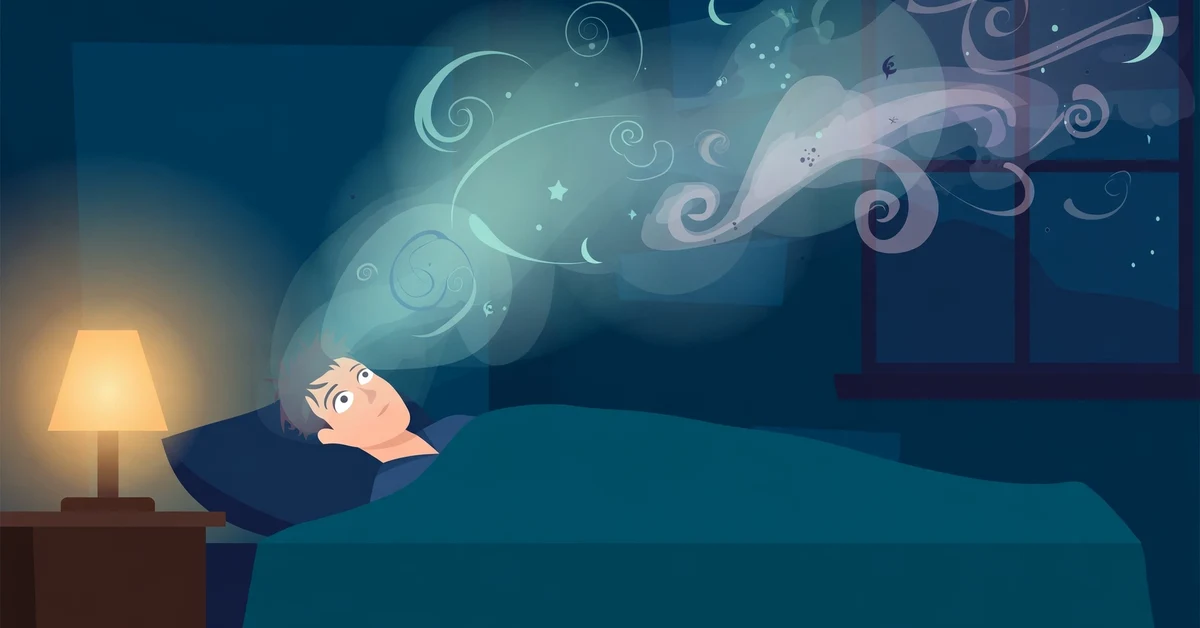
It’s 3 a.m. and you’re awake. Not half-awake. Fully, clearly awake – you can see the ceiling, the shape of the door, the glow of the clock. And you cannot move. Not your arms. Not your legs. You try to call out and all that comes is a thin squeak in your throat. Something feels wrong in the room, and your chest feels pressed down, as if the air itself got heavier.
Then, just as suddenly, it lets go. You sit up, heart hammering, completely fine.
That’s sleep paralysis. It’s one of the most frightening things a healthy body can do, and one of the most harmless. The NHS puts it bluntly: it can be scary, but it’s harmless. Below: what’s happening in your brain, how to get out of an episode faster, why so many people see a figure in the room, and the few situations where episodes mean your sleep needs a proper check.
What to Do During an Episode, Right Now
Here’s the part most guides skip. You’re mid-episode, frozen, frightened. What actually helps?
First, name it. Remind yourself what this is: “This is sleep paralysis. It ends on its own. It has never hurt anyone.” That sounds too simple to matter. It matters a lot. Panic makes the hallucinations darker, and people who learn to recognize the state say episodes feel shorter and far less terrifying.
Second, stop fighting for the big movements. Your arms and legs won’t answer yet. Your eyes and your smallest muscles will. Cleveland Clinic suggests starting tiny: wiggle one finger. Then two. Curl a toe. Move your eyes left and right. Those small signals seem to help the brain finish waking the body up, and they give you something to do besides panic.
Third, slow your breathing down. The chest pressure that makes episodes so frightening is partly mechanical – your breathing is running on the shallow REM pattern – and partly fear. Long, slow breaths through your nose push against both.
Then just wait. Episodes typically last from a few seconds to 1 or 2 minutes – that is the range MedlinePlus gives. It feels endless. It isn’t.
If you share a bed, agree on a signal beforehand – a hum, a forced breath. It means “touch me, shake me out of this,” and being touched often ends an episode on the spot.
What Is Sleep Paralysis, Actually?
To understand the freeze, you need one fact about dreaming sleep. During REM sleep, the stage where vivid dreams happen, your brain deliberately switches your muscles off. The switch is called atonia, and it’s protective – it stops you from acting out your dreams. You would be in trouble without it.
Sleep paralysis is a timing glitch. Your mind surfaces from REM just before the switch flips back. Consciousness comes online; the paralysis hasn’t left yet. Dream imagery can leak into the room for the same reason: part of the brain is still dreaming while another part is awake, looking at your actual bedroom.

It happens as you’re falling asleep (hypnagogic) or, more often, as you wake (hypnopompic). Doctors call the standalone version isolated sleep paralysis.
How common is it? Estimates are all over the map, from about 8% of people to as many as half, depending on how the question is phrased. Patient.info settles on at least 1 in 10 people having an episode. Students and people under heavy stress report it most, and for most people it happens once or twice, never again.
What Causes Sleep Paralysis?
Nobody can point to one cause, and any source that claims otherwise is overselling. What research has found is a stack of triggers that make the handoff between REM and waking sloppier. The biggest one isn’t exotic. It’s sleep debt.
Not enough sleep, at irregular times. Sleep deprivation and broken schedules are the most consistent links in the literature – MedlinePlus, the NHS and Cleveland Clinic all list them first or near it. A brain that’s desperate for REM sleep dives into it faster and climbs out of it messier.
Sleeping on your back. Episodes are reported far more often by back-sleepers than by side-sleepers. The NHS is direct about it: do not sleep on your back, as it can make sleep paralysis more likely. Why position matters is still not settled – changes in breathing and airway tone are the leading guesses – but the link is strong enough that side-sleeping is standard advice.
Stress and mental health. Anxiety, panic disorder, bipolar disorder and PTSD all show up alongside sleep paralysis more often than chance would explain, and trauma survivors report particularly vivid episodes. Alcohol belongs on the list too: it fragments second-half sleep, exactly when REM is densest.
Other sleep disorders. Obstructive sleep apnea shows strikingly high rates in some studies – 38% in one sample cited by the Sleep Foundation. Narcolepsy gets its own section below: there, the paralysis is one symptom of a larger problem.
It also runs in families – researchers have found a genetic component, though no single gene explains it.
The Figure in the Corner of the Room
Now the part people actually Google at 3 a.m. The demon.
A large share of episodes come with hallucinations, in three oddly consistent types that sleep researchers call:
- The intruder. A sensed presence in the room. Footsteps. A shadow by the door. The certainty that someone is standing over the bed. You may never see a face. You just know.
- The incubus. Pressure on the chest, difficulty breathing, the feeling of being held down or sat on. This is the one that built the folklore.
- The vestibular type. Floating, flying, spinning, drifting out of your body. Oddly, this one is sometimes not frightening at all – occasionally it’s pleasant.
Why does a brain do this? The best current explanation: the threat-detection parts of your brain are awake and working overtime, while the dream machinery is still running and happy to supply an image for the alarm. A presence gets detected, so a figure gets drawn. The chest pressure has a mechanical piece as well – during REM your breathing is shallow and your chest muscles are partly switched off, and a frightened brain reads that restriction as a weight. Then as a someone.

Every culture that has lived with this has named it. The “old hag” of Newfoundland folklore. Kanashibari in Japan. The demon on the chest in Fuseli’s painting. The names differ; the neurology doesn’t. What you’re seeing is not a visitor. It’s a glitch with very good special effects.
Sleep Paralysis vs Night Terrors and Other Look-Alikes
Three other sleep events get mixed up with sleep paralysis constantly – and the differences matter, because the right response differs.
| Feature | Sleep paralysis | Night terrors | Exploding head syndrome | REM sleep behavior disorder |
|---|---|---|---|---|
| When it happens | Falling asleep or waking, at the edges of REM | First third of the night, out of deep sleep | Usually while falling asleep | During REM sleep |
| Can you move? | No – that is the defining feature | Yes – sitting up, thrashing, screaming | Yes | Yes – acting out dreams, sometimes forcefully |
| Memory afterwards | Vivid and detailed | Usually none at all | Remembers the bang or flash | Remembers the dream, not the actions |
| Who gets it most | Teens through 30s | Children | Adults over 50 | Adults over 50, more often men |
| Is it dangerous? | No | Rarely – falls are the main risk | No | It can injure the sleeper or a partner – see a doctor |
The quickest way to separate sleep paralysis from a night terror is memory. Someone who has had sleep paralysis can describe every second of it the next morning. Someone who has had a night terror usually remembers nothing – it’s the person in the next bed who got the fright.
Is Sleep Paralysis Dangerous?
On its own, no. An episode cannot suffocate you, stop your heart, or trap you permanently. The real costs are indirect: dread of going to sleep, broken nights, and the flat exhaustion that follows. For people having episodes several times a week, that dread can harden into a genuine fear of bedtime – and that is worth treating.
There is one exception, and it’s why doctors ask follow-up questions instead of just reassuring you. Sleep paralysis is one of the classic symptoms of narcolepsy. In narcolepsy the brain can’t hold the borders between waking and REM sleep properly, so pieces of REM – the paralysis, the dream imagery – keep spilling into waking life.
See a doctor about your sleep if episodes come with any of the following:
- Falling asleep uncontrollably during the day – at your desk, mid-conversation, even mid-meal
- Sudden muscle weakness when you laugh or get a shock – knees buckling, jaw going slack. That’s cataplexy, and it’s a strong narcolepsy marker
- Vivid, dream-like hallucinations as you fall asleep, not only when you wake
- Badly broken night-time sleep despite spending enough hours in bed
- Episodes several times a week that aren’t improving
What happens next is less intimidating than it sounds. Usually a sleep diary first. Then, if needed, a night in a sleep lab – polysomnography, sensors on the scalp and chest while you sleep – and a daytime nap study called the MSLT, which checks whether you drop straight into REM. Mayo Clinic describes excessive daytime sleepiness, not the paralysis itself, as the hallmark of narcolepsy, so the daytime picture is what points doctors that way.
How to Stop Sleep Paralysis From Coming Back
There’s no pill that ends an episode in progress, and no drug approved specifically for isolated sleep paralysis. What works is boring. Boring is good news here – it means the levers are in your hands.
Protect your sleep like it’s medication. Seven to nine hours, the same bedtime, the same wake time, weekends included. Every major source – the NHS, MedlinePlus, Cleveland Clinic – gives this advice because sleep regularity is the most reliable way to cut episodes down. People who fix a chaotic schedule often find the episodes quietly stop on their own.
Sleep on your side. If back-sleeping is your default, a pillow wedged behind your back can help you stay turned. Given how consistently position shows up in the research, this change deserves a real trial before anything fancier.
Cut the evening disruptors. Alcohol at night, caffeine late in the day, a phone in bed – none of them single-handedly causes sleep paralysis, but all of them fragment sleep and make the REM boundaries messier.
Treat what’s underneath. If you snore heavily or have sleep apnea, get it assessed; treating apnea can cut episodes sharply. If anxiety or PTSD is part of the picture, therapy aimed at it – CBT, and CBT-I designed for insomnia – tends to reduce episodes as sleep stabilizes. Doctors occasionally prescribe low-dose antidepressants for frequent, stubborn cases because they suppress REM sleep, but that’s a specialist’s call, not a do-it-yourself step.
And the folk fixes? Sleeping with a light on, keeping a particular object by the bed, herbs, crystals – there is no evidence behind any of them. A dim light does no harm if the dark itself has become frightening. But if a remedy costs real money, or replaces actual sleep treatment, skip it.
Researchers still don’t fully know why some brains trip this wire and others never do. But what’s known is enough to act on: fix the schedule, fix the position, treat the underlying stuff – and for most people, the 3 a.m. freeze becomes a story they used to tell.
Frequently Asked Questions
What causes sleep paralysis?
Sleep paralysis happens when you wake from REM sleep just before the muscle paralysis of dreaming switches off. No single cause has been proven, but sleep deprivation, irregular schedules, sleeping on your back, stress, alcohol, and conditions such as narcolepsy and sleep apnea all raise the odds.
How long does sleep paralysis last?
Usually from a few seconds to about 2 minutes. It feels far longer because you’re conscious and unable to move. Episodes end on their own as the brain finishes waking the body, and small movements – wiggling a finger, moving your eyes – may help you come out of one sooner.
Is sleep paralysis dangerous?
No. An episode can’t suffocate you or cause lasting harm, and the NHS describes it plainly as scary but harmless. See a doctor for frequent episodes, fear of going to sleep, constant daytime tiredness, or narcolepsy signs such as falling asleep uncontrollably during the day.
What is a sleep paralysis demon?
It’s a hallucination, not a visitor. During an episode the brain’s threat systems are on high alert while dream imagery is still running, so many people sense a presence, see a figure, or feel a weight on the chest. Cultures everywhere gave that figure a name – the old hag, kanashibari, a demon – long before neuroscience explained it.
How can I stop sleep paralysis for good?
There’s no guaranteed permanent cure, but most people can cut episodes down sharply: keep a fixed sleep schedule with 7 to 9 hours a night, sleep on your side, cut alcohol and late caffeine, and treat any underlying problem such as sleep apnea, insomnia, or anxiety. If episodes stay frequent, a sleep specialist can discuss therapy or medication.
What is the difference between sleep paralysis and night terrors?
Almost everything. Sleep paralysis strikes at the edges of REM sleep, leaves you frozen but fully aware, and you remember it vividly. Night terrors erupt out of deep sleep early in the night: the person may sit up and scream, can move freely, and usually remembers nothing the next day. Night terrors are also far more common in children.
References
- NHS – Sleep paralysis: https://www.nhs.uk/conditions/sleep-paralysis/
- MedlinePlus Medical Encyclopedia – Sleep paralysis: https://medlineplus.gov/ency/article/000801.htm
- Cleveland Clinic – Sleep Paralysis: What It Is, Causes, Symptoms & Treatment: https://my.clevelandclinic.org/health/diseases/21974-sleep-paralysis
- Sleep Foundation – Sleep Paralysis: Symptoms, Causes, and Treatment: https://www.sleepfoundation.org/parasomnias/sleep-paralysis
- Bhalerao et al. (2024), Recent Insights Into Sleep Paralysis: Mechanisms and Management, Cureus: https://pmc.ncbi.nlm.nih.gov/articles/PMC11344621/
Read Next

When and How Should You End a Relationship with a Person Diagnosed with Bipolar Disorder?

Midlife Crisis or Midlife Myth? What to Know About Going ‘Over the Hill’

Lonely at the Top: Why Success Can Shrink Your Support System
Bedsore Stages in Pictures: What Each Pressure Ulcer Stage Looks Like

6 Ways to Ease Piriformis Syndrome Pain with Self-Massage and Stretches

How to Use a Warm Eye Compress to Treat Styes and Other Conditions
Related Posts
How Administrative Barriers Affect Access to Mental Health Care
Nov 20, 2026 • 14 min read
5 Ways to Reduce Stress-Related Tension in Your Neck and Shoulders
Sep 23, 2026 • 4 min read
AI Mental Health Tools vs. Professional Therapy
Nov 18, 2026 • 12 min read
Therapy for Burnout When You Are Still Performing Well
Nov 9, 2026 • 13 min read
Riding Out a Panic Attack: What Is Happening in Your Body and What to Do
Nov 8, 2026 • 23 min read