Soursop Benefits: What the Evidence Really Shows

- What Soursop, Guanabana and Graviola Actually Are
- Soursop Nutrition in Plain Numbers
- Claimed Benefits, Graded Honestly
- Digestion and Fiber: The Strongest Everyday Claim
- Blood Pressure and Blood Sugar: Promising, Early, Easy to Overstate
- Inflammation, Bacteria and the Cancer Claim
- Risks You Should Know Before You Buy Tea or Extracts
- How to Eat Soursop Safely
- The Bottom Line on Soursop
- Frequently Asked Questions
- Is soursop the same as guanabana and graviola?
- Can soursop cure cancer?
- Are soursop seeds safe to eat?
- Can soursop lower blood pressure?
- Does soursop lower blood sugar?
- Is soursop tea safe to drink every day?
- Who should avoid soursop supplements?
- How much soursop should I eat?
- References
Cut one open at a market stall in the Caribbean and the smell hits first – sweet, a little tangy, somewhere between pineapple, strawberry and banana. Then someone nearby tells you it cures cancer. That claim follows soursop everywhere, and it deserves a straight answer before anything else.
Here is that answer. Soursop is a nutritious tropical fruit with solid fiber, vitamin C and potassium. Lab and animal studies show interesting effects from its extracts, and one small human study found a blood pressure benefit from daily juice. No human study has shown that soursop treats or prevents cancer. None. The Memorial Sloan Kettering Cancer Center and MD Anderson both warn patients not to use soursop products in place of proven treatment, and Cleveland Clinic makes the same point about the lack of human data.
This guide goes claim by claim. You will see what the fruit actually provides, what the research actually tested, and where the real risks sit – because soursop does carry risks that many sellers skip over.
What Soursop, Guanabana and Graviola Actually Are
Soursop, guanabana and graviola are three names for the same fruit. Soursop is the common English name. Guanabana is the Spanish name used across Latin America. Graviola is the Portuguese name, and it is the name supplement brands use most often. In parts of Asia the fruit is called sirsak or guyabano. The scientific name is Annona muricata, a small evergreen tree native to tropical parts of the Americas and now grown across the Caribbean, West Africa and Southeast Asia, according to WebMD and Cleveland Clinic.
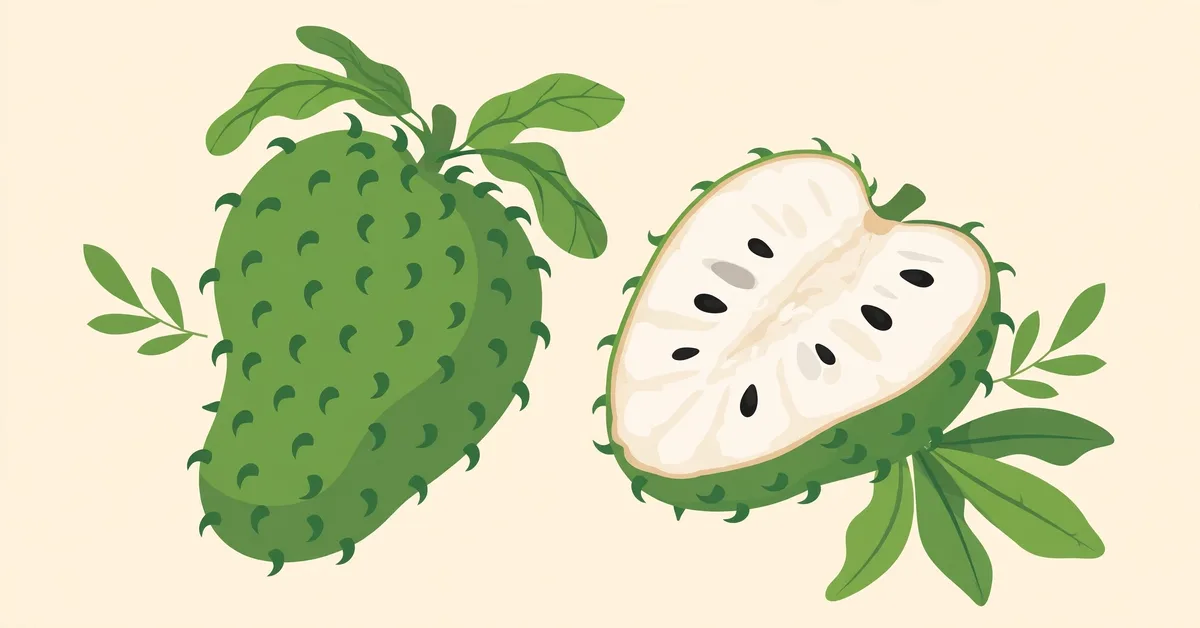
The fruit grows large, with dark green skin covered in soft spikes. Inside, the white pulp is soft, fibrous and creamy, wrapped around large black seeds. People eat it fresh or blend it into juice and smoothies. Leaves are dried for tea, and extracts are sold as capsules. Those forms are not the same thing, and the safety picture changes a lot between them.

Soursop Nutrition in Plain Numbers
On nutrition alone, soursop earns its place on the plate. Cleveland Clinic lists one cup of raw soursop, about 225 grams, at 148 calories, 37.8 grams of carbohydrates, 30 grams of natural sugar and 7.42 grams of fiber. That fiber figure is the standout.
The same cup provides vitamin C, potassium and magnesium, plus smaller amounts of B vitamins, folate, calcium and phosphorus, per Cleveland Clinic and MD Anderson. WebMD notes that a whole fruit can supply roughly a third to half of the daily potassium target for many adults. Soursop also contains flavonoids, tannins and phytosterols – the compounds behind most of the research interest, and most of the hype.
One caution belongs right here. The fruit is sweet for a reason. A whole large fruit can hold 70 to 80 grams of sugar, Cleveland Clinic dietitian Alexis Supan notes, so portion size matters if you watch your blood sugar. Half a fruit now and the rest frozen for smoothies is a sensible habit.
If you enjoy comparing tropical fruits, our guide to dragon fruit benefits shows a similar pattern – good fiber and vitamin C, with health claims that need the same careful reading.
Claimed Benefits, Graded Honestly
Traditional healers have used soursop fruit, leaves and stems for generations, for fever, pain, digestive complaints and infections, MD Anderson reports. Traditional use tells us a plant was valued. It does not prove the plant works for a condition in people today.
The table below sums up the main claims. Read the evidence level column first. It tells you whether people, animals or glass dishes produced the result.
| Claimed benefit | What the research shows | Evidence level |
|---|---|---|
| Better digestion | High fiber content supports regular bowel movements and feeds gut bacteria, the same way other fiber-rich fruits do | Human evidence – for fiber in general, not soursop trials |
| Immune support | Vitamin C content supports normal immune function as part of an overall diet | Human evidence – for vitamin C in general |
| Lower blood pressure | One study cited by Cleveland Clinic found lower blood pressure in people who drank about 7 ounces of soursop juice daily for three months; potassium content may also help | Human evidence – one small study, needs replication |
| Lower blood sugar | Extracts lowered blood glucose in diabetic rats over 28 days in animal work cited by WebMD; human data are lacking | Animal studies only |
| Less inflammation | Antioxidant compounds such as flavonoids showed anti-inflammatory activity in lab work; dose in people is unknown | Lab and animal studies only |
| Fights bacteria | Extracts killed bacteria linked to gum disease, cavities and staph infections in lab dishes, per Cleveland Clinic | Lab studies only |
| Protects the stomach lining | Extracts helped heal ulcers and protect the gut lining in animal studies cited by MD Anderson | Animal studies only |
| Treats or prevents cancer | Leaf extracts killed cancer cells in lab dishes, often at high doses; there are no human trials showing benefit | Lab studies only – no human evidence |
| Better sleep and calm | Leaf tea has a long history as a bedtime drink in the Caribbean and Latin America | Traditional use only |
Digestion and Fiber: The Strongest Everyday Claim
Of all the claims, digestion has the firmest ground. Fiber works. Soursop carries both soluble and insoluble fiber, Cleveland Clinic notes, and fiber adds bulk, helps food move through the gut and can ease constipation.
That does not make soursop a digestive medicine. It makes it a useful fruit. Our overview of papaya benefits covers a tropical fruit with a comparable digestive story.
Blood Pressure and Blood Sugar: Promising, Early, Easy to Overstate
Blood pressure is the one area with direct human data. Cleveland Clinic describes a study in which people drank about 7 ounces of soursop juice daily for three months and ended with lower blood pressure than a control group. Supan called the result promising. One study is a start, not a verdict. Larger trials are needed before anyone can say how big the effect is or who it helps.
Potassium adds a quieter reason for interest. It helps the body shed sodium and relaxes tension in blood vessel walls, WebMD explains. Soursop fits that pattern without being a treatment on its own.
Blood sugar sits a step lower on the evidence ladder. In animal studies, soursop extract lowered blood glucose in diabetic rats, and researchers think some compounds may slow carbohydrate breakdown. No solid human trial backs that up yet. If you live with diabetes, treat soursop as a sugary fruit first and a possible helper second – because the sugar in a large serving is real, while the glucose benefit in people is still unproven.
Inflammation, Bacteria and the Cancer Claim
Lab work gives soursop its boldest headlines. In test tubes, extracts show antioxidant activity and have slowed or killed certain bacteria. Leaf extracts have killed cancer cells grown in labs, per Cleveland Clinic, WebMD and MD Anderson.
A lab dish is not a body. Doses in these studies are often far higher than anyone gets from eating fruit. Compounds that kill cells in a dish may never reach a tumor, may break down during digestion, or may harm healthy tissue on the way. That is why MD Anderson stresses this research is early and done in lab settings, not in humans.
So the honest grade is this. Antioxidant content: real, as food chemistry. Anti-inflammatory effect in people at normal servings: unproven. Antibacterial effect in people: unproven. Cancer treatment or prevention in people: no human evidence at all. Anyone selling graviola capsules as a cancer cure is selling you a lab result dressed up as a promise. Do not delay or skip proven care for it.

Risks You Should Know Before You Buy Tea or Extracts
Fresh fruit in normal food amounts is one thing. Daily tea, juice in large amounts and concentrated extracts are another, and this is where soursop has a documented downside.
The seeds are toxic. Cleveland Clinic and MD Anderson both say the same thing in plain words – spit the seeds out, do not eat them, and do not blend them into smoothies. The seeds were used in folk medicine for parasites, but modern guidance is to avoid them.
Heavy, long-term use has been linked to Parkinson-like symptoms. Soursop contains a compound called annonacin. Research from regions where soursop tea and fruit are consumed heavily and daily over many years has linked that pattern to movement problems resembling Parkinson disease – rigid muscles, slow movement, balance and gait trouble, and problems with eye movement, Cleveland Clinic reports. Occasional fresh fruit is a very different exposure from daily extract or strong leaf tea for years. Still, the link is serious enough that Cleveland Clinic advises against soursop extracts and teas.
Medication interactions are real. Compounds in soursop can interfere with medicines for high blood pressure and for diabetes, Cleveland Clinic warns. If a fruit or extract lowers blood pressure or blood sugar on top of a drug doing the same job, the combined effect can push either one too low. Tell your clinician and pharmacist if you use soursop juice daily, drink the leaf tea, or take graviola capsules – especially if you take blood pressure medicine, diabetes medicine, or a sedative, since leaf tea is also used traditionally as a calming drink.
Supplements are loosely regulated. The U.S. Food and Drug Administration does not approve soursop teas and extracts for safety or strength the way it does prescription drugs, Cleveland Clinic notes.
Pregnant or breastfeeding? Data are thin, so stick to normal food amounts and skip extracts and teas until you have spoken with your clinician. The same caution fits anyone with Parkinson disease or low blood pressure.
How to Eat Soursop Safely
Pick a fruit that gives a little under gentle pressure. Cut it lengthwise, scoop the pulp with a spoon, and pick out every black seed as you go. Eat it fresh, stir it into yogurt, or blend the seed-free pulp with ice and lime.
A few habits keep the risk low:
- Enjoy the fruit as food, in modest servings, a few times a week at most – not as a daily tonic.
- Remove all seeds before eating or blending, every time.
- Skip concentrated extracts and strong daily leaf tea, especially if you take blood pressure or diabetes medicine.
- Buy whole fruit or plain frozen pulp over sweetened drinks, which add sugar on top of the fruit sugar already there.
For a tart contrast, our guide to grapefruit benefits carries its own medication warnings – a good reminder that natural does not mean interaction-free. Another option is tamarind, a tangy fruit with a long history in food and folk practice.
The Bottom Line on Soursop
Eat soursop because it tastes good and because a cup gives you real fiber, vitamin C and potassium. That case is solid. Treat the bigger claims – blood sugar control, fighting infection, shrinking tumors – as early science that has not yet been tested properly in people. And respect the downside that sellers tend to bury: toxic seeds, a Parkinson-like risk tied to heavy long-term use of teas and extracts, and clashes with common blood pressure and diabetes drugs.
Good fruit, honest limits. That is enough.
Frequently Asked Questions
Is soursop the same as guanabana and graviola?
Yes. Soursop, guanabana and graviola are different names for the same fruit, Annona muricata. Soursop is the English name, guanabana is Spanish, and graviola is Portuguese and is used often on supplement labels, per WebMD and MD Anderson.
Can soursop cure cancer?
No. Leaf extracts have killed cancer cells in lab dishes, but there are no human studies showing that soursop treats, prevents or cures cancer, according to Cleveland Clinic and MD Anderson. Do not use soursop products instead of proven cancer care.
Are soursop seeds safe to eat?
No. The large black seeds are toxic and should be removed and thrown away. Cleveland Clinic and MD Anderson both advise against eating them or blending them into drinks.
Can soursop lower blood pressure?
Maybe, a little. One small study cited by Cleveland Clinic found lower blood pressure after three months of daily soursop juice, and the fruit is rich in potassium. That is early evidence, not a replacement for prescribed treatment.
Does soursop lower blood sugar?
In diabetic rats, soursop extract lowered blood glucose. Human evidence is lacking, and the fruit itself contains a lot of natural sugar, so people with diabetes should watch portions and talk to their clinician, per WebMD.
Is soursop tea safe to drink every day?
Daily, long-term use of soursop leaf tea and extracts is the pattern linked in some studies to Parkinson-like movement symptoms. Cleveland Clinic advises staying away from soursop extracts and teas. Occasional fresh fruit is a different matter.
Who should avoid soursop supplements?
People who take blood pressure or diabetes medicine, people with Parkinson disease or low blood pressure, and anyone who is pregnant or breastfeeding should avoid extracts and teas and check with a clinician first, because interactions and safety data are limited.
How much soursop should I eat?
A modest serving works well – about half a large fruit or one cup of pulp. A whole large fruit can hold 70 to 80 grams of sugar, Cleveland Clinic notes, so save the rest for later or freeze it.
References
- Cleveland Clinic – 6 Health Benefits of Soursop
- WebMD – Health Benefits of Soursop
- MD Anderson Cancer Center – Soursop: Does This Tropical Fruit Have Health Benefits?
- Memorial Sloan Kettering Cancer Center – Graviola monograph on soursop safety and interactions
- SingleCare – Soursop benefits and side effects overview





Related Posts

Hello Wisp Review: Birth Control, UTIs, STIs, and More
Sep 29, 2026 • 21 min read
6 Reasons Working from Bed Isn't Doing You Any Favors
Oct 6, 2026 • 22 min read
Will It Fit? What to Check Before Buying Home-Care Equipment
Nov 15, 2026 • 30 min read
Weight Management Retreats: How to Choose the Right Programme for Sustainable Health
Nov 17, 2026 • 20 min read
Broccoli Sprouts: Benefits, Nutrition, Sulforaphane and Safety
Nov 23, 2026 • 9 min read