Resting Heart Rate Chart by Age: What's Normal for Men, Women and Children

- Resting heart rate chart for men
- Resting heart rate chart for women
- What people actually measure: population averages
- Resting heart rate chart for children
- How to measure your resting heart rate correctly
- What your smartwatch number really means
- What raises and lowers resting heart rate
- Why the trend matters more than one reading
- When a low resting heart rate is a problem
- When a high resting heart rate is a problem
- How to lower your resting heart rate
- The bottom line
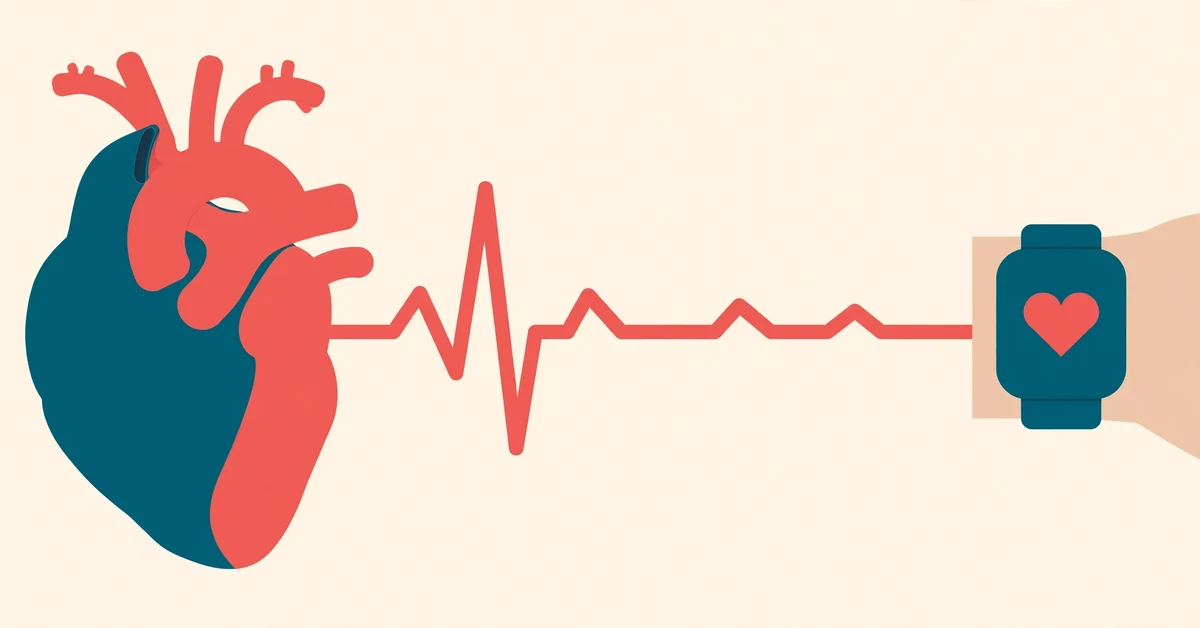
Your resting heart rate is the number of times your heart beats per minute when you are completely at rest — and it is one of the simplest fitness and health signals you can measure. For adults, the American Heart Association puts the normal range at 60 to 100 beats per minute (bpm). Well-trained athletes often sit between 40 and 60 bpm, and women average a few beats higher than men. Use the charts below to find where your number falls for your age and sex, then read on for how to measure it properly — because a badly taken reading is the most common reason a normal heart looks abnormal on paper.
One honesty note before the charts: unlike blood pressure, resting heart rate does not come with official “normal ranges” that change by adult age decade. The 60–100 bpm range applies at 25 and at 75. What does change with age is where people typically land inside that range — and that is mostly about fitness, not birthdays. The charts below therefore show two different, clearly labelled things: fitness bands (how your rate compares with people of your age and sex at different fitness levels) and population averages (what thousands of measured adults actually recorded). Neither is a pass/fail medical cutoff.
Resting heart rate chart for men
This is the standard fitness-band chart used in exercise science, adapted from the Topend Sports resting heart rate table. Find your age band, then read across to see which fitness category your morning resting heart rate falls into. Lower is generally better, because a trained heart pumps more blood with each beat and needs fewer beats to do the same work.
| Age | Athlete | Excellent | Good | Above average | Average | Below average | Poor |
|---|---|---|---|---|---|---|---|
| 18–25 | 49–55 | 56–61 | 62–65 | 66–69 | 70–73 | 74–81 | 82 or higher |
| 26–35 | 49–54 | 55–61 | 62–65 | 66–70 | 71–74 | 75–81 | 82 or higher |
| 36–45 | 50–56 | 57–62 | 63–66 | 67–70 | 71–75 | 76–82 | 83 or higher |
| 46–55 | 50–57 | 58–63 | 64–67 | 68–71 | 72–76 | 77–83 | 84 or higher |
| 56–65 | 51–56 | 57–61 | 62–67 | 68–71 | 72–75 | 76–81 | 82 or higher |
| 65+ | 50–55 | 56–61 | 62–65 | 66–69 | 70–73 | 74–79 | 80 or higher |
A man in his 40s with a resting heart rate of 68, for example, sits in the “Good” band — comfortably better than average for his age, without needing to train like an athlete. A reading in the “Poor” band is not a diagnosis, but it is a useful prompt: it usually reflects low aerobic fitness, and it is one of the most changeable numbers in this whole article.
Resting heart rate chart for women
Women’s resting heart rates run about 2 to 7 bpm higher than men’s on average, mainly because a slightly smaller heart pumps a little less blood per beat and compensates with a faster rate. The bands below already account for that difference.
| Age | Athlete | Excellent | Good | Above average | Average | Below average | Poor |
|---|---|---|---|---|---|---|---|
| 18–25 | 54–60 | 61–65 | 66–69 | 70–73 | 74–78 | 79–84 | 85 or higher |
| 26–35 | 54–59 | 60–64 | 65–68 | 69–72 | 73–76 | 77–82 | 83 or higher |
| 36–45 | 54–59 | 60–64 | 65–69 | 70–73 | 74–78 | 79–84 | 85 or higher |
| 46–55 | 54–60 | 61–65 | 66–69 | 70–73 | 74–77 | 78–83 | 84 or higher |
| 56–65 | 54–59 | 60–64 | 65–68 | 69–73 | 74–77 | 78–83 | 84 or higher |
| 65+ | 54–59 | 60–64 | 65–68 | 69–72 | 73–76 | 77–84 | 84 or higher |
Notice how little the bands move across the decades: the “Average” column for women is 73–78 bpm at age 20 and 73–76 bpm past 65. Age alone barely shifts resting heart rate — fitness, medication, thyroid function and general health shift it far more.
What people actually measure: population averages
Fitness bands describe how you compare. Averages describe reality. In the CDC’s NHANES survey data for the United States (Ostchega et al., National Health Statistics Reports No. 41 ), resting pulse was measured in more than 35,000 people. The median values — the exact middle of the population — were:
| Age | Men: median resting pulse (bpm) | Women: median resting pulse (bpm) |
|---|---|---|
| 20–39 | 69 | 74 |
| 40–59 | 68 | 71 |
| 60–79 | 67 | 70 |
| 80+ | 68 | 71 |
Two lessons hide in that small table. First, half of all healthy adults measure above these medians, so sitting a few beats above the middle is ordinary, not alarming. Second, the medians barely change with age — 69 bpm for young men, 67 for men in their 60s and 70s. When a resting heart rate climbs noticeably over the years, “getting older” is rarely the real explanation; fitness loss, weight gain, medication changes and developing health conditions are far more common causes.
Resting heart rate chart for children
Children’s hearts are smaller and beat much faster, and their normal ranges genuinely do change with age. These reference ranges are the ones listed by MedlinePlus (U.S. National Library of Medicine):
| Age | Normal resting heart rate (bpm) |
|---|---|
| Newborns (0–1 month) | 70–190 |
| Infants (1–11 months) | 80–160 |
| Children 1–2 years | 80–130 |
| Children 3–4 years | 80–120 |
| Children 5–6 years | 75–115 |
| Children 7–9 years | 70–110 |
| Children 10 years and older, teens and adults | 60–100 |
A sleeping child’s rate can sit below these awake ranges, and a crying, feverish or recently active child’s rate can sit well above them — both are expected. What matters for children, as for adults, is the calm, rested, well measurement.
How to measure your resting heart rate correctly
Most “abnormal” resting heart rates are measurement errors. Follow this protocol and your number becomes trustworthy:
- Time it right. Measure in the morning, shortly after waking, before coffee, breakfast or your phone. If mornings are impossible, sit or lie quietly for at least 5 minutes first.
- Empty your bladder and skip the caffeine. A full bladder and a recent espresso can each add several beats.
- Find the pulse. Use two fingers (not your thumb, which has its own pulse) on the inside of your wrist below the thumb, or gently on one side of your neck. Press lightly — pressing hard on the neck can actually slow the heart briefly.
- Count a full 60 seconds. The common 15-seconds-times-4 shortcut multiplies every miscount by four and hides an irregular rhythm. If the beat feels uneven, always count the full minute.
- Repeat and average. Take the reading on 3 to 7 different mornings and use the average. That average — not any single morning — is your resting heart rate.
A blood pressure cuff reading includes a pulse number too, and the two vitals are usually checked together; our blood pressure chart by age shows the companion ranges, and the blood pressure calculator explains what a cuff reading means.
What your smartwatch number really means
If your “resting heart rate” comes from a watch or fitness band, know that it is not quite the same measurement. Most wearables calculate resting heart rate from your sleep period or from the lowest sustained readings of the day, so a watch number typically runs a few beats lower than a manual count taken after waking. Optical wrist sensors also struggle with a loose fit, cold skin, tattoos and rapid arm movement, and they can miss beats when the rhythm is irregular.
That does not make the watch useless — quite the opposite. Its strength is the trend line: hundreds of nights of data show your baseline and its drift far better than occasional manual counts. Just compare like with like: judge your watch number against your own watch history, and your manual number against the charts on this page.
What raises and lowers resting heart rate
A resting heart rate that has moved from your usual baseline usually has an explanation. These are the common ones:
| Factor | Direction | Notes |
|---|---|---|
| Fever and infection | Raises it | Roughly 10 extra beats per minute for every 1 °C (1.8 °F) your temperature rises |
| Dehydration | Raises it | Less blood volume means the heart beats faster to keep up |
| Caffeine and nicotine | Raises it | Stimulants; the effect is strongest in the first hours after use |
| Decongestants (pseudoephedrine) and some asthma inhalers | Raises it | Common hidden cause of a “suddenly high” reading |
| Overactive thyroid (hyperthyroidism) | Raises it | Especially if the high rate comes with weight loss, tremor or heat intolerance |
| Anemia | Raises it | The heart compensates for lower oxygen-carrying capacity |
| Pregnancy | Raises it | Typically 10–20 bpm higher by late pregnancy as blood volume grows |
| Pain, anxiety and poor sleep | Raises it | Stress hormones push the baseline up, sometimes for days |
| Aerobic fitness | Lowers it | Training strengthens the heart so it pumps more blood per beat |
| Beta blockers (metoprolol, atenolol) and some calcium channel blockers (diltiazem, verapamil) | Lowers it | These medicines are designed to slow the heart; a lower reading on them is expected |
| Underactive thyroid (hypothyroidism) | Lowers it | Worth checking if a low rate comes with fatigue, cold intolerance and weight gain |
This is why a single strange reading should start with detective work, not worry: Were you ill, dehydrated, short on sleep, or freshly caffeinated? Did a medication change recently? Answer those before concluding anything about your heart.
Why the trend matters more than one reading
Day to day, a healthy resting heart rate naturally wobbles by a few beats. What carries information is a sustained change. A rise of about 5 to 10 bpm above your personal baseline that lasts several days often appears just before or during an infection — many people noticed exactly this pattern with flu and COVID-19 — and it also shows up with overtraining, mounting stress, worsening sleep or a thyroid gland speeding up. A gradual downward drift over months, on the other hand, is the classic signature of improving aerobic fitness.
A practical way to use this: glance at your 7-day average once a week rather than reacting to single mornings. If the average climbs and stays up for a week or more without an obvious cause — and especially if you feel unwell, tired or breathless with it — that is worth a conversation with a doctor.
When a low resting heart rate is a problem
A resting rate below 60 bpm is called bradycardia, and in a fit, symptom-free person it is usually a sign of a strong heart, not a weak one. It needs medical attention when it comes with symptoms, because then the heart may not be moving enough blood:
- Dizziness, light-headedness or fainting
- Unusual fatigue or inability to exercise as before
- Shortness of breath or chest discomfort
- Confusion or trouble concentrating
- A resting rate under 40 bpm while awake, even without symptoms, deserves a prompt check
Causes a doctor will look for include an underactive thyroid, the heart’s electrical system slowing with age (such as sick sinus syndrome or heart block), and rate-slowing medication doing its job too well. Never stop a prescribed heart medication because of a low reading — raise it at your next appointment, or sooner if you have symptoms.
When a high resting heart rate is a problem
A resting rate persistently above 100 bpm is called tachycardia. A day or two of it during a fever is expected; a resting rate that stays above 100 once you are well, rested and hydrated is not, and should be checked. Book an appointment if your resting heart rate is regularly in the 90s or above and creeping up, or if a faster rate comes with palpitations, a fluttering or irregular feeling, or breathlessness.
Get emergency help immediately if a fast or irregular heartbeat comes with chest pain or pressure, severe breathlessness, fainting, or severe dizziness. Those combinations can signal a heart attack or a dangerous rhythm problem, and they are not a “watch and wait” situation.
How to lower your resting heart rate
The reliable lever is aerobic fitness. Regular moderate-to-vigorous exercise — brisk walking, cycling, swimming, running — strengthens the heart muscle, and resting heart rate typically begins to drift down within 4 to 8 weeks of consistent training. Previously sedentary adults commonly see a drop of about 5 to 15 bpm over several months. Supporting habits help at the margins: sleeping 7 to 9 hours, limiting alcohol (an evening drink measurably raises overnight heart rate), quitting smoking, and treating sleep apnea if you have it.
What does not work: breathing tricks, cold water and vagus-nerve manoeuvres can slow your heart for a few minutes, which is useful for calming a reading, but they do not move the underlying baseline. Only sustained training — and treating medical causes like thyroid disease or anemia — does that.
The bottom line
For adults, a normal resting heart rate is 60 to 100 bpm at every age; where you sit inside that range says more about fitness, medication and health than about your age. Measure it properly — morning, rested, full-minute count, averaged over several days — compare it with the fitness band for your age and sex, and then watch the trend rather than any single number. If your rate is persistently below 60 with symptoms, persistently above 100 at rest, or has shifted by 10 bpm or more without explanation, bring the numbers to your doctor; the annual physical exam checklist by age shows where this fits into a routine check-up.
General information only, not medical advice. This article cannot diagnose a heart condition; if you have symptoms or concerns about your heart rate, see a qualified clinician.
Frequently Asked Questions
For everyone from older children through adults of any age, the normal resting heart rate is 60 to 100 beats per minute — the American Heart Association does not set different ranges for different adult decades. Younger children run faster: roughly 70 to 110 bpm at ages 7 to 9, 80 to 160 bpm for infants, and 70 to 190 bpm for newborns. Fitness moves you within the adult range far more than age does.
Most healthy women fall between 60 and 100 bpm. On the standard fitness chart, an “average” woman measures about 73 to 78 bpm depending on age, “good” is roughly 65 to 69 bpm, and “excellent” is about 60 to 65 bpm. Women average 2 to 7 bpm higher than men, which is normal and reflects a slightly smaller heart size.
Most healthy men fall between 60 and 100 bpm. An “average” man measures about 70 to 76 bpm on the fitness chart, “good” is roughly 62 to 67 bpm, and trained athletes commonly rest between 49 and 57 bpm. Population data from the CDC put the median adult man at 67 to 69 bpm.
Usually, yes. A resting rate in the 40s or 50s is common in people who exercise regularly and is a sign of an efficient heart, as long as you feel well. It deserves a medical check if it comes with dizziness, fainting, unusual fatigue, chest discomfort or breathlessness — or if you take a rate-slowing medicine such as a beta blocker and the dose was never matched to it.
It is inside the normal 60 to 100 bpm range, but at the upper end. Before accepting it as your baseline, rule out the temporary causes: recent caffeine, poor sleep, dehydration, pain, anxiety, a brewing infection, or a decongestant. If careful morning measurements still average near or above 90 to 100 bpm, mention it to your doctor — a persistently high resting rate can be an early clue to thyroid problems, anemia or low fitness.
The most common reasons are an infection starting (heart rate often rises a day before other symptoms), fever — about 10 extra bpm per 1 °C — dehydration, poor sleep, stress, alcohol the night before, new medication such as a decongestant or inhaler, or an overactive thyroid. A rise of 5 to 10 bpm that settles within a few days is usually the body fighting something off; one that persists beyond a week deserves a check-up.
Reasonably good for trends, imperfect for single values. Watches estimate resting heart rate from sleep or from your lowest readings of the day, so their number often runs a few beats lower than a manual morning count, and optical sensors can misread with a loose fit, cold skin or an irregular rhythm. Use the watch to follow your own trend over weeks, and confirm any worrying change with a full-minute manual count.
Worry about symptoms, not the number alone. A low resting rate needs prompt attention if it comes with fainting, dizziness, chest pain, breathlessness, confusion or new exercise intolerance — or if it drops below 40 bpm while you are awake. In a fit person who feels completely well, a rate in the 40s or 50s is generally a healthy adaptation, not a disease.
Read Next

Everything You Should Know About Health Benefits of Ginger Oil

Condom Catheters: How and When to Use

Hysterectomy Recovery: A Week-by-Week Timeline of What to Expect
UTI Symptoms in the Elderly: Atypical Signs Families Often Miss

Planning for a Gentle Cesarean Birth

The Ultimate Skin Care Routine for Combination Skin
Related Posts

Cholesterol Levels Chart by Age: What's Normal for LDL, HDL and Total Cholesterol
Nov 8, 2026 • 7 min read
10 of the Best Devices for People with Epilepsy
Oct 5, 2026 • 8 min read
What Are the Different Types of Hairlines for Women and Men?
Sep 22, 2026 • 24 min read
Can You Overdose on Xanax?
Sep 8, 2026 • 27 min read
What Are Deer Antler Supplements? Health Effects and Safety
Aug 15, 2026 • 12 min read