10 of the Best Devices for People with Epilepsy

- How we chose the best devices for epilepsy
- A note from the writer
- Pricing guide
- HealthEH’s picks for the best devices for epilepsy
- Best bracelets for epilepsy
- Divoti Sport ID Medical Alert Bracelet
- Pros
- Cons
- Epilepsy Alert Medical Bracelet
- Pros
- Cons
- Other options
- Best mattress devices for epilepsy
- Emfit Movement Monitor
- Pros
- Cons
- MP5v2 Bed Movement Monitor for Seizures
- Pros
- Cons
- Best cameras for epilepsy
- SAMi-3 Camera
- Pros
- Cons
- Sense-U Baby Breathing Monitor
- Pros
- Cons
- Best antisuffocation pillows for epilepsy
- Breathe-zy Anti Suffocation Pillow
- Pros
- Cons
- Sleep-Safe Anti Suffocation Pillow
- Pros
- Cons
- Best watches for epilepsy
- SOS Smartwatch
- Pros
- Cons
- SeizAlarm: Seizure Detection
- Pros
- Cons
- Comparison chart of the best devices for epilepsy
- Why are devices for epilepsy useful?
- Frequently asked questions about devices for epilepsy
- What devices help epilepsy?
- What is the best seizure alert device?
- What machines detect seizures?
- Takeaway
- Best bracelets for epilepsy: Divoti Sport ID Medical Alert Bracelet, Epilepsy Alert Medical Bracelet
- Best mattress devices for epilepsy: Emfit Movement Monitor, MP5v2 Bed Movement Monitor for Seizures
- Best cameras for epilepsy: SAMi-3 Camera, Sense-U Baby Breathing Monitor
- Best antisuffocation pillows for epilepsy: Breathe-zy Anti Suffocation Pillow, Sleep-Safe Anti Suffocation Pillow
- Best watches for epilepsy: SOS Smartwatch, SeizAlarm: Seizure Detection
Epilepsy is a neurological disorder that disrupts normal brain activity, which can lead to seizures and other significant complications.
It’s commonly identified in early childhood, which makes continuous supervision challenging for caregivers.
To assist families and people living with epilepsy, medical device makers have developed tools that monitor seizures and reduce the risk of severe seizure-related outcomes. These gadgets aren’t treatments and they don’t stop seizures, but they can offer reassurance and valuable information.
How we chose the best devices for epilepsy
Because epilepsy can have serious consequences, we prioritized products that are as safe and dependable as possible — devices that protect users without introducing significant risks. Many of the picks also help gather and preserve medical data that can be shared with clinicians to support treatment decisions.
A note from the writer
I also drew on my personal experience living with epilepsy when evaluating features I’d find genuinely useful. I’ve experienced different seizure types from infancy through adulthood.
Pricing guide
- $ = under $50
- $$ = $50 to $200
- $$$ = over $200
HealthEH’s picks for the best devices for epilepsy
Best bracelets for epilepsy
Divoti Sport ID Medical Alert Bracelet

- Price: $
Wearing a medical alert bracelet—whether metallic or made of soft silicone—is crucial for someone with epilepsy. These ID pieces let first responders rapidly identify a person with epilepsy and contact designated emergency numbers.
I always wear a medical ID when I go out in case I can’t communicate before, during, or after a seizure.
The Divoti option includes a removable engraved ID plate with your personal and emergency contact details on the front and a list of medical conditions on the back. Engraving your information is typically included.
Pros
- Available in several colorways.
- Adjustable sizing (trim-to-fit).
- Security clasp adds extra safety.
- Some users attach it to their smartwatch.
Cons
- Relatively pricey for what’s included.
- May be too small for larger wrists.
Epilepsy Alert Medical Bracelet

- Price: $
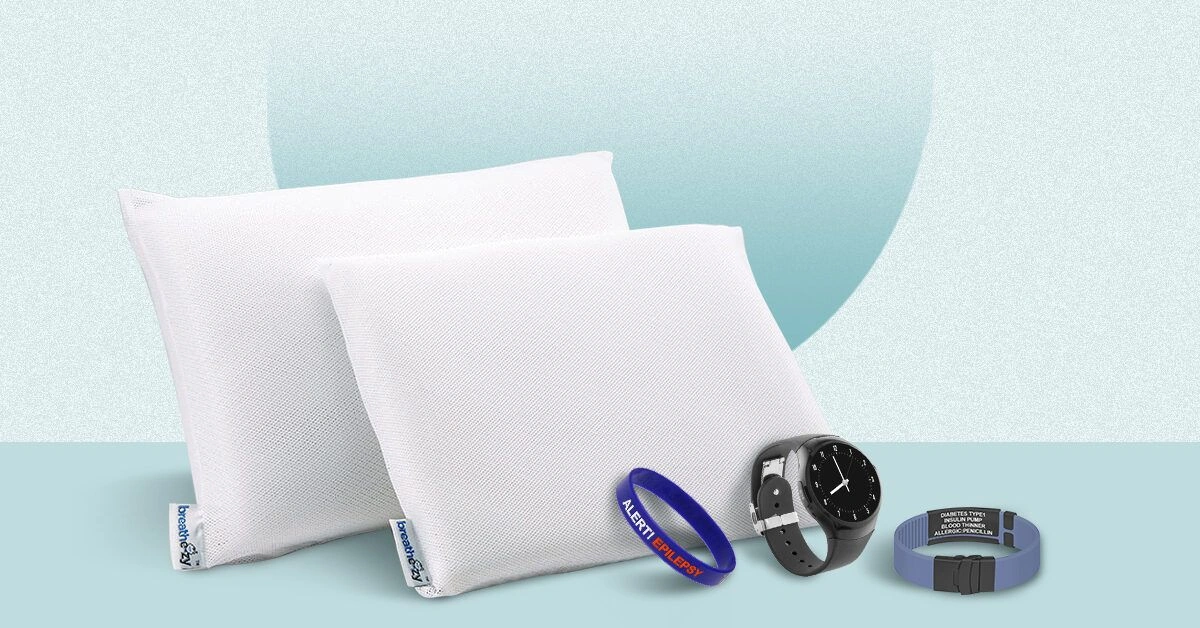
Mediband’s bracelet is constructed from medical-grade silicone, which the manufacturer says lowers the chance of breakage or loss. The band is printed with the words “ALERT! EPILEPSY.”
While it’s not customizable, it’s affordable, comfy, long-lasting, and easy to read when needed.
Pros
- Clear alert text and multiple color choices.
- Available in a variety of wrist sizes.
- Material is unlikely to irritate skin.
Cons
- Customization options are not offered.
Other options
Some vendors, like American Medical ID, can engrave a personalized phone number and link to an online medical profile for healthcare providers to access medication lists and health details quickly.
Best mattress devices for epilepsy
Emfit Movement Monitor

- Price: $$$
Mattress monitors sit beneath a mattress and register vibrations caused by seizures, triggering alarms when excessive movement is detected. These systems can give caregivers confidence that nighttime seizures won’t go unnoticed.
The Emfit Movement Monitor from Epi USA uses validated technology for nighttime surveillance, sensing abnormal motions such as muscle spasms and notifying a caregiver. The kit includes an under-mattress sensor and a bedside unit.
Pros
- Appropriate for both kids and adults.
- Compatible with many nurse call systems.
Cons
- High cost.
MP5v2 Bed Movement Monitor for Seizures

- Price: $$$
This comprehensive bed alarm system includes a backup battery, FCC-approved radio transmitter, and a microphone. It can sense movements such as spasms, atypical twitching, or prolonged shaking and alerts caregivers via the provided radio pager.
Pros
- Compatible with any mattress type.
- Usable for infants to older adults.
Cons
- Some users report issues pairing the remote after several months.
Best cameras for epilepsy
SAMi-3 Camera

- Price: $$$
Camera-based systems use infrared imaging to monitor for seizure-related movements and raise an alarm if they detect shaking while someone sleeps.
Because I live alone, capturing video when I feel an aura has been invaluable for sharing with my neurologists to adjust treatment.
The SAMi-3 package includes everything needed to record HD video and audio. It detects rhythmic shaking and also flags nonrhythmic motions that some devices miss.
Up to four caregivers can view a SAMi-3 feed remotely in real time, and it automatically saves night-time motion events for review.
Pros
- No wearable charging or sizing required.
- Convenient for travel.
- Comes with a 1-year warranty and straightforward returns.
Cons
- Pricey.
Sense-U Baby Breathing Monitor

- Price: $$
This clip-on monitor attaches to an infant’s clothing to track breathing, temperature, and sleep position. The Sense-U app will alert you if the baby rolls onto their stomach or if their temperature strays outside normal ranges.
It requires a 2.4GHz Wi-Fi connection and may be eligible for FSA/HSA reimbursement.
Pros
- Audible alerts can be sent to your smartphone.
- 30-day return policy for a full refund.
Cons
- Does not include video monitoring.
Best antisuffocation pillows for epilepsy
Breathe-zy Anti Suffocation Pillow

- Price: $
Suffocation is a recognized factor in sudden unexpected death in epilepsy (SUDEP). Antisuffocation pillows, such as the Breathe-zy, are designed to reduce that risk with breathable surfaces.
Classified as a Class 1 Medical Device in the UK, it has a mesh, washable cover and comes in four color options.
Pros
- Portable for travel.
- 28-day return window for a full refund.
Cons
- Some users report limited durability.
Sleep-Safe Anti Suffocation Pillow

- Price: $$
Developed by a pharmacist and made from UK-sourced materials, this pillow includes a removable micromesh case. Head movement compresses and releases internal chambers, channeling airflow around the face to clear exhaled breath and carbon dioxide.
Pros
- Hypoallergenic.
- Simple to wash.
Cons
- Costs more than some alternatives.
Best watches for epilepsy
SOS Smartwatch

- Price: $$
Smartwatches for epilepsy can spot movement patterns suggestive of seizures. Features vary: some trigger alarms, others alert caregivers with GPS location.
The SOS Smartwatch is marketed as a contemporary replacement for classic medical alert systems and works without a smartphone. Pressing the SOS button connects you to medical operators who can locate you, notify emergency contacts, and call 911 if required.
Pros
- Operates without a smartphone.
- Water-resistant.
- Includes GPS tracking.
- Company-stated battery life around 18 hours.
Cons
- Monthly fee (about $30) is required for constant monitoring.
SeizAlarm: Seizure Detection

- Price: free 2-week trial, then $—$$ depending on membership
This iOS and Apple Watch app senses seizure-like motion or abnormal heart rate and can automatically alert emergency contacts. You can also manually request help from the Watch or set a delayed request if you sense an aura and want assistance ready if it escalates.
I often experience auras that subside, so the delayed-request option is particularly useful. The app also offers a log that you can export to share with your clinician.
Pros
- Helpful for people who become nonverbal during seizures.
- Uses heart rate and motion sensing.
- Tracks GPS location.
Cons
- Requires an Apple Watch for reliable motion detection.
- May be prone to glitches.
- Paid features are needed to request help.
Comparison chart of the best devices for epilepsy
Remember there’s no proof that any seizure-detection product can prevent SUDEP. These tools are intended to detect seizure-like motion so assistance can be summoned and to collect useful clinical data.
Why are devices for epilepsy useful?
One worry for people with epilepsy is not only observable seizures, but also those that go unnoticed—especially nocturnal events.
Treatment aims to achieve seizure freedom through medications and other interventions, but it’s possible for someone to believe their epilepsy is under control while they still have nighttime seizures.
SUDEP—sudden unexpected death in epilepsy—is another serious concern. While causes are not fully understood, respiratory compromise or cardiac rhythm changes during or after seizures may play a role. Detecting seizures promptly could potentially reduce SUDEP risk by enabling timely assistance.
Frequently asked questions about devices for epilepsy
What devices help epilepsy?
Seizure-alert products can be a useful component of managing epilepsy. They don’t cure the condition or stop seizures, but they help ensure you can get help if a seizure occurs unexpectedly. Examples include medical alert bracelets, bed sensors, cameras, and alerting watches.
What is the best seizure alert device?
Some leading seizure-alert choices include:
Each of these can notify emergency contacts or EMS when a seizure is detected.
What machines detect seizures?
Various products and technologies can spot seizures, such as:
- bracelets
- mattress sensors
- camera systems
- watches
- mobile apps
They do this by identifying unusual movement patterns or, in some cases, abnormal heart rates.
Takeaway
As technology advances, more options will likely emerge to assist people with epilepsy. These tools can alert caregivers and provide clinicians with data to improve care.
Some insurers may cover part of the cost for these devices in certain situations. If you or someone you care for has epilepsy, discuss device options with your healthcare provider.
Frequently Asked Questions
Seizure-alert products such as medical ID bracelets, mattress movement monitors, camera systems, alerting smartwatches, and mobile apps can help notify caregivers and collect useful data during seizures.
No. Bracelets and seizure-detection devices do not treat or stop seizures; they help identify events, summon assistance, and provide information that can inform medical care.
Bed monitors can detect excessive movement or shaking during sleep and alert caregivers, making them a useful option for monitoring nocturnal seizures, though no device is guaranteed to detect every event.
Some smartwatches and apps can identify motion patterns or heart-rate changes associated with seizures and notify contacts. Reliability varies by device, wearer, and seizure type, and some systems require additional hardware like an Apple Watch.
Yes. Discussing device options with a neurologist or epilepsy specialist can help match technology to your seizure type, lifestyle, and clinical needs and determine potential insurance or reimbursement options.
Read Next

What Causes Love Handles and How To Get Rid of Them

How Many Calories Are Burned on an Elliptical in 30 Minutes?

What Should I Do If I Get Poked in the Eye?

Is the Pain in My Tailbone Cancer?

Is Shaving Against the Grain the Secret to Your Smoothest Shave Ever?

What Causes an Enlarged Uterus and How Is It Treated?
Related Posts

Fragile X Syndrome and Autism: What Is the Link?
Aug 8, 2026 • 14 min read
10 Ways to Boost Serotonin Naturally and Without Medication
Sep 7, 2026 • 13 min read
Understanding Foot Supination
Sep 15, 2026 • 34 min read
Incubators for Babies: Why They’re Used and How They Work
Sep 5, 2026 • 20 min read
7 Methods to Dry Up Breast Milk and When to Contact a Doctor
Sep 14, 2026 • 29 min read