Is Shaving Against the Grain the Secret to Your Smoothest Shave Ever?

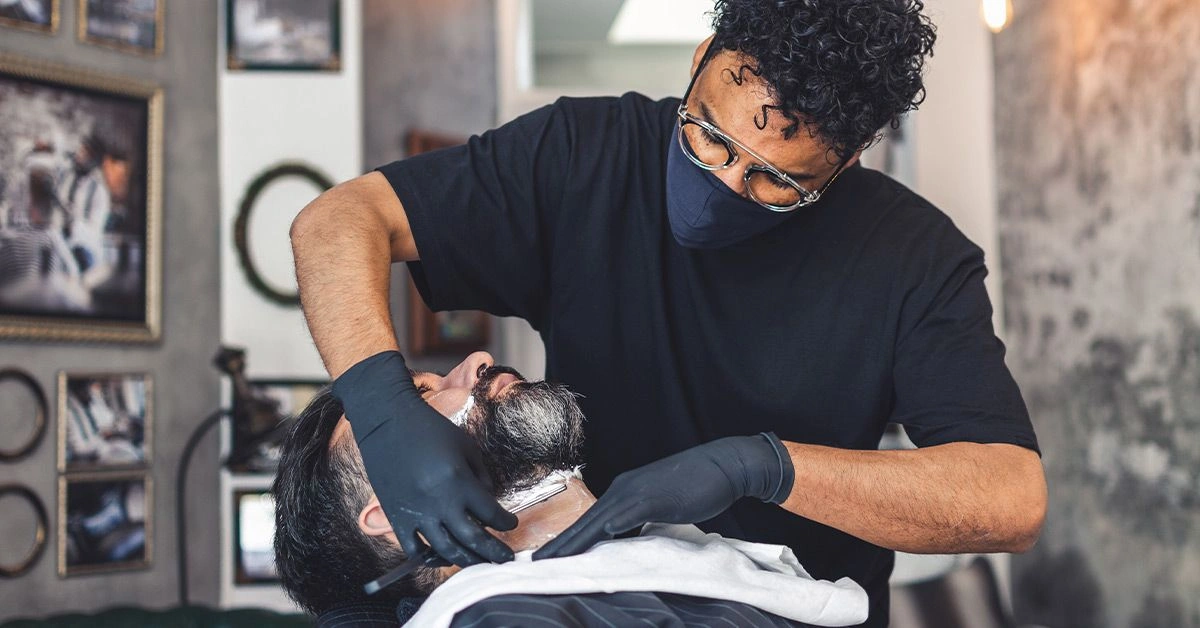

There’s been a long-running discussion about whether you should shave following the grain or moving against it.
Advocates of shaving against the grain claim it yields the closest result, but others warn it can bring irritation — or at least some razor burn and discomfort.
So, who has the better point?
We asked Farzad Salehi, a barber and proprietor of Farzad’s Barber Shop in Vancouver, British Columbia, and the person behind the Instagram account Farzad the Happy Barber, to explain.
What happens to the hair
When you shave against the grain the razor tends to pull on the hair, but Salehi says the hair itself isn’t the main issue.
“Nothing really happens to the hair if you shave against the grain. It is the skin that gets the irritation and, in some cases, razor burn,” Salehi says.
“The easiest way to prevent that is not to shave against the grain. Having said that, some faces may allow you to do that without any difficulty and irritation,” he adds.
If you don’t suffer from ingrown hairs or have easily irritated skin, then you’re likely among the fortunate “some faces” Salehi mentions.
Shaving other parts of the body — for example, your legs — might be less aggravating if done against the grain. Still, everyone’s skin reacts differently.
Is it safe?
It won’t harm you in a life-threatening way, so in that sense it’s safe. But unless you have resilient skin or take thorough precautions to shield your skin (details below), shaving against the grain can leave your skin raw and sore.
Should you do it?
Most pros, including Salehi, would say probably not.
“Overall I would say no. I would strongly advise shaving with the grain, not against,” Salehi states.
“This is a generalized recommendation. In my 34 years as a barber, I’ll tell you some faces tolerate shaving against the grain, and that depends on factors like pore structure and how frequently that face is shaved,” he explains.
Proper shaving technique matters too. Salehi notes that prepping the skin (see instructions below), using a fresh blade, and shaving regularly can help.
If you shave correctly every day, your skin is less likely to flare up if you occasionally go against the grain.
How to shave against the grain (safely)
Decided to take the chance and risk a bit of redness or razor burn?
Salehi suggests a stepwise routine — which is part of a solid shave regardless of the direction you pick.
Your skin should be prepared beforehand: warmed, hydrated, and massaged before applying shaving cream, he says.
To prep your skin for shaving:
- Shower or wash your face with warm water, massaging in circular motions to open the pores and help the hair stand up from the skin.
- Apply shaving soap or cream. Ideally it should be warm, since putting cold cream on can close pores.
To shave against the grain with less risk, Salehi recommends these steps:
- Begin by shaving with the grain first, using a sharp, new blade.
- Rinse the razor thoroughly after each pass.
- Before going against the grain, try shaving sideways. That may deliver a close result you’re satisfied with.
- For an even closer finish, gently stretch the skin with one hand and shave against the grain using very light pressure.
- Take extra care around the neck and any zones with acne or that are prone to irritation and bumps.
- When you’re done, rinse your face with cold water to help close the pores.
Note: these pointers apply to other body areas as well — think underarms, pubic region, legs, and so on.
The bottom line
If you’re after a close shave, you shouldn’t need to go against the grain provided you prepare your skin, use a new blade, and take your time.
If you’d rather accept the chance of a few nicks and bumps, that’s your decision. Good preparation and a gentle touch can reduce the risk.
Frequently Asked Questions
No — while it can give a closer shave, it often causes irritation, razor burn, or nicks for those with sensitive skin or a tendency to ingrown hairs.
Prep the skin with warm water, use shaving cream or soap, start by shaving with the grain, use a fresh blade, shave lightly, and rinse with cold water after.
Not necessarily. Many pros recommend shaving with the grain first, then sideways, and only going against the grain carefully for a final close finish.
Some areas like legs may tolerate shaving against the grain better than the face. Skin type and location both affect how the skin reacts.
Shaving regularly with proper prep, using sharp blades, moisturizing, and stretching the skin gently during strokes can make occasional against-the-grain passes less problematic.






Related Posts

What You Need to Know About Vacuum-Assisted Wound Closure (VAC)
Jul 31, 2026 • 8 min read
What Are Skin Neoplasms?
Aug 2, 2026 • 33 min read
How to Remove and Prevent Moths in Your Home
Aug 16, 2026 • 33 min read
6 Natural Treatments for Shingles
Sep 8, 2026 • 22 min read
The 10 Best Silicone-Free Shampoos
Oct 3, 2026 • 10 min read