Hernias by Picture

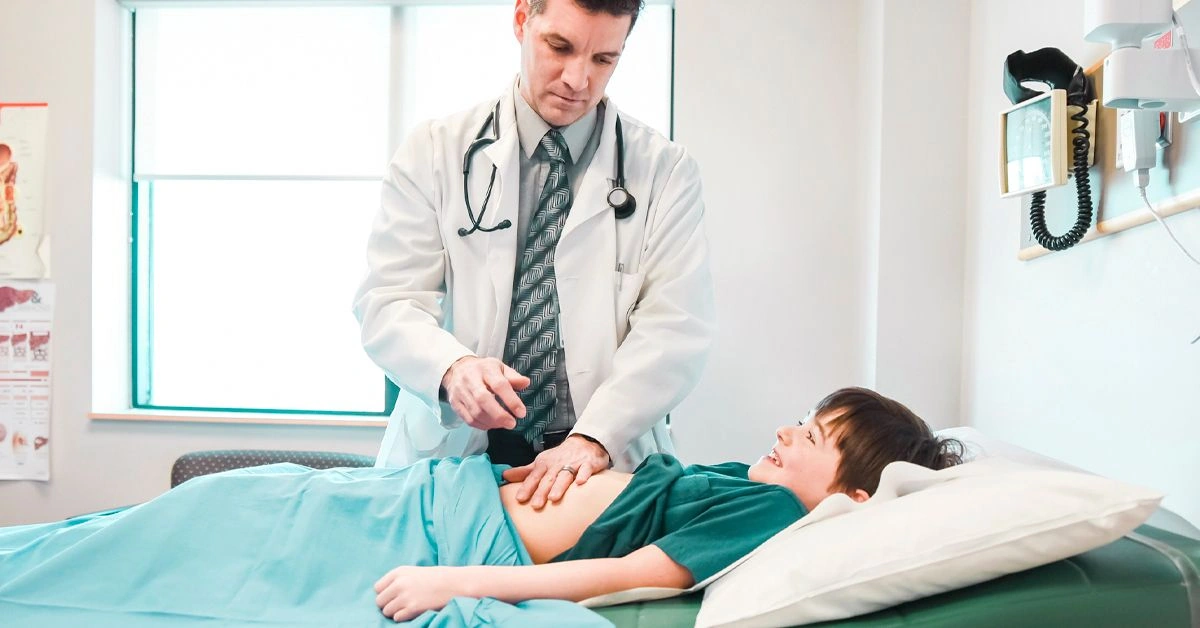
- What is a hernia?
- Incisional hernia picture
- What it is
- How it’s treated
- How to care for yourself
- Hiatal hernia picture
- What it is
- How it’s treated
- How to care for yourself
- Femoral hernia picture
- What it is
- How it’s treated
- How to care for yourself
- Epigastric hernia picture
- What it is
- How it’s treated
- How to care for yourself
- Umbilical hernia picture
- What it is
- How it’s treated
- How to care for yourself
- Inguinal hernia picture
- What it is
- How it’s treated
- How to care for yourself
- The takeaway
A hernia happens when a portion of tissue or an internal organ (for example, the intestine) pushes through the outer layer of tissue that normally contains it.
There are several varieties of hernias — some can be quite painful and may represent medical emergencies.
Read on to learn more about hernias and to view images of several common hernia types.
What is a hernia?
Normally, protective layers of tissue called fascia keep organs and tissues securely positioned. They serve as a sturdy outer covering to support and hold structures in place.
Occasionally those fascial layers develop weak spots. Rather than keeping the tissue enclosed, the weakened area permits tissue to bulge or protrude through. Clinicians refer to this as a hernia.
Hernias don’t always need immediate intervention, but they rarely resolve on their own. In many cases, a clinician may advise surgery to prevent complications from a hernia.
Incisional hernia picture

What it is
An incisional hernia can develop after abdominal surgery.
This problem is more likely when a person has a midline incision in the abdomen.
With that type of incision there’s often greater stress on the abdominal muscles at the site, according to an article in BJS Open.
An incisional hernia occurs in about 4 to 10 percent of abdominal procedures, per a 2018 review in Deutsches Arzteblatt International.
Possible symptoms include:
- pain
- digestive upset
- a persistent sensation of fullness in the abdomen
How it’s treated
The incarceration rate (abnormal trapping of tissue) for incisional hernias ranges from 6 to 15 percent , according to the 2018 review mentioned above.
If an incisional hernia is symptomatic or seems at increased risk for incarceration, clinicians usually advise surgical repair.
How to care for yourself
If your surgeon elects to watch the hernia, contact them promptly if you develop signs suggesting strangulation, which can include:
- sharp belly pain
- unexplained nausea
- inability to pass gas or have regular bowel movements
Hiatal hernia picture

What it is
A hiatal hernia happens when part of the upper stomach moves up through the diaphragm.
Usually the diaphragm holds the stomach in place, but weaknesses can form that allow the stomach to slide upward.
There are different types of hiatal hernias.
The most frequent is a type I hernia, where the junction between the esophagus and stomach moves up through the diaphragm, according to the Society of American Gastrointestinal and Endoscopic Surgeons.
This form often leads to gastroesophageal reflux disease (GERD).
How it’s treated
If someone has severe GERD, difficulty swallowing, or recurrent ulcers due to a type I hiatal hernia, their clinician may suggest surgery.
Other hiatal hernia varieties might require operative repair if intestines or a large portion of the stomach are herniating through the diaphragm.
How to care for yourself
If surgery is not advised for a hiatal hernia, steps can be taken to reduce reflux symptoms.
Examples include:
- avoiding spicy and fatty foods
- using OTC antacids
- taking H2 blockers such as famotidine (Pepcid) to ease symptoms
- using proton pump inhibitors like lansoprazole (Prevacid)
Femoral hernia picture

What it is
A femoral hernia appears in the lower pelvis near the inner thigh, often on the right side.
At first a clinician may mistake it for an inguinal hernia, but a closer evaluation shows its lower position is typical of a femoral hernia.
This type is uncommon, accounting for under 3 percent of groin hernias, per StatPearls .
Women develop femoral hernias about 10 times more often than men, likely due to pelvic anatomy.
How it’s treated
Femoral hernias have a higher chance of strangulation — where blood flow to the protruding intestine is cut off. About 15 to 20 percent may become strangulated, says StatPearls.
You can also have a femoral hernia alongside an inguinal hernia. Because of the strangulation risk, most clinicians recommend surgical repair.
How to care for yourself
Some femoral hernias cause no symptoms.
If you notice a bulge in the groin where a femoral hernia commonly occurs, see your healthcare provider.
It’s important to have a femoral hernia evaluated. If it’s strangulated, the risk of death increases tenfold , according to an article in Annals of Surgery.
Epigastric hernia picture

What it is
Epigastric hernias arise just above the navel and below the ribcage.
An epigastric hernia may be present in up to 10 percent of people, including both children and adults, according to the journal Hernia.
Though often asymptomatic, you might feel a small lump or mass that can be tender at times.
How it’s treated
Surgical repair is the only definitive cure for an epigastric hernia. If the hernia is small and not causing problems, a clinician might opt not to treat it immediately.
How to care for yourself
Keep track of your hernia’s size and inform your healthcare provider if it enlarges or begins to cause symptoms.
Get urgent care whenSeek emergency attention if you experience symptoms such as: pain, tenderness, or difficulty having bowel movements.
Umbilical hernia picture

What it is
An umbilical hernia occurs at or near the navel.
This condition is common in children and often resolves by about age 4.
In adults, roughly 90 percent are acquired, typically from increased pressure due to coughing or straining during bowel movements, per the American College of Surgeons.
How it’s treated
If the hernia can be pushed back in (a “reducible” hernia), surgery may not be immediately recommended.
Still, the only definitive treatment is surgical repair.
How to care for yourself
Watch the hernia and its size. If it becomes irreducible or enlarges significantly, contact your healthcare provider.
Get urgent care whenSeek emergency attention if you develop sudden pain and vomiting, as these signs could indicate strangulation or incarceration.
Inguinal hernia picture

What it is
An inguinal hernia forms when there is a weak point in the lower abdominal wall, allowing fat or small intestine to protrude.
In some women an ovary may herniate through the abdominal wall. In men, an inguinal hernia can affect the testes or scrotum.
Most inguinal hernias begin on the right side, according to the NIDDK .
Inguinal hernias are most common in infants and in people aged about 75 to 80.
How it’s treated
Clinicians usually recommend surgical repair of an inguinal hernia to lower the chance it will strangulate and injure the bowel or nearby organs.
If a person is asymptomatic, a clinician may suggest watchful waiting.
However, the NIDDK notes that most men who postpone inguinal hernia surgery will experience worsening symptoms or require surgery within five years of symptom onset.
How to care for yourself
If you opt against immediate surgery, monitor the hernia’s size and notify your clinician if you develop pain or increased discomfort.
Get urgent care whenSeek emergency medical attention if you have: severe or persistent pain, vomiting, or trouble passing stool.
The takeaway
Hernias can produce a range of symptoms.
They may present as a small lump felt occasionally (often when standing) or as an area that becomes painful because the tissue becomes twisted or loses blood supply after protruding through the fascia.
Some hernias are not palpable, such as a hiatal hernia inside the GI tract.
Many types of hernias exist, and in most situations surgery is the only definitive treatment.
Do not ignore signs like pain or nausea related to a hernia — they could signal compromised blood flow to the tissue.
Frequently Asked Questions
Hernia pictures usually display a visible or palpable bulge where tissue or an organ pushes through weakened fascia; internal types like hiatal hernias are illustrated with imaging rather than external lumps.
Inguinal, umbilical, epigastric, femoral, and incisional hernias are commonly shown in photos because they often create external bulges that can be photographed or examined clinically.
Images can help clinicians and patients recognize a possible hernia, but a medical exam and sometimes imaging (ultrasound, CT) are needed to confirm the diagnosis and determine severity.
If a hernia is painful, becomes hard and non-reducible, or is accompanied by vomiting or inability to pass gas or stool, seek emergency care—these signs can indicate strangulation.
Not all do. Some small, asymptomatic hernias may be monitored, but many—especially those at risk of incarceration or strangulation—are treated surgically as the definitive cure.



Related Posts

Is Shaving Against the Grain the Secret to Your Smoothest Shave Ever?
Oct 4, 2026 • 24 min read
What Causes Peau D’Orange?
Aug 23, 2026 • 27 min read
Why Is My Sweat Salty? The Science Behind Sweat
Aug 27, 2026 • 24 min read
The 10 Best Silicone-Free Shampoos
Oct 3, 2026 • 26 min read
What’s the Best Antiseptic for Open Wounds? Iodine, Peroxides, and More
Aug 15, 2026 • 17 min read