What Is Atherosclerosis? Plaque Buildup in Your Arteries, Explained

- What is atherosclerosis, exactly?
- How plaque builds up: the four stages
- Stage 1: Damage to the artery lining
- Stage 2: Fatty streak formation
- Stage 3: Plaque growth
- Stage 4: Plaque rupture or erosion — the emergency
- Atherosclerosis vs arteriosclerosis: what’s the difference?
- What causes atherosclerosis? Risk factors
- Risk factors you can change
- Risk factors you can’t change
- Symptoms: they depend on which artery is narrowed
- Heart (coronary artery disease)
- Brain and neck (carotid artery disease)
- Legs (peripheral artery disease)
- Kidneys (renal artery stenosis)
- Digestive system
- Warning signs: call 911 now
- How atherosclerosis is diagnosed
- Treatment: lifestyle, medicines, and procedures
- Lifestyle — the foundation
- Medicines
- Procedures — for severe narrowings and symptoms
- Can atherosclerosis be reversed?
- The bottom line
Atherosclerosis is the slow buildup of a sticky substance called plaque inside the walls of your arteries. Over years, that plaque makes the arteries narrower and stiffer, so less oxygen-rich blood can get through. It is the process behind most heart attacks, many strokes, and most cases of poor circulation in the legs — and diseases linked to it are the leading cause of death in the United States and worldwide, according to the National Heart, Lung, and Blood Institute (NHLBI).
The word itself gives the process away: athero- comes from the Greek word for a soft, mushy deposit, and -sclerosis means hardening. The tricky part is that atherosclerosis usually causes no symptoms at all while it is developing. Many people only find out they have it when a narrowed artery starts to starve an organ of blood — or when a plaque suddenly breaks open and a blood clot blocks the artery completely.
This guide explains what atherosclerosis is in plain English, how plaque builds up step by step, who is at risk, the symptoms to watch for in each part of the body, how doctors diagnose and treat it, and an honest answer to the question almost everyone asks: can it be reversed?
What is atherosclerosis, exactly?
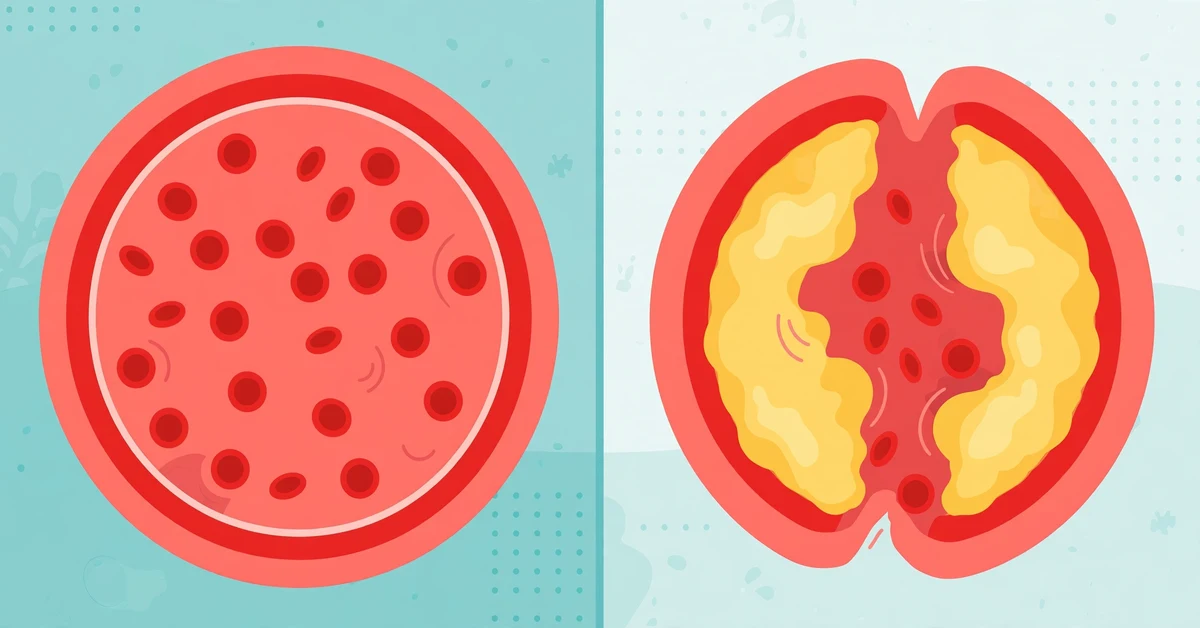
Arteries are the blood vessels that carry oxygen-rich blood from your heart to every organ and tissue. In atherosclerosis, a mixture of cholesterol, fat, calcium, dead cells, and other substances from the blood collects within the wall of an artery — not just on its surface — and forms a raised deposit called a plaque (also called an atheroma).
As a plaque grows, two things happen. First, the channel inside the artery (the lumen) gets narrower, so blood flow drops. Second, the artery wall becomes stiff and less able to widen when tissues need more blood, such as during exercise. If a plaque’s surface cracks or erodes, the body rushes to repair it by forming a blood clot — and that clot can block the artery within minutes.
Atherosclerosis can develop in almost any artery, and the disease takes a different name depending on where it happens:
- Coronary artery disease (CAD) — plaque in the arteries feeding the heart; the main cause of heart attacks.
- Carotid artery disease — plaque in the neck arteries feeding the brain; a major cause of stroke.
- Peripheral artery disease (PAD) — plaque in the leg arteries (sometimes the arms), causing leg pain when walking.
- Renal artery stenosis — plaque narrowing the arteries to the kidneys, which can drive hard-to-control blood pressure and kidney damage.
- Mesenteric artery disease — plaque in the arteries supplying the intestines, causing pain after eating.
It is very common. Cleveland Clinic, citing U.S. National Institutes of Health data, notes that about half of Americans aged 45 to 84 have atherosclerosis and don’t know it.

How plaque builds up: the four stages
Atherosclerosis is not a sudden event. It unfolds over decades, in stages doctors can now describe in detail. Research on young people who died of accidents (the PDAY study) found the earliest stage — fatty streaks — already present in the arteries of teenagers and young adults, which is why this is best thought of as a lifelong process rather than a disease of old age. Our article on when atherosclerosis starts looks at that timeline in more depth.
Stage 1: Damage to the artery lining
Every artery is lined by a thin, smooth layer of cells called the endothelium. High blood pressure, cigarette smoke, high blood sugar, and excess LDL cholesterol particles injure this lining. The injury makes the wall “sticky” and lets cholesterol-carrying particles slip into the wall, where they become trapped.
Stage 2: Fatty streak formation
Immune cells called monocytes move into the wall to clean up the trapped cholesterol. Stuffed with fat, they become “foam cells.” Clusters of dead foam cells form a yellowish fatty streak — the first visible sign of atherosclerosis. At this stage there is no narrowing and no symptom, and the process can still slow down if the drivers (LDL, blood pressure, smoking) are brought under control.
Stage 3: Plaque growth
More foam cells, smooth muscle cells, calcium, and debris pile up. Smooth muscle cells form a fibrous cap over the deposit, like a lid. The plaque now bulges into the channel and blood flow starts to fall. A plaque with a thick, stable cap may sit quietly for years; a plaque with a thin cap and a large fatty core is more dangerous.
Stage 4: Plaque rupture or erosion — the emergency
The fibrous cap tears (rupture) or its surface wears away (erosion). The body treats this like a wound and forms a clot on the spot. That clot can block the artery completely or break off and lodge downstream. This is the moment atherosclerosis turns into a heart attack, a stroke, or sudden limb-threatening loss of blood flow. When tissue is starved of oxygen but not yet dead, doctors call it ischemia; once tissue dies, it is an infarction — we explain the difference in our guide to ischemia vs infarction.
One consequence surprises many people: most heart attacks come from plaques that were not the tightest ones. A plaque narrowing an artery by only 40–50% can still rupture and clot off the vessel. That is why treatment focuses on the whole artery system — lowering LDL, calming inflammation, and preventing clots — and not only on opening the single narrowest spot.
Atherosclerosis vs arteriosclerosis: what’s the difference?
The two words sound almost identical and are often used interchangeably, but they don’t mean quite the same thing.
| Atherosclerosis | Arteriosclerosis | |
|---|---|---|
| What it is | A specific disease: fatty plaque builds up inside an artery wall and narrows it. | A general term for arteries becoming thick, stiff, and less elastic (“hardening of the arteries”). |
| Main cause | Cholesterol-rich plaque driven by LDL, inflammation, smoking, diabetes, and high blood pressure. | Several causes — aging of the artery wall, calcium deposits in the middle layer (common in diabetes and kidney disease), and atherosclerosis itself. |
| Relationship | Atherosclerosis is one type of arteriosclerosis. Every case of atherosclerosis is arteriosclerosis, but not all arteriosclerosis is atherosclerosis. | |
| Main dangers | Heart attack, stroke, PAD, kidney damage from blocked or clot-prone arteries. | Raised systolic blood pressure and extra strain on the heart from stiff vessels. |
When a news report or a doctor says “hardening of the arteries,” they usually mean atherosclerosis — the plaque disease described in this article.
What causes atherosclerosis? Risk factors
There is no single cause. Atherosclerosis develops when several factors injure the artery lining and supply the raw material for plaque over many years. Some you can change; some you can’t.
Risk factors you can change
- High LDL cholesterol. LDL particles carry cholesterol into the artery wall — they are the building material of plaque. Lifetime exposure matters: years of moderately high LDL can do as much damage as a shorter period of very high LDL. See where your numbers fall in our cholesterol levels chart by age.
- Smoking and tobacco. Smoke chemicals damage the endothelium directly, lower protective HDL, and make blood more likely to clot. Risk starts falling within weeks to months of quitting.
- High blood pressure. Constant pressure stresses and injures the artery lining and forces more lipid particles into the wall.
- Diabetes and high blood sugar. Excess sugar injures the lining and changes lipoproteins so they stick more easily; diabetes accelerates plaque in every vascular bed.
- Physical inactivity, excess weight (especially around the waist), and a diet high in saturated fat, sodium, and added sugar.
- Chronic inflammation and related conditions — rheumatoid arthritis, lupus, psoriasis, chronic kidney disease, and untreated sleep apnea all raise risk.
Risk factors you can’t change
- Age and sex. Risk climbs steadily with age; men tend to develop it earlier (after 45), women catch up after menopause (after 55).
- Family history of early cardiovascular disease — a close male relative diagnosed before 55 or a close female relative before 65.
- Familial hypercholesterolemia (FH), an inherited condition (about 1 in 250 people) that causes very high LDL from birth.
- Lipoprotein(a), or Lp(a). A cholesterol-like particle set almost entirely by your genes. It is not part of a standard cholesterol panel, doesn’t respond much to diet, and guidelines increasingly suggest measuring it once in a lifetime. If yours is high, the practical response is to control every other risk factor more aggressively.
Symptoms: they depend on which artery is narrowed
Atherosclerosis is usually silent until an artery is severely narrowed — symptoms often appear only when a vessel is more than about 70% blocked — or until a plaque ruptures. When symptoms do appear, they point to the organ being starved of blood.
Heart (coronary artery disease)
- Chest pain or pressure (angina) with exertion or stress that eases with rest
- Shortness of breath during light activity
- Discomfort spreading to the shoulder, arm, neck, jaw, or back
- Unusual fatigue, nausea, palpitations, or dizziness — reported more often by women, older adults, and people with diabetes
Brain and neck (carotid artery disease)
The first sign is often a transient ischemic attack (TIA, or “mini-stroke”): sudden weakness or numbness on one side, slurred or garbled speech, loss of vision in one eye (sometimes described as a shade coming down), facial droop, or a sudden severe headache. A TIA is a warning that a full stroke may follow — it needs emergency assessment the same day.
Legs (peripheral artery disease)
- Cramping or aching in the calf, thigh, or buttock after walking a predictable distance, easing within minutes of rest (intermittent claudication)
- In advanced disease: burning foot pain at rest, cool or pale feet, sores on the feet or toes that heal slowly or not at all
Kidneys (renal artery stenosis)
- Blood pressure that stays high despite several medications
- Swelling, changes in urination, unexplained tiredness or itchy, dry skin as kidney function declines
Digestive system
Pain or cramping after meals, bloating, and unintentional weight loss from avoiding food (“food fear”) can signal narrowed intestinal arteries, though this is less common.

Warning signs: call 911 now
Do not wait these out. Call 911 (or your local emergency number) immediately if you or someone near you has:
- Heart attack signs: chest pressure, squeezing, or pain lasting more than a few minutes or coming and going; pain spreading to the jaw, neck, shoulder, arm, or back; shortness of breath; cold sweat, nausea, or lightheadedness.
- Stroke signs (BE-FAST): Balance loss, Eyes — sudden vision change, Face drooping, Arm weakness, Speech difficulty, Time to call 911. Minutes matter: stroke treatments work only within a short window.
- A limb emergency: a leg or arm that suddenly becomes painful, pale or blue, cold, and weak or numb — this can mean a complete blockage.
Do not drive yourself. Chew an aspirin while waiting only if the emergency dispatcher advises it.
How atherosclerosis is diagnosed
Because early atherosclerosis is silent, diagnosis usually starts with risk assessment — blood pressure, cholesterol panel, blood sugar, smoking history, family history — and moves to tests that look at specific arteries. Which test you get depends on which territory doctors want to check:
| Test | What it checks | Numbers worth knowing |
|---|---|---|
| Blood tests (lipid panel, A1C, sometimes Lp(a) and hs-CRP) | The raw drivers of plaque: LDL, triglycerides, HDL, blood sugar control, inflammation. | For people at high risk, guidelines commonly target LDL below 70 mg/dL; blood pressure below 130/80 mm Hg. |
| Ankle-brachial index (ABI) | Leg arteries — compares blood pressure at the ankle with the arm using cuffs and a small ultrasound probe. | 1.0–1.4 is normal. Below 0.9 indicates peripheral artery disease; the lower the number, the worse the blockage. |
| Carotid ultrasound | Neck arteries feeding the brain; measures narrowing and blood-flow speed, painlessly. | Narrowing of 70% or more is generally considered severe. |
| Coronary artery calcium (CAC) scan | A quick CT scan that measures calcified plaque in the heart’s arteries — a direct look at plaque burden. | Score 0 = no detectable calcified plaque; 1–99 mild; 100–299 moderate; 300+ high burden and higher risk. |
| Stress test / CT angiography | Whether the heart muscle gets enough blood under demand, and a map of narrowed segments. | Used when symptoms or a high CAC score suggest significant coronary disease. |
| Catheter angiography | The definitive map of a narrowed artery, done through a thin tube; often combined with treatment (stent) in the same session. | Reserved for significant symptoms or planned procedures. |
One practical point: a normal cholesterol result does not rule atherosclerosis out, and a high one does not prove how much plaque you have. Tests like ABI and CAC exist precisely because risk factors and actual plaque are two different things.
Treatment: lifestyle, medicines, and procedures
There is no procedure that scrubs arteries clean. Treatment has three goals: stop plaque from growing, stabilize the plaques that exist so they don’t rupture, and restore blood flow where a narrowing is causing symptoms.
Lifestyle — the foundation
- Quit smoking. The single highest-yield step; benefits for the arteries begin within weeks.
- Eat a Mediterranean-style pattern: vegetables, fruit, whole grains, legumes, nuts, olive oil, and fish; go easy on saturated fat, processed meat, sodium, and added sugar.
- Move most days: at least 150 minutes a week of moderate activity such as brisk walking. For leg PAD, structured walking programs measurably extend pain-free walking distance.
- Reach and keep a healthy weight, and treat sleep apnea if you have it.
Medicines
- Statins lower LDL cholesterol and stabilize plaque; for people with established atherosclerotic disease they are the backbone of treatment, and they reduce heart attacks and strokes even in people whose cholesterol was never very high.
- Other LDL-lowering drugs — ezetimibe and PCSK9 inhibitors — are added when LDL stays above target on a statin, or in very-high-risk patients.
- Antiplatelet medicines (such as low-dose aspirin or clopidogrel) reduce clot formation on plaque surfaces in people who already have atherosclerotic disease. (For people without disease, the benefit–bleeding balance is different — don’t start aspirin on your own.)
- Blood pressure and diabetes medicines treat two of the main drivers of artery injury.
Procedures — for severe narrowings and symptoms
- Angioplasty and stenting: a balloon widens the narrowed segment and a small mesh tube (stent) holds it open — used in heart, leg, and kidney arteries.
- Endarterectomy: a surgeon opens the artery and removes the plaque itself, most often in the carotid artery to prevent stroke.
- Bypass surgery: a vein or synthetic graft routes blood around a blocked section — coronary artery bypass (CABG) for the heart, or leg bypass for advanced PAD.
These procedures fix a specific blockage; they don’t change the disease in the rest of the artery tree, which is why lifestyle and medicines continue afterward.
Can atherosclerosis be reversed?
Honest answer: not completely, and not back to a brand-new artery — but its course can be changed. The NHLBI notes that atherosclerosis can sometimes be reversed through healthy lifestyle changes and medicines, and imaging research shows what that means in practice:
- With intensive LDL lowering (high-intensity statins, sometimes combined with PCSK9 inhibitors), ultrasound studies inside coronary arteries have measured small but real shrinkage of plaque volume — on the order of about 1% of total atheroma volume over 1–2 years. Modest, but it proves the process is not one-way.
- More important than shrinkage is stabilization: treated plaques develop thicker caps and smaller fatty cores, making the rupture-and-clot event — the actual cause of most heart attacks — much less likely. Event rates fall far more than the small change in narrowing would suggest.
- Calcified, scarred portions of old plaque do not melt away. What changes is the soft, active, dangerous part.
So the realistic goal is: stop the growth, stabilize what’s there, and prevent the event. People who quit smoking, get LDL and blood pressure to target, and stay active can live for decades with atherosclerosis without a heart attack or stroke. The worst strategy is assuming a “mild” result means no action is needed — mild plaque is exactly the stage where treatment works best.
The bottom line
Atherosclerosis is plaque — cholesterol, fat, calcium, and cell debris — building up inside artery walls over a lifetime, narrowing the vessels that feed your heart, brain, legs, and kidneys. It starts silently, often in youth, and usually announces itself only when blood flow is badly reduced or a plaque ruptures and clots.
The hopeful part: its main drivers are measurable and treatable. Know your LDL, blood pressure, and blood sugar; don’t smoke; keep moving; and if you are at higher risk, ask your doctor whether an ABI, a calcium scan, or an Lp(a) test makes sense for you. If warning signs of a heart attack or stroke appear, treat them as the emergency they are and call 911.
This article is general information only and is not medical advice. If you are concerned about your arteries or your cardiovascular risk, talk to your own doctor, who can interpret tests in the context of your health history.
Sources: National Heart, Lung, and Blood Institute (NHLBI), What Is Atherosclerosis? ; American Heart Association, What Is Atherosclerosis?; Cleveland Clinic, Atherosclerosis: Symptoms, Causes & Treatment ; Mayo Clinic, Arteriosclerosis/Atherosclerosis — Symptoms and Causes .
Frequently Asked Questions
Atherosclerosis is the buildup of a fatty, sticky deposit called plaque inside the walls of your arteries. Over many years the plaque makes arteries narrower and stiffer, reducing blood flow to the heart, brain, legs, and kidneys. It is the underlying cause of most heart attacks and many strokes.
Arteriosclerosis is the general term for arteries becoming thick and stiff (“hardening of the arteries”). Atherosclerosis is the most common type of arteriosclerosis — the specific form caused by cholesterol-rich plaque. All atherosclerosis is arteriosclerosis, but arteriosclerosis can also come from aging or calcium deposits in the artery wall.
Earlier than most people expect. Studies of young accident victims found fatty streaks — the earliest stage — in the arteries of teenagers, and the process typically builds silently for decades. Risk rises sharply in men after age 45 and in women after age 55, but by then plaque has usually been forming for a long time, which is why doctors screen risk factors (cholesterol, blood pressure, blood sugar) well before symptoms appear.
Only partly. Atherosclerosis cannot be erased or an artery restored to new, and calcified plaque does not dissolve. But intensive LDL lowering with statins (sometimes combined with other drugs), not smoking, and blood pressure control can slightly shrink plaque and — more importantly — stabilize it so it is far less likely to rupture and cause a heart attack. Progression can be stopped in many people; that, plus preventing events, is the realistic goal of treatment.
Usually there are none — early atherosclerosis is silent. The first noticeable signs depend on the artery involved: chest pressure with exertion (heart), a transient ischemic attack with temporary weakness or speech trouble (brain), leg cramps after walking a set distance that ease with rest (legs), or blood pressure that becomes hard to control (kidneys). Because symptoms start late, screening tests matter.
Diagnosis combines risk-factor checks (cholesterol panel, blood pressure, blood sugar) with tests aimed at specific arteries: an ankle-brachial index (ABI) below 0.9 indicates peripheral artery disease in the legs; carotid ultrasound looks at the neck arteries; a coronary artery calcium (CAC) scan measures plaque burden in the heart’s arteries (0 = none detected, 300 or more = high). Significant findings may lead to CT angiography or catheter angiography.
Yes. Atherosclerosis is common — about half of U.S. adults aged 45 to 84 have some — and many people live full-length lives with it, especially when it is found early and the drivers are controlled: LDL and blood pressure at target, no smoking, regular activity, and medicines taken consistently. Outcomes are worst when it is discovered only after a heart attack or stroke, which is why early detection and treatment change the picture so much.
Read Next
Back Pain From Sitting All Day: What Helps, What Doesn't
All About the Chinese Body Clock

9 Stretches for Sciatica Pain Relief

If You’re Transitioning, Breast Growth Is Possible — Here’s What You Need to Know

9 of the Best Keto-Friendly Protein Bars You Can Buy
The 10 Best Selenium Supplements, According to a Dietitian
Related Posts

What Are Deer Antler Supplements? Health Effects and Safety
Aug 15, 2026 • 36 min read
What to Know When Choosing a PEMF Therapy Device for Home
Oct 4, 2026 • 6 min read
9 Causes for Throat Clearing and How to Make It Stop
Aug 20, 2026 • 16 min read
5 Ways to Reduce Stress-Related Tension in Your Neck and Shoulders
Sep 23, 2026 • 22 min read
9 Powerful Health Benefits of Cumin
Aug 22, 2026 • 3 min read