Back Pain From Sitting All Day: What Helps, What Doesn't
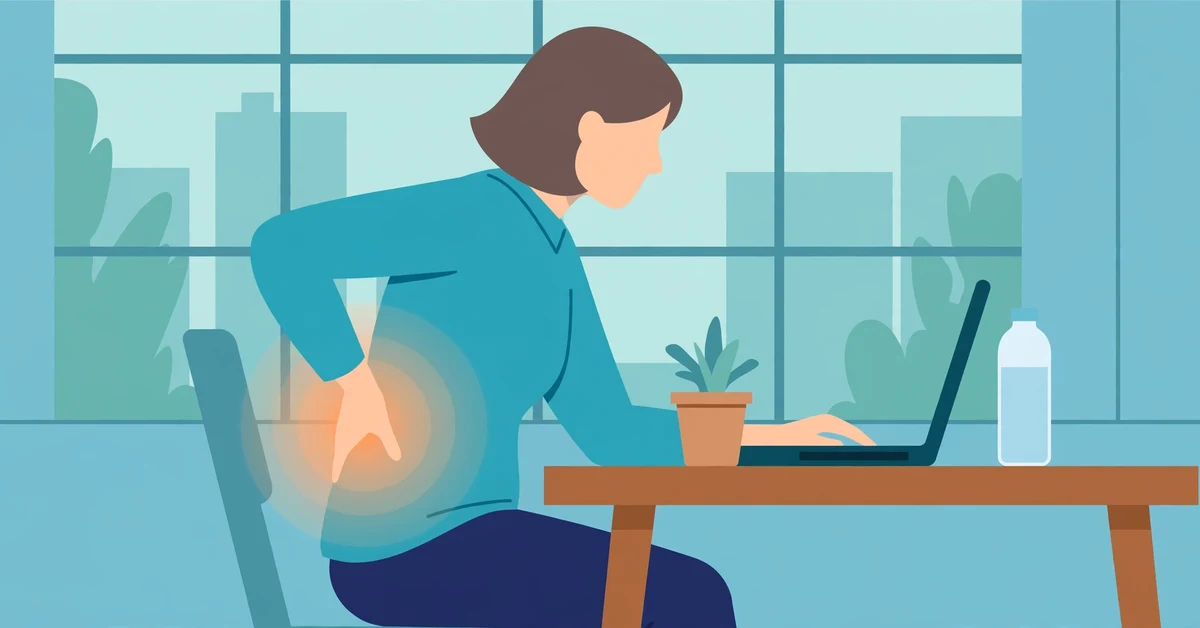
- Why does your back hurt after sitting?
- Does sitting all day actually damage your spine?
- What actually helps back pain from sitting?
- 1. Change position regularly
- 2. Keep walking
- 3. Exercise your back and surrounding muscles
- 4. Make your workstation comfortable
- 5. Use heat for short-term comfort
- 6. Pay attention to sleep and stress
- What about stretching?
- What probably does not help as much as people think?
- 1. Searching for the one perfect posture
- 2. Buying an expensive chair as the only solution
- 3. Wearing a back brace all day
- 4. Relying only on massage
- 5. Spending days in bed
- 6. Getting an MRI immediately
- Do standing desks prevent back pain?
- Can painkillers help?
- When should you see a doctor?
- A realistic daily approach
- The bottom line
- References
You finish a long day at your desk, stand up, and feel that familiar ache across your lower back. Perhaps it disappears after walking around for a few minutes, or perhaps it stays with you throughout the evening, so you stretch, adjust your chair, or search online for the perfect sitting posture. Then you return to work the next morning, and the same thing happens again.
Back pain is common among people who spend long hours sitting, and office workers, students, drivers, and people working from home can all experience it. But sitting is often blamed for more than the evidence supports. A long day in a chair may contribute to discomfort, particularly when you remain in one position for hours, yet sitting does not automatically damage your spine, and there is no single perfect posture that prevents back pain.
The good news is that many people can manage uncomplicated back pain with sensible changes to their daily routine. The less encouraging news is that expensive chairs, posture devices, and quick fixes often promise more than they can deliver. Let us look at what actually helps.
Why does your back hurt after sitting?
Your lower back contains muscles, ligaments, joints, discs, and nerves, and these structures work together to support movement and allow you to bend, twist, and lift. When you sit for a long time, your body remains in a relatively fixed position. Some muscles stay active while others do very little, and depending on your position and the support available, certain tissues may experience sustained loading, which can contribute to discomfort.
But pain is more complicated than pressure on a particular muscle or disc. Sleep, stress, previous injuries, physical activity, and individual sensitivity can all influence how much pain someone experiences. The World Health Organization’s 2023 guideline on chronic primary low back pain recognizes that physical, psychological, and social factors can all contribute to persistent symptoms. This helps explain why two people can sit at similar desks for eight hours and have very different experiences. One may develop back pain, while the other feels perfectly comfortable, and it also explains why changing a chair does not always solve the problem.
Does sitting all day actually damage your spine?
This is an important distinction. Sitting for long periods may be associated with back discomfort, but the evidence does not support telling every person with back pain that sitting is damaging their spine. A systematic review by Hartvigsen and colleagues, published in The Lancet in 2018, described low back pain as a condition with multiple contributing factors, and a single structural cause cannot be identified in most cases.
There is also no reliable way to determine the condition of someone’s spinal discs simply from their sitting posture. People often worry that sitting with a rounded back means their discs are slowly being destroyed, but that is an oversimplification. The spine is designed to move through different positions, and flexion, extension, and rotation are normal movements. Some positions may aggravate symptoms in certain people, particularly during a painful episode, but that does not make those positions universally dangerous. If leaning forward makes your back hurt, changing position is reasonable, but you do not need to spend your entire working day frightened of bending your spine.
What actually helps back pain from sitting?
1. Change position regularly
One of the simplest changes is to avoid remaining in the same position for very long periods. You can stand up, walk to get water, or move around the room, and a brief movement break gives you a chance to change the load on your back and move muscles that have been relatively inactive.
There is no universally proven interval that everyone must follow. Some people prefer a short break every 30 minutes, while others find that standing or walking once an hour works better with their routine. The point is to make movement a regular part of the day. If your work involves continuous computer use, consider placing routine tasks away from your desk, since walking to speak to a colleague or standing during a phone call can make movement easier to fit into your schedule.
These small changes are not a guaranteed treatment for back pain, and the evidence for particular workplace break schedules is limited. But they are practical ways to reduce uninterrupted sitting without needing special equipment.
2. Keep walking
Walking is often a good starting point for people with uncomplicated back pain. It requires little equipment, can be adjusted to your fitness level, and allows the back to move without complicated exercises. NICE guideline NG59 recommends encouraging people with low back pain to continue normal activities, and the WHO also supports structured exercise as part of care for chronic primary low back pain.
Walking may help maintain physical activity and confidence in movement. A person who has become afraid of moving because of pain may gradually begin avoiding more activities, and over time this can make daily life harder, so walking offers a manageable way to stay active. Start with an amount that feels tolerable. Some people can walk for 20 minutes without difficulty, while others may need shorter periods while symptoms are more troublesome. There is no need to force yourself through severe or worsening pain.
3. Exercise your back and surrounding muscles
Exercise has better evidence for managing persistent low back pain than many passive treatments. A 2021 Cochrane review by Hayden and colleagues examined exercise therapy for chronic low back pain. The review included 249 trials involving 24,486 participants, and it found moderate-certainty evidence that exercise probably reduces pain compared with no treatment, usual care, or placebo. The average benefit was modest, and not everyone responded in the same way.
That matters because exercise is often advertised as though one particular routine can cure every type of back pain. In reality, different approaches can help, and these may include general strengthening, aerobic exercise, Pilates, and other structured movement programs. There is no clear reason to assume that everyone needs the same exercise. For someone who spends most of the day sitting, a balanced program might involve strengthening the legs and trunk, improving general fitness, and gradually increasing activity. A physiotherapist can help choose appropriate exercises when pain persists or limits normal movement.
4. Make your workstation comfortable
Your desk setup matters, but it does not need to be perfect. A chair that supports your body comfortably, a screen positioned where you can see it without straining, and a keyboard within easy reach can make long working hours more manageable. Your feet should have comfortable support, and if the chair is too high, a footrest may help. Try to avoid constantly reaching forward for your keyboard or mouse, and if you use a laptop for long periods, an external keyboard and a raised screen may make the setup more comfortable.
However, ergonomic changes should be viewed as adjustments that may improve comfort, not guaranteed treatments. The evidence that any particular chair or desk arrangement prevents low back pain is limited. A person can have an expensive ergonomic chair and still develop pain, while another person can use an ordinary chair and remain comfortable. The aim is to make your working position tolerable and allow you to move easily.
5. Use heat for short-term comfort
Some people find that a warm pack or heat wrap helps when their back feels stiff or sore. Heat may provide short-term symptom relief, especially in uncomplicated acute or subacute low back pain. A Cochrane review by French and colleagues found moderate evidence from a small number of trials that continuous low-level heat wrap therapy provides a small, short-term reduction in pain and disability.
This is not evidence that heat treats the underlying cause of every back problem. It is a comfort measure. Avoid placing excessive heat directly against the skin, particularly if you have reduced sensation or a condition that increases the risk of burns, and heat should not delay assessment when symptoms suggest a serious problem.
6. Pay attention to sleep and stress
Back pain can affect sleep, and poor sleep can make pain harder to tolerate. Stress may also influence pain sensitivity and muscle tension. These relationships do not mean the pain is imaginary. They mean that the nervous system plays an important role in how pain is experienced.
For people with persistent pain, improving sleep routines and addressing stress may be useful parts of a wider management plan. The WHO’s chronic low back pain guideline supports a person-centered approach that considers more than the physical structures of the spine. However, sleep changes or relaxation exercises alone should not be presented as a guaranteed cure. They are supporting measures, especially when poor sleep or stress is clearly contributing to the person’s difficulties.
What about stretching?
Stretching can feel good after sitting for hours. Gentle movements of the hips, lower back, and surrounding muscles may reduce a feeling of stiffness, but there is no strong evidence that one particular stretch is necessary for everyone with desk-related back pain. Stretching is also not a reliable way to identify the cause of pain.
If a movement feels comfortable and helps you loosen up, it may be worth including in your routine. If it consistently increases pain, causes shooting symptoms down your leg, or makes you feel worse afterward, it may not be appropriate for you, and you do not need to force a painful stretch because someone online claims it is essential.
What probably does not help as much as people think?
1. Searching for the one perfect posture
Many people are told that their back pain comes from poor posture, and they may then spend the entire day trying to sit perfectly straight. But maintaining any position rigidly for hours can become uncomfortable. Research does not establish a single ideal sitting posture that prevents back pain in everyone. Slouching is not automatically harmful, and sitting upright is not automatically protective. Comfort, movement, and the ability to change position are more practical goals, and if you find yourself constantly checking whether your spine is perfectly aligned, you may be giving posture more attention than it deserves.
2. Buying an expensive chair as the only solution
A better chair may improve comfort, and that is a reasonable reason to replace a chair that is uncomfortable or poorly suited to your desk. But buying a costly chair does not guarantee relief from back pain. If you remain inactive, sleep poorly, or have another cause of pain, a chair cannot address all those factors.
Before spending heavily, consider whether simple adjustments to your existing workstation might help. You may find that changing the screen height, adjusting the seat, or taking more movement breaks makes the workspace easier to use.
3. Wearing a back brace all day
Back braces are often marketed as a way to support the spine and correct posture. However, NICE guideline NG59 recommends against offering belts or corsets for routine management of low back pain with or without sciatica. The WHO’s 2023 guideline also advises against routine use of lumbar braces and supports for chronic primary low back pain.
This does not mean braces have no medical use. They may be appropriate for specific injuries or spinal conditions under professional guidance, but an ordinary office worker with uncomplicated back pain should not assume that wearing a brace throughout the day is necessary.
4. Relying only on massage
Massage may provide temporary relief for some people, and there is nothing unreasonable about enjoying a massage when your muscles feel sore. But temporary relief is different from long-term improvement. NICE recommends considering manual therapy, including massage or spinal manipulation, only as part of a treatment package that includes exercise, which reflects the limited role of passive treatments when used alone. If pain keeps returning, it is worth looking beyond repeated short-term treatments.
5. Spending days in bed
When back pain is severe, resting briefly may feel necessary, but prolonged bed rest is generally discouraged for uncomplicated low back pain. The NHS and NICE recommend staying active as much as reasonably possible, and avoiding all movement can make it harder to return to normal activities. This does not mean ignoring pain or attempting strenuous exercise during a severe episode. It means maintaining tolerable activity rather than assuming complete rest is the best treatment.
6. Getting an MRI immediately
Many people believe that an MRI is necessary whenever back pain lasts more than a few days, but most uncomplicated low back pain does not require immediate imaging. NICE guideline NG59 advises against routine imaging in non-specialist settings for low back pain with or without sciatica. Imaging is considered when it is likely to change management or when symptoms suggest a serious underlying condition.
An MRI may reveal disc changes that are also found in people without pain. A 2015 systematic review by Brinjikji and colleagues found that degenerative spinal imaging findings were common among asymptomatic individuals and increased with age. For example, the estimated prevalence of disc degeneration was 37% in asymptomatic 20-year-olds and 96% in asymptomatic 80-year-olds. These findings do not mean MRI results are meaningless. They mean imaging must be interpreted alongside symptoms and examination findings, and a scan alone cannot always tell you why your back hurts.
Do standing desks prevent back pain?
Standing desks have become popular among people trying to reduce sitting time. They can help workers alternate between sitting and standing, and that may be useful for comfort and reducing sedentary time. However, the evidence that standing desks reliably prevent or treat low back pain is not strong enough to promise a cure, and standing still for hours can also become uncomfortable. A standing desk works best as another option for changing position, rather than a replacement for all sitting, and you do not need to stand for your entire working day to look after your back.
Can painkillers help?
Medication can sometimes provide short-term relief, but it is not the main answer to recurring desk-related pain. NICE recommends considering oral non-steroidal anti-inflammatory drugs, or NSAIDs, for low back pain while taking account of individual risks. These medicines can cause gastrointestinal bleeding, kidney problems, and cardiovascular complications in some people, and they are not suitable for everyone. NICE also advises against paracetamol alone as a treatment for low back pain and against opioids for chronic low back pain. The choice of medication should depend on the person’s medical history and the type of pain, and taking painkillers repeatedly to get through every working day is a reason to reassess the problem, rather than simply continuing indefinitely.
When should you see a doctor?
Most episodes of uncomplicated low back pain improve, but some symptoms need medical attention. Arrange an assessment if your pain persists, keeps returning, affects sleep or normal activities, or is getting progressively worse. Pain traveling down a leg, especially with numbness or weakness, may suggest nerve involvement, and a clinician can examine you and decide whether further investigation is needed.
Certain symptoms need urgent assessment. These include new bladder or bowel dysfunction, numbness around the genitals or anus, and severe or progressive leg weakness. Back pain accompanied by fever, significant trauma, or a history suggesting cancer or infection also deserves prompt medical evaluation. These symptoms do not always mean something dangerous is happening, but they should not be dismissed as ordinary sitting-related pain.
A realistic daily approach
If your work involves long hours at a desk, the following habits are reasonable starting points:
- Change position regularly instead of remaining fixed in one posture.
- Include walking or other comfortable movement during the day.
- Build a manageable exercise routine that you can continue.
- Adjust your workstation for comfort rather than chasing perfect posture.
- Seek professional assessment if pain persists or symptoms change.
You do not need to do everything perfectly. A short walk between tasks is still movement, and a basic exercise routine can be useful without expensive equipment. The aim is to keep your back functioning and reduce the effect pain has on everyday life.
The bottom line
Back pain after sitting is common, but it does not automatically mean your spine is damaged. Regular movement, exercise, and staying active have better support than many products marketed for posture correction. Ergonomic changes and heat may improve comfort, but they are not guaranteed solutions. If symptoms persist, worsen, or suggest nerve involvement, a proper clinical assessment matters more than another chair or online stretching routine.
References
- World Health Organization. WHO Guideline for Non-Surgical Management of Chronic Primary Low Back Pain in Adults in Primary and Community Care Settings. 2023.
- NICE. Low Back Pain and Sciatica in Over 16s: Assessment and Management, NG59. https://www.nice.org.uk/guidance/ng59
- Hayden JA, Ellis J, Ogilvie R, Malmivaara A, van Tulder MW. Exercise Therapy for Chronic Low Back Pain. Cochrane Database of Systematic Reviews, 2021.
- Hartvigsen J, Hancock MJ, Kongsted A, et al. What Low Back Pain Is and Why We Need to Pay Attention. The Lancet, 2018.
- Brinjikji W, Luetmer PH, Comstock B, et al. Systematic Literature Review of Imaging Features of Spinal Degeneration in Asymptomatic Populations. American Journal of Neuroradiology, 2015.
- French SD, Cameron M, Walker BF, Reggars JW, Esterman AJ. Superficial Heat or Cold for Low Back Pain. Cochrane Database of Systematic Reviews, 2006.
- NHS. Back Pain. https://www.nhs.uk/conditions/back-pain/
- World Health Organization. WHO Releases Guidelines on Chronic Low Back Pain. 2023. https://www.who.int/news/item/07-12-2023-who-releases-guidelines-on-chronic-low-back-pain
Frequently Asked Questions
Sitting for long periods may be associated with back discomfort, but the evidence does not support telling every person with back pain that sitting is damaging their spine. A single structural cause cannot be identified in most cases of low back pain, and discomfort does not automatically mean damage.
The measures with the best support are changing position regularly, keeping walking, exercising your back and surrounding muscles, and staying active. A comfortable workstation and heat may improve comfort, and sleep and stress also play a role.
No. Research does not establish a single ideal sitting posture that prevents back pain in everyone. Slouching is not automatically harmful, and sitting upright is not automatically protective. Comfort, movement, and the ability to change position are more practical goals.
Most uncomplicated low back pain does not require immediate imaging. NICE guideline NG59 advises against routine imaging in non-specialist settings. Imaging is considered when it is likely to change management or when symptoms suggest a serious underlying condition.
Medication can sometimes provide short-term relief, but it is not the main answer to recurring desk-related pain. NICE recommends considering oral NSAIDs while taking account of individual risks, advises against paracetamol alone as a treatment for low back pain, and against opioids for chronic low back pain.
Arrange an assessment if your pain persists, keeps returning, affects sleep or normal activities, or is getting progressively worse. Seek urgent assessment for new bladder or bowel dysfunction, numbness around the genitals or anus, severe or progressive leg weakness, or back pain accompanied by fever, significant trauma, or a history suggesting cancer or infection.
Read Next

What Are the Purported Benefits and Uses of PanAway Essential Oil?

The 8 Best Eco-friendly Razors for a More Sustainable Shave

Does Evening Primrose Oil Safely Induce Labor?

Tadalafil (Oral Tablet): Side Effects, Dosage, and Review

What Causes an Enlarged Uterus and How Is It Treated?
8 Ankle Stretches to Try at Home
Related Posts
Stretches and Exercises to Help Ease SI (Sacroiliac) Joint Pain
Oct 5, 2026 • 29 min read
10 Back Exercises with Bands to Counteract Work-from-Home Posture
Sep 14, 2026 • 26 min read
Pregnancy Rib Pain: Causes, Prevention, Remedies
Sep 19, 2026 • 32 min read
6 Foam Roller Exercises for Your Back
Sep 16, 2026 • 7 min read
The 9 Best Couches for Good Posture and a Healthy Back
Sep 30, 2026 • 29 min read