Saturated vs Unsaturated Fat: What the Difference Really Means for Your Heart

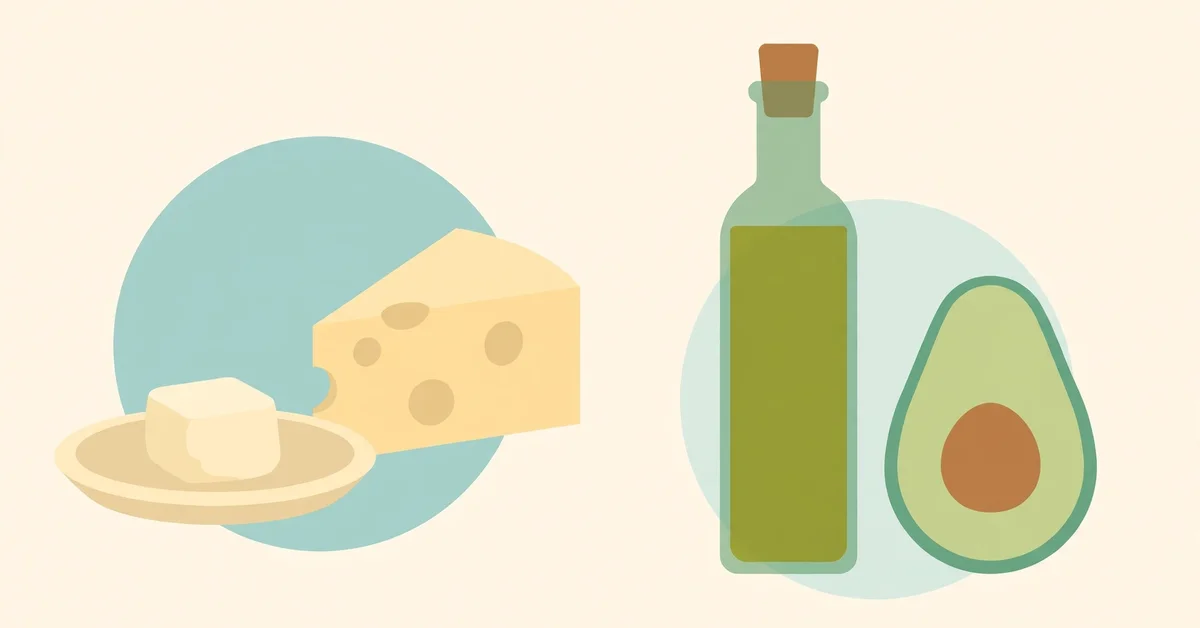
- How we put this guide together
- Saturated vs unsaturated fat: the difference in one table
- What makes a fat saturated or unsaturated?
- Monounsaturated fat: the everyday workhorse
- Polyunsaturated fat, omega-3 and omega-6
- Where each fat lives: foods and grams
- What the guidelines say now — and why they disagree in 2026
- What the evidence actually shows
- Cooking with unsaturated fats
- A day of swaps: what “change the fat” looks like
- How to choose: reading labels, portions, and the fine print
- The bottom line
Saturated fat is usually solid at room temperature and tends to raise LDL (“bad”) cholesterol. Unsaturated fat is usually liquid and can help lower LDL when it replaces saturated fat. That is the whole comparison — but it leaves out the part that matters most: what you replace saturated fat with. Swapping butter for olive oil helps; swapping butter for white bread and sugary snacks does not. This guide explains the difference in plain English, shows which foods carry each type of fat and in what amounts, lays out what the guidelines say in 2026 — including where they disagree — and gives you a realistic day of swaps you can follow.
If you want the deep dive on saturated fat alone — what it is, the different fatty acids, the full food table and the daily limits — our guide to what saturated fat is covers it. This article is the head-to-head comparison.
How we put this guide together
The facts below come from the Dietary Guidelines for Americans 2025–2030 , the American Heart Association’s 2026 dietary guidance, the World Health Organization , the 2020 Cochrane review of saturated-fat reduction, a February 2026 systematic review in the Annals of Internal Medicine, the Harvard Nutrition Source, MedlinePlus (NIH) , and USDA FoodData Central for the food values. Amounts are typical values, rounded to the nearest half gram. Where the guidelines disagree, we say so plainly instead of picking a side for you.
Saturated vs unsaturated fat: the difference in one table
| Saturated fat | Unsaturated fat | |
|---|---|---|
| Chemistry | No double bonds; every carbon carries the maximum hydrogen | One double bond (monounsaturated) or several (polyunsaturated) |
| Shape | Straight chains that pack tightly | Bent or kinked chains that cannot pack tightly |
| At room temperature | Usually solid or semi-solid | Usually liquid |
| Main sources | Fatty and processed meat, butter, cheese, whole milk, coconut and palm oils | Olive and canola oil, nuts, seeds, avocado, fatty fish |
| Effect on LDL cholesterol | Raises it | Lowers it when it replaces saturated fat |
| Other effects | Can raise HDL slightly, but not enough to cancel the LDL effect | Omega-3 fats also lower triglycerides; unsaturated fats ease inflammation |
| Calories per gram | 9 | 9 — the same |
| Guidance | Limit: under 10% of calories, ideally about 5–6% | Make this most of your fat intake |
No food is purely one type of fat: olive oil carries about 2 grams of saturated fat per tablespoon, and a steak contains unsaturated fat too — we call a food “saturated” or “unsaturated” by whichever type it has most of.
What makes a fat saturated or unsaturated?
All dietary fats are built from fatty acids — chains of carbon atoms with hydrogen atoms attached. In a saturated fatty acid, every link is a single bond and each carbon carries as many hydrogen atoms as it can hold: the chain is “saturated” with hydrogen. With nowhere to bend, it stays straight, and straight chains stack tightly — which is why butter holds its shape on the counter.
An unsaturated fatty acid has one or more double bonds between its carbons. Each double bond puts a kink in the chain. Kinked chains cannot stack neatly, so the fat stays liquid: olive oil pours, canola oil pours, and a bottle of flaxseed oil stays liquid in the fridge. One double bond makes a monounsaturated fat; two or more make a polyunsaturated fat.
That chemistry explains the health story too. When you eat more saturated fat, your liver clears LDL particles from the blood less efficiently, LDL climbs, and over years those particles help build plaque inside artery walls — the process called atherosclerosis. Unsaturated fats do not do this; eaten in place of saturated fat, they help the liver clear LDL more effectively. The full mechanism and the different saturated fatty acids are covered in our saturated fat guide.
Monounsaturated fat: the everyday workhorse
Monounsaturated fat — one double bond — is the fat you will use most often. It is the main fat in olive oil, canola oil, avocados, almonds, cashews, peanuts, and peanut butter. It is liquid at room temperature but thickens when chilled, which is why olive oil clouds up in a cold pantry and clears again at room temperature.
Eaten in place of saturated fat, monounsaturated fat lowers LDL cholesterol and is associated with lower heart-disease risk in the large studies behind the Mediterranean-style eating pattern. It is also a good source of vitamin E.
The practical point is that monounsaturated fat is the easiest swap in a kitchen: olive oil for sautéing and dressings, canola oil where you want a neutral taste and higher heat, avocado or nut butter where you used to spread butter.
Polyunsaturated fat, omega-3 and omega-6
Polyunsaturated fats have two or more double bonds, and they split into two families your body cannot make on its own — which is why both are called essential fats.
Omega-3 fats are the better-known family: ALA (alpha-linolenic acid) from plants — flaxseed, chia seeds, walnuts — and EPA and DHA from fatty fish. Your body converts only a little ALA into EPA and DHA, so fish is the reliable source: a 3-ounce serving of cooked salmon carries about 1.5 grams of EPA and DHA combined. The FDA and EPA advise adults to eat 2–3 servings of low-mercury fish a week, 8–12 ounces in total. Omega-3s lower triglycerides, ease inflammation, and help stabilize heart rhythms.

Omega-6 fats are the other family, led by linoleic acid in corn, soybean, sunflower, and safflower oils, and in most nuts and seeds. Your body needs them too — they are part of cell membranes and the immune response. The confusion comes from the ratio: the modern diet contains far more omega-6 than omega-3, and some writers blame that imbalance for inflammation. The evidence for harm from omega-6 itself is weak — large studies link higher linoleic acid intake with lower, not higher, heart risk. That is also the honest answer to the “seed oil” debate: the claim that seed oils are toxic is not supported by the trial evidence, but varying your oils and getting omega-3s from fish, walnuts, and flaxseed is sensible anyway.
The strongest replacement finding concerns polyunsaturated fat specifically: replacing saturated fat with it is the swap with the best trial support, covered in the evidence section below.
Where each fat lives: foods and grams
Lists of “foods high in unsaturated fat” are everywhere, but grams per serving are what let you plan. The table below uses typical values from USDA FoodData Central, rounded to the nearest half gram. Compare it with the saturated-fat table in our saturated fat guide to see both sides of any food.
| Food and serving | Total fat | Monounsaturated | Polyunsaturated | Saturated |
|---|---|---|---|---|
| Olive oil, 1 tablespoon | 14 g | ~10 g | ~1.5 g | ~2 g |
| Canola oil, 1 tablespoon | 14 g | ~9 g | ~4 g | ~1 g |
| Avocado, 1/2 fruit | ~10 g | ~7 g | ~1 g | ~1.5 g |
| Almonds, 1 oz (about 23) | 14 g | ~9 g | ~3.5 g | ~1 g |
| Walnuts, 1 oz (about 14 halves) | 18 g | ~2.5 g | ~13 g (incl. ~2.6 g ALA) | ~1.7 g |
| Salmon, Atlantic, cooked 3 oz | ~10 g | ~4 g | ~3 g (incl. ~1.5 g EPA+DHA) | ~2 g |
| Flaxseed, ground, 1 tablespoon | ~3 g | ~0.5 g | ~2 g (incl. ~1.6 g ALA) | ~0.3 g |
| Peanut butter, natural, 2 tablespoons | 16 g | ~8 g | ~4 g | ~3 g |

Read the table as a shopping lesson: the foods at the top are almost pure unsaturated fat with very little saturated fat riding along. Walnuts look odd at first — the highest-fat food here — but 13 of their 18 grams are polyunsaturated, including plant omega-3. You do not need exotic foods to fix your fat mix; oil, nuts, avocado, and fish twice a week cover it.
For the other side of the picture — the saturated-fat grams in butter, cheese, fatty meat, and coconut oil — see the food table in our saturated fat guide. One warning from that table is worth repeating here: a single tablespoon of coconut oil carries about 11 grams of saturated fat, roughly 85 percent of the American Heart Association’s whole-day target, even though it comes from a plant.
What the guidelines say now — and why they disagree in 2026
If you have seen headlines saying saturated fat is “back” or “banned again,” you have seen the 2026 guideline split. Here is what each major source actually says, without the headlines.
Dietary Guidelines for Americans, 2025–2030 (USDA and HHS, January 2026): saturated fat should generally not exceed 10 percent of daily calories — about 22 grams on a 2,000-calorie diet. The new edition emphasizes whole foods and omega-3-rich seafood, nuts, seeds, olives, and avocados, names olive oil as a cooking oil to prioritize, and stresses cutting highly processed foods, a major source of saturated fat. It also says openly that more high-quality research is needed on which fats best support long-term health.
American Heart Association (2026 dietary guidance): stricter. For the greatest benefit, especially if you are trying to lower LDL cholesterol, aim for about 5–6 percent of calories from saturated fat — roughly 13 grams on a 2,000-calorie diet — and choose unsaturated fats in place of saturated fats as part of a lifelong heart-healthy eating pattern. Its consumer materials have long used the under-6-percent figure.
World Health Organization: fat for everyone aged two and older should be primarily unsaturated fatty acids, with no more than 10 percent of total energy from saturated fat and no more than 1 percent from trans fat.
Why do they differ? The federal guidelines are a population-wide pattern guide that also weighs food access, culture, and the whole diet; the Heart Association’s number is a clinical target aimed squarely at lowering LDL. The new federal edition’s friendlier tone toward full-fat dairy and red meat drew criticism, but its 10-percent ceiling did not move — and neither did its advice to get fats mostly from whole foods and unsaturated sources.
What should you actually do? All three sources agree on the practical convergence: keep saturated fat modest, get most of your fat from unsaturated sources, and prefer whole foods over processed ones. If your LDL is already high or you have heart disease, use the stricter 13-gram target and talk to your doctor or a registered dietitian. If you are healthy and your numbers are fine, the 22-gram ceiling plus the swaps below are a reasonable place to stand.
What the evidence actually shows
Three findings matter more than any single headline.
First, cutting saturated fat helps — but what replaces it decides how much. The strongest summary of the trial evidence is a 2020 Cochrane review by Hooper and colleagues, which combined 15 randomized trials with 56,675 participants, each lasting at least two years. Reducing saturated fat cut combined cardiovascular events by 17 percent (relative risk 0.83, 95% confidence interval 0.70 to 0.98, moderate-quality evidence). Replacing saturated fat with polyunsaturated fat or carbohydrate appeared useful, while replacing it with monounsaturated fat was unclear. Harvard’s Nutrition Source makes the same point from the other direction: replacing saturated fat with refined carbohydrates lowers LDL but also lowers HDL and raises triglycerides, leaving the heart no better off. The swap has to be toward unsaturated fat, not toward sugar and white flour.
Second, the size of the benefit depends on your starting risk. A February 2026 systematic review in the Annals of Internal Medicine pooled 17 randomized trials with 66,337 participants: over five years, reducing or modifying saturated fat showed little or no clear benefit for people at low cardiovascular risk, while higher-risk groups saw more meaningful reductions in major cardiac events. That corrects one-size-fits-all claims in both directions — saturated fat is neither poison for everyone nor harmless for everyone.
Third, the dose of the swap matters. In large prospective cohort studies, replacing 5 percent of calories from saturated fat with polyunsaturated fat was associated with about a 25 percent lower risk of coronary heart disease. Five percent of a 2,000-calorie diet is 100 calories — roughly one tablespoon of butter swapped for olive oil, every day. Small swaps, done daily, are where the numbers come from.
None of this supports the two extreme positions online. “Saturated fat doesn’t matter” ignores the trial data. “Any saturated fat is dangerous” ignores the risk-stratified evidence and the fact that dose and replacement matter. The middle position — limit it, replace it with unsaturated fat, keep the overall pattern healthy — is where the evidence points.
Cooking with unsaturated fats
Knowing which fats are healthier is only half the job; the other half is using them without ruining them. Unsaturated oils are more fragile than butter because those double bonds that make them healthy also make them react faster with heat, light, and air.

Match the oil to the heat. Approximate smoke points are: extra-virgin olive oil about 190–210°C (375–410°F), canola oil about 204°C (400°F), avocado oil about 271°C (520°F), and butter about 150°C (300°F) — which is why butter burns so easily in a hot pan. For everyday sautéing and roasting, olive or canola oil is fine; for high-heat searing, avocado oil is safer. Never heat flaxseed oil — use it only in dressings, and keep it refrigerated.
Store oils properly. Keep oils in a cool, dark cupboard away from the stove, with the cap on. Light and heat speed up rancidity, and rancid oil tastes bitter and loses the compounds that make olive oil worth using. Buy smaller bottles if you cook infrequently; an opened bottle is best used within a few months.
A day of swaps: what “change the fat” looks like
Advice is cheap; a worked example is not. Here is one ordinary day, before and after, with saturated-fat grams counted honestly. Values are typical, rounded, and use the tables in this guide and our saturated fat guide.
| Meal | Before (~33 g saturated fat) | After (~9 g saturated fat) |
|---|---|---|
| Breakfast | Toast with butter (7 g), coffee with whole milk (2.5 g) — 9.5 g | Avocado toast with an olive-oil drizzle (1 g), coffee with 1% milk (1 g) — 2 g |
| Lunch | Cheeseburger (10 g) with fries (2 g) — 12 g | Turkey and avocado sandwich (2 g) with a side salad — 2 g |
| Snack | Small ice cream (4.5 g) | A small handful of almonds, 1 oz (1 g) |
| Dinner | Chicken thigh with skin (4 g), vegetables mashed with butter (3.5 g) — 7.5 g | Grilled salmon (2 g), vegetables roasted in olive oil (2 g) — 4 g |
Nothing in the “after” column is a punishment food — the day still has toast, a sandwich, a snack, and a full dinner. What changed is the fat in each one. That is the whole method: keep the meal recognizable, change the fat. If 33 grams down to 9 feels too far in one jump, do it in two steps — breakfast first for a week, then dinner — and check your LDL after a few months. Our cholesterol levels chart by age shows the LDL ranges clinicians aim for.
How to choose: reading labels, portions, and the fine print
Start with the serving size. Every number on a nutrition label describes one serving, and packages often contain two or three. A bag of nuts labeled 1 gram of saturated fat per serving is 3 grams if you eat the whole bag.
Compare oils by the saturated-fat line, not the front of the bottle. Olive oil lists about 2 grams of saturated fat per tablespoon, canola oil about 1 gram, coconut oil about 11 grams — that one line settles the comparison in five seconds.
Watch what “0 g trans fat” can hide. Labels may legally show 0 grams when a serving has under 0.5 grams. If “partially hydrogenated oil” appears in the ingredients, some artificial trans fat is present; choose a product without it. Small amounts occur naturally in beef and dairy, which is not the same problem as the artificial kind the FDA removed from the food supply.
Mind the calories. All fats carry 9 calories per gram, unsaturated included. A heavy hand with olive oil can add 200–300 calories to a salad without you noticing, and a desk drawer full of nuts is a meal, not a serving — a small handful (about 1 ounce) is the serving.
Fish: enjoy it, and mind the mercury. The FDA and EPA advice is 2–3 servings a week of low-mercury fish — salmon, sardines, trout, pollock — and to limit high-mercury fish such as shark, swordfish, king mackerel, and tilefish. If you do not eat fish, ground flaxseed, chia seeds, and walnuts cover ALA, but they are not a full substitute for EPA and DHA; talk to your doctor before starting a fish-oil supplement, especially if you take blood thinners.
Coffee creamer is a quiet trap. Many powdered and liquid creamers are built on coconut or palm oil, so a “non-dairy” creamer can add several grams of saturated fat to every cup. Our guide to coffee creamer risks and alternatives breaks down that trap and the swaps that fix it.
A quick 2-minute self-check. Add up the three biggest sources — meat (a palm-sized portion of fatty meat is roughly 6–10 grams), cheese (one slice is about 6 grams), and butter or cooking oil (one tablespoon of butter is 7 grams, one of olive oil is 2). If those three alone pass 20 grams, your day is over the stricter target before snacks and sauces — and the swap table above is the fix.
The bottom line
Saturated and unsaturated fats differ by one thing in their chemistry — double bonds — and that decides whether they are solid or liquid, and whether they raise LDL or help lower it. The guidelines agree on the direction even when they argue about the number: keep saturated fat modest, make unsaturated fat most of your fat intake, and get it mostly from whole foods — olive oil, nuts, seeds, avocado, and fish. The evidence backs the swap rather than the subtraction: replacing saturated fat with unsaturated fat, especially polyunsaturated fat, is what moves LDL and cardiovascular risk, while replacing it with refined carbohydrates does not. Change the fat, keep the meal, and let the grams add up in your favor.
This article is for general information only and is not medical advice. If you have high cholesterol, heart disease, diabetes, or take cholesterol or blood-thinning medication, talk to your doctor or a registered dietitian before making major changes to your diet.
Frequently Asked Questions
Saturated fat has no double bonds in its fatty-acid chains, so the chains pack tightly and the fat is usually solid at room temperature — butter, cheese, fatty meat. Unsaturated fat has one or more double bonds that bend the chains, so it stays liquid — olive oil, nuts, avocado, fish. Saturated fat tends to raise LDL (“bad”) cholesterol; unsaturated fat can help lower LDL when it replaces saturated fat.
No. Coconut oil is about 82% saturated fat — more saturated than butter — even though it comes from a plant. One tablespoon carries about 11 grams of saturated fat. It raises LDL compared with unsaturated oils, though it also raises HDL. Use it for flavor in small amounts rather than as your default cooking oil.
Olive oil, for everyday cooking. Butter is about 7 grams of saturated fat per tablespoon and burns at around 150°C (300°F). Olive oil is about 2 grams of saturated fat per tablespoon, mostly monounsaturated, and handles sautéing and roasting at 190–210°C (375–410°F). For very high-heat searing, avocado oil (about 271°C / 520°F) is the safer choice.
Yes. All fats carry 9 calories per gram, unsaturated included, so a heavy hand with olive oil or a large bag of nuts can add hundreds of calories without you noticing. The goal is to replace saturated fat with unsaturated fat, not to add unsaturated fat on top of everything else. A tablespoon of oil and a small handful of nuts (about 1 ounce) are the serving sizes to anchor on.
Most people do not, if they eat fatty fish twice a week — a 3-ounce serving of salmon carries about 1.5 grams of EPA and DHA. Plant sources such as flaxseed, chia seeds, and walnuts provide ALA, but your body converts only a small amount of it into EPA and DHA. Talk to your doctor before starting a fish-oil supplement, especially if you take blood thinners or have a bleeding risk.
The claim that seed oils (corn, soybean, sunflower oil) are toxic is not supported by the trial evidence — large studies link higher linoleic acid intake with lower, not higher, heart risk. Seed oils are high in omega-6, and the modern diet already has far more omega-6 than omega-3, so the sensible move is to eat more omega-3-rich foods (fish, walnuts, flaxseed) and vary your oils, not to purge seed oils entirely.
No. The Dietary Guidelines for Americans 2025–2030 (January 2026) kept the ceiling at under 10% of calories from saturated fat — about 22 grams on a 2,000-calorie diet — and still advise getting fats mostly from whole foods and unsaturated sources. The American Heart Association’s 2026 guidance is stricter, at about 5–6% (roughly 13 grams). The new federal edition’s friendlier tone toward full-fat dairy and red meat changed the emphasis, not the limit.
Under 10% of daily calories per the Dietary Guidelines — about 22 grams on a 2,000-calorie diet — and about 5–6% (roughly 13 grams) if you are trying to lower LDL cholesterol, per the American Heart Association. Most American adults eat more than both targets. Our saturated fat guide has the full breakdown by calorie level, the food table, and the label-reading steps.






Related Posts
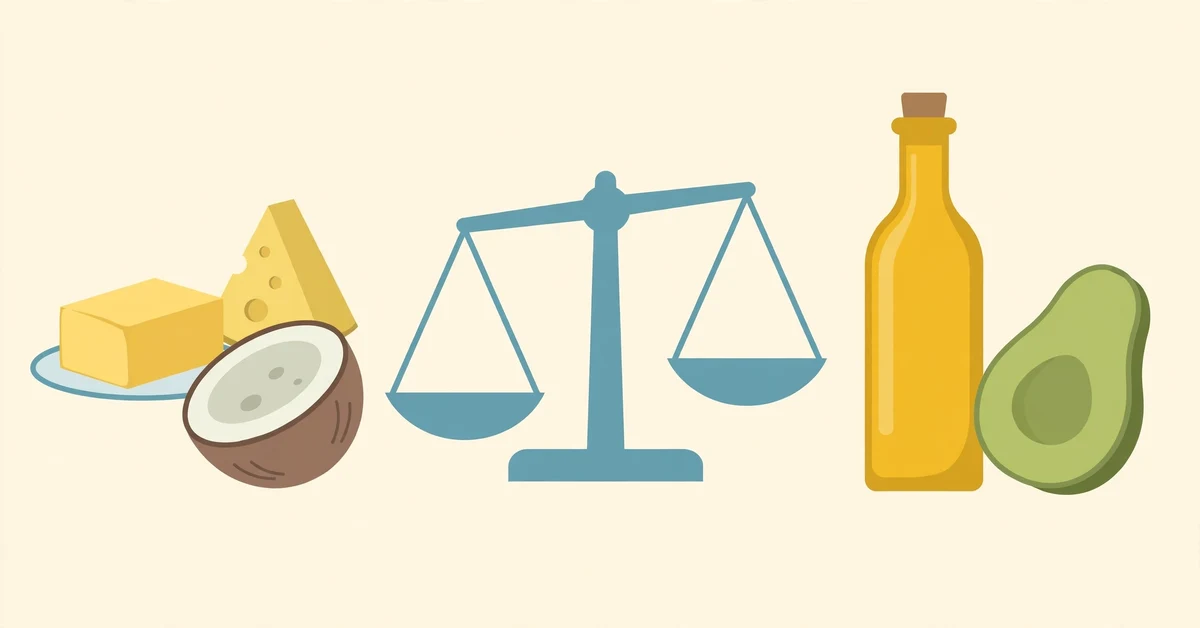
What Is Saturated Fat? Sources, Daily Limits and Smarter Swaps
Nov 11, 2026 • 17 min read
What to Expect After Laser Treatment for Spider Veins
Sep 13, 2026 • 25 min read
White Mushrooms: Nutrition, Benefits, and Uses
Aug 29, 2026 • 8 min read
10 Tasty Wild Berries to Try (and 8 Poisonous Ones to Avoid)
Aug 16, 2026 • 26 min read
9 Powerful Health Benefits of Cumin
Aug 22, 2026 • 30 min read