Foods to Avoid With Gout: Purine Chart & Safe Alternatives

- What Is Gout, and Why Do Some Foods Trigger It?
- Foods to Avoid With Gout: The Purine Chart
- Organ Meats: The Worst Offenders
- Seafood to Avoid – and the Fish You Can Still Eat
- Red Meat, Poultry and Processed Meat: How Much Is Too Much?
- What Can You Drink With Gout? Beer, Spirits, Wine and Sugary Drinks
- Hidden Purines: Yeast Extracts, Gravies and Sauces
- What to Eat During a Gout Flare (and Between Flares)
- Safe Alternatives: Foods That Help Lower Uric Acid
- A Sample Gout-Friendly Day of Eating
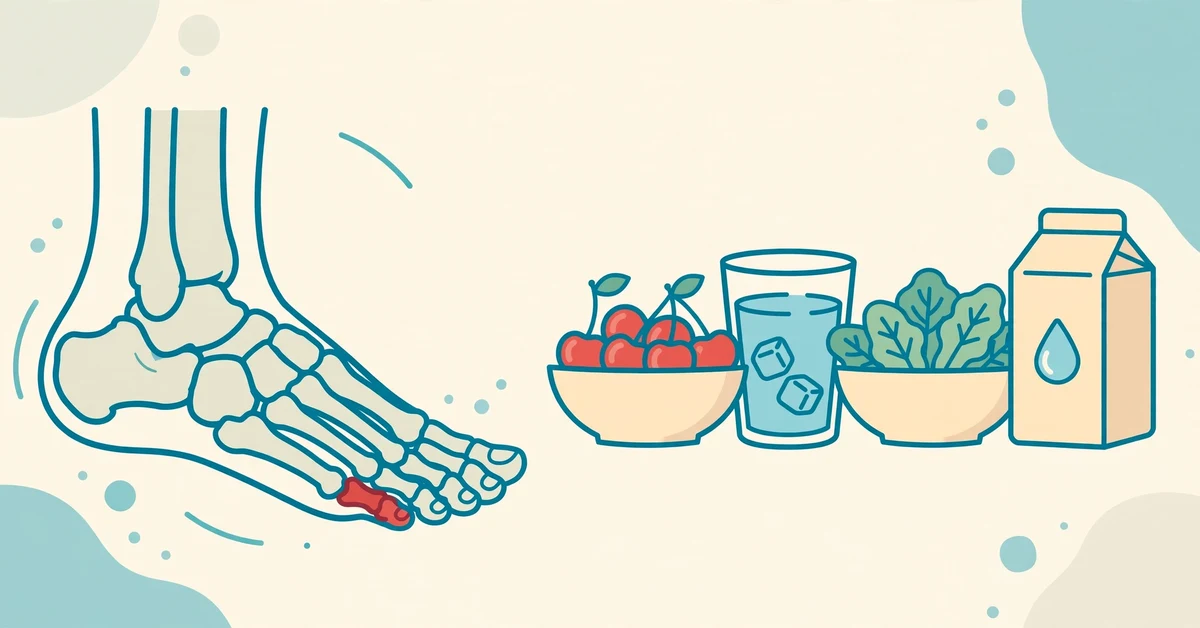
If you have gout, the foods most likely to trigger a flare are the ones highest in purines: organ meats such as liver and sweetbreads, oily fish such as anchovies and sardines, large portions of red meat, beer, and drinks sweetened with high-fructose corn syrup. Your body turns purines into uric acid, and when uric acid builds up it can form sharp crystals in a joint, most often the big toe.
The good news is that most of the foods on a healthy plate are safe: nearly all vegetables, low-fat dairy, cherries, whole grains, eggs, tofu and water. You do not need a joyless diet, you need to know which foods are red, which are yellow and which are green. This guide gives you that in one place: a purine chart with real numbers, the drinks ranked, the hidden purines most lists miss, what changes during a flare, and a full sample day of eating.
What Is Gout, and Why Do Some Foods Trigger It?
Gout is a form of inflammatory arthritis. It happens when uric acid builds up in the blood, a condition called hyperuricemia, and forms needle-shaped crystals in a joint. The result is a flare: sudden, intense pain, swelling, redness and warmth, often starting in the big toe at night.

Purines are natural compounds found in all living cells, so every food that contains protein carries some purines. When your body digests them it produces uric acid, and most of that uric acid leaves the body in urine. Problems start when you make too much uric acid, or your kidneys clear too little of it. Diet is only part of the story: genetics, kidney function, weight and some medicines matter at least as much. In fact, changing your diet alone usually lowers uric acid by only about 10 to 15 percent, which is rarely enough on its own for someone with established gout. That is not a reason to ignore food. It is a reason to be realistic: a gout-friendly diet reduces flares and supports your treatment, it does not replace it. If you have gout, talk to your doctor about your uric acid target and whether you need medicine alongside diet changes.
Two ideas run through this whole guide. First, not all purines are equal: purines from animal foods raise gout risk, while purines from plants do not. Second, dose matters: a small portion of a moderate-purine food a few times a week is a different thing from a large portion every day.
Foods to Avoid With Gout: The Purine Chart
Purine content is measured in milligrams per 100 grams of food. Dietitians sort foods into three bands: high (over 150 mg per 100 g), moderate (50 to 150 mg) and low (under 50 mg). As a rough target, many gout guides suggest keeping total purines around 500 to 700 mg a day, and 300 to 400 mg a day during a flare. The values below are approximate: they vary with the source, the cut of meat and how the food is cooked.
| Food | Purines (mg/100 g) | Level | What to do |
|---|---|---|---|
| Beef liver | ~300-400 | High | Avoid |
| Sweetbreads | ~380-800 | High | Avoid |
| Anchovies | ~240-410 | High | Avoid |
| Sardines | ~210-480 | High | Avoid |
| Herring, mackerel | ~145-300 | High | Avoid or rare small portion |
| Mussels, scallops | ~135-150 | High | Avoid or rare small portion |
| Trout, tuna | ~150-370 | High | Limit strictly |
| Beef, pork, lamb | ~120-250 | Moderate-high | Small portions, a few times a week |
| Chicken, turkey | ~100-150 | Moderate | 4-6 oz portions, skinless |
| Salmon, fresh shrimp | ~100-170 | Moderate | Small portions, 1-2 times a week |
| Bacon, sausage | ~130-160 | Moderate-high | Limit strictly |
| Eggs, low-fat dairy | ~0-15 | Low | Enjoy regularly |
| Most vegetables, fruits | ~0-50 | Low | Enjoy freely |
| Whole grains, tofu, beans | ~0-100 | Low-moderate | Enjoy regularly |
One serving puts these numbers in perspective. A single 100-gram serving of beef liver carries around 379 mg of purines, more than half of a whole day’s target for someone managing gout. A 100-gram serving of anchovies carries roughly 240 mg. By contrast, a whole day built on vegetables, grains, eggs and low-fat dairy can stay well under 300 mg without feeling like a punishment.
Organ Meats: The Worst Offenders
If there is one food group to cut out completely, it is organ meats. Liver, kidney, heart, brain and sweetbreads (thymus and pancreas) carry the highest purine concentrations of any common food, often two to three times the purines of a steak. Sweetbreads can exceed 800 mg per 100 grams in some tables. There is no portion size that makes them a good idea for someone with gout, and no cooking method that removes the purines.
The same warning covers foods made from them. Pate, liver sausage, haggis and some traditional dishes built on offal belong in the same avoid group. Gravy and meat extracts made by boiling down meat are also concentrated sources, which is why they appear again in the hidden-purines section below. If a dish lists liver, kidney or sweetbreads anywhere in its description, treat it as a red food and choose something else.
Seafood to Avoid – and the Fish You Can Still Eat
Seafood is the trickiest category, because fish is healthy in almost every other way. The rule for gout is about species and portion, not about giving up fish entirely. The worst offenders are small oily fish and shellfish: anchovies, sardines, herring, mackerel, mussels, scallops, trout and tuna in large amounts. Anchovies hide in more places than people expect, including Caesar salad dressing, pizza toppings, Worcestershire sauce and some Asian sauces, so check the label if you eat out often.

Fish you can still eat, in small portions once or twice a week, include salmon, fresh shrimp, crab and lobster. Salmon sits in the moderate band, roughly 100 to 170 mg per 100 grams, and some research suggests the omega-3 fats in oily fish may even be linked to a lower risk of flares, though the evidence is not settled. The practical approach is portion control: a palm-sized serving of salmon is a different thing from a large tuna steak. Keep total meat and fish to about 4 to 6 ounces a day, and less during a flare. If you are unsure about a particular fish, the safest question is not whether it is healthy in general, but how much of it you are eating and how often.
Red Meat, Poultry and Processed Meat: How Much Is Too Much?
Red meat sits in the middle of the chart, which is why the advice is “limit” rather than “never”. Beef, pork and lamb carry roughly 120 to 250 mg of purines per 100 grams, and a large 6-ounce steak delivers about one and a half times the uric acid load of the same weight of chicken. The long-running Harvard study of more than 47,000 men found that those who ate the most meat had a 40 percent higher risk of gout than those who ate the least. Game meats such as venison, rabbit and pheasant are higher still and are best avoided.
Portion size is the lever that matters most here. Keep red meat to 4 to 6 ounces per serving, a few times a week at most, and fill the rest of the plate with vegetables and grains. Chicken and turkey are moderate-purine foods, roughly 100 to 150 mg per 100 grams, and skinless chicken breast in a 4-ounce portion is a reasonable everyday protein for most people with gout. Dark turkey meat runs a little higher than light meat, so choose breast when you have the option.
Processed meats deserve a stricter line. Bacon, sausage, salami, pepperoni and hot dogs combine moderate-to-high purines with salt, saturated fat and, often, added sugars. They also tend to appear in large portions, on pizza, in sandwiches and at breakfast, which makes them easy to overeat. Treat them as occasional foods, not staples.
What Can You Drink With Gout? Beer, Spirits, Wine and Sugary Drinks
Drinks may matter more than any single food. Alcohol raises uric acid in three ways at once: it increases purine production, it slows the kidneys’ removal of uric acid, and it produces lactic acid that competes with uric acid for excretion. Beer is the worst of all because it adds its own purines from brewer’s yeast on top of the alcohol effect. One large study found that even one can of beer a day raised the risk of a gout flare by about 1.49 times.
| Drink | Gout risk | What to do |
|---|---|---|
| Beer (including low-alcohol beer) | Highest: purines + alcohol | Avoid, especially during flares |
| Spirits (whiskey, vodka, gin) | High: raises uric acid, blocks excretion | Avoid during flares; strictly limit otherwise |
| Wine | Lowest of the alcohols, but still raises risk | Avoid during flares; small amounts only between flares |
| Soda and sugary drinks | High: fructose drives uric acid up | Avoid; 2+ cans a day linked to 85% higher risk |
| Fruit juice | Moderate-high: natural fructose | Limit to a small glass or skip |
| Coffee | Linked to lower risk | Fine in normal amounts; skip sugary coffee drinks |
| Water | Helps flush uric acid | Aim for 8-10 glasses a day |
Sugary drinks deserve the same attention as beer. Fructose is the only sugar that directly drives uric acid production, and drinks sweetened with high-fructose corn syrup deliver it in large doses. Men who drank two or more sugar-sweetened sodas a day had an 85 percent higher risk of developing gout than men who rarely drank them. Fruit juice looks healthier but carries the same problem: a glass of orange juice holds the fructose of several oranges with none of the fiber. Energy drinks and sweetened sports drinks belong in the same group. Water is the best choice, and most gout guides suggest 8 to 10 glasses a day, because good hydration helps the kidneys clear uric acid.
Hidden Purines: Yeast Extracts, Gravies and Sauces
Some of the highest-purine foods never appear on a dinner plate as themselves. Dried brewer’s yeast tops most purine tables at roughly 3,000 mg per 100 grams, which is why beer is so problematic and why yeast-based spreads and supplements should be avoided. Marmite, Vegemite and other yeast extracts are concentrated purine sources, and they turn up in canned soups, stews, frozen dinners, salty snacks and some soy sauces. Meat extracts, gravies and stock cubes made by boiling down meat are concentrated in the same way. Fish sauce and some Thai sauces carry purines from anchovies. None of these is dangerous in a trace amount, but a daily habit, a spoonful of Marmite on toast every morning, a bowl of instant soup every lunch, adds up. Check labels for yeast extract, meat extract, hydrolyzed protein and fish sauce, and treat them as foods to limit rather than free extras.
What to Eat During a Gout Flare (and Between Flares)
The rules change when a flare starts. During a flare, tighten everything for a few days: no alcohol at all, since any alcohol prolongs the attack; keep all meat and fish to about 4 ounces a day in total; aim for the lower purine target of 300 to 400 mg a day; drink plenty of water; and keep taking your prescribed medicine unless your doctor tells you otherwise. Build meals around vegetables, grains, eggs and low-fat dairy, and rest the affected joint. A flare is not the time to test whether you can handle a steak.
Between flares, the rules relax into a pattern you can live with. Moderate-purine foods such as chicken, salmon and red meat can return in small portions, two or three times a week, with total meat and fish around 4 to 6 ounces a day. A small glass of wine on occasion is a lower-risk choice than beer, though avoiding alcohol entirely is still the safest option. The goal between flares is consistency rather than perfection: a diet you can keep for months beats a strict week followed by a return to old habits. If you are working on weight loss, do it gradually. Crash diets and fasting raise uric acid and can trigger a flare, so aim for slow, steady loss with professional guidance if you need it.
Safe Alternatives: Foods That Help Lower Uric Acid
The safe list is long, and it is also where the evidence is most encouraging. Low-fat dairy is the standout: in the Harvard cohort, men who ate the most low-fat dairy had a lower risk of gout, and low-fat milk, yogurt and cheese appear protective against repeat flares. Cherries are the most studied single food for gout. Tart cherries such as Montmorency and Balaton are rich in anthocyanins, the compounds behind their deep red color, and studies link cherry intake with lower uric acid and fewer attacks. There is no agreed daily amount, but a small bowl of fresh cherries or a glass of tart cherry juice is a reasonable habit.

Vitamin C and coffee have the strongest numbers behind them. In a study that followed nearly 47,000 men for 20 years, those taking 1,500 mg of vitamin C a day had about a 45 percent lower risk of gout. Citrus fruit, kiwi, strawberries, bell peppers and broccoli are all good food sources. Coffee shows a similar pattern: men drinking four to five cups a day had about a 40 percent lower risk, and six or more cups about 59 percent lower, while women drinking four or more cups had about a 57 percent lower risk. Coffee is not a treatment and it is not right for everyone, so check with your doctor if you have other conditions, but an ordinary cup of unsweetened coffee fits a gout-friendly diet.
Then there is the myth worth clearing up properly. Vegetables such as spinach, asparagus, mushrooms, peas and cauliflower are relatively high in purines, and old gout lists told people to avoid them. Modern research says the opposite: plant purines do not raise gout risk, and in the Harvard study, plant protein was linked to a lower risk of gout. The body handles purines from plants differently from purines in meat and fish, so there is no reason to give up vegetables. Whole grains, beans, lentils, tofu and tempeh belong in the same safe group, and the DASH eating pattern, rich in vegetables, whole grains and low-fat dairy, has been linked with lower uric acid.
A Sample Gout-Friendly Day of Eating
A gout-friendly day is an ordinary healthy day with the red foods removed and the portions kept honest. Here is one example built on the foods above:
- Breakfast: oatmeal made with low-fat milk, topped with berries and a few walnuts, plus a cup of coffee.
- Lunch: a large salad with chickpeas, cucumber, tomatoes and olive oil, whole-grain bread, and a small pot of low-fat yogurt.
- Snack: a small bowl of cherries or an apple, and a glass of water.
- Dinner: tofu and vegetable stir-fry with brown rice, or a 4-ounce skinless chicken breast with roasted potatoes and steamed broccoli.
- Drinks through the day: water, aiming for 8 to 10 glasses, with unsweetened tea or coffee if you like.
Eating out needs the same thinking in a different setting. At a steakhouse, choose the smallest cut, order grilled chicken or fish instead, and fill the plate with vegetables. At a sushi restaurant, skip anchovy and sardine rolls and keep tuna portions small. At a fast-food counter, skip the bacon burger, the gravy and the large soda, and pick grilled chicken, a salad and water. None of these swaps is complicated; they are the same red-yellow-green choices, made before you order.
| Traffic light | Foods | Rule |
|---|---|---|
| Red – avoid | Organ meats, anchovies, sardines, beer, sugary drinks, yeast extracts, gravies | Cut out, especially during flares |
| Yellow – limit | Red meat, chicken, turkey, salmon, shrimp, wine, fruit juice | Small portions, a few times a week |
| Green – enjoy | Vegetables, cherries and other fruit, low-fat dairy, eggs, whole grains, tofu, beans, water, coffee | Every day, freely |
Gout is a condition you manage for the long term, and food is one of the few parts of it you control every day. Cut the red foods, keep the yellow foods small and occasional, build your plate from the green foods, and drink water instead of beer or soda. That pattern will not cure gout on its own, but it lowers your uric acid, cuts the number of flares and makes your treatment work better. If you are unsure where to start, a registered dietitian can turn this traffic-light list into a plan that fits your tastes and your medicines. If you want to understand how gout is diagnosed, see our guide to gout diagnosis, and for home measures that may help between flares, see home remedies for gout.
This article is for general information only and is not medical advice. If you have gout, talk to your doctor or a registered dietitian before making major changes to your diet, especially if you take uric-acid-lowering medicine or have kidney disease.
Frequently Asked Questions
Organ meats, especially liver and sweetbreads. They carry the highest purine levels of any common food, roughly 300 to 800 mg per 100 grams, so a single serving can exceed half a day’s purine target. Anchovies and sardines are the next worst. If you cut one thing out completely, make it organ meats.
Yes, in moderation. Chicken is a moderate-purine food, roughly 100 to 150 mg per 100 grams. A 4-ounce portion of skinless chicken breast a few times a week fits a gout-friendly diet. Choose breast over dark meat, skip the skin, and keep total meat and fish to about 4 to 6 ounces a day.
There is no strong evidence that tomatoes raise uric acid for most people, and they are low in purines. Some people report tomatoes as a personal trigger, and a small number of surveys link tomato intake with flares, but the evidence is mixed. If you notice flares after eating a lot of tomatoes, cut back and see whether it helps; otherwise there is no reason to avoid them.
Wine carries the lowest risk of the alcoholic drinks, but it still raises gout risk, and one study of 724 people with gout found wine, beer and spirits were each linked to more flares. Avoid all alcohol during a flare. Between flares, a small glass of wine occasionally is a lower-risk choice than beer, but avoiding alcohol entirely remains the safest option.
The evidence is promising but modest. Tart cherries are rich in anthocyanins, and studies link cherry intake with lower uric acid and fewer gout attacks, but there is no agreed daily amount and cherries are not a substitute for medicine. A small bowl of fresh cherries or a glass of tart cherry juice is a reasonable daily habit.
Yes. Although spinach, asparagus, mushrooms, peas and cauliflower are relatively high in purines, research shows plant purines do not raise gout risk, and plant protein was linked to a lower risk in a large Harvard study. Do not give up vegetables because of an old purine list.
Yes. Eggs are very low in purines, roughly 0 to 15 mg per 100 grams, and they are a good protein choice for a gout-friendly diet. They fit in the green group along with low-fat dairy, vegetables and whole grains.
Usually not. Diet changes alone lower uric acid by only about 10 to 15 percent, which is rarely enough for someone with established gout. Diet reduces the number of flares and supports treatment, but most people with recurrent gout also need uric-acid-lowering medicine. Talk to your doctor about your uric acid target rather than relying on diet alone.


Related Posts

What’s the Benefit of Poppyseed Oil?
Aug 25, 2026 • 8 min read
How Many Calories Are in an Egg?
Aug 26, 2026 • 22 min read
What Is Acerola Cherry?
Sep 9, 2026 • 13 min read
2025 Noom Diet Review: Follow Our Reviewer’s 12-Month Weight Loss Journey
Sep 17, 2026 • 23 min read
What Is Tamarind? A Tropical Fruit with Health Benefits
Sep 3, 2026 • 32 min read