Is Pneumonia Contagious? How It Spreads and How Long You're Contagious

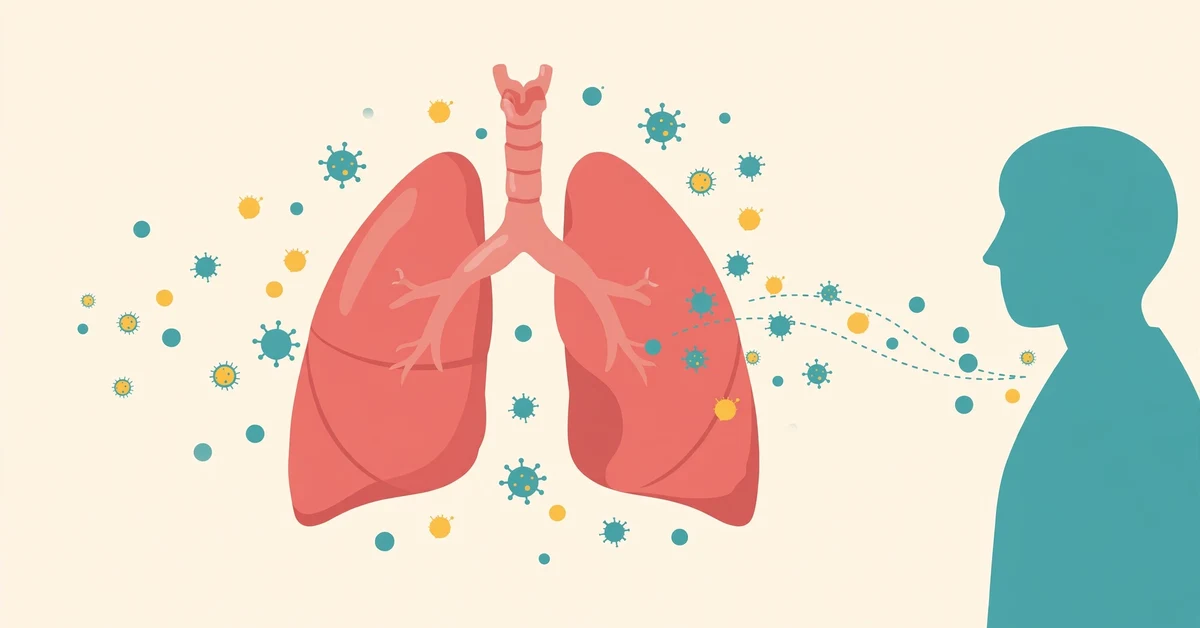
- You Catch the Germ, Not the Pneumonia
- How Does Pneumonia Spread?
- How Long Is Pneumonia Contagious?
- Is Walking Pneumonia Contagious?
- Is Pneumonia Contagious After Antibiotics?
- Pneumonia vs. Bronchitis: Which One Spreads More?
- Why One Person Gets Pneumonia and the Other Just Gets a Cold
- Protecting Everyone Else in the House
- When to See a Doctor
- Frequently Asked Questions
- Can you catch pneumonia from someone in the same house?
- Is pneumonia contagious before symptoms start?
- Can you be contagious with pneumonia if you have no fever?
- How long should you stay home from work or school with pneumonia?
- Should you sleep in the same bed as someone with pneumonia?
- Can you get pneumonia more than once?
- References
It’s half past nine at night. Your partner is asleep on the couch with a rattling cough, a course of antibiotics on the coffee table, and a diagnosis from urgent care ringing in your ears: pneumonia. And now you’re standing in the kitchen doorway, pillow in hand, doing the math every family does. Do you sleep in the spare room tonight? Can the kids still hug him goodnight? Should you be calling your boss, your mum, anyone?
Here’s the short answer. Some types of pneumonia can spread from person to person – but what travels between you isn’t “pneumonia” itself. It’s the germ behind it. And how long that germ can spread depends on which one it is.
That distinction sounds like wordplay. It isn’t. It changes what you should worry about, how long you should keep your distance, and when life can go back to normal.
You Catch the Germ, Not the Pneumonia
Pneumonia isn’t a single disease you pass around like a parcel. It’s what happens when an infection settles deep in the lungs and the tiny air sacs fill with fluid and pus. The American Lung Association puts it plainly: the lung infection itself is not contagious, but the bacteria and viruses that cause it can be.
Think of it this way. If your partner’s pneumonia started with the flu virus, what you might catch from his coughing is the flu virus. Whether that virus then settles in your lungs and becomes pneumonia depends on you – your age, your airways, your immune system. Most healthy adults who catch the same germ get a miserable cold or flu, nothing worse. The germ is shared. The pneumonia is not.
Some pneumonias can’t spread at all. Fungal pneumonia comes from spores breathed in from soil or bird droppings, not from people. Aspiration pneumonia happens when food, drink, or stomach contents slip into the lungs – grim, sometimes dangerous, but nobody catches it from anybody. Chemical fumes can do similar damage. No germ, no contagion.

How Does Pneumonia Spread?
Mostly the way you’d guess. Coughing. Sneezing. Talking up close. Every cough launches thousands of tiny droplets; breathe them in, and the germ gets its chance. The Centers for Disease Control and Prevention (CDC) describes this droplet spread as the main route for the bacteria behind most bacterial pneumonia.
Surfaces play a smaller part. A doorknob, a shared cup, a tissue left on the sofa – some respiratory viruses survive on surfaces for hours, and touching them then rubbing your eyes or nose can deliver the germ. Hand-to-face contact is the route people forget.
A two-minute chat in a breezy hallway is low risk. Eight hours in a closed bedroom with someone coughing through the night is a different story. That’s why these germs move so easily through households, dormitories, and care homes – anywhere people breathe the same air for hours.
How Long Is Pneumonia Contagious?
This is where people want one number. There isn’t one. The contagious window swings from about two days to several weeks depending on the germ. A fever is a useful rough gauge – while it’s there, assume they can spread what they’ve got – but the type of pneumonia matters more than the thermometer.
| Type of pneumonia | Contagious? | Typical contagious window | When it’s usually safe to be close again |
|---|---|---|---|
| Bacterial (e.g. Streptococcus pneumoniae) | Yes | Until 24-48 hours after starting antibiotics; longer if untreated | After 1-2 days on antibiotics and the fever has gone |
| Viral (flu, RSV, COVID-19, common cold viruses) | Yes | From 1-2 days before symptoms start to roughly a week after; worst in the first few days | Once symptoms are clearly improving and fever-free for at least 24 hours |
| Walking pneumonia (Mycoplasma pneumoniae) | Yes | Can stretch for several weeks, often the whole time the cough lingers | Hardest to call – take extra care around high-risk people for 2-3 weeks |
| Fungal (from soil, mould, bird droppings) | No | Never spreads person to person | No restrictions needed |
| Aspiration / chemical (food or fumes in the lungs) | No | Not an infection passed between people | No restrictions needed |
Two honest caveats. First, these windows are averages, not guarantees – a weakened immune system can stretch any of them. Second, people can carry and pass on some of these germs before they feel ill, and occasionally without ever getting sick. You can’t police what you can’t see – which is why the household habits further down matter more than stopwatch-watching.
Incubation runs the other way, too. If you were exposed recently, viral pneumonia typically shows up within 1 to 4 days. Mycoplasma is slower and sneakier – it can take up to three weeks to declare itself.

Is Walking Pneumonia Contagious?
Yes – and in some ways it’s the one to watch. Walking pneumonia is usually caused by Mycoplasma pneumoniae, a small bacterium that produces a milder illness: stubborn cough, low fever, headache, a sore throat that won’t quit. People feel rough but not flattened, so they keep going to work, to school, to the supermarket. Still coughing. Still spreading it.
Mycoplasma also holds the record for patience. Outbreaks roll slowly through schools and dorms because the incubation period can stretch to three weeks and the contagious period can drag on for weeks, roughly as long as the cough does. Antibiotics shorten the illness, but doctors can’t give you a tidy day on which a mycoplasma cough stops being a risk to others. If anyone in your house is elderly, very young, or immune-suppressed, treat a lingering walking-pneumonia cough with respect for a good two to three weeks.
Is Pneumonia Contagious After Antibiotics?
For bacterial pneumonia, antibiotics change the picture fast. The general rule from the American Lung Association and MedlinePlus: after 24 to 48 hours on the right antibiotic, with the fever gone and symptoms easing, a person with bacterial pneumonia is usually no longer contagious. The drugs don’t just make the patient feel better – they cut down the number of bacteria being coughed out.
Three conditions hide inside that sentence. The antibiotic has to be the right one for the germ. It has to actually be taken, on schedule. And the person has to be improving – if the fever is still spiking on day three, the 48-hour rule doesn’t apply and it’s time to call the doctor back, not to declare the all-clear.
Antibiotics do nothing for viral pneumonia. There’s no 48-hour shortcut there; contagiousness fades as the illness itself fades. Feeling better isn’t the same as fully recovered, either – the cough and exhaustion can linger for weeks after you’ve stopped being a risk to anyone.
Pneumonia vs. Bronchitis: Which One Spreads More?
These two get confused constantly, partly because the same viruses often cause both. Bronchitis inflames the larger airways; pneumonia infects the air sacs themselves. Bronchitis is far more common, and usually far less serious. Pneumonia is the one that hospitalises people.
On contagiousness, bronchitis probably wins the race it doesn’t want to win. Acute bronchitis is usually viral, and those cold-and-flu viruses spread briskly in the first few days. Pneumonia’s germs spread too, but classic bacterial pneumonia – pneumococcus settling into a vulnerable lung – is often less about catching it fresh from a cough and more about bacteria already living quietly in your own nose and throat getting their chance after a virus has roughed up your airways.
So if your partner has bronchitis and you catch his virus, you’ll likely get bronchitis or a cold. If he has pneumonia, you might catch his germ – but your odds of it turning into pneumonia are much lower than your odds of a few rough days on the couch yourself.
Why One Person Gets Pneumonia and the Other Just Gets a Cold
Exposure is only half the story. The other half is the state of the lungs receiving the germ. The NHS and CDC flag the same higher-risk groups: adults over 65; babies and very young children; people with COPD, asthma, heart disease, or diabetes; anyone whose immune system is suppressed by illness or medication; and smokers, whose damaged airways clear germs badly.
Recent flu is a risk factor all by itself. Influenza strips the lining of the airways and leaves the door open for bacteria – which is why bacterial pneumonia often arrives a few days after someone seemed to be recovering from flu. That one-two punch is a pattern doctors dread.
None of this is a reason to panic if you’re a healthy 35-year-old sharing a house with a pneumonia patient. It is a reason to be properly careful if Grandma lives with you, or if there’s a newborn in the next room.
Protecting Everyone Else in the House
Forget the deep-clean theatre. The measures that matter are boring, and they work because the spread is mostly through air and hands.
- Air first. Open windows, run a fan, spend time in different rooms where you can. Fresh air dilutes droplets faster than any spray.
- Hands second. Soap and water after coughing fits, before meals, after tissues. The patient’s hands and yours.
- Give the sick person their own kit. Their own towel, their own glass, their own pillow. Wash bedding and towels hot once they’re on the mend.
- Mask around the vulnerable. If there’s a high-risk person in the house, the patient wears a mask in shared spaces while they’re still coughing hard – or better, the high-risk person stays out of the sickroom entirely.
- Cough etiquette isn’t a poster, it’s a habit. Elbow or tissue, tissue straight in the bin, hands washed after.
- Vaccines are the long game. Flu shots every year, pneumococcal vaccination for the over-65s and at-risk groups, COVID and RSV vaccination where recommended. They don’t just protect the person vaccinated – they cut the number of germs circulating in your house.
And keep some perspective. Most brief contact – a visit, a chat, dropping off soup – carries low risk. It’s the long, close, unventilated hours that do the damage.
When to See a Doctor
Pneumonia is not a wait-and-see illness. Get medical help the same day if you or the person you’re caring for has a cough with any of the following: breathlessness at rest or trouble finishing sentences; chest pain when breathing in; a fever that isn’t settling after a few days, or one that comes back after improving; confusion or drowsiness, especially in an older person; lips or face looking blue or grey; coughing up blood; or symptoms that were improving and then worsen. Call emergency services for severe breathlessness or blue lips – don’t drive yourself.
Children under two, adults over 65, pregnant women, and anyone immune-suppressed should be seen earlier rather than later, even for symptoms that look mild. With pneumonia, the trajectory matters more than any single reading: getting worse on day three is a red flag, full stop.
Frequently Asked Questions
Can you catch pneumonia from someone in the same house?
You can catch the germ that caused their pneumonia, because household contact is long and close – exactly the conditions droplets like. But catching the germ is not the same as getting pneumonia. Most healthy household members who pick it up develop a cold, flu, or bronchitis instead. Your risk rises if you’re over 65, smoke, or have a lung condition or weakened immune system.
Is pneumonia contagious before symptoms start?
For viral pneumonia, yes. People can shed flu and other respiratory viruses a day or two before they feel ill, which is one reason these illnesses move through families so efficiently. Bacterial pneumonia is less often spread this way, though people can carry pneumococcus in the nose and throat without symptoms and pass it on, mostly to young children and older adults.
Can you be contagious with pneumonia if you have no fever?
Yes, it’s possible. Fever is a helpful signal – while it’s present, assume you’re contagious – but it isn’t a perfect switch. Walking pneumonia often runs with little or no fever while the cough keeps spreading mycoplasma for weeks. Judge by the whole picture instead: the cough, the days of treatment, and whether you’re improving.
How long should you stay home from work or school with pneumonia?
At minimum, stay home until your fever has been gone for at least 24 hours without fever-reducing medicine and you’re clearly improving – and for bacterial pneumonia, until you’ve had a day or two of antibiotics. In practice most people need longer – a week or more is common, because the fatigue outlasts the contagious period. Your doctor can pin down a date based on your type of pneumonia and your job.
Should you sleep in the same bed as someone with pneumonia?
For the first few nights – while the fever is up and the cough is at its worst – the spare room is the kinder and safer option if you have one. You’re spending eight unventilated hours inches from the source. Once they’re fever-free, improving, and (for bacterial pneumonia) a couple of days into antibiotics, the risk drops a lot and normal arrangements are fine for most healthy partners. If you’re in a high-risk group yourself, be stricter for longer.
Can you get pneumonia more than once?
Yes. Having pneumonia once doesn’t protect you – there are dozens of bacteria and viruses that can cause it, and immunity to one says little about the others. Some people get it repeatedly, which is worth raising with a doctor – it can point to an underlying problem with the airways or immune system. Vaccination against flu and pneumococcus lowers the odds of the most common repeat offenders.
References
- Centers for Disease Control and Prevention (CDC) – Pneumonia: cdc.gov/pneumonia
- American Lung Association – Is Pneumonia Contagious?: lung.org
- MedlinePlus (U.S. National Library of Medicine) – Pneumonia: medlineplus.gov/pneumonia
- NHS – Pneumonia: nhs.uk/conditions/pneumonia
- Mayo Clinic – Pneumonia: Symptoms and Causes: mayoclinic.org
Read Next
12 Bench Press Alternatives to Build Size and Strength
Knee Replacement Recovery Timeline: What to Expect Week by Week
Measles Rash Pictures: What the Rash Looks Like Day by Day

The 10 Best Low Carb and Keto-Friendly Protein Powders
Is It Serosanguinous or Another Type of Wound Drainage?

Boxer’s Fracture
Related Posts
Does Medicare Cover CPAP Machines? Coverage Rules and Costs Explained
Nov 13, 2026 • 24 min read
Smoker's Cough: Everything You Need to Know
Sep 13, 2026 • 34 min read
Sleep Apnea ICD-10 Codes: What G47.33, G47.31, and G47.37 Mean — and What Medicare Requires for CPAP
Nov 15, 2026 • 28 min read
What is Decannulation of a Tracheostomy?
Sep 6, 2026 • 24 min read
SpO2 Levels Chart: Normal Oxygen Levels, Danger Zones and What to Do
Nov 12, 2026 • 35 min read