Knee Replacement Recovery Timeline: What to Expect Week by Week

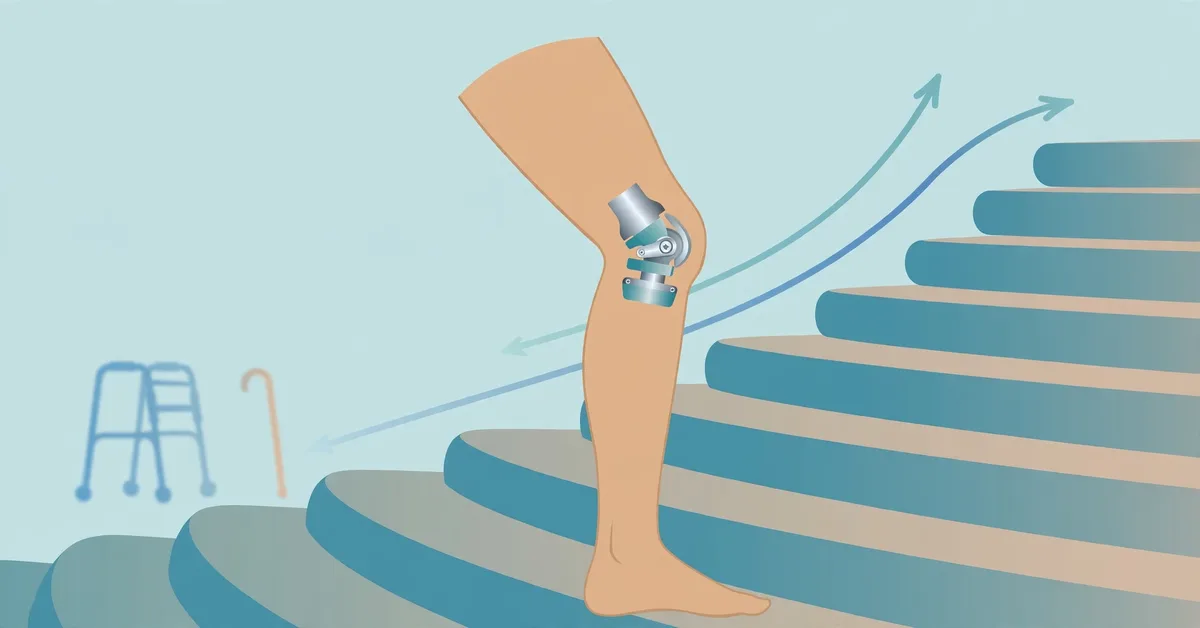
- Knee Replacement Recovery Timeline at a Glance
- Days 1 to 3: Hospital and Coming Home
- Weeks 1 to 2: The Hardest Stretch
- Weeks 3 to 6: Building the Bend and Dropping the Walker
- Weeks 6 to 12: Walking Unaided and Driving Again
- Months 3 to 6: Back to Most of Daily Life
- Months 6 to 12: The Final Result
- Knee Replacement Milestones: A Checklist
- Pain and Swelling: What Is Normal, and When
- Red Flags: Call Your Surgeon or Get Urgent Care
- Total vs Partial Knee Replacement: How Recovery Differs
- Follow-Up Appointments to Expect
- Habits That Keep Recovery on Track
- The Bottom Line
Most people stand and take their first steps with a walker on the day of surgery or the day after, go home after one to three nights, and are back to most daily activities by about six weeks. Roughly 90 percent of functional recovery happens in the first twelve weeks, but full recovery — settled swelling, rebuilt strength, a knee you stop thinking about — usually takes six months to a year. The NHS and MedlinePlus both stress that the timeline below is a typical pattern, not a test: your age, general health, fitness before surgery, and how consistently you do your rehabilitation all shift it, and your surgeon’s instructions always override any general guide.
Knee Replacement Recovery Timeline at a Glance
| Phase | How it usually feels | Walking aid | Bend (flexion) target | Key milestones |
|---|---|---|---|---|
| Days 1–3 | Sore, swollen and tired; pain often peaks around day 2–3 | Walker (frame) | Fully straight (0° extension) is the priority; bend builds toward 60–90° | Stand and walk on day 1; physiotherapy starts; home after 1–3 nights |
| Weeks 1–2 | The hardest stretch: swelling, bruising and broken sleep are normal | Walker | About 90° by the end of week 2 | Short walks several times a day; staples or sutures out around week 2 |
| Weeks 3–6 | Pain easing steadily; the knee still feels warm and stiff after activity | Cane (single stick) | 100–110° | Stairs improving; desk work from about 4–6 weeks |
| Weeks 6–12 | Swelling after busy days; sleep still improving | None, for most people | 110–120° | Driving at about 6 weeks if criteria are met; stairs feel normal by about 12 weeks |
| Months 3–6 | Occasional warmth and swelling; a numb patch beside the scar is common | None | Around 120° or more for most | Most daily activities; swimming, cycling and golf for many |
| Months 6–12 | Strength and confidence still building | None | Final range for most people | Normal routine; the knee can keep improving for a year or more |
Days 1 to 3: Hospital and Coming Home
Physiotherapy usually starts within 24 hours of surgery — often the same day. With help, you will sit up, stand, and take a few steps with a walker. Most people bear weight on the new knee as tolerated from day one. These first sessions focus on three things: getting the knee fully straight, starting it bending, and moving safely — bed to chair, chair to standing, and a short walk.
Pain is usually strongest around day two or three, once the anaesthetic and nerve blocks wear off, and the knee will look swollen and bruised. That is expected, not a setback. Ice, elevation, and the ankle-pump exercises your physiotherapist teaches you all help — ankle pumps also keep blood moving in the calf, which lowers the risk of a blood clot. Discharge typically happens after one to three nights (some people go home the same day, others stay longer) once you can walk safely with your aid, manage stairs if you have them, and your pain is controlled on oral medication.
Weeks 1 to 2: The Hardest Stretch
Almost every recovery guide — and almost every patient — agrees the first two weeks at home are the toughest. Swelling is at its most obvious (it typically peaks around the end of the first week), bruising can spread down the leg, and night pain frequently disrupts sleep. The knee feeling warm is normal. The trend matters more than any single day: week two should feel better than week one.
You will walk around the house with a walker and do your exercises several times a day: ankle pumps, quadriceps sets (tightening the thigh muscle with the leg straight), heel slides to build the bend, and straight-leg raises as strength allows. Two targets dominate this phase: keeping the knee fully straight (0° extension) and reaching roughly 90° of bend by the end of week two. Rest with the leg straight and supported under the heel — avoid sleeping or resting with a pillow under the knee, because a knee kept bent for long periods can stiffen in that position.
Around the two-week mark you will usually have a first follow-up: the wound is checked and staples or sutures are removed if you have them. Some soreness directly behind the knee is common in these weeks; our guide to pain behind the knee after knee replacement explains what causes it and which patterns need a call to your surgeon.
Weeks 3 to 6: Building the Bend and Dropping the Walker
This is the phase where progress becomes visible. Pain eases week by week, walks get longer, and physiotherapy adds strengthening and balance work — often including a stationary bike, starting with partial pedal rotations and progressing to full turns.
Most people use a walker for about the first three weeks, then switch to a cane for two to three more weeks. The rule surgeons use is gait, not the calendar: move to a cane once you can walk without limping, and drop the cane when your walking is steady and limp-free without it. Stairs follow a pattern early on — up leading with your unoperated leg, down leading with the operated one — and gradually progress to one foot per step. The bend target in this phase is about 100–110°.
Many people return to desk work somewhere between weeks four and six, often part-time or with breaks to move and elevate the leg at first. The knee will still swell and feel stiff after a busy day; that remains normal through this phase and beyond.
Weeks 6 to 12: Walking Unaided and Driving Again
By about six weeks, most people walk without a stick and the knee bends to roughly 110–120°. Strengthening becomes the main work of physiotherapy, stairs feel increasingly normal (most people manage them one foot per step by about twelve weeks), and low-impact exercise expands — swimming once the wound is fully healed and your team clears it, and cycling on flat ground for many.
Driving typically becomes possible around six weeks, but the calendar is not the test. You are ready when you are off strong opioid pain medication, can sit comfortably, bend the knee enough to get in and out and work the pedals, and — most importantly — can perform an emergency stop without hesitation. A right knee replacement usually needs the full six weeks; a left knee replacement with an automatic car is often cleared sooner. The American Academy of Orthopaedic Surgeons (AAOS) frames it the same way: adequate muscle control and reaction time, not a fixed date. Kneeling can be tried in this phase on a soft surface with padding, though a significant minority of people never find it comfortable — that alone is not a sign of failure.
Months 3 to 6: Back to Most of Daily Life
By three months, most people are back to the majority of their everyday activities, and low-impact sports such as golf, cycling, and swimming are realistic for many. Strength, stamina, and confidence keep building even when the knee feels “done.” Mild to moderate swelling can persist for three to six months — the AAOS notes this is a normal pattern, especially swelling that appears after activity and settles overnight.
Two sensations surprise people in this phase. First, a numb patch on the outer side of the scar is very common, because small skin nerves are cut during surgery; it usually shrinks over months and is harmless. Second, the new knee may click or feel mechanical when you move it. In a painless knee that is functioning well, that is expected — the implant parts are metal and plastic, not cartilage.
Months 6 to 12: The Final Result
Full recovery lands somewhere in this window for most people: MedlinePlus gives a range of about four months to a year for complete recovery, and strength and mobility can keep improving past the one-year mark. By twelve months, many people say they largely forget the knee is artificial. Most modern knee replacements keep working well for 15 to 20 years or more. Follow-up reviews with an X-ray are commonly scheduled around six and twelve months, though schedules vary by surgeon. The same long-arc pattern — early hardship, steady middle months, a result that keeps maturing for a year — shows up after other major operations too, as our look at quality of life after right hemicolectomy describes for bowel surgery.
Knee Replacement Milestones: A Checklist
| Milestone | Typical timing | Notes |
|---|---|---|
| First steps with a walker | Day of surgery or day 1 | With a physiotherapist; full weight bearing as tolerated for most |
| Staples out and first wound check | About 2 weeks | Some wounds use dissolving stitches instead |
| Walker → cane | About 2–4 weeks | When you can walk without a limp |
| Cane → no aid | About 4–6 weeks | When gait is steady and limp-free without the cane |
| Knee bends to 90° | About weeks 2–3 | Full straightening (0°) matters just as much |
| Knee bends to 110–120° | Weeks 6–12 | Enough bend for stairs, chairs, and cycling for most people |
| Driving | About 6 weeks | Criteria-based: off strong painkillers, comfortable sitting, reliable emergency stop; left knee in an automatic often sooner |
| Desk work | About 4–6 weeks | Part-time or with movement breaks at first |
| Standing job | About 6–12 weeks | Long standing, lifting, or kneeling duties can push this toward 3 months |
| Manual or heavy work | About 3 months | Confirm with your surgeon at the 6-week review |
| Stairs, one foot per step | About 6–12 weeks | Up with the unoperated leg first until then |
| Swimming, cycling, golf | From about 6 weeks (swimming, once the wound is healed) to about 3 months (golf) | Low-impact only; running and contact sports are generally discouraged |
Pain and Swelling: What Is Normal, and When
Pain follows a fairly predictable arc. It is worst in the first few days, peaks around day two or three, then eases steadily — though “steadily” still includes bad days, especially after you have done more than usual. Night pain is very common in the first few weeks and is a frequent reason for broken sleep; it improves as swelling settles. Swelling itself typically peaks around the end of the first week, is moderate to severe in the early weeks, and then fades slowly: mild to moderate swelling for three to six months is within the normal range, and a knee that puffs up after a long walk and settles by morning is behaving normally.
The pattern that matters is direction. Each week should be a little better than the last. Pain or swelling that suddenly worsens after a period of improvement — rather than after a clearly bigger day of activity — deserves a call to your surgical team, and the specific warning signs below need prompt attention.
Red Flags: Call Your Surgeon or Get Urgent Care
Contact your surgical team promptly — the same day — if you notice any of these:
- Possible infection: redness around the wound that is spreading rather than shrinking, new or increasing wound drainage, the wound opening, a bad smell from the dressing, or pain that suddenly gets worse after it had been improving.
- Fever: a temperature of 38°C (100.4°F) or higher that persists beyond the first day or two, or fever with chills at any point.
- Possible blood clot in the leg (DVT): new calf pain or tenderness, or one leg swelling much more than expected — especially the calf.
- Possible blood clot in the lung (PE) — treat as an emergency: chest pain, sudden breathlessness, coughing up blood, or a racing heartbeat. Call emergency services.
- A fall onto the knee, a sudden inability to bear weight, or pain that your prescribed medication cannot control.
Early movement, ankle pumps, and any blood-thinning medication your surgeon prescribes are all aimed at preventing clots, which is why taking them exactly as directed matters.
Total vs Partial Knee Replacement: How Recovery Differs
A partial (unicompartmental) replacement resurfaces only one damaged compartment of the knee instead of the whole joint, and recovery is usually faster across the board. It is only suitable when arthritis is confined to that one compartment — your surgeon decides based on imaging and what they find. The broad pattern:
| Partial replacement | Total replacement | |
|---|---|---|
| Hospital stay | Often same day or 1 night | Typically 1–3 nights |
| Walking aids | Days to about 2 weeks for many | Walker about 3 weeks, then a cane for 2–3 more |
| Desk work | Often about 2–4 weeks | About 4–6 weeks |
| Driving | Often earlier, once the same safety criteria are met | About 6 weeks |
| How the knee feels | Often feels more natural, as the ligaments are kept | May feel mechanical at first; clicks are common |
| Full recovery | Often about 3–6 months | About 6–12 months |
Follow-Up Appointments to Expect
Schedules vary, but a common pattern is a wound review at about two weeks (with staple or suture removal and a check on pain control), a surgeon review with an X-ray at about six weeks — the visit where driving, work, and exercise progression are usually confirmed — and further reviews with X-rays at six and twelve months. If you are not progressing as expected — for example, the bend is stuck well below 90° approaching week six — your team may bring reviews forward or adjust physiotherapy, which is one reason to mention a stalled bend early rather than waiting for the scheduled visit.
Habits That Keep Recovery on Track
- Do the exercises daily. The first six weeks of physiotherapy do more to determine your final bend and strength than any other period. Little and often beats occasional big efforts.
- Straight beats bent at rest. Elevate the leg on pillows under the heel and calf, not under the knee, and avoid sleeping with a pillow under the knee.
- Ice after activity, and expect the knee to need rest after bigger days — plan them, don’t fear them.
- Walk little and often rather than saving it all for one long walk, and keep ankle pumps going in the early weeks.
- Expect broken sleep early on. Night pain and stiffness disturb sleep for most people in the first weeks; it improves as swelling settles. Mention it at follow-up if it is not improving.
The Bottom Line
Knee replacement recovery is measured in months, not weeks: the first two weeks are the hardest, most daily activities return by about six weeks, the large majority of functional recovery is done by twelve weeks, and the knee keeps maturing for up to a year. Walker to cane to unaided walking, a bend building from 90° toward 110–120°, and driving at about six weeks are the signposts most people recognise. Use them as a map, not a scorecard — being a week or two behind this timeline is common and usually means nothing more than a different starting point.
This article is general information only and is not medical advice. Recovery plans differ by surgeon, implant, and patient; always follow the instructions of your own surgical and physiotherapy team, and contact them promptly if you notice any of the warning signs described above.
Frequently Asked Questions
Most people are back to most daily activities by about six weeks, and roughly 90 percent of functional recovery happens within the first twelve weeks. Full recovery — settled swelling, rebuilt strength, and final range of motion — usually takes six months to a year, and MedlinePlus gives a range of about four months to a year. Improvement can continue past twelve months.
Most people use a walker for about the first three weeks, then a cane for two to three more weeks, and walk unaided by about four to six weeks. The deciding factor is your gait, not the calendar: you move on when you can walk without limping, first with a cane and then without any aid.
Typically around six weeks, and only when you meet the safety criteria: you are off strong opioid pain medication, you can sit comfortably and bend the knee enough to work the pedals, and you can perform an emergency stop without hesitation. A right knee replacement usually needs the full six weeks; a left knee replacement in an automatic car is often cleared sooner.
Typical targets are about 90 degrees of bend by weeks two to three, 100–110 degrees by week six, and 110–120 degrees by weeks six to twelve. Getting the knee fully straight (0 degrees of extension) matters just as much as the bend. Many people finish around 120 degrees or a little more; a natural knee bends to about 135 degrees.
Yes. Mild to moderate swelling for three to six months is a normal pattern, according to the AAOS, especially swelling that appears after activity and settles overnight. Swelling that suddenly worsens together with spreading redness, new wound drainage, fever, or calf pain is not normal — contact your surgical team the same day.
Desk work is often possible from about four to six weeks, sometimes part-time at first. Jobs with long standing may need six to twelve weeks, and manual or heavy work usually around three months. Your surgeon will usually confirm timing at the six-week review.
Most modern knee replacements keep working well for 15 to 20 years or more. Staying active with low-impact exercise and maintaining a healthy weight both help the implant last.
Call your surgical team the same day for spreading redness around the wound, new drainage, a persistent fever of 38°C (100.4°F) or higher, pain that suddenly worsens after improving, or new calf pain and swelling, which can signal a blood clot. Chest pain, sudden breathlessness, or coughing blood can signal a clot in the lung and are an emergency.
Read Next

The 10 Best Selenium Supplements, According to a Dietitian

6 Natural Treatments for Shingles
10 Back Exercises with Bands to Counteract Work-from-Home Posture
Blood Sugar Level Chart: What Your Fasting, After-Meal and Random Readings Mean

Can You Eat Pumpkin or Pumpkin Seeds Raw?

Understanding Foot Supination
Related Posts

7 Best Knee Pillows for Back and Side Sleepers in 2025
Oct 1, 2026 • 22 min read
Yoga for Endometriosis: Try These Stretches to Relieve Pain
Sep 18, 2026 • 3 min read
What to Expect After Laser Treatment for Spider Veins
Sep 13, 2026 • 18 min read
Can You Have Surgery with a Cold?
Aug 26, 2026 • 20 min read
9 of the Best Keto-Friendly Protein Bars You Can Buy
Sep 17, 2026 • 19 min read