Low Lymphocyte Count: What It Means and When to Worry

- What Does a Low Lymphocyte Count Actually Mean?
- The 1,000 vs 1,500 Question: Why Two Sources Disagree
- Absolute vs Percentage: The Number That Actually Matters
- How to Read Your CBC Report, Line by Line
- What Lymphocytes Actually Do
- What Causes a Low Lymphocyte Count?
- How Low Is Low? A Severity Ladder
- What Are the Symptoms?
- Which Follow-Up Tests a Doctor Orders, and Why
- Low Lymphocyte Count in Children
- Can You Raise Your Lymphocyte Count?
- Frequently Asked Questions
- What is considered a low lymphocyte count?
- Is a low lymphocyte count serious?
- What causes lymphocytes to drop?
- Can a low lymphocyte count go back to normal on its own?
- Does a low lymphocyte percentage mean the same thing as a low count?
- What should I do if my lymphocyte count is low?
- Can stress cause a low lymphocyte count?
- References
You open the lab portal on your phone, half expecting everything to be green. Most of it is. Then one line stops you: LYMPH, flagged low, in red. Below it, a number you have never thought about before. Your heart does a small skip. Is your immune system failing? Do you need to call someone tonight?
Take a breath. A low lymphocyte count is one of the most common flags on a routine blood test, and most of the time it turns out to be nothing urgent – a cold you had last week, a steroid cream, a lab range that runs tighter than the next lab’s. But sometimes it’s the first clue to something that needs attention. The difference is in the number, how low it is, and whether it stays low.
What Does a Low Lymphocyte Count Actually Mean?
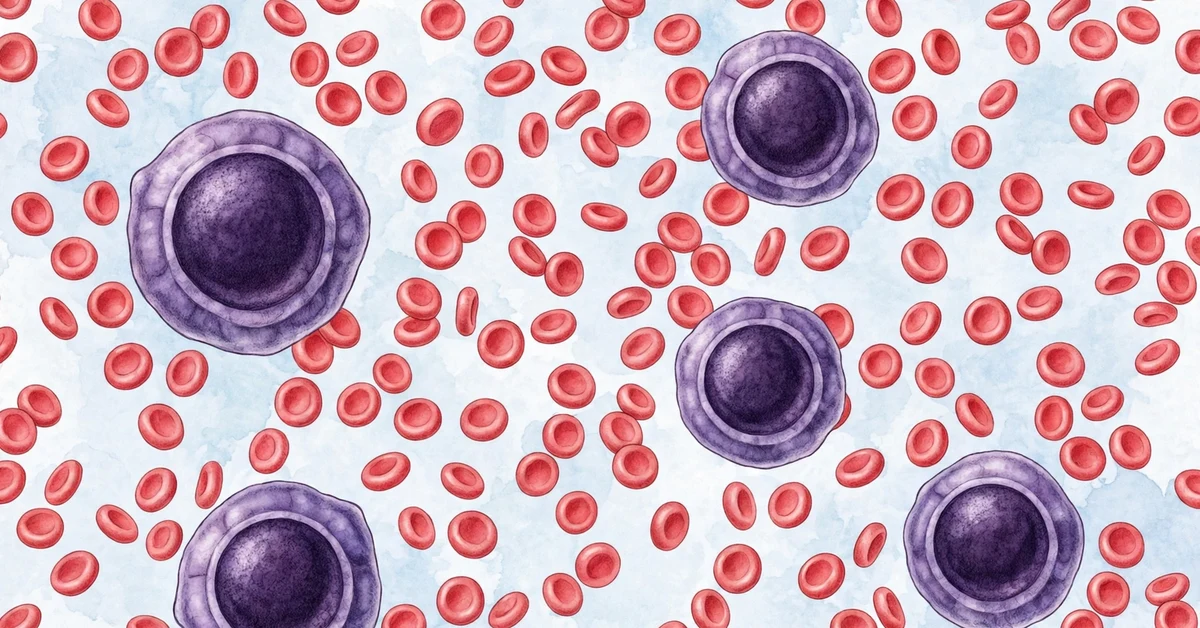
Lymphocytes are a type of white blood cell, and they run the targeted half of your immune system. While other white blood cells attack anything foreign on sight, lymphocytes learn to recognize specific threats – one virus, one bacterium, one abnormal cell – and remember them. They make up roughly 20 to 40 percent of all white blood cells, according to the MSD Manual.
A low lymphocyte count, called lymphocytopenia or lymphopenia, means there are fewer of these cells circulating in your blood than the lab expects. Doctors measure it as the absolute lymphocyte count, or ALC. The usual adult range is about 1,000 to 4,800 cells per microliter, per UCSF Benioff Children’s Hospitals.
A low count isn’t a disease by itself. It’s a clue. Lymphocytes can drop because the bone marrow makes too few, because they’re destroyed too fast, because they’ve temporarily moved out of the bloodstream, or because they’re leaking out of the body.
The 1,000 vs 1,500 Question: Why Two Sources Disagree
Look up the cutoff and you will find two different numbers. The MSD Manual and Healthline say a count is low below 1,500 cells per microliter in adults. UCSF Benioff Children’s, MyHematology, and Ubie put the line at 1,000. Which one is right?
Both are, in their own way. The 1,000 figure is the bottom of the normal reference range most labs use for adults: 1,000 to 4,800 cells per microliter. The 1,500 figure is the threshold the MSD Manual uses to define lymphocytopenia as a diagnosis – a more cautious line that catches milder dips. Every lab also sets its own reference range, so one lab’s lower limit might be 1,000 and another’s 1,500.
That’s why a count of 1,200 can be flagged low on one report and normal on another. Judge your number against the range printed on your own report, not a number from a website.
Absolute vs Percentage: The Number That Actually Matters
Your report shows lymphocytes twice: as a percentage (LYMPH%) and as an absolute count (LYMPH# or ALC). Only the absolute count decides whether your lymphocytes are truly low.
The percentage is just a slice of the pie. If your total white blood cell count shoots up – say during a bacterial infection, when neutrophils flood in – the lymphocyte slice gets smaller even though the actual number of lymphocytes has not changed. Your report flags LYMPH% as low, but nothing about your lymphocytes is wrong.
Here’s a concrete example. Imagine your total white blood cell count is 20.0 (normal is roughly 4.0 to 11.0) and your lymphocyte percentage is 10 percent (normal is 20 to 40 percent). Ten percent of 20.0 gives an absolute lymphocyte count of 2.0 – comfortably inside the normal range of 1.0 to 4.8. The percentage is low. The lymphocytes are fine. This is called relative lymphopenia. When you read your report, find the absolute count first.
How to Read Your CBC Report, Line by Line
Most people meet their lymphocyte count on a complete blood count (CBC) with differential. Here is what each relevant line means.
WBC. Your total white blood cell count. Normal is roughly 4,000 to 11,000 per microliter. This is the size of the pie.
LYMPH%. Lymphocytes as a percentage of all white blood cells. Normal is about 20 to 40 percent. Useful context, not the deciding number.
LYMPH# or ALC. The absolute lymphocyte count. Normal for adults is about 1,000 to 4,800. This is the number that matters.

What Lymphocytes Actually Do
There are three main types of lymphocytes, and each does a different job. Knowing which type is low can point a doctor toward the cause, which is why follow-up testing sometimes counts the subtypes separately.
B cells make antibodies – proteins that tag specific invaders so other immune cells can destroy them. When B cells run low, bacterial infections become more frequent.
T cells are the coordinators and the killers. Helper T cells (CD4+) direct the whole immune response, while cytotoxic T cells (CD8+) destroy infected or cancerous cells. A sharp drop in CD4+ T cells is the classic pattern of late-stage HIV infection. Our guide to CD4 T lymphocytes explains that number in detail.
Natural killer (NK) cells act fast, destroying virus-infected and some tumor cells without needing to learn the target first. All three types start in the bone marrow, then patrol the blood, lymph nodes, spleen, and tonsils. For the full picture, see our explainer on white blood cells.

What Causes a Low Lymphocyte Count?
The list of causes is long, but it gets manageable when you sort it by mechanism – the four buckets MyHematology uses.
Too few being made. The bone marrow cannot produce enough lymphocytes. This happens with bone marrow disorders such as aplastic anemia, leukemia, and lymphoma; with chemotherapy and radiation; and with severe undernutrition, one of the most common causes worldwide. Inherited immune disorders such as severe combined immunodeficiency (SCID) and DiGeorge syndrome also fall here.
Too many being destroyed. Viral infections lead this group: HIV directly infects and destroys CD4+ T cells, influenza causes a short-lived drop, and measles can cause a deep and prolonged one. Sepsis triggers massive lymphocyte death. Autoimmune conditions such as lupus, rheumatoid arthritis, and Sjogren’s disease destroy lymphocytes too, as do corticosteroids such as prednisone and some biologic drugs.
Moved out of the blood, or lost from the body. The cells aren’t gone, they’ve just left the bloodstream for lymph tissue. Acute stress – major surgery, trauma, critical illness – does this by raising cortisol, and so do corticosteroids. These drops are usually temporary. Rarely, lymphocytes physically leak out through the gut or with lymph fluid into the chest or abdomen.
Doctors also split causes by time. Acute lymphocytopenia shows up briefly – during a viral infection, a fast, a course of steroids – and then resolves. Chronic lymphocytopenia lasts, and the MSD Manual names the two most common long-term causes: late-stage HIV infection and undernutrition.
How Low Is Low? A Severity Ladder
Not every low number carries the same weight. This table gives a rough guide for adults, using the absolute lymphocyte count.
| Level | Absolute count (cells/uL) | What it usually means | What to do next |
|---|---|---|---|
| Mild | 1,000 – 1,500 | Often temporary: a recent virus, stress, a medication. | Repeat the CBC in a few weeks. |
| Moderate | 500 – 1,000 | A real drop that needs an explanation. | See your doctor for targeted tests. |
| Severe | Below 500 | Defenses seriously weakened. Risk of severe infections. | Seek prompt medical care. |
What Are the Symptoms?
Most of the time, a low lymphocyte count has no symptoms of its own. Mild cases are usually found by accident, on a blood test done for something else, and the person feels fine.
When symptoms do appear, they usually come from the infections a weakened immune system lets through, or from the condition that caused the low count. Recurrent infections, or infections from organisms that don’t usually cause trouble, are the clearest warning signs.
The underlying cause has its own signs too: cough and fever point toward a viral infection; enlarged lymph nodes and spleen suggest cancer or HIV; painful swollen joints and a rash suggest lupus or rheumatoid arthritis. Get care promptly if a low count comes with repeated or unusually severe infections, unexplained fevers, or swollen lymph nodes that do not settle. If your count is below 500, don’t wait for symptoms.
Which Follow-Up Tests a Doctor Orders, and Why
A single low result rarely ends the story. What happens next depends on how low the count is and whether it stays low:
| Test | What it looks for | When it is ordered |
|---|---|---|
| Repeat CBC with differential | Whether the low count persists | Almost always, usually in a few weeks |
| Lymphocyte subset panel (flow cytometry) | Which type is low: CD4+ T, CD8+ T, B, or NK | When the count stays low or is severe |
| HIV test | HIV, a leading cause of chronic low counts | When the drop is severe, unexplained, or persistent |
| Autoimmune panel | Lupus, Sjogren’s disease, rheumatoid arthritis | When symptoms point that way – rashes, joint pain |
| Immunoglobulin levels | Whether antibody production is also low | With recurrent bacterial infections or low B cells |
| Bone marrow examination | Leukemia, aplastic anemia, other marrow disorders | Only when counts are drastically low |
| Genetic testing | Inherited immunodeficiency disorders | In newborns and infants with persistent low counts |
A bone marrow test is not the default – the MSD Manual reserves it for drastically low counts. Most people never get past the repeat CBC, because the count has usually bounced back by then.
Low Lymphocyte Count in Children
Children aren’t small adults where lymphocytes are concerned. Their counts run much higher and fall gradually toward adult levels as they grow. For children age 6 or younger, UCSF Benioff Children’s Hospitals considers fewer than 2,000 per microliter abnormally low; the MSD Manual puts the cutoff at 3,000. Infants under 2 can have normal counts from 3,000 to 9,500, per MyHematology.
Causes in children overlap with adults – viral infections, chemotherapy, steroids, major surgery – plus inherited immunodeficiency disorders such as SCID. Mild cases usually need no treatment.
Can You Raise Your Lymphocyte Count?
There’s no pill, food, or supplement that directly raises your lymphocyte count, and Healthline says so plainly. The count goes up when the cause is fixed, not when you chase the number itself. Most causes are fixable.
If a medication is the culprit, the count usually recovers within days of stopping it, under a doctor’s guidance – never stop a prescribed drug on your own. If the cause is an infection, the count typically rebounds as you recover. If undernutrition is behind it, restoring calories and protein, plus zinc, vitamin B12, and folate, helps the bone marrow make lymphocytes again.
For people with too few B cells, doctors sometimes give gamma globulin – a preparation rich in antibodies – to help prevent infections. What about the “immune-boosting” supplements marketed for exactly this fear? No supplement has been shown to raise lymphocyte counts. If your count stays low, the useful step is a doctor’s visit, not a shopping cart.
Frequently Asked Questions
What is considered a low lymphocyte count?
For adults, most labs treat an absolute lymphocyte count below 1,000 cells per microliter as low, with a normal range of about 1,000 to 4,800; the MSD Manual uses a more cautious cutoff of 1,500. Judge your result against the range printed on your own report. For children under 6, below 2,000 is considered low.
Is a low lymphocyte count serious?
It depends on how low it is and whether it stays low. A mildly low count after a cold or flu usually corrects itself within weeks. A moderate or severe count, or one that stays low for months, needs a doctor to find the cause. Below 500, care should not wait.
What causes lymphocytes to drop?
The most common are viral infections (flu, COVID-19, HIV), undernutrition, corticosteroids such as prednisone, chemotherapy and radiation, severe stress or major surgery, autoimmune conditions such as lupus, and blood cancers such as leukemia and lymphoma.
Can a low lymphocyte count go back to normal on its own?
Yes, often. Counts depressed by a viral illness, fasting, stress, or a short course of steroids usually recover once the trigger passes. Counts that stay low point to a longer-term cause.
Does a low lymphocyte percentage mean the same thing as a low count?
No. The percentage can look low simply because another white blood cell type has surged and shrunk the lymphocyte slice of the pie. The absolute count is the number that matters: if it is normal, a low percentage alone is usually not a problem.
What should I do if my lymphocyte count is low?
Check the absolute count and how far below the range it sits. If it is mildly low and you feel well, arrange a repeat CBC in a few weeks. If it’s below 1,000, or it stays low, see your doctor. If it’s below 500, seek prompt medical care. Don’t stop any prescribed medication without talking to your doctor first.
Can stress cause a low lymphocyte count?
Yes, temporarily. Severe physical stress – major surgery, trauma, critical illness, prolonged fasting – raises cortisol, which pushes lymphocytes out of the bloodstream. The drop is usually short-lived and the count recovers as the stress passes.
References
- MSD Manual (Consumer Version) – Lymphocytopenia: https://www.msdmanuals.com/home/blood-disorders/white-blood-cell-disorders/lymphocytopenia
- UCSF Benioff Children’s Hospitals – What Do Low Lymphocytes Mean?: https://www.ucsfbenioffchildrens.org/education/low-lymphocytes-lymphopenia
- Healthline – Lymphocytopenia: https://www.healthline.com/health/lymphocytopenia
- MyHematology – Lymphopenia or Low Lymphocytes: Causes, Symptoms & Treatment: https://myhematology.com/white-blood-cells/lymphopenia-low-lymphocytes/
- Mayo Clinic – Complete blood count (CBC): https://www.mayoclinic.org/tests-procedures/complete-blood-count/about/pac-20384919
- CDC – About the Immune System: https://www.cdc.gov/immune-system/about/index.html
Read Next

Ginger Oil Benefits: What the Evidence Actually Supports

The 5 Best CBD Gummies for Sleep and Relaxation: Our Testers Tell All

7 Easy Ways to Stretch Tight Glutes

White Mushrooms: Nutrition, Benefits, and Uses

Biktarvy and Cost: What You Need to Know

How Administrative Barriers Affect Access to Mental Health Care
Related Posts

Is It Serosanguinous or Another Type of Wound Drainage?
Sep 4, 2026 • 7 min read
What Blood Tests Are Used to Diagnose Anemia?
Aug 31, 2026 • 19 min readAll About Xarelto
Oct 5, 2026 • 22 min read
4 Herbs for Sickle Cell Anemia
Aug 20, 2026 • 20 min read
6 Resistance Band Exercises for Shoulders
Sep 19, 2026 • 32 min read