
7 Easy Ways to Stretch Tight Glutes

Stretching the gluteal muscles offers a range of advantages, including easing muscle tightness and helping to lessen lower back discomfort. Read on to find out ways to stretch tight glutes and why it matters.
Your gluteal muscles play a major role in keeping you mobile. They assist with daily movements like walking, climbing stairs, and standing up from a seat.
There are three gluteal muscles:
- gluteus maximus
- gluteus medius
- gluteus minimus
These muscles sit in the buttock area. The gluteus maximus is the largest muscle in the body and contributes a significant amount of force.
Your glutes connect to bones in the hips, pelvis, back, and legs. So when they become tight, you might notice discomfort not only in your buttocks but also in nearby regions like your back and hips.
Tight glutes can be caused by various things, such as injuries, poor posture, or incorrect technique during exercise.
Overworking these muscles during workouts or sports can also make them feel tense.
Below, learn practical stretches for your glutes and the perks of doing them consistently.
Benefits of stretching the glutes
If your glutes are tight, stretching can help ease that tension. This often reduces discomfort, including:
- low back pain
- buttock soreness
- pelvic discomfort
- stiff hips
- tight hamstrings
- sometimes, knee pain
By releasing tightness, glute stretches may also help to:
- increase flexibility
- expand range of motion
- lower the chance of injury
- boost overall mobility
When to stretch your glutes
Glute stretches are useful after a warmup and before exercising to increase blood flow and prime the muscles for activity.
It’s equally important to stretch after workouts. Postexercise stretching can help maintain flexibility, prevent stiffness, and aid recovery for future sessions.
You can also perform glute stretches during long periods of sitting — for example, after binge-watching a show or during extended desk time.
Chair-based glute stretches are safe and practical when you:
- sit at a desk most of the day
- are on a lengthy flight or road trip
- find sitting on the floor uncomfortable
7 stretches for glutes and hips
Here are seven stretches to help ease tightness in your glutes and nearby areas such as the lower back, legs, hips, and pelvis.
1. Seated figure-four stretch

Also referred to as the Seated Pigeon Pose, the seated figure-four helps release tightness in the glutes and adjacent muscles.
How to do it:
- Sit tall in a solid chair. Place your right ankle on your left thigh just above the knee. Rest your hands on your shins.
- Keep your spine long and lean forward slightly to intensify the stretch.
- Hold for 20–30 seconds.
- Return to the start and switch legs.
You can also perform similar stretches on the floor or while standing.
2. Seated glute stretch

This straightforward move eases tightness in your glutes, hips, and lower back. If you need extra support for the hips, sit on a yoga block or folded towel.
How to do it:
- Sit on the floor with your legs extended in front of you.
- Keeping your back straight, lift your left leg and place the left ankle on top of the right knee. Lean forward slightly to deepen the stretch.
- Hold for 20 seconds, then switch sides.
3. Downward-Facing Dog

Downward-Facing Dog is a classic yoga posture that stretches many areas, including the shoulders, hamstrings, calves, and glutes.
How to do it:
- Begin in a pushup position with hands shoulder-width apart and feet together. Engage your core.
- Lift your hips back and up to make an upside-down “V.” Slightly bend your knees and let your head hang between your shoulders, aligned with your spine. Reach your heels toward the floor but keep them slightly elevated.
- Hold for about 20 seconds, then return to the start.
Place your hands on yoga blocks if your wrists need support. Bending your knees can help keep your spine straight and maintain the “V” shape.
4. Pigeon Pose

Pigeon Pose, another common yoga position, can relieve tension across the glutes, hips, and lower back.
How to do it:
- Start on all fours. Bring your right knee toward your right wrist, setting your shin on the floor, and move your right ankle near your left wrist.
- Slide your left leg back with toes pointed and keep your hips squared forward. Lengthen your spine.
- Walk your hands forward gently and hold for 5–10 breaths.
- Return to the starting position and repeat on the opposite side.
To advance the stretch, bend your back leg, lift the foot, and grasp it with your hand for a quad stretch.
5. Knee to opposite shoulder

This stretch can be helpful for sciatica symptoms. Drawing the knee toward the opposite shoulder helps release tension in the glutes and around the sciatic nerve.
How to do it:
- Lie on your back with legs extended and feet flexed up.
- Bend and lift your right knee, wrapping your hands around it.
- Gently pull the right knee toward your left shoulder.
- Hold for 20–30 seconds, then lower the leg.
- Straighten the right leg and repeat with the left side.
6. Standing figure-four stretch

The standing figure-four is the upright counterpart to the seated figure-four and is great for alleviating tightness in the glutes, hips, and lower back.
How to do it:
- Stand tall and cross your left ankle over your right thigh just above the knee to form a “4.” Use a wall or desk for balance if needed.
- Slowly bend your right knee, lowering your hips into a partial squat.
- Hold when you feel the stretch in the left glute for 20–30 seconds.
- Return to standing and switch sides.
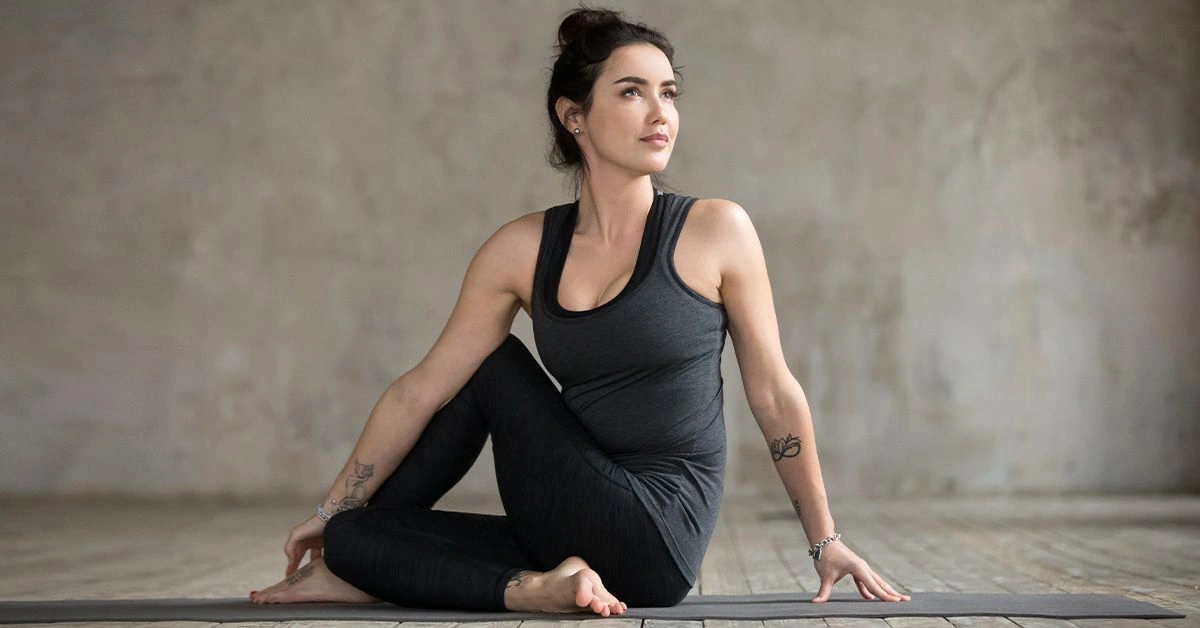
7. Seated twist

- Sit on the floor with your legs extended forward.
- Place your left hand behind you and cross your left leg over your right, setting your left foot beside your right knee.
- Bring your right arm over the left knee with the palm facing outward.
- Rotate to the left and use your right arm to gently push the left knee inward.
- Hold the twist for 20–30 seconds.
- Release and repeat on the other side.
Safety considerations
Before attempting glute stretches, consult a doctor or qualified fitness professional if you’ve had surgery, an injury, or ongoing pain in your hips, legs, or back.
If you’re new to stretching, proceed gradually. Start by holding each stretch for 20–30 seconds and increase intensity slowly as you become more comfortable.
Final thoughts
Stretching the glutes offers meaningful benefits, such as reducing tension and pain while improving flexibility. Incorporating targeted stretches into your routine can support better movement and recovery.
If you’re unsure about how to stretch safely, have had recent surgery or injury, or are experiencing persistent lower-body pain, check with a physician or physical therapist before starting a glute-stretching routine. For complementary exercises that strengthen the hips and posterior chain, learn more about squats for glutes.
Frequently Asked Questions
Aim for daily short sessions or at least 3–4 times per week. Hold each stretch 20–30 seconds and repeat 2–3 times per side, adjusting to comfort and progress.
Yes. Releasing tight glute muscles can reduce stress on the lower back and hips, often easing discomfort when combined with proper posture and strengthening exercises.
Stretch after a light warmup or postworkout to maintain flexibility and aid recovery. You can also do gentle stretches during long sitting periods to relieve tightness.
Risks are low if you move gently and avoid bouncing. Stop if you feel sharp pain. Consult a doctor before stretching if you have recent surgery, an injury, or persistent pain.
The knee-to-opposite-shoulder and seated figure-four stretches often help relieve sciatic nerve tension, but individual responses vary—use caution and consult a clinician if pain persists.

Related Posts
Try the Superman Exercise to Stand Tall and Proud
Sep 18, 2026 • 4 min read
The No BS Guide to Building Lean Muscle
Sep 19, 2026 • 22 min read
How to Do Chair Dips
Oct 4, 2026 • 25 min read
How to Use a Sled Push to Build Power, Speed, and Endurance
Sep 28, 2026 • 4 min read
Tire Workouts: What You Need to Know Before Starting
Sep 14, 2026 • 26 min read