6 Resistance Band Exercises for Shoulders


- For best results
- Reverse fly
- Front raise
- Lateral raise
- Standing row
- Band pull-apart
- Overhead band pull-apart
- What are the benefits of resistance bands?
- Safe and low impact: Great for shoulders
- Easy to scale for individual needs
- Portable, affordable, and user-friendly
- What to consider when buying a resistance band
- The bottom line
Exercises using resistance bands for the shoulders are both effective and straightforward, making them suitable for people at all fitness stages and abilities.
If you’re looking for an easy method to work your shoulders, a resistance band could be the ideal fitness accessory. Bands are lightweight, convenient, and affordable, so you can take a set with you while traveling or on the move.
It’s simple to incorporate resistance band moves into your existing workout or build a fresh routine that introduces new challenges.
These movements will enhance shoulder mobility and engage muscles important for stability, including those of the rotator cuff. Continue reading to learn how to perform resistance band exercises for your shoulder muscles and to discover some advantages of resistance band training.
For best results
For each movement, aim for 1–3 sets of 8–15 reps, or adjust this guideline according to advice from your physician, physical therapist, or trainer.
Master the technique with a lighter band before progressing to a heavier one. Move with slow, controlled motions. Avoid rocking, swinging, or relying on momentum.
Inspect any band you use for fraying or damage to reduce the chance of snapping. If you have shoulder pain or other shoulder conditions, consult a healthcare professional before starting these exercises.
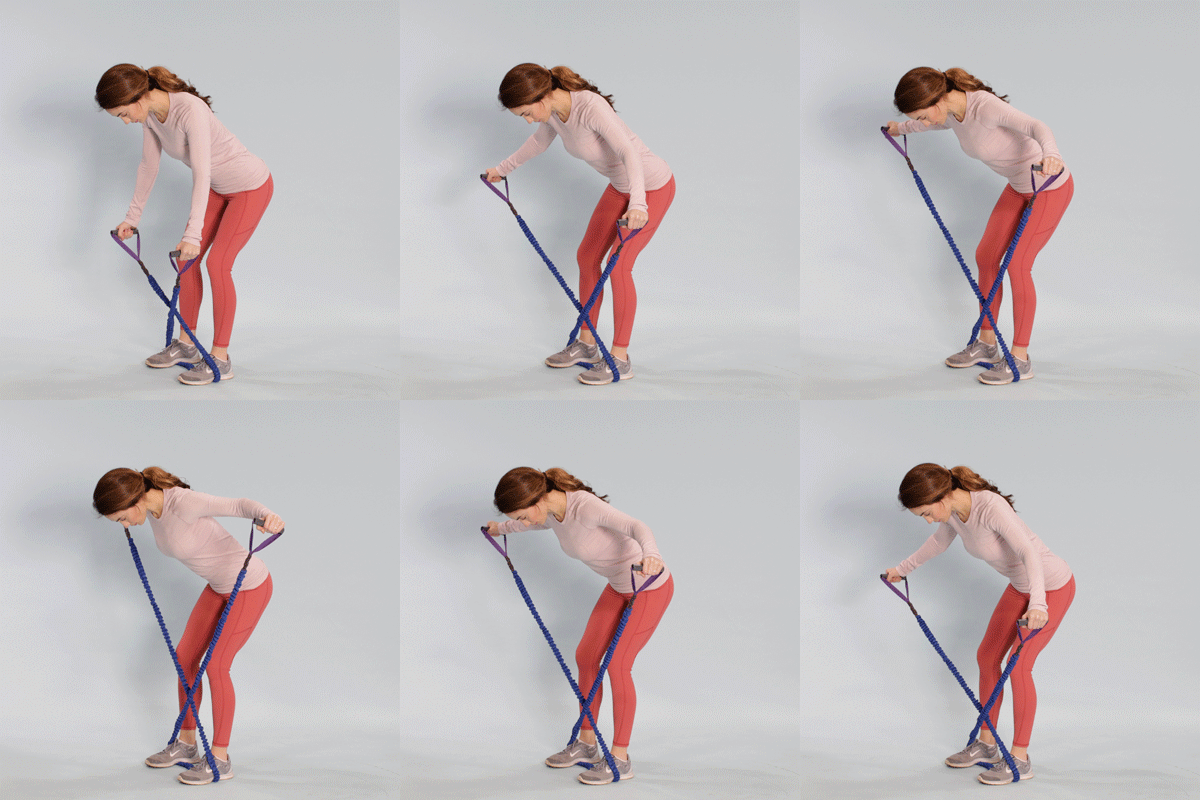
Reverse fly
This movement builds strength in the shoulders, upper back, and upper arms. It supports better posture and is useful for people who sit a lot or frequently bend forward.
- Stand with the band under the middle of your feet.
- Cross the ends to opposite hands so the band crosses across the front of your lower legs.
- Hinge at the hips and lean forward slightly, keeping a long, neutral spine and a slight bend in the knees throughout.
- Pull the band up and out to the sides until your hands reach chest level or higher.
- Squeeze your shoulder blades together.
- Hold briefly for a few seconds.
- Slowly return to the start position.
Front raise
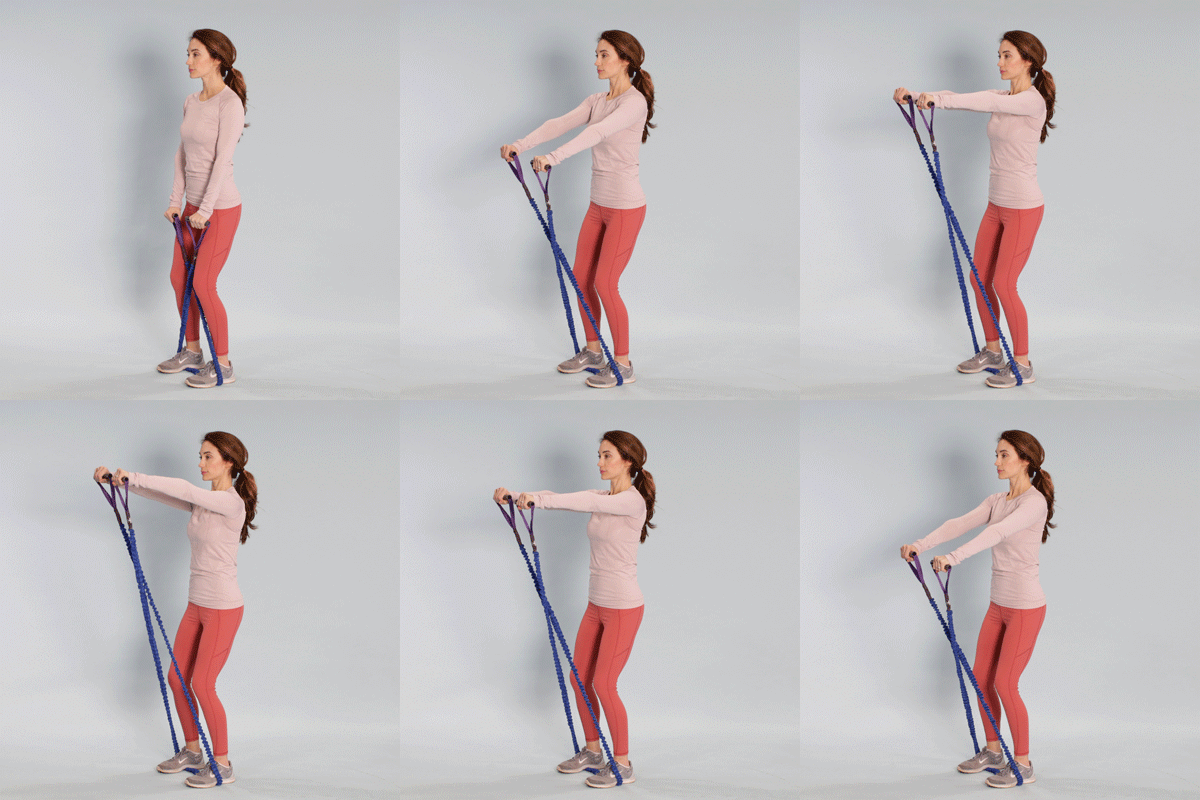
This move targets the anterior (front) portion of the shoulders. To support good posture, draw your shoulder blades down, lengthen your spine, and engage your core.
- Stand with the band under the center of your feet and hold each end in the opposite hand so the band crosses in front of the lower legs.
- Let your palms rest on your thighs.
- Lift your arms straight ahead, stopping when they reach shoulder height. Try not to rock or lean backward as you lift.
- Pause, then slowly lower back to the starting position.
Lateral raise
This exercise emphasizes your shoulders, upper back, and core muscles.
- Stand on the middle of the band.
- Grip each end of the band in the opposite hands, palms facing inward, with the band crossing in front of the lower legs.
- Keep a slight bend in the elbows as you lift your arms out to the sides.
- Pause for a couple of seconds with your arms just above shoulder height.
- Slowly lower back to the starting position.

Standing row
This movement targets the lats and rhomboids as well as the mid and lower trapezius. Pull your shoulder blades together while performing the exercise. Avoid rounding your shoulders and keep your neck relaxed.
- Secure the resistance band to a doorknob or another fixed anchor.
- Take a handle in each hand with your forearms parallel to the floor.
- Bend your elbows and pull your hands straight back alongside your ribs. Be careful not to arch your lower back or push your ribs forward.
- Slowly return to the start.

Band pull-apart
This drill activates the rear shoulders and upper back, helping to counteract and prevent rounded shoulders. It also increases shoulder stability for overhead activities.
It’s especially useful for people who frequently hunch forward. Bringing your hands closer together on the band increases resistance.
- Hold the band with your arms extended straight out in front.
- Keep your spine long and maintain a slight bend in the elbows.
- Stretch the band apart as far as you can.
- Squeeze your shoulder blades together.
- Hold for a few seconds.
- Slowly return to the starting position.

Overhead band pull-apart
This movement engages the shoulders, back, and triceps. It enhances stability, mobility, and posture.
- Hold the band directly overhead with both hands.
- Pull the band apart while lowering your arms to shoulder level, pressing your hands outward to the sides.
- Hold that position for a few seconds.
- Slowly return to the start, focusing on keeping your shoulder blades drawn down away from the ears.

What are the benefits of resistance bands?
Training with resistance bands offers many advantages. You can use these movements independently or alongside weight-based exercises.
Safe and low impact: Great for shoulders
This low-impact, safe option is particularly well-suited to complex joints like the shoulders, which are susceptible to injury. Because bands don’t rely on gravity, you can deliver resistance from various angles, allowing focus on specific regions and ranges of rotation.
Performing gentle movements to develop strength, stability, and mobility can help preserve shoulder health and reduce injury risk.
Easy to scale for individual needs
Resistance bands increase tension as you stretch them. That means movements get harder as the band is elongated and easier when there’s slack.
Because of this, you can readily adjust the difficulty of an exercise by changing band tension or grip placement to match your needs.
Portable, affordable, and user-friendly
Bands are portable, inexpensive, and simple to use, so they fit easily into your fitness plan. They also offer a wide range of variations and modifications.
Resistance band work can help boost flexibility and function and correct muscular imbalances. They may also relieve back or shoulder discomfort, particularly following injury or surgery, so daily activities feel more comfortable.
If you’re performing these exercises as part of post-injury or post-surgery rehab, check with your healthcare team first.
What to consider when buying a resistance band
There are many types of bands available if you want to buy your own. Consider the following:
- how and where you plan to use the bands
- the level and kind of resistance you prefer
- useful features such as handles
For more guidance on bands and common choices, see the 5 Bands for Resistance Training article.
The bottom line
Resistance band exercises are an effective and safe approach to strengthening and increasing flexibility in the shoulders and rotator cuffs.
Enjoy integrating them into your workouts, and consult a physical therapist, physician, or trainer if you want assistance or have medical concerns.
Stop performing the exercises if you experience pain or discomfort, especially if you’re recovering from an injury.
Frequently Asked Questions
A Shoulder Band Exercise uses elastic resistance bands to target shoulder muscles, improving strength, stability, and mobility with low-impact movements.
Aim for 2–4 sessions per week, performing 1–3 sets of 8–15 reps per exercise, but adjust based on your fitness level and professional guidance.
When performed correctly and with appropriate guidance, band exercises can improve stability and reduce pain; consult a healthcare professional if you have an existing injury.
Band pull-aparts, reverse flys, and standing rows are especially effective at strengthening the upper back and rear shoulder muscles that support better posture.
Select a band that lets you complete the desired reps with good form; start lighter to master technique and progress to thicker bands as strength improves.





Related Posts
Tire Workouts: What You Need to Know Before Starting
Sep 14, 2026 • 14 min read
10 Ways to Stretch and Strengthen Your Lats
Sep 15, 2026 • 8 min read
How to Do Chair Dips
Oct 4, 2026 • 9 min read
How to Get Toned Arms: 7 Exercises
Sep 29, 2026 • 21 min read
How to Use a Sled Push to Build Power, Speed, and Endurance
Sep 28, 2026 • 31 min read