Low MCHC on Your Blood Test: What It Means and What to Do Next

- What MCHC Actually Measures
- What Counts as Low MCHC?
- Check your MCHC result
- Why Is Your MCHC Low?
- Iron deficiency anemia
- Thalassemia trait
- Chronic blood loss
- Other, less common causes
- Symptoms of Low MCHC
- How Your Doctor Finds the Cause
- How Low MCHC Is Treated
- Iron-Rich Foods That Actually Help
- When to See a Doctor
Your blood results land in the portal on a Tuesday afternoon. Hemoglobin looks fine, white cells fine, and then one line is flagged in red: MCHC 29.8 g/dL, low. The number means almost nothing on its own, and that is exactly what makes it so unnerving: a result, a flag, and no plain-English explanation of what to do with either.
MCHC stands for mean corpuscular hemoglobin concentration. In plain terms, it says how densely packed the hemoglobin is inside your red blood cells. Hemoglobin is the protein that carries oxygen from your lungs to the rest of your body, so a low MCHC means each red cell is carrying less of it than it should. It is a clue, not a diagnosis, and once you know how to read it next to the other numbers on your report, it starts to make sense.
What MCHC Actually Measures
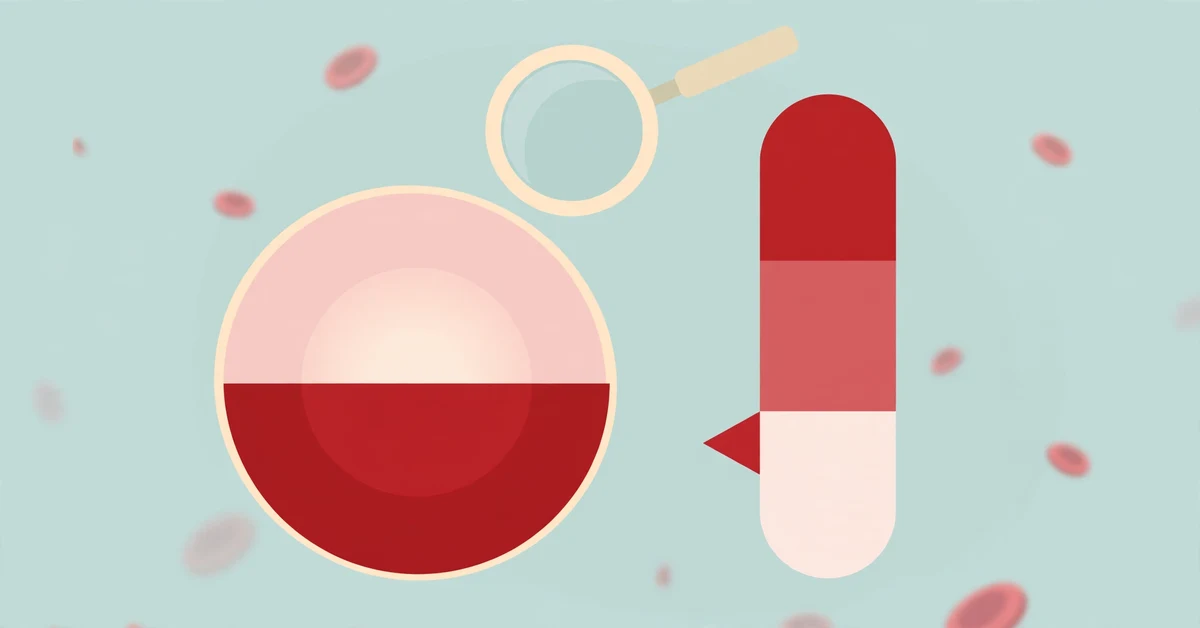
Picture each red blood cell as a tiny delivery van, and hemoglobin as its cargo: oxygen, picked up in the lungs and dropped off in the tissues. MCHC does not count the vans or measure how big they are. It measures how full each van is loaded, so a low MCHC means the vans are running half-empty.
The number comes from your complete blood count, or CBC, the most common blood test in medicine. You never order an MCHC test on its own; it arrives automatically with every CBC, calculated from two other numbers rather than measured directly: hemoglobin divided by hematocrit, multiplied by 100. MedlinePlus notes that no special preparation is needed for the red blood cell indices test, and Cleveland Clinic confirms you do not need to fast for a CBC.

Three similar-sounding numbers share the same report, and they are not the same thing:
| Index | What it measures | Typical adult range | Unit |
|---|---|---|---|
| MCV | Average size of a red blood cell | 80-100 | fL |
| MCH | Average amount of hemoglobin in one red cell | 27-33 | pg |
| MCHC | Average concentration of hemoglobin inside the red cells | 32-36 | g/dL |
As Cleveland Clinic puts it, unlike MCH, MCHC factors in both the amount of hemoglobin per red blood cell and the size of those cells. What MCHC catches is paleness: cells with a low MCHC are called hypochromic, literally under-colored, because hemoglobin is what makes red cells red.
What Counts as Low MCHC?
Most labs set the normal adult range at 32 to 36 grams per deciliter (g/dL), or 320 to 360 grams per liter (g/L). MedlinePlus gives 32 to 36 g/dL and Mayo Clinic uses the same band, though some labs print a slightly different range, such as 31.5 to 35.7 g/dL. The range printed on your own report is the one that applies, because each lab calibrates its equipment and reference population a little differently.
| MCHC result | Range (g/dL) | What it usually means |
|---|---|---|
| Normal | 32-36 | Red cells are carrying a normal concentration of hemoglobin. |
| Mildly low | 30-31.9 | Often early iron deficiency, or normal variation. Worth a repeat test and an iron check. |
| Low | Below 30 | Points toward iron deficiency anemia or thalassemia trait. Your doctor will want to find the cause. |
| Very low, with low hemoglobin | Well below 32 plus anemia | More concerning. The lower the hemoglobin alongside it, the more urgent the workup. |
Check your MCHC result
Enter the MCHC value from your blood test report to see which band it falls in and what it usually means.
Reference range: 32-36 g/dL for adults (MedlinePlus, Mayo Clinic). Your lab’s range applies. General information only, not medical advice.
Doctors judge the number together with your hemoglobin, MCV, symptoms, and whether the result is getting worse over time. Children are read against their own age-based ranges, and in pregnancy a low MCHC is a more reliable flag for iron deficiency than a borderline hemoglobin reading alone.
One honest caveat: reference ranges are statistical, covering the middle 95 percent of healthy people, so about 1 in 20 healthy results falls outside the lines. A mildly low MCHC with everything else normal is often just that, but it still deserves a repeat test: the trend tells your doctor far more than one number.
Why Is Your MCHC Low?
A low MCHC almost always traces back to anemia. The World Health Organization notes that iron deficiency is the most common cause of anemia worldwide, and MedlinePlus lists iron deficiency anemia and thalassemia as the two main causes of a low MCHC.

Iron deficiency anemia
This is the most common cause by a wide margin. Your body runs short of iron, so it cannot make enough hemoglobin, and the red cells it makes come out pale and small. Iron runs low for a few common reasons: a diet light on iron, heavy or long menstrual periods, pregnancy, blood loss from the gut such as a stomach ulcer, and conditions that block iron absorption, including celiac disease, Crohn’s disease, and gastric bypass surgery. Chronic low-grade blood loss over months can drain iron stores long before you notice any bleeding.
Thalassemia trait
Thalassemia is a group of inherited blood disorders in which the body makes fewer healthy red blood cells and less hemoglobin. People with thalassemia trait, the mild carrier form, often have a low MCHC and a low MCV for their whole lives without ever feeling ill. It looks almost identical to iron deficiency on a CBC, yet the treatment is completely different, which is where the ferritin test earns its keep: low ferritin points to iron deficiency, while a normal ferritin with a low MCV and low MCHC points toward thalassemia trait.
Chronic blood loss
Slow bleeding you cannot see is a classic cause. Heavy menstrual bleeding is the most common source in women and the easiest to spot, since you can report it yourself. Bleeding from the stomach or bowel, from ulcers, polyps, or cancer, can go unnoticed for months, which is why a low MCHC sometimes leads your doctor to look for a source of blood loss rather than simply handing you iron pills.
Other, less common causes
Hemolysis, the premature destruction of red blood cells, can lower MCHC, and so can long-standing inflammation from chronic disease. Lead poisoning, sideroblastic anemia, and deficiencies of copper or vitamin B6 are rarer causes your doctor considers when the usual tests do not explain the result.
Symptoms of Low MCHC
A mildly low MCHC often causes no symptoms at all. When symptoms appear, they are the symptoms of anemia, and they creep in slowly enough that many people blame them on a busy life or poor sleep. The NHS lists tiredness, shortness of breath, pale skin, and a fast or irregular heartbeat among the main signs of iron deficiency anaemia. Other signs include:
- Fatigue and low stamina, even after a full night’s sleep
- Dizziness or lightheadedness when you stand up
- Headaches and trouble concentrating
- Cold hands and feet
- Brittle nails, or nails that curve upward like a spoon
- Sore tongue or cracks at the corners of the mouth
- Restless legs, especially at night
- Unusual cravings, such as for ice, clay, or starch
Severe anemia brings louder warnings: chest pain, very fast breathing, confusion, and fainting. In the worst cases, low MCHC can lead to anemic hypoxia, where the tissues do not get enough oxygen, which can become life threatening. Chest pain, severe breathlessness, fainting, or confusion are reasons to seek urgent care, not to wait for a routine appointment.
How Your Doctor Finds the Cause
MCHC is a pointer, not an answer. Your doctor reads it with the rest of your CBC, especially hemoglobin, MCV, and RDW, which measures how much your red cells vary in size. Small, pale cells with a low MCHC and low MCV point toward iron deficiency or thalassemia; normal-sized cells with a low MCHC point somewhere else.

The single most useful next test is usually ferritin, which measures your stored iron. It separates the two big suspects in one stroke. After that, your doctor may order:
| Test | What it answers |
|---|---|
| Ferritin | Are your iron stores empty? Low ferritin means iron deficiency. |
| Iron panel and TIBC | How much iron is circulating, and how much capacity your blood has to carry it. |
| Reticulocyte count | Is your bone marrow making new red cells fast enough? |
| Peripheral blood smear | What do the cells actually look like under the microscope? |
| Celiac antibodies | Is poor absorption the reason iron is low? |
| Stool test for hidden blood | Are you losing blood from the gut without knowing it? |
| Endoscopy or colonoscopy | Where is the bleeding coming from, if a stool test is positive? |
Most of these can be done from the same blood draw as your CBC. Endoscopy and colonoscopy only come into play when your doctor suspects bleeding from the digestive tract. The easiest source to check first is your menstrual history, since heavy or frequent periods are something you can report directly.
How Low MCHC Is Treated
Treatment depends entirely on the cause, which is why your doctor works through the tests above before settling on a plan. Treating the number itself does nothing; treating the reason behind it fixes the number.
For iron deficiency, the plan usually has three parts. First, iron goes back into your diet and, often, into a supplement. Oral iron is the usual starting point, and your doctor will tell you how to take it: with vitamin C, which helps absorption, and away from tea, coffee, and calcium, which block it. Iron pills can cause constipation and dark stools, and they work slowly. Your red cell indices typically take weeks to months to climb back into range, and your doctor will recheck your blood a few weeks after you start treatment. For more detail on the tests involved, see our guide to anemia blood tests.
Second, the source of the iron loss gets fixed: treating heavy periods, healing an ulcer, or managing celiac disease so your gut can absorb iron again. Iron pills without fixing the leak are like pouring water into a bucket with a hole in it.
Third, severe cases sometimes need stronger measures. Intravenous iron is used when oral iron is not absorbed or not tolerated. A blood transfusion is reserved for severe anemia with symptoms such as chest pain or severe breathlessness.
For thalassemia trait, the approach is different. Most carriers need no treatment at all and live normal, healthy lives. Iron supplements are only given if iron deficiency is also present, since extra iron can build up and cause harm. It is worth knowing you carry the trait before pregnancy, since two carriers can pass on a more serious form to a child.
One thing not to do: do not start high-dose iron supplements on your own because a lab value came back low. Iron overload is real, and self-treatment can mask a bleeding ulcer or another source of blood loss that needs finding. The US Food and Drug Administration also warns that iron-containing supplements are a leading cause of accidental poisoning in young children, so keep them well out of reach.
Iron-Rich Foods That Actually Help
Food alone rarely fixes a true deficiency fast, but it matters for keeping your iron up once supplements have done the heavy lifting. Heme iron, from animal foods, is absorbed far better than non-heme iron from plants, and pairing plant iron with vitamin C helps your body take in more of it.
| Food group | Good choices | Absorption tip |
|---|---|---|
| Heme iron (best absorbed) | Red meat, liver, poultry, fish, shellfish | Already well absorbed; no special pairing needed. |
| Non-heme iron | Beans, lentils, tofu, spinach, fortified cereals | Eat with vitamin C foods such as citrus, peppers, or tomatoes. |
| Vitamin C helpers | Oranges, strawberries, bell peppers, broccoli | Add to the same meal as plant iron. |
| Blockers to time apart | Tea, coffee, calcium-rich foods, high-fiber bran | Keep them an hour or two away from iron-rich meals or pills. |
Spinach is a good example of why pairing matters: its iron is poorly absorbed because of its oxalic acid content, and cooking it and eating it with vitamin C helps. What you eat with your iron matters almost as much as how much iron you eat. Our hemoglobin levels chart shows the normal ranges by age and sex, which helps put your full CBC in context.
When to See a Doctor
A mildly low MCHC with no symptoms is a routine appointment, not an emergency. Book it, bring the full report, and be ready to talk about your periods, your diet, any stomach pain, and any medicines or supplements you take. Your doctor will probably repeat the CBC and check ferritin before deciding anything.
Seek care sooner, within a day or two, if you have new fatigue with pale skin, shortness of breath on mild exertion, a fast heartbeat at rest, or dizziness that keeps coming back. If you notice the symptoms of anemia getting worse over weeks, do not wait for your next annual checkup.
Get urgent care the same day if you have chest pain, severe shortness of breath, fainting, or confusion. The same applies to black or tarry stools, blood in vomit or stool, or menstrual bleeding so heavy you are soaking through a pad or tampon every hour. Those are signs of bleeding or severe anemia that need attention now.
A low MCHC result is unsettling because it arrives without an explanation attached. In most cases, though, the explanation is ordinary and fixable: low iron, a trait you were born with, or a slow bleed that can be found and stopped. The number did its job by flagging the problem early. The next step is a conversation with your doctor, a ferritin test, and a plan aimed at the cause.
This article is for general information only and is not medical advice. Talk to your own clinician about your results and before starting any supplement or treatment.
Frequently Asked Questions
For most adults, a normal MCHC is 32 to 36 grams per deciliter (g/dL), or 320 to 360 grams per liter (g/L). MedlinePlus and Mayo Clinic both use this range, though some labs print a slightly different one, such as 31.5 to 35.7 g/dL. The range printed on your own report is the one that applies to your result.
Yes. You can have a mildly low MCHC with a normal hemoglobin level, for example in early iron deficiency, when your iron stores are running low but your hemoglobin has not dropped yet. Heavy menstrual bleeding can also lower your iron without causing full anemia. A low MCHC on its own is a sign to investigate, not a diagnosis of anemia.
There is no single universal cutoff. A result of 31 with a normal hemoglobin is very different from a result of 26 with a low hemoglobin. Doctors judge the number together with your hemoglobin, MCV, symptoms, and whether the result is getting worse. Chest pain, severe shortness of breath, fainting, or confusion alongside a very low MCHC are reasons to seek urgent care.
MCH is the average amount of hemoglobin in one red blood cell, measured in picograms. MCHC is the average concentration of hemoglobin inside the red cells, measured in g/dL. As Cleveland Clinic puts it, MCHC factors in both the amount of hemoglobin per cell and the size of the cells. A small cell and a large cell can share the same MCHC.
Diet helps, but it rarely fixes a true deficiency on its own. Iron-rich foods, especially red meat, poultry, and fish, plus vitamin C to help absorb plant iron, support recovery. Most people with iron deficiency anemia also need iron supplements and treatment of the underlying cause, such as heavy periods or poor absorption, to bring their numbers back into range.
Not on your own. Iron helps only when the cause is iron deficiency, and it can be harmful when it is not, for example in thalassemia trait, where extra iron can build up. Self-treatment can also mask a bleeding ulcer or another source of blood loss that needs finding. Ask your doctor first, and get a ferritin test to confirm iron deficiency before starting supplements.
Read Next

Sleep Paralysis: Why It Happens and How to Stop the Episodes

Veneers vs. Lumineers: What’s the Difference?

Mental Health App Privacy: How to Check an App Before You Sign Up

6 Foam Roller Exercises for Your Back

How to Reduce the Appearance of 'Man Boobs' with Exercise and Diet

How to Build a Skincare Routine That Fits a Busy Day
Related Posts
Low Lymphocyte Count: What It Means and When to Worry
Nov 22, 2026 • 36 min read
What Blood Tests Are Used to Diagnose Anemia?
Aug 31, 2026 • 8 min read
All About Xarelto
Oct 5, 2026 • 15 min read
Is It Serosanguinous or Another Type of Wound Drainage?
Sep 4, 2026 • 15 min read
Low Back Pain ICD-10 Codes: M54.50, M54.16 & Sciatica Codes
Nov 18, 2026 • 30 min read