6 Reasons Working from Bed Isn't Doing You Any Favors

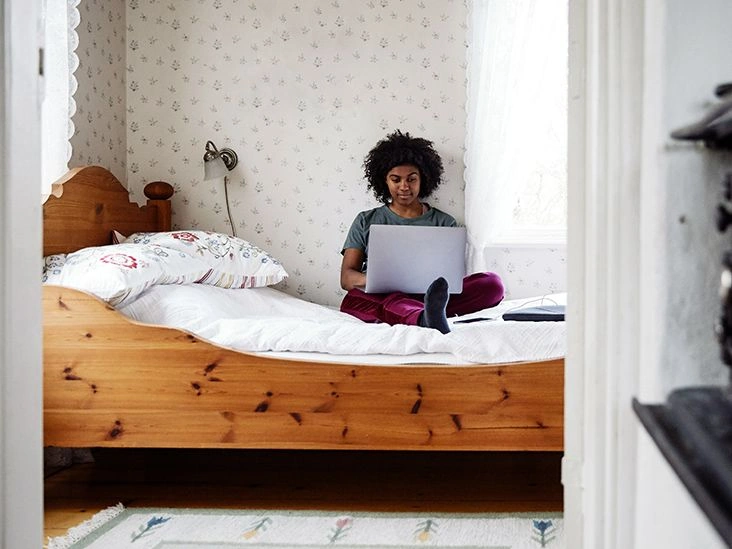

I’ll be frank. Until a few months back, I was working from my bed almost every single day.
Just before COVID-19 forced many of us indoors, I made a conscious mental pivot to resist the lure of my bed — an ironic coincidence given what followed.
I struggle with executive functioning and maintaining focus, and I also don’t do well forcing myself to sit at a desk all day. Over time, I realized working from my bed came with a lot of drawbacks.
To begin with, my sleep became poor, I developed persistent shoulder pain that worsened, and I lost any real boundary between work and personal life.
Pandemic aside, I’m certain I’m not the only one tempted to work from bed and suffering the consequences.
On paper, working in bed seems idyllic — you picture coffee, a supportive pet nearby, and comfy pants 24/7.
But that comfort is a slippery slope that can rapidly erode self-discipline. I found that out the hard way.
Sleep quality
Psychotherapist and behavioral sleep medicine specialist Annie Miller points to a clear reason we should avoid working in bed.
“When we use our bed for other activities, like working, reading, watching TV, etc., we create an association with wakefulness. We want the bed to be a cue for sleep, and working in bed weakens this association,” Miller explains.
Put simply: the bed should signal only two things — sleep and intimacy.
If you already have sleep troubles, Miller suggests consulting a specialist. She and others address sleep issues without drugs by using cognitive behavioral therapy for insomnia (CBT-i).
CBT-i has been found to lower reliance on sleeping pills and does not carry the same side effects .
Beyond cognitive strategies, there are practical physical habits you can adopt.
Watching bright screens suppresses melatonin, though modestly. Aim for at least 30 minutes to two hours of device-free time before bed.
Productivity
These issues are connected. Working from bed harms sleep quality, which in turn reduces work performance, energy, and overall quality of life.
Using your bed as a workstation means dragging work into your sleep environment, both physically and mentally.
If your day is spent in bed, you’re more likely to keep thinking about tasks at night and struggle to mentally switch off when you get under the covers.
Conversely, you may never feel genuinely productive — succumbing to drowsiness, taking naps when you should be working. I’ve been there.
Insomnia tops the list of sleep disorders that impair workplace efficiency. While insomnia can exist independently of bed-work habits, blending work and sleep spaces can exacerbate it.
Posture
I already battle with maintaining good posture, and in bed it essentially disappears. I’m tempted to lie on my back, stomach, or side, and often end up with sore spots or cramps.
Even when seated, your mattress offers an uneven base, your screen is likely at the wrong height, and your back tends to curve.
That setup can cause pain immediately or over time and can also undermine sleep quality. It may even contribute to musculoskeletal disorders .
Relationships
Many of us already divide our attention between our partners and electronic devices. Whether it’s laptops or phones, this dynamic affects relationships.
One study found that brief phone distractions during time with a partner can lower relationship satisfaction and even raise depressive symptoms in the other person.
The same principle applies to all screens. Nobody enjoys being ignored for a device. Keeping screens out of arm’s reach while in bed signals to your partner that you’re present.
That also helps your partner tie the bed to closeness rather than to work.
Hygiene
Here’s a somewhat unsettling fact: dermatologist Dr. Alok Vij told the Cleveland Clinic that we shed enough skin daily to feed around a million dust mites, with up to 15 million cells lost at night.
More hours spent in bed working just increases bacterial buildup, and you’re sitting in it repeatedly. One study even noted human beds are less hygienic than chimpanzee nests.
Quick PSA: Wash your sheets frequently!
Mood and energy
Bedrooms often receive less sunlight than other rooms because of fewer windows or habits of keeping curtains closed. Natural light boosts mood and energy.
A dim bedroom can keep you feeling drowsy, shift your circadian rhythm, hurt mental health, and strain your eyes. While low light is fine for naps, it’s poor for daytime productivity.
Do you feel like you never leave work behind? Working from bed takes that feeling further. A healthy work-life balance is essential for both mental and physical well-being.
Work-from-home tips to try
Below are some practical suggestions to preserve a healthier balance between work and home.
Keep electronics out of the bedroom
Beyond a tech-free buffer before sleep, consider a tech-free bedroom altogether. Making your bedroom dedicated solely to sleep and intimacy can be transformative.
It can improve rest, enhance relationships (how often do both partners scroll in bed instead of talking?), and establish a clear line between work and home.
Nighttime light from screens can disrupt your circadian rhythm. Research also links it to risks for cancer , diabetes, cardiovascular disease, and obesity .
Create a workspace
You don’t need an elaborate office to keep sleeping and working separate. Small adjustments or a simple desk can suffice.
The key is having a workspace used only for professional tasks. That helps both physically and mentally.
It’s easier to switch into “work mode,” establish routines, and set boundaries with housemates or family.
If sitting all day is difficult for you, consider a standing desk.
Don’t start your workday in pajamas
I’ll admit this is tough for me. I might switch into yoga pants, but I don’t usually change into distinct home and work outfits.
The main point is: sleepwear and workwear should be different. Your work attire can still be comfortable — just try not to spend the whole day in a robe and slippers.
Create and stick to a routine
Working from home can be new, but most of your daily rituals don’t need to change. Wake at your normal time, get dressed, eat a nutritious breakfast, and start the day.
Without a commute, it’s tempting to extend your work hours. Instead, use that time for reading, walking, or listening to podcasts or music.
Balance means balance. Not commuting doesn’t obligate you to lengthen your workday by an hour or two.
Sleep is sacred
Sleep is too valuable to jeopardize by turning your bed into a multiuse piece of furniture.
From better, deeper rest to improved posture and productivity, leaving your bed for sleep and intimacy pays off.
When it’s time to climb into bed at night, you’ll appreciate the boundaries you put between work and rest.
Frequently Asked Questions
Yes. Regularly working from bed blurs the line between work and rest, harms sleep quality, increases the risk of poor posture and pain, and can reduce overall productivity and mood.
Using your bed for work creates an association with wakefulness rather than sleep, making it harder to fall asleep and maintain restorative sleep. It can worsen insomnia and disrupt circadian rhythms.
Create a small dedicated workspace even if it’s just a table or shelf in another room. Use routines—get dressed, sit in the same spot, and reserve the bed for sleep and intimacy to help separate work from rest.
Potentially yes. Beds and mattresses don’t provide ergonomic support, so prolonged laptop use in bed can lead to back, neck, and shoulder pain and contribute to musculoskeletal issues over time.
Wash sheets and pillowcases more frequently, avoid eating in bed, and vacuum or air out the bedroom. Limiting time spent sitting or working in bed also helps reduce bacterial buildup.






Related Posts

Stretches to Do at Work Every Day
Sep 21, 2026 • 18 min read
Everything You Need to Know about Sensory Deprivation Tank Therapy
Aug 11, 2026 • 24 min read
Top 10 Benefits of Sleeping Naked
Aug 27, 2026 • 13 min read
Hello Wisp Review: Birth Control, UTIs, STIs, and More
Sep 29, 2026 • 28 min read
Virectin Review: Does It Really Work?
Sep 28, 2026 • 29 min read