Easy Exercises to Develop Your Lower Trapezius

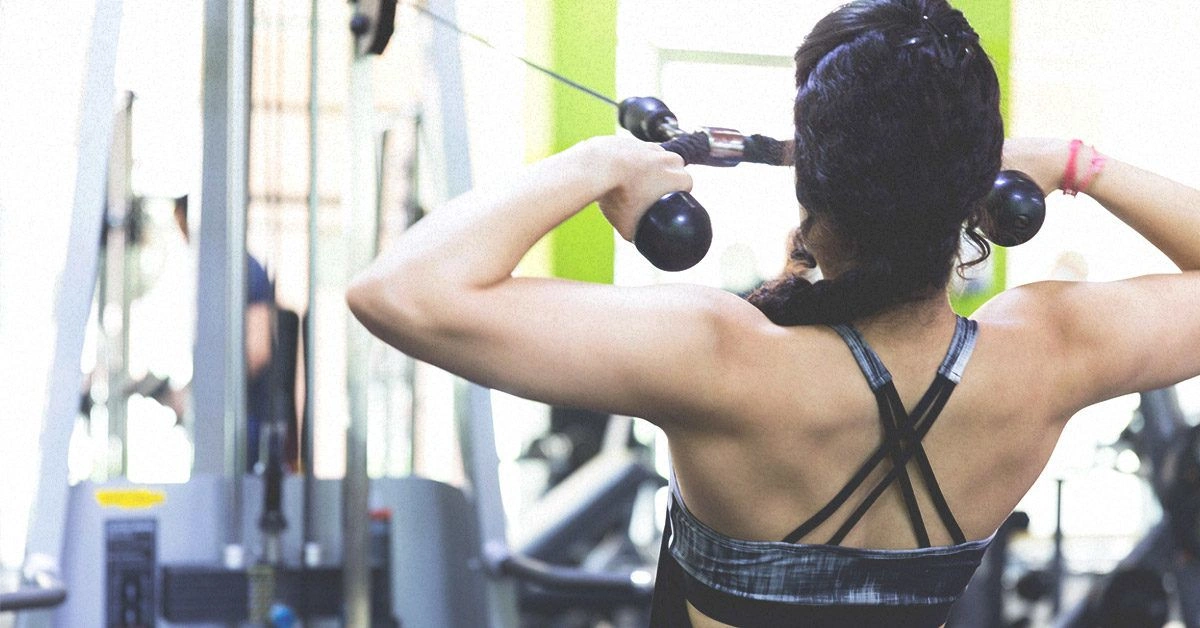
Developing your lower trapezius
Building strength in your trapezius is a key element of any fitness program. This muscle plays a major role in the movement and stability of the scapula (shoulder blade).
Many people, both men and women, often overlook training their trapezius (traps) — either because it isn’t visible, they underestimate its importance, or they simply don’t know which moves target it.
For optimal back and shoulder function, you need to be able to depress and retract your scapula — actions that are difficult with feeble lower traps. Additionally, proper performance of back and shoulder movements requires balance among the lower traps, upper traps, deltoids (delts), and serratus (which links the ribs to the scapula).
In short, weak lower traps can raise your risk of injury during other lifts, like the chest press. With that in mind, here’s a closer look at how to strengthen and grow your lower traps.
Rear delt cable raise

- Drop one cable pulley to its lowest notch on the machine and clip on a single handle. Stand with the pulley positioned to your left.
- Choose a suitable weight and grasp the handle with your right hand, palm turned up toward you. Keep a slight bend in your elbow. Hinge at the hips until your torso is nearly parallel to the floor. Slightly bend your knees, and rest your left hand on your left thigh.
- Exhale and lift your right arm, maintaining a slight elbow bend, until your arm is parallel to the floor and aligned with your right ear. Pause for a count.
- Inhale and lower the handle slowly back to the start.
- Do 12 reps, then rotate so the cable machine is on your right and repeat the movement with your left hand.
Modified version
If this exercise feels awkward or the weight is too heavy, try performing it first with a resistance band.
Rope rear delt pull with scapular retraction

- Set the cable pulley a couple of notches above your head and attach a rope handle.
- Take hold above the knots with your palms facing down and thumbs pointing toward you. Step back until there’s tension in the cable and your arms are extended. Keep a neutral lower back and a slight knee bend so your core is engaged and you remain stable.
- Pull the rope toward you, aiming for the bridge of your nose while flaring your elbows out. Pause and squeeze your shoulder blades together, letting your elbows travel slightly behind your torso.
- Inhale and slowly return the rope to the starting position, allowing your shoulders to stretch forward.
- Perform 12 reps for 4 sets, increasing the load slightly after each set if possible.
Overhead farmer’s walk

- Grip a kettlebell or dumbbell overhead, keeping your arm straight and your palm facing forward. Place your opposite hand on your ribcage to cue an upright posture, and brace your core as you begin to walk.
- Walk while concentrating on keeping your core engaged and your shoulder blade depressed and retracted.
- Cover roughly 100 feet or walk for about 30 seconds, then switch arms.
Chin-up

- Grab a pull-up bar with a palms-facing-you grip, hands slightly narrower than shoulder-width. Fully extend your arms, cross your feet behind you, and bend your knees at about 90 degrees. Keep your torso tall while creating a slight arch in your lower back or pushing your chest out.
- Exhale and pull yourself upward until your head clears the bar. Focus on employing your biceps and mid-back during the ascent. Keep your elbows close to your sides as you pull.
- Hold briefly at the top for a count.
- Inhale and lower yourself slowly back to a full hang.
- Repeat five times for three sets.
Modified chin-up
If chin-ups are too challenging at first, use an assisted pull-up machine with the same underhand grip, if available. The machine helps offset part of your body weight.
Alternatively, use a resistance band looped over the bar and place one foot in the lower loop. Bands provide the most assistance at the bottom (where you’re weakest) and the least at the top (where you’re stronger).
Progress by switching to lighter bands over time until you no longer need assistance.
High pulley cable row

- Set both pulleys to the top position and attach a handle to each. Sit on a stability ball or bench with a handle in each hand, palms facing one another. Reach forward with your arms and round your shoulders slightly, then engage your core and sit tall. Plant your feet shoulder-width apart, flat on the floor.
- Exhale and pull the handles toward you in a rowing pattern until they reach the outer chest. Squeeze your shoulder blades together and keep your elbows tucked to your sides.
- Inhale and allow the cables to return slowly, stretching your shoulders forward.
- Complete 12 reps for 4 sets, increasing weight after sets if you can maintain form.
Standing Y raise

- Lower both cable pulleys to the bottom notch. Cross the cables so the handles stay snug and take hold with your palms facing down. Stand centered, knees slightly bent and core engaged. Lift the handles a touch away from your thighs to set your shoulders.
- Exhale and lift the cables up and out overhead to form a “Y.” Finish when your biceps line up with your ears. Pause for one count.
- Inhale and lower the cables slowly back to the starting position.
- Perform 12 reps for 3 sets.
Advanced: Seated cable Y raise
Doing the cable Y while seated removes hip drive and isolates the shoulders, rear delts, lower traps, and core more effectively.
- Sit on a seated cable-row station (or place a bench in front of the pulley and attach two handles). Cross the handles to keep them close during the motion.
- Brace your core and sit upright with palms facing down and feet planted shoulder-width apart.
- Exhale and lift both hands overhead until your biceps are in line with your ears. Emphasize drawing your shoulder blades down and back. Hold briefly.
- Inhale and lower the cables back under control.
- Do 8 reps for 3 sets.
The takeaway
Your back contains many essential muscles beyond the latissimus dorsi (lats) and rear delts. The lower traps are vital for correct movement and overall resilience, so include targeted strength work for them just like any other muscle. For balanced shoulder health and posture, also consider incorporating trapezius stretches into your routine.
Frequently Asked Questions
Lower Trap Exercises target the lower fibers of the trapezius muscle that help depress and retract the scapula. Strengthening them improves shoulder stability, posture, and reduces injury risk during pressing and pulling movements.
Aim to include lower trap work 2–3 times per week, allowing at least 48 hours of recovery between focused sessions. Integrate them with your back or shoulder workouts and adjust volume based on recovery and goals.
Effective moves include standing Y raises, high-pulley cable rows, rear-delt cable raises, rope rear-delt pulls with scapular retraction, overhead farmer’s walks, and chin-up variations that emphasize scapular control.
Yes. Start with lighter resistance, use bands or machine-assisted variations for pulls, and prioritize slow, controlled scapular movement. Focus on form—depressing and retracting the shoulder blade—before increasing load.
Look for better scapular control during lifts, improved shoulder posture, less discomfort during pressing movements, and gradual increases in reps or resistance while maintaining correct form.
Read Next

How to Check for Yeast Infections: The 4 Best At-Home Vaginal pH Tests
Everything You Need to Know About Mini Dental Implants
10 Ways to Stretch and Strengthen Your Lats
5 Hand Massagers for Pain and Stiffness Relief at Your Fingertips

Carbohydrates in Brown, White, and Wild Rice: Whole vs. Refined Carbs
What Causes Love Handles and How To Get Rid of Them
Related Posts

Stretches to Loosen Your Trapezius Muscles
Sep 16, 2026 • 4 min read
Hot and Cold Therapy: When to Use Each for Neck Pain
Sep 4, 2026 • 27 min read
Boxer’s Fracture
Sep 7, 2026 • 29 min read
12 Must-Try Threesome Positions for First-Timers and Beyond
Sep 29, 2026 • 17 min read
Condom Catheters: How and When to Use
Sep 24, 2026 • 3 min read