What Is a Cystic Fibrosis Vest and What Does It Do?


- What is a cystic fibrosis vest?
- How does a cystic fibrosis vest work?
- Tips for using a cystic fibrosis vest
- Who needs a cystic fibrosis vest?
- How much does a cystic fibrosis vest cost?
- How do you get a cystic fibrosis vest?
- What are the advantages of using a cystic fibrosis vest?
- What are the disadvantages of using a cystic fibrosis vest?
- Frequently asked questions
- Will my insurance plan cover a cystic fibrosis vest?
- Is wearing a cystic fibrosis vest painful?
- Do I need a prescription for a cystic fibrosis vest?
- Takeaway
A cystic fibrosis vest is a therapeutic device. When worn, it delivers compressions similar to manual chest percussion. Using the vest can help dislodge thick secretions so a person can more easily cough them up and breathe with less effort.
For people with cystic fibrosis, the mucus coating the lungs, airways, and other tissues becomes unusually thick and sticky. This mucus can be hard to clear or expel, so chest physiotherapy serves as a physical aid.
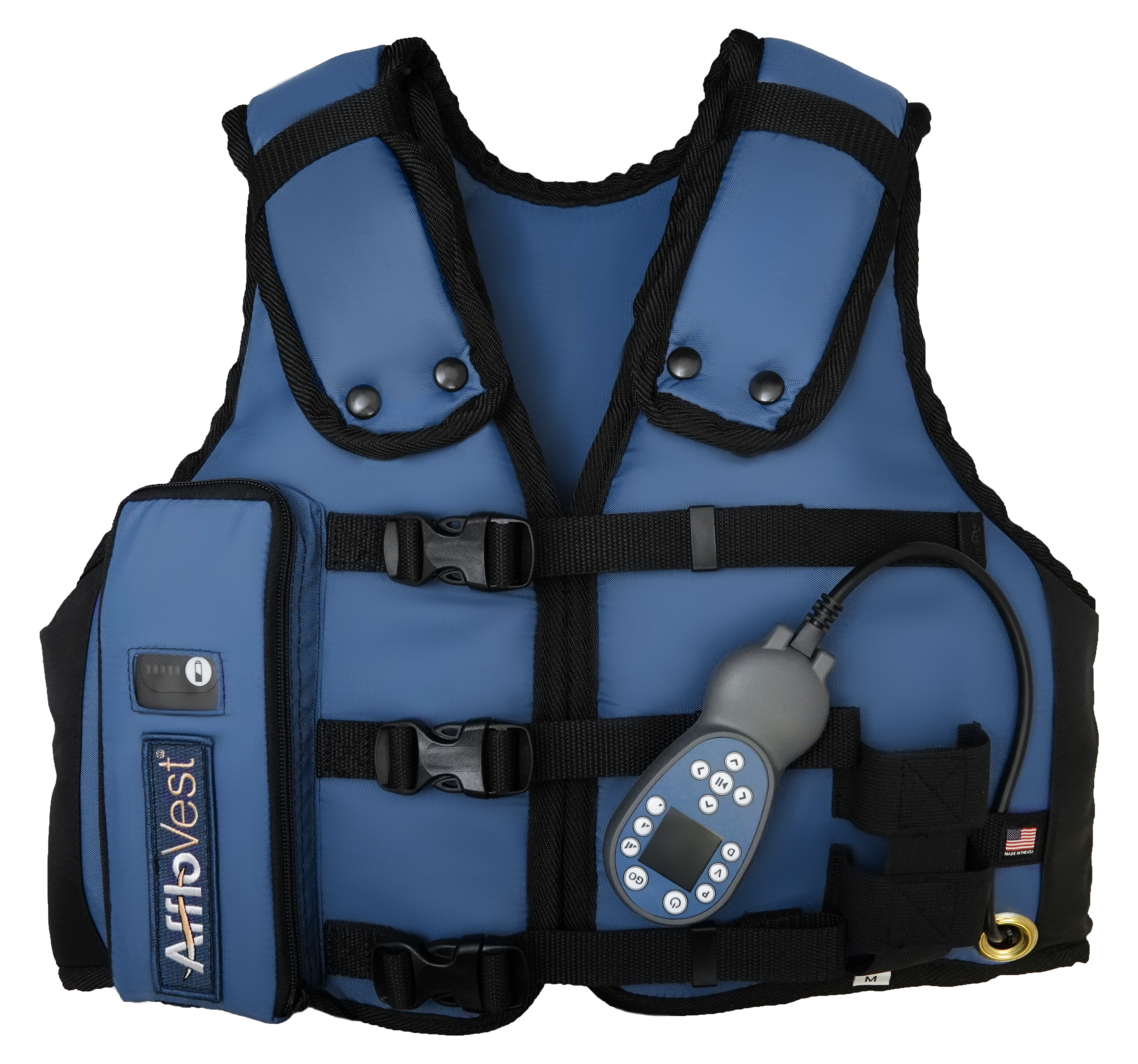
Various chest physiotherapy or airway clearance techniques can assist people with cystic fibrosis in moving sticky phlegm out of narrowed, inflamed airways. One option for this therapy is a cystic fibrosis vest, also called a high frequency chest wall oscillation vest (HFCWO).
This article outlines who may benefit from the airway clearance these vests provide, how much they may cost, and where to obtain one.
Learn more about cystic fibrosis.
What is a cystic fibrosis vest?
A cystic fibrosis vest is a wearable, transportable medical appliance. It uses pulsating discs embedded in an inflatable garment to produce bursts of force against the chest wall. These pulses help dislodge secretions and open airways clogged with sticky mucus.
Traditional chest physiotherapy often involves someone rhythmically clapping your chest while you do coughing and deep-breathing exercises. Performed manually, this therapy can last between 20 and 40 minutes, typically repeated at least twice each day.
Wearable devices such as cystic fibrosis vests can provide greater mobility and independence so people with certain respiratory conditions can stick to their therapies more easily.
How does a cystic fibrosis vest work?
A cystic fibrosis vest has two principal components — a generator that produces air pulses and an inflatable vest. The generator pumps bursts of air through tubes attached to the vest, creating rapid cycles of inflation and deflation that occur approximately 20 times per second during a session.
The pressure and vibration from this pulsating inflation help free mucus and make it easier to cough up. The effect resembles manual chest clapping, but with the vest you do not require another person’s assistance to perform it.
You can put the vest on yourself, and the active phase of treatment lasts about 5 minutes. After the vest’s oscillations, you’ll perform deep breathing and coughing to expel the loosened mucus. Altogether, each session with the vest should take around 20 minutes.
Tips for using a cystic fibrosis vest
Chest physiotherapy is not always comfortable, but these suggestions may help your treatment go more smoothly.
- Wear the vest over just a thin layer of clothing.
- Ensure the vest is adjusted properly to fit and cover as much of your upper chest as possible.
- The bottom edge of the vest should sit just above your hip bones.
- Straps should not be overly tight. When you inhale deeply, you should be able to fit your hand between the vest and your chest.
- Grip the bottom of the vest and pull downward as it inflates.
- The vest is most effective when used correctly. For best results: Try to do treatments before eating or at least 1 hour after meals. Use the vest twice daily for maintenance, with the option to increase to four times daily during illness. Nebulized saline or other inhaled medications can help further moisten and loosen secretions when used alongside vest therapy. If you experience itching, try adding an extra t-shirt under the vest.
Who needs a cystic fibrosis vest?
The chest physiotherapy a vest provides can help people with conditions beyond cystic fibrosis. For those with cystic fibrosis, clearing airways with manual percussion or other chest physiotherapy methods is often a cornerstone of care.
Outside of cystic fibrosis, individuals with the following conditions may also receive chest clapping, HFCWO vests, or other physiotherapy:
- bronchiectasis
- atelectasis
- lung abscess
- some forms of pneumonia
How much does a cystic fibrosis vest cost?
There are multiple types and brands of cystic fibrosis vests. The price you pay may depend on the:
- type
- design
- brand
- additional features
Some brand names of cystic fibrosis vests include:
Prices have been reported to range from roughly $24,856 to $37,290 for one of these systems, based on a 2019 U.K. study. That analysis also suggested that investing in a vest may yield long-term savings by reducing flare-ups, hospital stays, and other cystic fibrosis-related complications.
Your health insurance may cover equipment for cystic fibrosis therapies, including vests. Many people with cystic fibrosis also qualify for Social Security Disability and Medicare or Medicaid before age 65. If you qualify for such programs, Medicare Part B typically pays for chest oscillators.
How do you get a cystic fibrosis vest?
If a cystic fibrosis vest is suitable for you, your clinician or respiratory therapist will recommend one. Your doctor must write a prescription for a chest physiotherapy vest so that Medicare or other insurers can provide coverage.
There are likely multiple suppliers in your area that offer cystic fibrosis vests, but it’s wise to check with your insurance plan or healthcare provider to ensure you obtain the correct device and that it will be covered.
What are the advantages of using a cystic fibrosis vest?
A cystic fibrosis vest can help free secretions in your airways and make them easier to expel. Chest physiotherapy is a primary treatment approach for cystic fibrosis. A 2020 study found that any airway clearance method can help improve airflow through the lungs.
Some research has questioned whether a vest outperforms other airway clearance approaches and has not reached a definitive conclusion. Using a vest may make it simpler for people with cystic fibrosis to adhere to their prescribed regimen.
A major benefit of the vest is that a single user can operate it, offering greater independence and mobility compared with methods that require a caregiver.
What are the disadvantages of using a cystic fibrosis vest?
Chest physiotherapy can be uncomfortable. In particular for young children, percussion and vibration therapies can be hard to tolerate. A vest may not be suitable for people with low tolerance for these treatments or for those with complex medical conditions such as:
- head trauma or brain injury
- chest injuries involving bleeding
- coughing up blood
- spinal cord injury
- rib fractures
- high blood pressure
- bleeding or clotting disorders
Frequently asked questions
Will my insurance plan cover a cystic fibrosis vest?
Coverage for a cystic fibrosis vest depends on your specific insurance plan. Many insurers will cover these devices if you have a prescription from your doctor. Medicare can also provide coverage.
Is wearing a cystic fibrosis vest painful?
Wearing a chest physiotherapy vest should not be painful, but it may be uncomfortable. The strong percussion used to free mucus can be tough to tolerate, though the relief you feel after clearing your airways may make it worthwhile.
Do I need a prescription for a cystic fibrosis vest?
You can purchase various medical devices online, but if you are diagnosed with cystic fibrosis, discuss the most appropriate medications and therapies with your healthcare team. Additionally, you will need a prescription if you want your insurance plan to consider covering the device.
Takeaway
A cystic fibrosis vest can help loosen sticky mucus that accumulates in your airways. The device applies taps and vibrations that free these secretions so you can cough them out. The inflatable vest option offers more independence and mobility, making it easier to maintain regular treatments.
Frequently Asked Questions
A cystic fibrosis vest is an inflatable garment connected to a generator that delivers rapid air pulses. These pulses create gentle chest wall oscillations that loosen thick mucus so it can be coughed up more easily.
People with cystic fibrosis often use the vest to aid airway clearance. It may also help others with conditions that cause mucus retention, such as bronchiectasis, some pneumonias, or certain neuromuscular disorders.
Yes. A doctor must prescribe the vest for many insurance plans, including Medicare, to consider coverage. Your clinician or respiratory therapist can recommend the appropriate device and supplier.
An active session of oscillation usually lasts about 5 minutes, with the full airway clearance routine (including breathing and coughing exercises) taking around 20 minutes per session.
Some users find the vibrations uncomfortable, and vests may not be suitable for people with certain conditions (for example, recent chest injury, bleeding disorders, or unstable spine/head trauma). Talk with your healthcare provider to determine safety and tolerance.





Related Posts

Smoker's Cough: Everything You Need to Know
Sep 13, 2026 • 9 min read
What is Decannulation of a Tracheostomy?
Sep 6, 2026 • 29 min read
Stabilize Your Knees with Step-Downs
Sep 24, 2026 • 3 min read
Do Magnetic Bracelets Really Help with Pain?
Aug 2, 2026 • 26 min read
Tadalafil (Oral Tablet): Side Effects, Dosage, and Review
Sep 22, 2026 • 36 min read