Is There a Relationship Between Menopause and Body Odor?


- Why body odor shifts during menopause
- Your ability to smell can change
- More sweating from hot flashes or night sweats
- Elevated anxiety
- Lower estrogen disrupts overall hormonal balance
- More urine leakage
- What you can do to reduce unwanted odors during menopause
- Update your hygiene habits
- Use deodorant or antiperspirant more often
- Avoid douching
- Stay hydrated
- How to prevent unwanted body odor going forward
- Track what you consume
- Consider a probiotic
- Adopt stress-reduction practices
- When to see a clinician
- The takeaway
Several elements can lead to alterations in your body scent during menopause and in how you notice your personal aroma. These shifts are typically not dangerous, but there are measures you can take to reduce unwanted smells.
Hormonal swings are the most frequent reason, says Suzanne Gilberg-Lenz, MD, author of “Menopause Bootcamp: Optimize Your Health, Empower Your Self, and Flourish as You Age.”
Specifically, variations in cortisol, estrogen, and testosterone. While these hormones ebb and flow at many points across life, the shifts are more pronounced during puberty, pregnancy, and menopause.
Minor alterations in body scent are often short-lived. “But strong, persistent odors can signal a more significant issue like an infection and should be evaluated by a clinician,” explained Judith Meer, PT, DPT, pelvic rehabilitation specialist with The Pelvic PT in New Jersey.
Changes in vaginal odor are more likely to merit attention, particularly if the smell is fishy, foul, or yeasty.
Why body odor shifts during menopause
Your ability to smell can change
Some smell changes happen naturally with aging. Presbyosmia, sometimes called age-related olfactory decline, can cause:
- Hyposmia: a dulled or diminished sense of smell
- Dysosmia: a distorted perception of odors
- Phantosmia: olfactory hallucinations or sensing smells that aren’t present
“Dysosmia and phantosmia can lead people to believe they smell unpleasant even when they don’t,” said Meer.
More sweating from hot flashes or night sweats
During menopause, estrogen levels fall. Estrogen influences blood vessel flexibility, so when estrogen declines, blood vessels are less able to expand, Gilberg-Lenz explains.
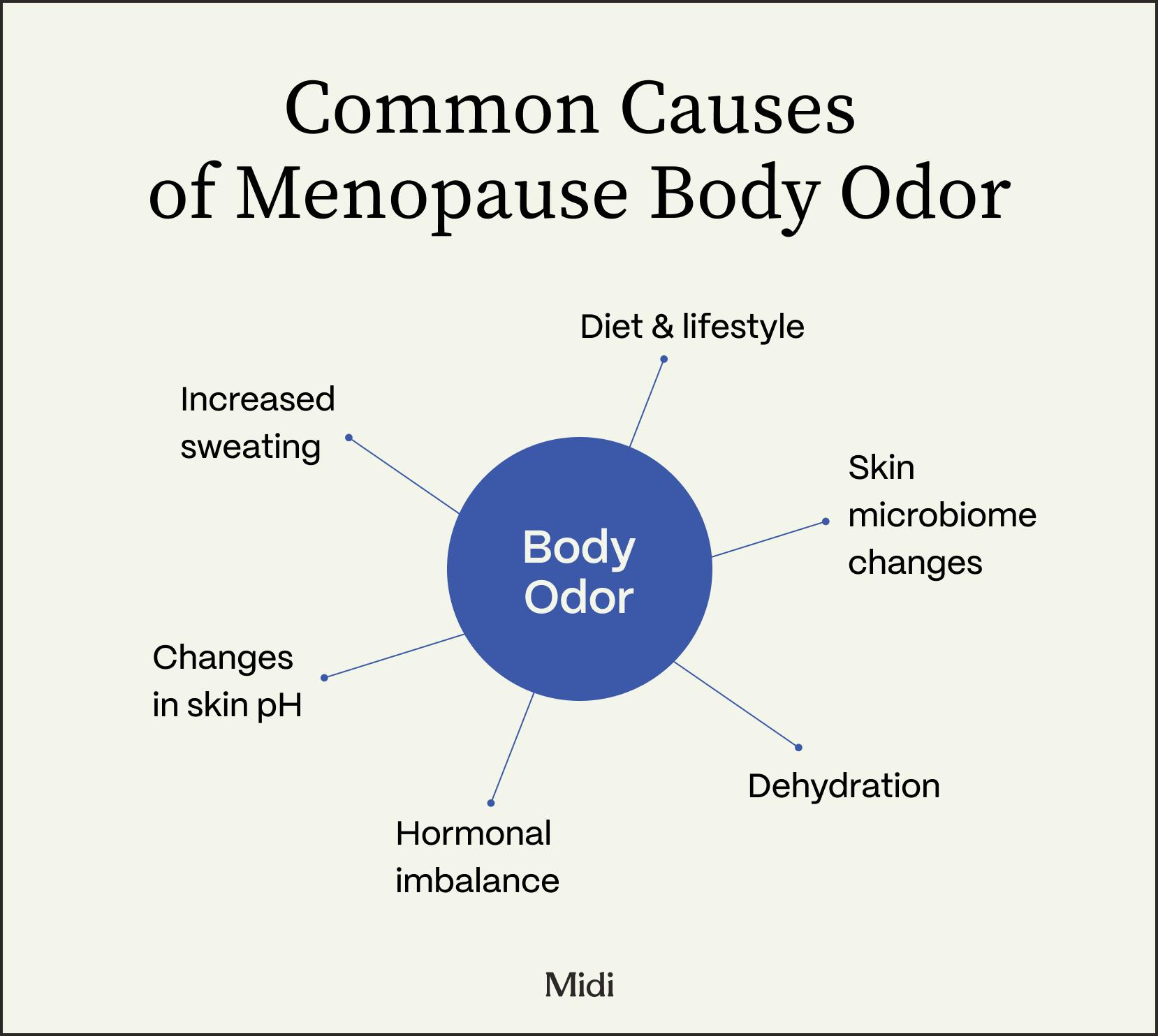
“This reduced dilation means menopausal individuals can’t shed excess body heat as effectively,” she said, which raises the likelihood of hot flashes and night sweats.
“The extra sweating combined with greater bacterial variety in the perspiration itself can produce body odor,” Gilberg-Lenz adds.
An uptick in testosterone contributes to this bacterial increase. Testosterone is also associated with production of androstenol, a compound linked to a musky aroma.
Elevated anxiety
A 2023 meta-analysis found that roughly 25% of menopausal people experience anxiety. Worse menopausal symptoms correlated with higher anxiety rates.
Normal sweat is produced by eccrine glands, while stress-related sweat comes from apocrine glands, explains Stephanie Culver, MD, a Menopause Society Certified Practitioner with Pandia Health.
Apocrine sweat contains more proteins and lipids than other sweat types, which can worsen odor, she notes.
So, if anxiety increases during menopause, it’s unsurprising that your sweat might smell different than before.
Lower estrogen disrupts overall hormonal balance
Falling estrogen is the chief reason for shifts in vaginal scent.
Estrogen helps vulvar and vaginal tissues remain lubricated. When estrogen drops, lubrication diminishes, says Culver.
“Changes in lubrication and estrogen also affect vaginal pH and the composition of bacteria in the urogenital area,” she said.
Often there’s a decline in Lactobacilli, the “good” bacteria that support vaginal health, she adds.
Less Lactobacilli typically coincides with growth of other bacterial strains, which can alter smell and discharge.
More urine leakage
Many experience pelvic floor changes during menopause, including reduced muscle tone and altered function.
“Estrogen decline, for instance, can cause thinning of tissues and muscles around the urethra,” explains Meer.
Weakened pelvic floor muscles can lead to urinary leakage (incontinence). Urine has a distinct odor, and leakage can influence how you perceive vaginal and overall scent, she says.
Healthgrades is owned by RVO Health. By clicking on this link, we may receive a commission. Learn more.
What you can do to reduce unwanted odors during menopause
Unwanted body odor can harm self-image, social life, and quality of life, says Culver. But there are steps you can take now and over time to manage your scent.
Update your hygiene habits
After menopause, you may need to adopt a different hygiene routine, says Culver.
Even if you never had to before, showering soon after exercise or physical exertion can prevent odors from lingering, she suggests.
Similarly, a quick rinse after a hot flash may be useful when your schedule allows.
Use deodorant or antiperspirant more often
Menopause Society Certified Practitioner Catherine Hansen, MD, head of menopause at Pandia Health, recommends applying antiperspirant or deodorant in the morning and whenever you notice scent changes.
“Antiperspirants block sweat glands to reduce sweat reaching the skin where bacteria break it down,” she explained. Deodorants have antimicrobial effects that lower bacterial numbers.
Both can help lessen sweat-related odors, she says.
Avoid douching
If your genital area develops a new scent, you might be tempted to use special washes and fragrances — but that usually makes things worse.
“Douching, and using special washes or sprays, will cause bigger problems over time — like recurring infections or increased odor — because they strip out the beneficial bacteria in the vaginal canal that protect vaginal health,” Hansen explained.
“To keep your vulva and vagina clean, use regular soap [externally] or plain water,” she advises.
Stay hydrated
“Drinking water helps keep your sweat less concentrated,” says Gilberg-Lenz. Less concentrated sweat tends to smell less.
How to prevent unwanted body odor going forward
Track what you consume
To begin, Culver suggests logging foods, alcohol and drug use, and medications. Skip this step if it might trigger unhealthy behaviors around food.
“Certain foods and medications can influence body odor,” she said. Identifying which ones contribute to undesirable scent changes is important.
Always consult the prescribing clinician before altering medications. They can suggest substitutes or help you taper safely if needed.
Consider a probiotic
Taking a daily probiotic can help replenish Lactobacilli in the vaginal canal, according to Hansen.
Adopt stress-reduction practices
“Stress can always influence odor,” said Gilberg-Lenz.
“Mindfulness, bedtime yoga, reducing blue light exposure, and deep-breathing techniques can be part of a routine that keeps you calmer and cooler,” she added.
For additional information on related symptoms, see menopause itching.
When to see a clinician
If unusual or persistent body odor continues, schedule an appointment with a healthcare provider to review your symptoms. A scent change could point to an underlying problem that needs diagnosis and treatment.
Liver or kidney conditions, for example, can increase production of metabolites that alter body scent.
Ongoing genital odor may be due to a sexually transmitted infection like chlamydia or another vaginal infection. Prompt diagnosis and treatment help reduce the risk of complications.
If you think urinary leakage has contributed to scent changes, working with a pelvic floor therapist may assist.
The takeaway
Minor changes in overall scent are common during menopause. While these shifts may take some adjustment, they’re rarely alarming.
However, if you notice sudden or major changes in your body or vaginal odor, consult a healthcare professional to rule out possible underlying conditions.
Frequently Asked Questions
Hormonal shifts—especially lower estrogen and relative increases in testosterone—alter sweat production, bacteria on the skin, and vaginal pH, which can change how you or others perceive your scent.
Yes. Increased sweating from hot flashes or night sweats provides more moisture and nutrients for bacteria that produce odor, so episodes of heavy sweating can lead to stronger smells.
Mild changes are common due to lower estrogen affecting lubrication, pH, and beneficial bacteria. Strong, fishy, foul, or yeasty smells may indicate infection and warrant medical evaluation.
Improve hygiene (shower after sweating), use antiperspirant or deodorant, stay hydrated, avoid douching, consider probiotics for vaginal health, and adopt stress-reduction practices to limit stress sweat.
Seek care if you notice sudden, severe, or persistent odor changes, foul or fishy vaginal smells, associated discharge, or other symptoms—these could signal infections or other medical issues.
Read Next

Everything You Need to Know About Mini Dental Implants
How to Reduce the Appearance of 'Man Boobs' with Exercise and Diet
What Are the Different Types of Hairlines for Women and Men?

Does My Chocolate Craving Mean Anything?

The 20 Best Low Carb Vegetables (Plus 1 Great Low Carb Fruit)
What Are Skin Neoplasms?
Related Posts

White Specks in Stool
Aug 28, 2026 • 30 min read
Smoker's Cough: Everything You Need to Know
Sep 13, 2026 • 26 min read
All About Aristada
Oct 6, 2026 • 3 min read
Stretches to Loosen Your Trapezius Muscles
Sep 16, 2026 • 28 min read
Is It Serosanguinous or Another Type of Wound Drainage?
Sep 4, 2026 • 13 min read