Is Bronchitis Contagious?

- The Short Answer: Acute Spreads, Chronic Does Not
- Acute vs Chronic Bronchitis at a Glance
- How the Infection Spreads
- How Long Are You Contagious?
- When Can You Go Back to Work or School?
- Protecting the People You Live With
- Bronchitis or Pneumonia? Knowing the Difference
- What Helps While You Recover
- Frequently Asked Questions
- Can you catch bronchitis from kissing someone?
- How long should you stay away from someone with bronchitis?
- Is a lingering cough still contagious?
- Can chronic bronchitis turn into something contagious?
- Do you need antibiotics for bronchitis?
- Can you get bronchitis twice in one season?
- Should you wear a mask at home with bronchitis?
- When should you see a doctor for bronchitis?
- References
You are on day four of a hacking cough, your chest feels tight, and your partner just asked the question everyone asks: should you be sleeping on the couch tonight? The short answer is yes, you can pass this on, at least in the early days. Acute bronchitis is usually driven by the same cold and flu viruses that move through offices and classrooms every winter, and those viruses travel easily from person to person. Chronic bronchitis is a different story. It comes from years of irritation, most often cigarette smoke, and you cannot catch it from anyone.
That split matters because the word bronchitis covers two conditions with very different risks for the people around you. Harvard Health puts it plainly: the swollen airways themselves are not contagious, but the viruses and bacteria behind an acute case can be. The American Lung Association says much the same. So the real question is not whether the label spreads. It is which germ, if any, is driving your cough, and how long that germ stays active.
The Short Answer: Acute Spreads, Chronic Does Not
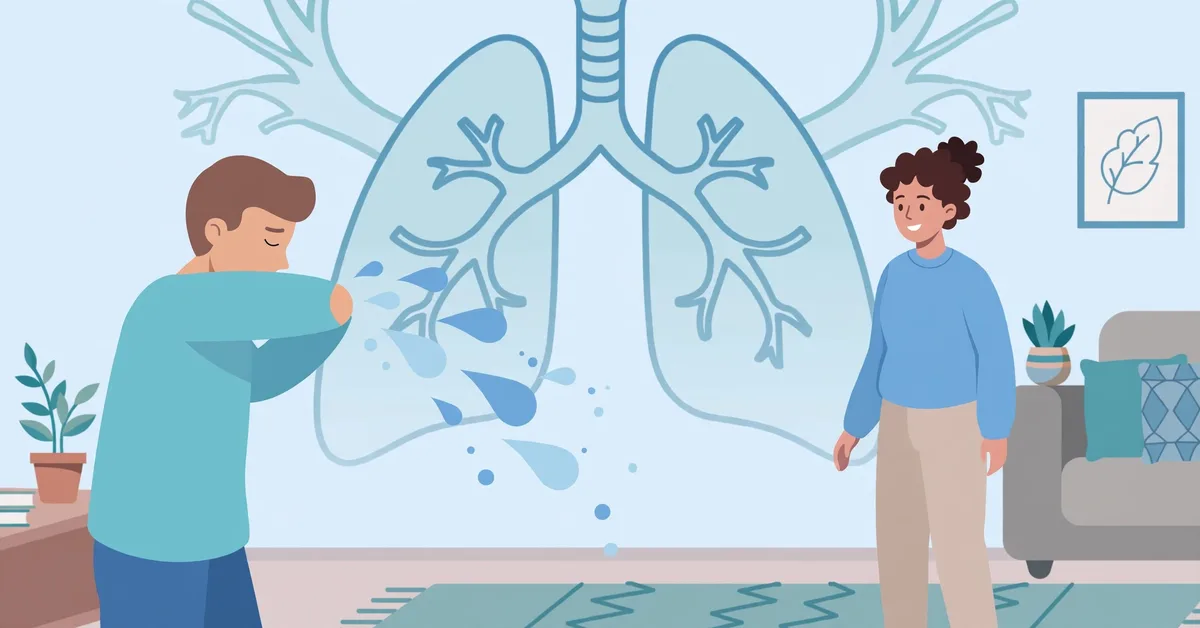
Acute bronchitis, often called a chest cold, starts when a virus settles into the bronchial tubes, the airways that carry air into your lungs. The lining swells, mucus builds up, and a deep cough takes hold. Because a living virus is behind it, you can share that virus with anyone close enough to breathe in your cough droplets or touch a surface you just handled. Most cases clear within one to three weeks, according to the Centers for Disease Control and Prevention (CDC), even though the cough itself can drag on longer.
Chronic bronchitis behaves nothing like that. The NHS and MedlinePlus describe it as a long-term condition, usually part of chronic obstructive pulmonary disease (COPD), where the airways stay inflamed month after month. A cough that brings up mucus on most days for at least three months, in two years in a row, fits the usual clinical picture. Smoke, dust, and chemical fumes do the damage over time. No germ passes between people, so sitting next to someone with chronic bronchitis will not give you the condition.

Acute vs Chronic Bronchitis at a Glance
Side by side, the contrast is stark. One is a short infection you can share for a few days. The other is a lasting lung condition shaped by exposure and habit, not by contact.
| Feature | Acute bronchitis | Chronic bronchitis |
|---|---|---|
| Usual cause | Cold, flu, RSV, or COVID-19 viruses; bacteria in a small share of cases | Long-term irritation, most often smoking, dust, or fumes |
| Contagious? | Yes, while cold or flu symptoms are active | No |
| Typical length | Illness about 7 to 10 days; cough may last 2 to 3 weeks or more | Cough on most days for 3 months or longer, returning over 2 years |
| Who gets it | Anyone, often after a cold; more common in winter | Mostly adults with years of smoke or irritant exposure |
| Antibiotics | Rarely needed, per the CDC, since viruses cause most cases | Not a cure; used at times for bacterial flare-ups |
| Main risk to others | Spreading the virus to household members and coworkers | None from contact alone |
One wrinkle deserves attention. A person with chronic bronchitis can still pick up a fresh cold or flu virus, and that new infection can spread like any other. In that moment, what travels is the new virus, not the chronic condition underneath it.
How the Infection Spreads
Think about the last time someone coughed near you in a small room. Each cough, sneeze, and even a loud conversation can release tiny droplets that carry virus into the air. If those droplets land in your nose, mouth, or eyes, or you breathe them in at close range, the virus gets its foothold. The CDC describes this droplet route as the main way respiratory viruses move between people.
Surfaces play a quieter role. A sick person coughs into a hand, then grabs a door handle, a kettle, or a shared phone. You touch the same spot an hour later, rub your eye, and the chain continues. Handshakes, shared cups, and kissing all count as close contact for the same reason.
What you catch, though, is the virus, not a guaranteed case of bronchitis. Plenty of people exposed to the same germ will get a plain head cold and nothing more. Others, especially smokers and people with asthma, are more likely to see the infection sink into the chest. Your airways, your immune system, and your exposure history decide where the illness lands.
How Long Are You Contagious?
Here is the timeline most doctors work with. You can start spreading a cold or flu virus shortly before symptoms show up, sometimes a day or so ahead. With bronchitis, the riskiest window is the first few days, when fever, sore throat, body aches, and heavy coughing overlap. Harvard Health notes that people are generally contagious until those cold and flu symptoms fade. For many adults, that means roughly a few days to about a week of taking real care around others.
The lingering cough confuses people, and fair enough. A cough can hang around for two or three weeks after the virus itself has gone, because the airway lining stays raw and twitchy while it heals. A dry, fading cough in week three, with no fever and steady energy, usually signals healing tissue rather than an active infection. If you want practical help calming that stubborn cough at night, our guide on how to stop uncontrollable coughing walks through what tends to help.
No home test can tell you the exact hour you stop being contagious. Fever is a useful marker. Once fever has been gone for a full day without fever-reducing medicine, and your other symptoms are clearly improving, your risk to others drops a lot. Until then, assume you can still share the virus and act accordingly, especially around babies, older adults, and anyone with weak immunity.
When Can You Go Back to Work or School?
Most workplaces and schools use the same simple test: stay home while you have fever, feel wiped out, or cannot control your cough around other people. Going in too early helps nobody. You work badly, and the person at the next desk pays for it by Friday.
A reasonable return looks like this. Your fever has been gone for at least 24 hours without medicine. Your cough is easing, not building. You can get through a conversation without a long coughing fit. You feel well enough to do the job safely. If your work involves infants, hospital patients, care home residents, or food handling, ask your employer or clinician first, since stricter rules often apply in those settings.
Kids follow the same logic. Keep a child home with fever, heavy coughing, or unusual tiredness. A mild leftover cough, with normal energy and appetite, is usually fine for school. When in doubt, a quick call to the school nurse or pediatrician settles it faster than guessing at the kitchen table.

Protecting the People You Live With
You cannot move out for a week every time a chest cold hits, and nobody expects you to. Small, steady habits cut the risk inside a home far more than one dramatic deep clean.
- Cover every cough and sneeze with a tissue or the crook of your elbow, then bin the tissue right away.
- Wash hands with soap often, and always after coughing, blowing your nose, or before preparing food.
- Wear a well-fitting mask around others during the first few days if you can tolerate one.
- Keep your cup, towel, toothbrush, and utensils separate until you are clearly better.
- Open a window or run a fan for a while each day. Fresh air dilutes the droplets hanging in a closed room.
- Wipe down the handles, taps, and phone screens that everyone touches, once a day is plenty.
- Sleep alone for a few nights if you have the space, and keep some distance on the couch.
Vaccines help at the edges, too. A yearly flu shot lowers your odds of the flu that so often sets up a bout of bronchitis, and the American Lung Association recommends staying current with recommended vaccines for people with lung disease. Our overview of flu shot side effects explains what to expect after the jab, and it is milder than most people fear. Timing plays a part as well: cases climb in the colder months, a pattern explored in our piece on why flu season falls in winter, when people crowd indoors with the windows shut.
Bronchitis or Pneumonia? Knowing the Difference
A chest infection that keeps getting worse deserves a second look. Pneumonia infects the tiny air sacs deep in the lungs, and it tends to hit harder than bronchitis, with higher fever, sharper chest pain when breathing in, faster breathing, and a more drained, unwell feeling overall. Mayo Clinic advises prompt care for breathing trouble, chest pain, a fever of 102 degrees Fahrenheit (39 degrees Celsius) or higher, or a cough that brings up blood.
The two conditions also raise the same contagion questions, since some pneumonias spread between people and others do not. If you are weighing up a household member with a deeper chest infection, our companion guide on whether pneumonia is contagious covers how each type spreads and how long to keep your distance. When symptoms point downward rather than easing after a week or so, get checked in person instead of waiting it out.
What Helps While You Recover
Most acute cases need rest and time, not a prescription. The CDC is blunt on this point: antibiotics do not help viral bronchitis, and taking them without need carries side effects and feeds drug resistance. A clinician may consider antibiotics only when a bacterial cause looks likely, or when whooping cough or pneumonia enters the picture.
At home, fluids keep mucus thinner and easier to clear. Warm drinks soothe a raw throat. Honey in warm water can ease coughing in adults and children over one year old, though never give honey to an infant under 12 months. A humidifier or a steamy shower loosens that tight, congested feeling for a while. Over-the-counter pain relievers can take the edge off fever and aches when used as directed on the label. Skip cough medicines for young children unless a clinician advises them, since guidance from regulators is cautious in that age group.
Smoke makes everything worse. If you smoke, a bout of bronchitis is a rough week but also a clear signal from your lungs. Cutting down helps, quitting helps far more, and your household breathes easier either way.
Frequently Asked Questions
Can you catch bronchitis from kissing someone?
Yes, you can pick up the virus that way. Kissing involves close contact with saliva and mucus, and cold and flu viruses ride in both. During the first few days of illness, when fever and heavy coughing are present, it is wiser to hold off.
How long should you stay away from someone with bronchitis?
Keep extra distance for the first few days, while fever and strong cold symptoms last. After fever has been gone for a full day and symptoms are clearly improving, the risk falls sharply, even if a mild cough lingers.
Is a lingering cough still contagious?
Usually not. A cough can persist for two to three weeks after the virus has cleared, because the airways stay sensitive while they heal. A fading cough without fever, in someone who feels steadily better, points to healing rather than active spread.
Can chronic bronchitis turn into something contagious?
The chronic condition itself never becomes contagious. But a person with chronic bronchitis can catch a fresh viral infection on top of it, and that new infection can spread to others in the usual way.
Do you need antibiotics for bronchitis?
Most people do not. Viruses cause most acute cases, and the CDC says antibiotics will not speed recovery for a viral infection. A clinician may prescribe them if a bacterial cause is suspected or a complication develops.
Can you get bronchitis twice in one season?
Yes. Many different cold and flu viruses can trigger it, and immunity to one does not protect you from the others. Repeated bouts can also signal asthma, reflux, or smoke exposure worth checking with a clinician.
Should you wear a mask at home with bronchitis?
For the first few days, yes, if you can manage it, especially around older relatives, babies, or anyone with lung disease or weak immunity.
When should you see a doctor for bronchitis?
Book an appointment for breathing difficulty, chest pain, coughing up blood, a high or returning fever, or a cough lasting longer than three weeks. MedlinePlus also advises care for wheezing that does not ease or symptoms that keep worsening after a week.
References
- Centers for Disease Control and Prevention (CDC) – Chest Cold (Acute Bronchitis) guidance on causes, contagion, and antibiotic use.
- American Lung Association – Acute bronchitis and chronic bronchitis facts, symptoms, and prevention.
- Harvard Health Publishing – Is bronchitis contagious? Overview of acute and chronic types and how germs spread.
- NHS – Bronchitis and chronic obstructive pulmonary disease (COPD) condition pages.
- Mayo Clinic – Bronchitis symptoms, causes, and when to seek care.
- MedlinePlus (U.S. National Library of Medicine) – Acute bronchitis and chronic bronchitis summaries.
Read Next

Guide to Baby Wearing: Benefits, Safety Tips, and How To

Derma Roller for Hair Growth: Here’s What You Need to Know
Right Hemicolectomy Recovery: Week-by-Week Timeline and What to Eat After Surgery

Is Shaving Against the Grain the Secret to Your Smoothest Shave Ever?

AI Mental Health Tools vs. Professional Therapy

Resting Heart Rate Chart by Age: What's Normal for Men, Women and Children
Related Posts

What is Decannulation of a Tracheostomy?
Sep 6, 2026 • 29 min read
Sleep Apnea ICD-10 Codes: What G47.33, G47.31, and G47.37 Mean — and What Medicare Requires for CPAP
Nov 15, 2026 • 31 min read
Smoker's Cough: Everything You Need to Know
Sep 13, 2026 • 12 min read
Is Pneumonia Contagious? How It Spreads and How Long You're Contagious
Nov 20, 2026 • 10 min read
Does Medicare Cover CPAP Machines? Coverage Rules and Costs Explained
Nov 13, 2026 • 31 min read