Using Hydrogen Peroxide to Remove Earwax

- Managing an earwax blockage
- Potential risks of hydrogen peroxide ear drops
- Other options for earwax removal
- Common questions about hydrogen peroxide for cerumen
- Can hydrogen peroxide actually dissolve earwax?
- How long should hydrogen peroxide remain in the ear to be effective?
- Is it safe to apply hydrogen peroxide to the ear?
- Bottom line
Using hydrogen peroxide ear drops can be a safe, inexpensive, and straightforward option for loosening and removing earwax at home.

Hydrogen peroxide is a frequent component in liquid ear-drop formulations known as cerumenolytics.
These products are commonly the initial approach for managing ear impaction caused by surplus earwax and are also used to soften cerumen prior to other interventions.
Earwax, or cerumen, is a natural secretion that helps shield the ear canal from moisture, infection, and foreign irritants.
However, a notable portion of people in the United States develop cerumen impaction, which can lead to:
- a sensation of fullness, tinnitus, or blockage in the ear
- dizziness, vertigo, or balance problems
- reduced hearing
- infection
Seek immediate medical careIf you notice any of the following signs, consult a healthcare professional promptly, as these symptoms are not typical of simple wax buildup and may indicate a more serious issue:
- severe pain
- discharge of fluids
- bleeding from the ear
Managing an earwax blockage
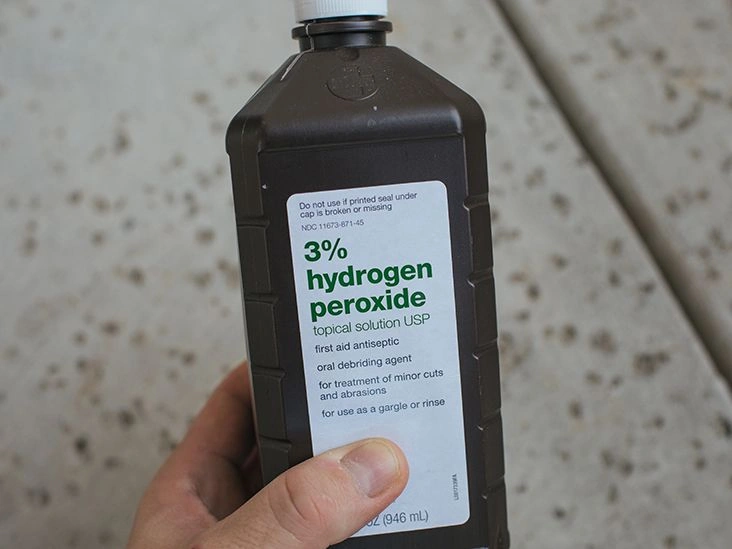
Over-the-counter cerumenolytic solutions commonly contain 3% hydrogen peroxide. They produce oxygen bubbles that help loosen, fragment, or dissolve earwax.
Carbamide peroxide is another ear-drop agent used for this purpose.
If you’re considering product options, some kits and drops use carbamide peroxide (a common active ingredient) alongside a soft bulb syringe for irrigation; these oil- or water-based approaches can be alternatives to peroxide alone. For more on oil-based options and home methods, see resources about castor oil as an at-home ear-care oil.
The dose, how often you apply it, and how long you should continue treatment vary based on the brand and formulation.
For instance, some products may require multiple daily applications over several days.
Always follow the directions on the ear-drop package carefully.
Potential risks of hydrogen peroxide ear drops
Talk with your doctor before using hydrogen peroxide ear drops, particularly if you have a history of or current ruptured eardrum, ear infection, or tympanostomy tubes.
In some users, cerumenolytic solutions can cause:
- infection of the ear canal
- irritation, itching, or discomfort in the ear canal
- contact dermatitis
Other options for earwax removal
If hydrogen peroxide drops don’t resolve the issue, consult a physician to review safe alternative methods for earwax extraction, such as:
- ear irrigation
- microsuction
- manual removal with instruments like a curette, pick, or alligator forceps
- oil- or water-based ear-drop products
- home-based remedies

Never insert objects such as cotton swabs or use ear candles in your ears. Contrary to popular belief, these can push wax deeper into the canal and cause serious harm.
Common questions about hydrogen peroxide for cerumen
Can hydrogen peroxide actually dissolve earwax?
Hydrogen peroxide eardrops can help soften and break apart earwax. They release oxygen that aids in loosening and disintegrating cerumen. These products are available over the counter and, in some cases, as stronger prescription formulations.
How long should hydrogen peroxide remain in the ear to be effective?
Lie on your side with the affected ear facing upward. Stay in that position for about 5 to 10 minutes so the hydrogen peroxide can penetrate and soften the wax.
Afterward, tilt your head to let excess solution drain onto a tissue or cotton ball.
Is it safe to apply hydrogen peroxide to the ear?
Hydrogen peroxide ear drops are generally considered safe when used appropriately. Avoid using them if you suspect an ear infection, have a perforated eardrum, or have tympanostomy tubes.
Bottom line
Most people produce sufficient earwax to protect the ear from infection and moisture, and in many cases wax naturally migrates out of the ear without intervention.
Excessive cerumen buildup can lead to impaction, which may require treatment.
If you notice symptoms such as ear fullness, hearing reduction, or dizziness, consult a healthcare provider.
These signs could indicate an earwax blockage or an underlying medical condition that needs evaluation.
Frequently Asked Questions
Hydrogen peroxide ear drops help soften and fragment earwax by releasing oxygen bubbles that loosen cerumen, making it easier to remove or drain.
Lie on your side with the treated ear up and keep the drops in place for about 5–10 minutes to allow the solution to penetrate and soften the wax before tilting your head to drain.
When used as directed for minor wax buildup, peroxide eardrops are generally safe, but avoid them if you have a suspected ear infection, a perforated eardrum, or tympanostomy tubes.
Some people may experience irritation, itching, contact dermatitis, or ear canal infection; stop use and consult a healthcare provider if you have severe pain, bleeding, or discharge.
If drops don’t resolve the blockage, see a healthcare professional to consider alternatives like ear irrigation, microsuction, or manual removal by a clinician.






Related Posts

Is Polypropylene a Safe Plastic to Use in Your Home?
Sep 10, 2026 • 34 min read
Entomophobia: Fear of Insects
Sep 7, 2026 • 15 min read
The 5 Best CBD Gummies for Sleep and Relaxation: Our Testers Tell All
Sep 30, 2026 • 26 min read
Everything You Should Know About Health Benefits of Ginger Oil
Aug 29, 2026 • 8 min read
How to Check for Yeast Infections: The 4 Best At-Home Vaginal pH Tests
Sep 24, 2026 • 16 min read