Why You Get Hiccups When Drinking (And How to Stop Them)

- Hiccups are caused by spasms of the diaphragm.
- Consuming large volumes of liquid can expand the stomach, which may affect the diaphragm.
- Alcohol can irritate the esophagus, which may provoke hiccups.
- Hiccups usually go away on their own, but simple home strategies like holding your breath can help.
Hiccups aren’t the most serious consequence of drinking too much, but they can be annoying and inconvenient, especially if you’re out socializing.
Here’s what to know about alcohol-related hiccups, including whether you should be concerned about them and some ways to stop them.
Are they risky?

Generally, hiccups are more of an irritation than a health threat. Dangerous or fatal? Very unlikely.
Given that excessive drinking can lead to risks like choking on vomit, it’s understandable to worry about hiccups after drinking.
During hiccup episodes you might notice tastes or small amounts of stomach contents rising (yes, hangover tacos are a thing). You might also feel occasional stomach acid come up when hiccuping. While unpleasant, this usually isn’t dangerous.
That said, hiccups that persist beyond 48 hours or that recur frequently can sometimes point to an underlying problem, such as gastroesophageal reflux disease (GERD), nerve injury, or even a mass. Severe, long-lasting hiccups can interfere with eating and sleeping, potentially causing fatigue, poor nutrition, and dehydration — though these outcomes are rare.
What causes them
To understand how drinking can lead to hiccups, it helps to know what hiccups actually are.
Hiccups involve a sudden, involuntary contraction of the diaphragm — the muscle beneath the lungs that separates the chest from the abdomen. Experts don’t have a complete explanation for every hiccup trigger.
Still, alcohol is a recognized trigger for several reasons.
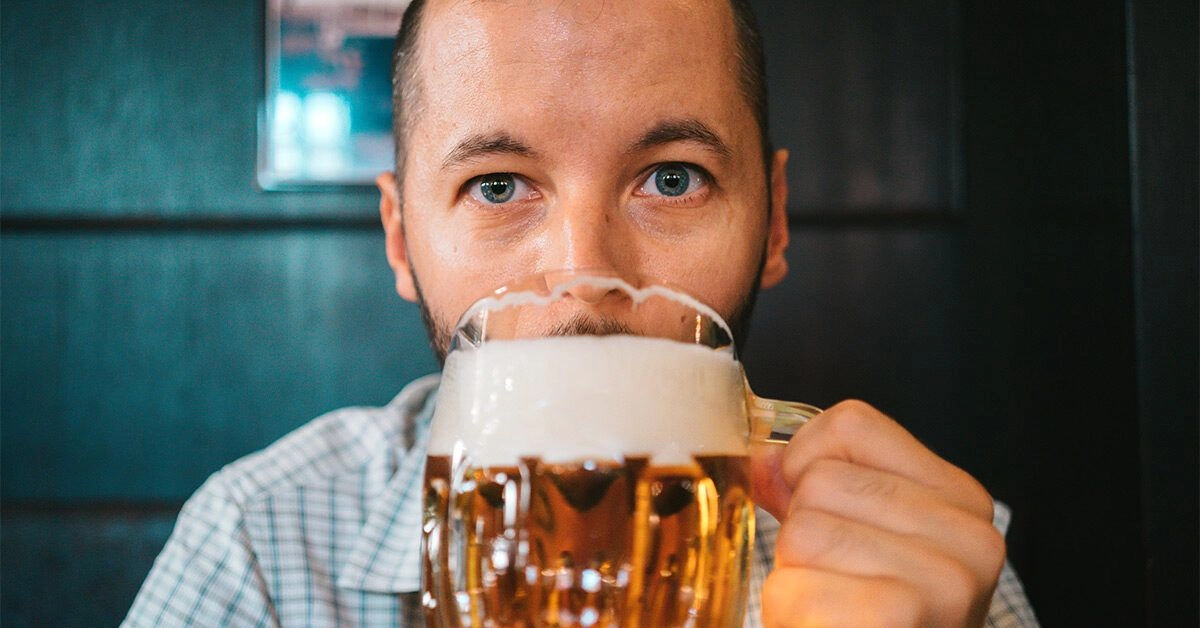
First, anything that stretches the stomach can provoke hiccups. That includes consuming large amounts of fluid, particularly beer and carbonated beverages like soda.
The stomach lies just below the diaphragm on the left. When it becomes distended, it may press on or irritate the diaphragm, setting off hiccups.
When you’re chatting and snacking while drinking, you may swallow air or eat and drink rapidly, which can also bloat the stomach.
Alcohol can also inflame the digestive tract, including the esophagus, which may trigger hiccups and boost acid production, leading to reflux. And acid reflux itself can bring on — you guessed it — hiccups.
How to stop them
Hiccups usually resolve within a few minutes on their own, but if you want to speed things up, try one of these methods.
Try any of the following to help stop hiccups:
- Trigger the back of your throat by swallowing a spoonful of sugar.
- Sip or gargle with very cold water.
- Hold your breath briefly to disrupt your breathing pattern.
- Perform the Valsalva maneuver: pinch your nose and exhale against a closed mouth.
- Massage the back of your neck.
- Breathe into a paper bag.
- Draw your knees up to your chest and lean forward.
- Bend forward to put pressure on your diaphragm.
- Suck on a slice of lemon.
How to reduce them in the future
The only surefire way to prevent alcohol-related hiccups is to avoid alcohol, but there are steps you can take to lower the odds.
Keep these tips in mind next time you’re drinking and want to minimize hiccups:
- Steer clear of beer.
- Avoid fizzy mixers and carbonated beverages.
- Sip slowly and don’t chug.
- Drink in moderation.
The takeaway
Unless hiccups persist for more than a couple of days, hiccups after drinking are usually not a major concern. Alcohol commonly triggers hiccups, and some people are simply more susceptible. Paying attention to how much and what type of alcohol you drink can help prevent those annoying hiccups.
Frequently Asked Questions
Alcohol can distend the stomach, irritate the esophagus, and promote acid reflux — all of which can trigger involuntary diaphragm spasms that cause hiccups.
Usually they are just annoying. Persistent hiccups lasting more than 48 hours or those that interfere with eating and sleeping should be evaluated by a clinician.
Common home remedies include holding your breath, sipping very cold water, swallowing a spoonful of sugar, doing the Valsalva maneuver, or breathing into a paper bag.
Yes — beer and other carbonated beverages increase stomach distension, and some mixers can worsen reflux, both raising the chance of hiccups.
Drink slowly, avoid chugging, skip carbonated drinks (especially beer), moderate alcohol intake, and avoid behaviors that cause you to swallow excess air.


Related Posts
Remedios naturales para colitis ulcerosa: Dieta, suplementos y más
Aug 7, 2026 • 10 min read
Salmonella Food Poisoning
Sep 14, 2026 • 29 min read
How SNL Comedian Kenan Thompson Manages GERD Symptoms After Diagnosis
Sep 26, 2026 • 9 min read
Proteolytic Enzymes: How They Work, Benefits and Sources
Sep 13, 2026 • 20 min read
White Specks in Stool
Aug 28, 2026 • 31 min read