Pimple on Lip: Causes, Treatment, and How to Tell It From a Cold Sore

- What a Pimple on the Lip Actually Is
- Why Pimples Form on the Lip Line
- Pimple vs Cold Sore vs Fordyce Spots
- Should You Pop a Pimple on Your Lip?
- How to Treat a Lip Pimple Safely
- How to Help Prevent the Next One
- When to See a Doctor
- Frequently Asked Questions
- How long does a pimple on the lip take to heal?
- Can you get a pimple directly on your lip?
- How can I tell a lip pimple from a cold sore fast?
- Is a pimple on the lip contagious?
- Can I put benzoyl peroxide on a lip pimple?
- What are the tiny white dots on my lip that never go away?
- Should I use toothpaste or lemon juice on a lip pimple?
- When is a lip bump not a pimple at all?
- References
You are brushing your teeth before work, half awake, and there it is in the mirror. A red, sore bump right on the edge of your lip. It hurts when you smile. It hurts when you sip coffee. And now you are stuck on one question before you have even rinsed: is this a pimple, or is it a cold sore?
That question matters. A pimple and a cold sore can look alike for a day, but they have different causes, different risks, and different treatment. A third look-alike, Fordyce spots, needs no treatment at all. Getting the ID right saves you from putting the wrong cream on the wrong bump, and from worrying more than you need to.
Most lip pimples clear on their own in a few days to a week with gentle care. This guide walks through why they form on the lip line, how to tell the three apart, what helps safely, and which signs mean you should get checked in person.
What a Pimple on the Lip Actually Is
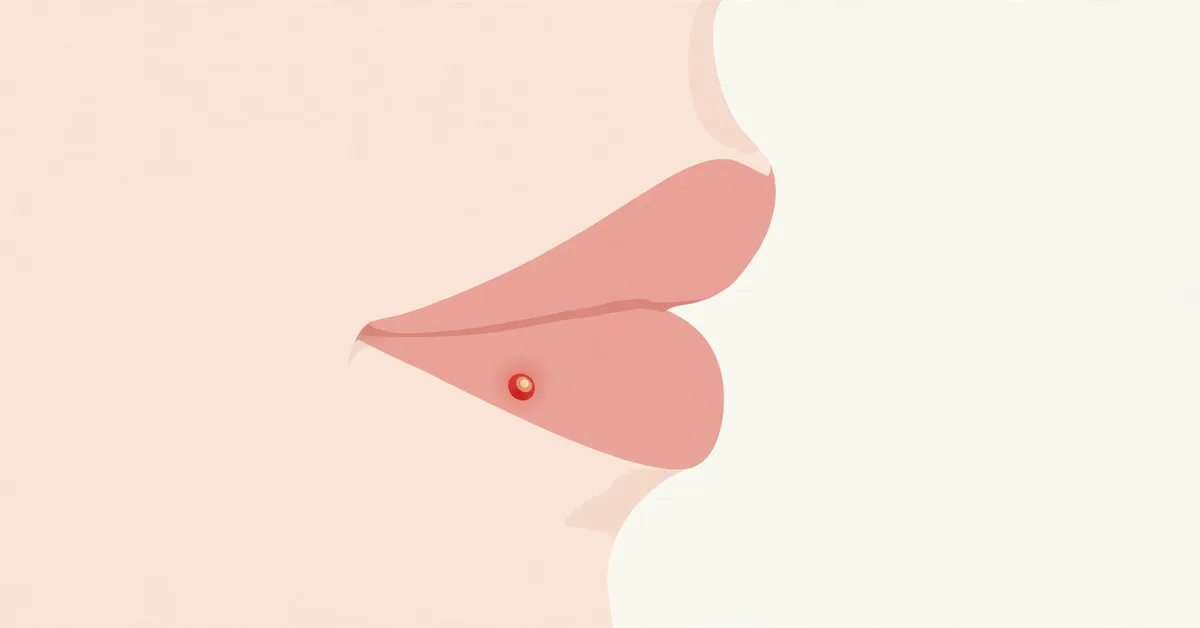
A pimple on the lip almost never sits on the pink part of the lip itself. The pink part has no hair follicles. Instead, the bump forms on the lip line, in the corners of the mouth, or on the skin just above or below the lip, where follicles do exist.
Cleveland Clinic explains it plainly. A hair follicle gets blocked or inflamed, and a bump follows. You might see a whitehead, a blackhead, or just a red, tender lump with no head at all. The American Academy of Dermatology describes the same basic process for acne anywhere on the face: a pore fills with oil, dead skin, and bacteria, the wall of the pore swells, and inflammation does the rest.

Why Pimples Form on the Lip Line
Around the mouth, a few everyday triggers make that plug more likely:
- Lip products. Heavy balms, glosses, and lipsticks can sit over pores along the lip line. Cleveland Clinic and Healthline both list lip products among the common triggers. Old products, and products shared with someone else, add bacteria to the mix.
- Food, sweat, and dirt. Greasy food, sweat after a workout, and a phone or mask rubbing the spot can irritate the lip line.
- Touching and picking. Hands carry oil and bacteria. Resting your chin in your hand, biting your lip, or squeezing an early bump pushes debris deeper.
- Hormones and stress. Hormone shifts around periods, pregnancy, or puberty can raise oil output. Stress does not create a pimple from nothing, but Healthline notes it can worsen acne in people who are already prone to it.
If you are sorting through other bumps in this area, our guide to bumps on lips covers the wider list of causes, from milia to mucoceles, so you can place this bump in context.
Pimple vs Cold Sore vs Fordyce Spots
This is the section to slow down on. The three can overlap at first glance, especially in the first 24 hours, but they diverge fast if you check location, feel, and how the bump changes over two or three days.
A pimple tends to be a single bump on the skin side of the lip line, often with a white or yellow center. A cold sore tends to start with tingling, burning, or itching before anything is visible, then forms a cluster of tiny fluid-filled blisters that can sit on the lip itself. Fordyce spots are different again: many tiny, pale, painless dots that stay the same for months or years. Our detailed guide to Fordyce spots shows how those harmless glands look up close and why they do not need squeezing, creams, or removal.

| Feature | Lip pimple | Cold sore | Fordyce spots |
|---|---|---|---|
| Cause | Clogged pore or follicle with oil, dead skin, and bacteria | Herpes simplex virus type 1 (HSV-1) | Visible oil glands that are a normal part of the lip |
| Look | Single red bump, may have a whitehead, blackhead, or pus-filled center | Cluster of small fluid-filled blisters, then oozing, crusting, and scabbing | Many tiny white or yellow-white dots, 1 to 3 mm, often in a patch |
| Feel | Tender or sore when touched, no warning tingle | Tingling, burning, or itching first, then pain | Painless, no itching or burning |
| Location | Lip line, corners of mouth, skin above or below lip | On the lip itself or nearby skin, often returns to the same spot | Lip border and inner lip, often on both sides |
| Contagious | No | Yes, through saliva and close contact, especially while blisters are present | No |
| Course | Often improves in 3 to 7 days, may take up to 2 weeks | Often 7 to 14 days, sometimes up to 2 to 4 weeks without treatment | Stay the same over time, do not come and go in days |
| Treatment | Gentle cleansing, warm compress, benzoyl peroxide or salicylic acid used with care | Antiviral cream or tablets work best early, pain relief, no sharing of lip products | No treatment needed |
Cleveland Clinic, Mayo Clinic, and the NHS all stress the warning tingle for cold sores. If you felt burning or itching a day before the bump appeared, and you now see several small blisters grouped together rather than one whitehead, treat it as a cold sore until proven otherwise. Do not share drinks, straws, towels, or lip balm, and avoid kissing while it is active. If cold sores keep returning, learning your personal cold sore triggers can help you act at the first tingle, when antiviral treatment helps most.

Fordyce spots catch people out because they can look like a crop of tiny whiteheads. The giveaways are number and stability. There are usually many of them, they do not hurt, they do not form a head you can drain, and they were probably there last month too. Stretching the lip gently makes them easier to see. They are not an infection, they are not spread by contact, and picking at them only risks a real infection in skin that was fine.
Should You Pop a Pimple on Your Lip?
No. Short answer, and for this spot on your face it is worth sticking to.
Cleveland Clinic advises against popping lip pimples because squeezing adds pressure and inflammation, and can push the contents deeper into the skin instead of out. Healthline gives the same warning for pimples in general: popping raises the risk of infection and scarring and can make healing take longer, not shorter.
The lip line adds extra reasons to leave it alone. The skin is thin, the area moves constantly, and your mouth is full of bacteria. A squeezed bump that breaks inward or tears the surface gives those bacteria an easy entry point. What was a three-day annoyance can turn into a swollen, infected sore that needs antibiotics. Squeezing also raises the chance of a dark mark or small scar that lingers long after the pimple would have gone.
How to Treat a Lip Pimple Safely
Start simple. Most lip pimples need time, gentle cleaning, and one well-chosen spot treatment, not a stack of products.
Wash gently, twice a day. Use lukewarm water and a mild, fragrance-free cleanser. Clean the lip line, pat dry, and wash again after heavy sweating. Skip gritty scrubs and strong astringents around the mouth.
Use a warm compress. Soak a clean cloth in warm, not hot, water and hold it on the bump for about 10 minutes, a few times a day. Cleveland Clinic notes that warmth can ease discomfort and help the spot come to a head and drain on its own. A cold compress or wrapped ice for 10 to 15 minutes on the first day can help more with pain and swelling, so some people alternate depending on what feels worse that day.
Try benzoyl peroxide, with care. This ingredient kills acne bacteria and helps clear the pore. Cleveland Clinic recommends it for lip pimples, starting with a lower strength such as 2.5 percent. Dab a tiny amount on the bump only, keep it off the pink lip itself, and stop if you get marked dryness, cracking, or burning. It can bleach towels and pillowcases, so let it dry first. Our guide to benzoyl peroxide for acne covers strengths and how to start without wrecking your skin barrier.
Or try salicylic acid. Cleveland Clinic also suggests a product with 2 percent salicylic acid, which helps dissolve the plug of oil and dead skin and calms inflammation. Use one active at a time. Layering benzoyl peroxide, salicylic acid, and a retinoid around the mouth in one night is a fast route to raw, peeling skin that heals slower than the pimple would have.
Skip the kitchen remedies. Healthline notes there is no solid evidence for lemon juice, and toothpaste can irritate and dry the skin. Cleveland Clinic urges caution with tea tree oil and apple cider vinegar too. On thin lip skin, irritation is often the main effect.
How to Help Prevent the Next One
Prevention here is boring, and that is why it works. Keep the lip line clean without stripping it, and reduce the things that sit on and block those pores.
- Wash your face morning and night, and after workouts. Pay attention to the crease at the corners of the mouth, where sweat and product collect.
- Choose non-comedogenic face and lip products where you can, and replace old lipsticks and balms rather than using them for a year.
- Keep hands off your face, clean your phone screen, and change pillowcases regularly if you break out often.
- Remove lipstick and makeup before sleep. Sleeping in it gives oil and pigment hours to sit in the lip line.
When to See a Doctor
Most single lip pimples do not need a visit. Book one, or seek care sooner, if any of these apply:
- The bump keeps growing, is very painful, or shows spreading redness, swelling, warmth, or streaks.
- You have fever, swollen glands, or pus that keeps returning after the bump drains.
- It has not improved at all after about two weeks, or it keeps coming back in exactly the same place.
- You cannot tell if it is a pimple or a cold sore, especially if you have a weakened immune system, or you care for a newborn or someone who is immunocompromised.
- Blisters appear near the eye, or you get cold sores often enough that early antiviral tablets might help.
- Over-the-counter care has failed for repeated breakouts, or the bumps leave scars or dark marks.
A clinician can confirm the diagnosis by looking, prescribe stronger topical treatment or an oral antibiotic when needed, and drain or lance a deep spot safely if that is truly required. Mayo Clinic guidance on cold sores also notes that antiviral medicines work best when started early, so for a likely cold sore, do not wait a week to ask.
Frequently Asked Questions
How long does a pimple on the lip take to heal?
Most improve in 3 to 7 days and clear within about 2 weeks. Deep or squeezed pimples take longer.
Can you get a pimple directly on your lip?
Not on the pink part, which has no hair follicles. What people call a pimple on the lip is almost always on the lip line, at the corners of the mouth, or on the skin just around the lip.
How can I tell a lip pimple from a cold sore fast?
Check for a warning tingle, burning, or itching, and for grouped fluid-filled blisters. Those point to a cold sore. A single bump with a whitehead or blackhead and no warning tingle points to a pimple.
Is a pimple on the lip contagious?
No. A pimple is a clogged, inflamed pore and cannot be passed to another person. A cold sore is contagious, which is one reason telling them apart matters.
Can I put benzoyl peroxide on a lip pimple?
Yes, with care. Use a low strength, dab a tiny amount on the bump only, and keep it off the pink lip itself. Stop if you get strong burning, cracking, or peeling, and do not swallow the product.
What are the tiny white dots on my lip that never go away?
Those are often Fordyce spots, harmless visible oil glands. They stay stable and need no treatment.
Should I use toothpaste or lemon juice on a lip pimple?
No. Both can irritate and dry the thin skin around the mouth, and neither has solid evidence behind it for lip pimples. A warm compress and a proven spot treatment are safer choices.
When is a lip bump not a pimple at all?
If it blisters and crusts, keeps returning to the same spot, is painless and never changes, bleeds easily, or grows steadily, it may be a cold sore, Fordyce spots, or something else entirely. A clinician can identify it in person.
References
- Cleveland Clinic. How To Get Rid of Lip Pimples.
- Cleveland Clinic. Cold Sore vs. Lip Pimple: What Is the Difference?
- Mayo Clinic. Cold Sore: Symptoms and Causes, Diagnosis and Treatment.
- NHS. Cold Sores.
- American Academy of Dermatology. Acne: Diagnosis and Treatment; How to Treat Different Types of Acne.
- Healthline. How to Get Rid of Pimples on Lips: Remedies and Treatments.
Read Next

Related Posts

The Ultimate Skin Care Routine for Combination Skin
Sep 20, 2026 • 28 min read
The 8 Best Eco-friendly Razors for a More Sustainable Shave
Sep 21, 2026 • 9 min read
The 8 Best Cooling Pillow Cases
Oct 8, 2026 • 31 min read
What to Expect After Laser Treatment for Spider Veins
Sep 13, 2026 • 20 min read
Can You Use Face Mapping to Improve Your Skin’s Health?
Sep 20, 2026 • 13 min read