T6


The thoracic section of the spine comprises twelve vertebrae positioned between the cervical vertebrae (which start at the skull base) and the lumbar vertebrae. The sixth thoracic vertebra (T6), found just beneath the level of the scapulae, functions together with the other eleven thoracic segments to safeguard the spinal nerves.
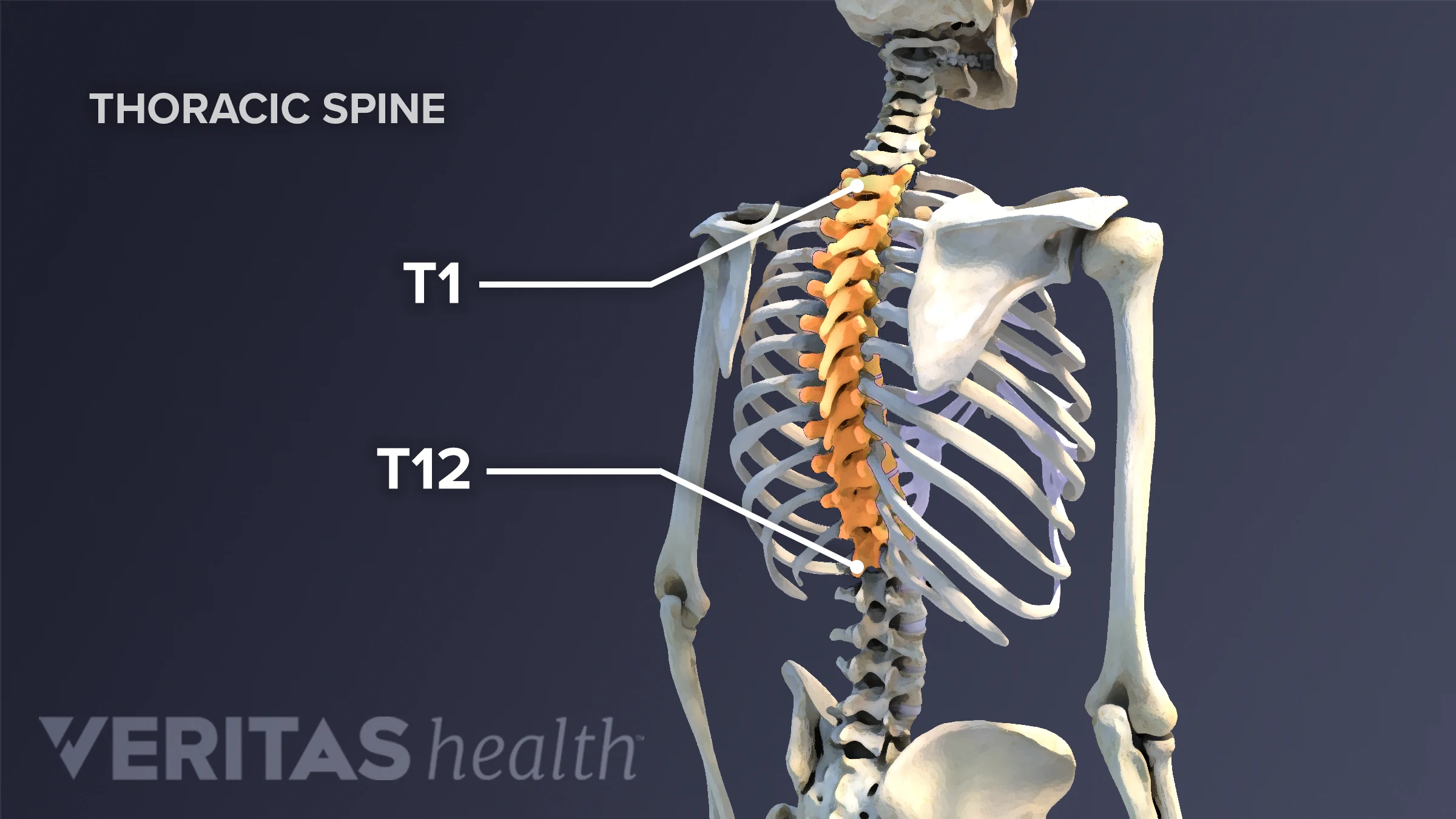
Each thoracic vertebra becomes progressively larger than the one above it, growing in diameter down the spinal column. Greater size enables a segment to bear more load. Every vertebra has two bony projections (pedicles) that surround the vertebral foramen — the hollow channel through which the spinal cord passes. In addition, vertebrae feature smaller openings called vertebral foramina or intervertebral foramina that accommodate the branching nerve roots.
The rib cage offers protection to the T6. However, this does not eliminate the possibility of injury or degenerative changes. Compression of neural elements, spinal stenosis, or disc herniation may produce referred pain, localized discomfort, episodes of numbness, and sensations of weakness. Given T6’s relative closeness to the upper abdominal area, trauma or irritation at this level can also lead to symptoms such as heartburn, dyspepsia, and indigestion — issues sometimes linked with disruption of the nerves supplying the stomach region. For related spinal shape issues, see dorsal hump.
Frequently Asked Questions
The T6 vertebra is the sixth thoracic vertebra, located in the middle of the thoracic spine roughly beneath the level of the scapulae, between T1–T5 above and T7–T12 below.
T6 contributes to protecting the spinal cord and supporting the rib cage, helping distribute load and enabling attachment points for muscles and ribs involved in respiration and trunk movement.
Injury or degeneration at T6 can cause localized back pain, referred pain, numbness, weakness, and sometimes upper abdominal symptoms like heartburn or dyspepsia due to nerve involvement.
Diagnosis combines clinical exam, patient history, and imaging such as X-ray, MRI, or CT scans to assess for fractures, disc issues, stenosis, or other structural causes affecting T6.
Treatment may include conservative care like physical therapy, pain management, anti-inflammatory medication, and in some cases interventional procedures or surgery depending on severity and underlying cause.





Related Posts

Carob Powder: 9 Nutrition Facts and Health Benefits
Aug 31, 2026 • 31 min read
Don’t ‘Wake Your Partner Up’ with Sex — That Can Be Sexual Assault
Jul 29, 2026 • 30 min read
What Is Tamarind? A Tropical Fruit with Health Benefits
Sep 3, 2026 • 21 min read
Lexapro and Cost: What You Need to Know
Aug 3, 2026 • 18 min read
What Should I Do About a Molar Broken Off at the Gum Line
Aug 8, 2026 • 19 min read