Sleep Deprivation: What Short Sleep Does to Your Body and Brain

- What Is Sleep Deprivation?
- How Much Sleep Do You Actually Need?
- What Happens as Short Sleep Drags On
- How Sleep Deprivation Hits Every System
- Microsleeps and the Driving Risk
- Sleep Debt: Can You Actually Catch Up?
- Sleep Deprivation vs Insomnia vs Sleep Apnea: Which One Is Mine?
- The Night-Shift Playbook
- How to Recover: A Realistic 7-Day Reset
- When to See a Doctor
- Frequently Asked Questions
- How many hours of sleep do adults need?
- Can you catch up on lost sleep?
- Is sleep deprivation the same as insomnia?
- What are microsleeps?
- Does sleep deprivation cause weight gain?
- When should I see a doctor about sleep deprivation?
- References
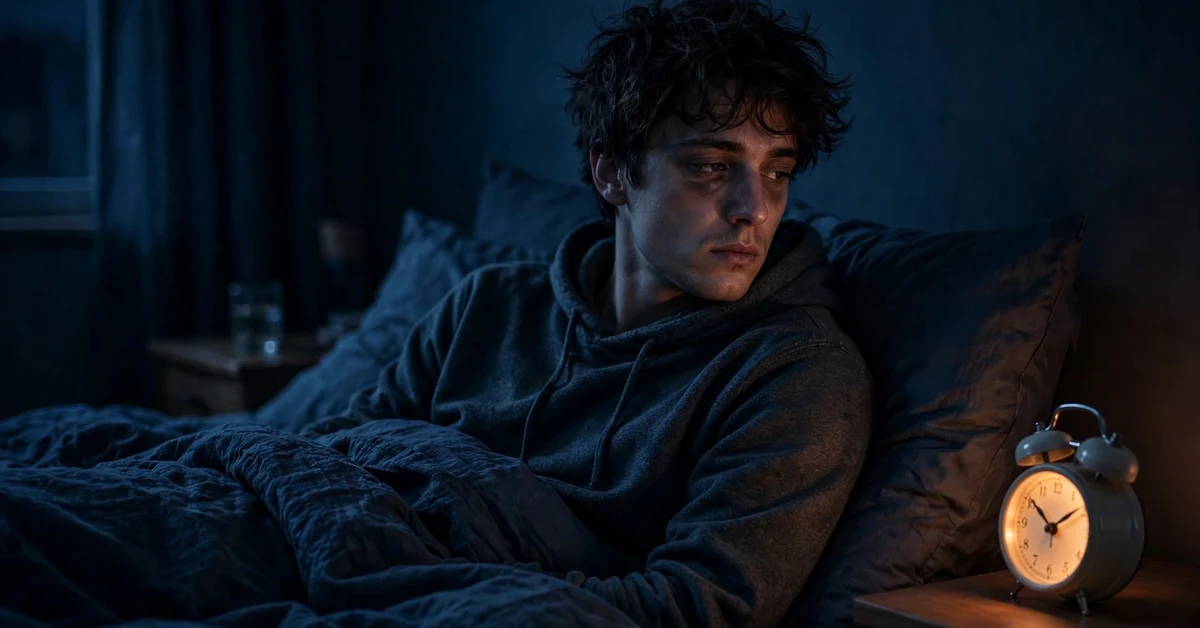
It’s the third night in a row you’ve slept five hours. You’re writing an email and you reach for the same sentence twice. The word is right there, and then it isn’t. You read the paragraph back and it says something you don’t remember typing. You tell yourself you’re fine. You’re tired, sure, but fine.
That gap between how tired you feel and how impaired you actually are is the whole story of sleep deprivation. It creeps up slowly, feels normal after a while, and by the time it shows in your blood pressure, your weight, or your driving, it has been running for months.
What Is Sleep Deprivation?
Sleep deprivation means not getting enough sleep to support alertness, performance, and health. It takes two forms.
Acute sleep deprivation is short and sharp: one night with no sleep, or a couple of nights on four or five hours. Chronic sleep deprivation is the slow version: routinely sleeping less than you need, week after week. It’s the form people live with, and the dangerous one, because you adapt to it – your brain stops flagging the deficit while your performance keeps sliding.
Sleep deprivation is about not getting enough sleep, often because life leaves no room for it. Insomnia is different: you have the time, but you can’t fall asleep or stay asleep. If your schedule is the problem, you need more hours in bed; if sleep itself is the problem, you need treatment for insomnia.
How common is it? Cleveland Clinic estimates 50 to 70 million US adults meet the medical criteria at any given time – roughly one-third of the population.
How Much Sleep Do You Actually Need?
The CDC and the National Sleep Foundation agree on these ranges:
| Age group | Recommended sleep per night |
|---|---|
| Newborns (up to 3 months) | 14 to 17 hours |
| Infants (4 to 12 months) | 12 to 16 hours, including naps |
| Young children (1 to 5 years) | 10 to 14 hours, including naps |
| School-age children (6 to 12 years) | 9 to 12 hours |
| Teenagers (13 to 18 years) | 8 to 10 hours |
| Adults (18 and up) | 7 to 9 hours |
Some people need a little more or less, but those exceptions are rare. The CDC’s guidance is blunt: adults who regularly sleep less than 7 hours are sleep deprived, full stop. Quality matters too – eight hours in bed still leaves you deprived if snoring, apnea, or constant waking breaks it.
Sleep runs in cycles of 90 to 120 minutes, four or five per night: stage 1 is light sleep (about 5%), stage 2 (about 45%) is linked to memory and learning, stage 3 (about 25%) is where the body does most of its physical repair, then REM, the dreaming stage. Cut your night short and you lose the late-night REM and stage 2 cycles first, which is why a five-hour night hits your memory and mood harder than your muscles.

What Happens as Short Sleep Drags On
| Timeframe | What typically happens |
|---|---|
| After 1 bad night | Slower reaction time, worse attention and memory, irritability, stronger cravings, microsleeps during boring tasks |
| After 1 week of short sleep | Memory problems, poor concentration, weaker immunity, mood swings, falling asleep within minutes of lying down |
| After months | Weight gain, higher blood pressure, higher risk of diabetes, heart disease, stroke, depression, weaker immunity |
How Sleep Deprivation Hits Every System
Your brain. This is where the damage shows first: sleep deprivation hits the prefrontal cortex hardest – the part that handles reasoning, decision-making, and attention. A 2010 study found that after just one night without sleep, people showed slower reactions, weaker reasoning, and less mental flexibility.
Your heart and blood pressure. People with chronic sleep deprivation are more likely to develop high blood pressure and high cholesterol, according to Cleveland Clinic, raising the risk of heart disease and stroke; short sleep keeps stress hormones elevated and gives blood vessels less overnight rest.
Your metabolism and weight. Short sleep disrupts hunger hormones: ghrelin goes up, leptin goes down, so after a short night you crave calorie-dense food and eat more of it. A meta-analysis in Sleep Medicine Reviews linked chronic short sleep to higher risk of obesity, type 2 diabetes, and cardiovascular disease. Weight gain from short sleep is not a willpower problem. It’s chemistry.
Your immune system. Your body’s defenses can’t work properly without enough sleep: people who sleep less catch colds more easily.
Your mood and mental health. Sleep deprivation makes it harder to manage emotions: people who don’t sleep enough are more likely to feel symptoms of depression and anxiety, and chronic short sleep is linked to severe mood swings. The relationship runs both ways – anxiety and depression also wreck sleep – so the cycle is hard to break without treating both sides.
Microsleeps and the Driving Risk
Here is the part that should scare you most. When you are sleep deprived, your brain starts taking sleep in tiny installments without asking permission: microsleeps, brief lapses of a few seconds where you are asleep with your eyes open.
On the road, a few seconds is everything: a microsleep at highway speed covers the length of a football field. A 2000 study found that staying awake 17 to 19 hours impairs driving as much as being drunk; at 24 hours awake, it is worse. The US National Highway Traffic Safety Administration blames drowsy driving for roughly 100,000 crashes a year in the United States, with about 1,550 deaths.
The cruel part is the subjective trap: research reviewed on Wikipedia found that chronically sleep-deprived people keep rating themselves as only mildly impaired, even when their attention-test scores match people who stayed up all night. Your own judgment is the first thing short sleep takes. If you have to ask whether you’re too tired to drive, you already have your answer – and if sleepiness hits while you’re driving, pull over at the next safe place and take a 20-minute nap. It beats any amount of coffee.
Sleep Debt: Can You Actually Catch Up?
Sleep debt is the running total of the sleep you’ve missed – lose an hour a night for a week and you’re seven hours in the red. The debt is real and cumulative. But can you repay it?
Partly, and slowly. After several nights of short sleep, one long night does not reset you: reaction time improves after a couple of full nights, but full recovery takes several nights, and the longer the debt ran, the longer the payback. A weekend lie-in helps, but it doesn’t erase a month of five-hour nights.
There’s a catch with weekend catch-up: sleeping in until noon on Saturday feels wonderful and does pay down some debt, but it also shifts your body clock later, making Sunday night harder and Monday morning worse. The smarter move is to add an hour or two, not four or five, and keep your wake time roughly fixed. Pay the debt in installments.

Sleep Deprivation vs Insomnia vs Sleep Apnea: Which One Is Mine?
These three get mixed up constantly, and the right fix depends on telling them apart.
| Question | Sleep deprivation | Insomnia | Sleep apnea |
|---|---|---|---|
| Do you get enough hours in bed? | No – schedule cuts sleep short | Yes, but you can’t fall or stay asleep | Often yes, but broken |
| Do you fall asleep fast when you get the chance? | Yes – within minutes | No – you lie awake | Yes, but you wake unrefreshed |
| Do you snore or gasp? | Not usually | Not usually | Yes – loud snoring, pauses, gasping |
| What fixes it? | More time in bed, fixed schedule | CBT-I, sleep hygiene, sometimes meds | Sleep study, CPAP, airway treatment |
They overlap: insomnia causes deprivation, and so does apnea. But the first question – do you actually spend enough hours in bed? – sorts most people into the right lane. If the answer is no, start there. It’s the cheapest fix in medicine. If constant daytime drowsiness is your main symptom, see our guide to excessive daytime sleepiness.
The Night-Shift Playbook
None of the top guides gives night-shift workers a real plan, which is strange, because shift work is one of the most common causes of chronic sleep deprivation – and generic advice about a 10 p.m. bedtime is useless when your job runs against your body clock.
Anchor your sleep. Pick a sleep window and hold it even on days off. A rotating schedule is far harder on the body than fixed nights.
Use light like medicine. Bright light during the first half of your shift keeps you alert and pushes your clock later. On the way home, wear dark sunglasses – morning sunlight tells your brain to wake up – and keep the bedroom dark with blackout curtains.
Nap strategically. A 20-minute nap before a night shift cuts sleepiness in the early hours, and a short nap during a break helps too. Keep naps under 30 minutes so you wake before deep sleep, or you’ll feel worse than before.
Time your caffeine and food. Caffeine early in the shift works, but in the last four hours before sleep it wrecks it. Keep shift meals small and light – a heavy meal at 2 a.m. fights your digestive clock.
How to Recover: A Realistic 7-Day Reset
Recovery is not one heroic night of sleep. It’s a week of small, boring corrections.
Nights 1-2: pay the first installment. Go to bed an hour earlier than usual and get up at your normal time – no weekend-style lie-in yet, since a fixed wake time resets your clock. Skip alcohol; it fragments the second half of sleep, when REM is densest.
Days 3-5: lock the schedule. Same bedtime, same wake time, every day. Get bright light within an hour of waking; a walk outside beats any lamp. Exercise 20 to 30 minutes a day, finishing at least 5 to 6 hours before bed, and cut caffeine after midday.
Days 6-7: check the result. You should notice the fog lifting – faster thinking, less irritability, no more nodding off. If you’re still falling asleep within five minutes of lying down, keep the schedule going for another two weeks.
What does not work. Sleeping pills are not a first step for deprivation – they can disrupt sleep and lose effect after a few weeks, and older adults face nearly double the risk of falls and hip fractures on them, according to UMass Memorial. Energy drinks don’t repay debt, they hide it, and a single marathon sleep on Saturday doesn’t fix a month of short nights; it just moves your clock.
For the day-to-day habits behind this reset, see our 17 tips to sleep better. Waking up unable to move is a different phenomenon – see our guide to sleep paralysis.
When to See a Doctor
Most sleep deprivation is a schedule problem, and a schedule problem is fixable at home. See a doctor sooner if any of these apply:
- You sleep 7 to 9 hours and still wake up exhausted
- You snore loudly, gasp, or stop breathing – or your partner says you do
- You fall asleep uncontrollably during the day
- You have microsleeps while driving
- Mood problems, anxiety, or depression came with the short sleep
- Short sleep for months, and a fixed schedule for two weeks hasn’t helped
What happens next: a sleep diary first, then, if needed, an overnight sleep study or home actigraphy.
Frequently Asked Questions
How many hours of sleep do adults need?
Most adults need 7 to 9 hours a night, per the CDC and the National Sleep Foundation. Regularly sleeping less than 7 hours counts as sleep deprivation.
Can you catch up on lost sleep?
Partly, and slowly. One long night does not erase a week of short sleep. Reaction time improves after a couple of full nights, but full recovery takes several nights. Add an hour or two a night rather than sleeping until noon on Saturday.
Is sleep deprivation the same as insomnia?
No. Insomnia means you can’t fall asleep or stay asleep even when you have the time; sleep deprivation means you don’t give yourself enough time to sleep, or the sleep you get is too broken to count. Deprivation is fixed by more hours in bed; insomnia usually needs CBT-I.
What are microsleeps?
Microsleeps are brief lapses of a few seconds where your brain slips into sleep without you noticing, often during boring tasks – and while driving, where a few seconds covers the length of a football field.
Does sleep deprivation cause weight gain?
Yes. Short sleep raises ghrelin, the hunger hormone, and lowers leptin, the fullness hormone, so you crave calorie-dense food and eat more of it. A meta-analysis in Sleep Medicine Reviews linked chronic short sleep to higher risk of obesity, diabetes, and heart disease.
When should I see a doctor about sleep deprivation?
See a doctor if you sleep 7 to 9 hours and still wake exhausted, if you snore loudly or gasp, if you fall asleep uncontrollably during the day, or if a fixed schedule for two weeks hasn’t helped. A sleep study can check for apnea or other disorders hiding underneath.
References
- Centers for Disease Control and Prevention – How Much Sleep Do I Need?: https://www.cdc.gov/sleep/about/index.html
- Cleveland Clinic – Sleep Deprivation: What It Is, Symptoms, Treatment & Stages: https://my.clevelandclinic.org/health/diseases/23970-sleep-deprivation
- National Sleep Foundation – How Much Sleep Do We Really Need?: https://www.thensf.org/how-many-hours-of-sleep-do-you-need/
- American Thoracic Society – Sleep Deprivation (patient information): https://www.thoracic.org/patients/patient-resources/resources/sleep-deprivation.pdf
- UMass Memorial Health – Sleep Deprivation: https://www.ummhealth.org/health-library/sleep-deprivation
- Wikipedia – Sleep deprivation: https://en.wikipedia.org/wiki/Deprived_of_sleep
- NHS – Why lack of sleep is bad for your health: https://www.nhs.uk/live-well/sleep-and-tiredness/why-lack-of-sleep-is-bad-for-your-health/
Read Next

Mental Health App Privacy: How to Check an App Before You Sign Up

Midlife Crisis or Midlife Myth? What to Know About Going ‘Over the Hill’
Therapy for Burnout When You Are Still Performing Well
AI Mental Health Tools vs. Professional Therapy

How Rear Lateral Raises Can Benefit Your Workout Routine
12 Bench Press Alternatives to Build Size and Strength
Related Posts

When and How Should You End a Relationship with a Person Diagnosed with Bipolar Disorder?
Sep 2, 2026 • 22 min read
Riding Out a Panic Attack: What Is Happening in Your Body and What to Do
Nov 8, 2026 • 6 min read
Sleep Paralysis: Why It Happens and How to Stop the Episodes
Nov 20, 2026 • 3 min read
5 Ways to Reduce Stress-Related Tension in Your Neck and Shoulders
Sep 23, 2026 • 9 min read
How Administrative Barriers Affect Access to Mental Health Care
Nov 20, 2026 • 16 min read