Why High Achievers Wait Years to Get Help for Anxiety and Depression


Most people who live with anxiety or depression do eventually look for help. The problem is how long it takes. For high achievers, people whose careers reward pushing through, the wait between “something is wrong” and a first appointment can stretch for years. Understanding why that delay happens is the first step to shortening it.
The treatment gap is measured in years, not weeks
In the National Comorbidity Survey Replication, a nationally representative US survey of 9,282 adults published in Archives of General Psychiatry in 2005, Philip Wang and colleagues measured how long people waited between the onset of a mental health condition and their first treatment contact. Among those who eventually sought care, the delay ranged from 6 to 8 years for mood disorders such as depression, and from 9 to 23 years for anxiety disorders.
Many people never reach care at all. The World Health Organization estimates that only about 1 in 4 people who need treatment for an anxiety disorder (27.6%) receive any treatment. For depression, the WHO reports that even in high-income countries, only about one third of people with depression receive mental health treatment.
The delay has a cost of its own. Untreated symptoms tend to spread from one area of life to the next: poor sleep affects concentration, irritability strains relationships, and the effort of hiding it all adds another layer of exhaustion.
Those figures describe the general population. Among professionals who are used to performing under pressure, the reasons for waiting are often sharper.
The delay is longest when you still look fine
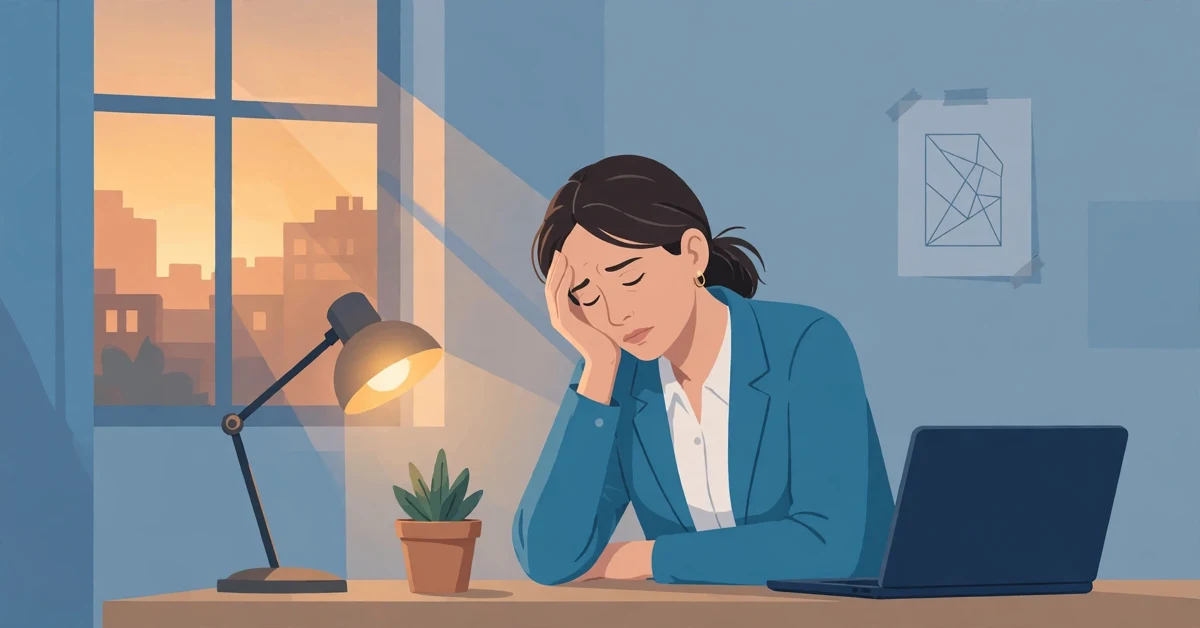
High achievers rarely stop functioning when anxiety or depression sets in. They keep meeting deadlines, keep showing up, and keep telling themselves that a quieter month is coming. Outward success becomes evidence that nothing needs to change.
Data from people who sought therapy shows how long that can last. A 2026 CEREVITY report, Why Executives Wait 21 Months for Therapy, reviewed 307 executives who sought therapy through the CEREVITY network and found a median of 21 months between first clearly recognizing significant strain and a first session. A second 2026 CEREVITY report, 61% of Physicians Delay Therapy Over Licensing or Credentialing Fears, reviewed 297 physicians who sought therapy through the network: 61% had delayed care over licensing or credentialing worries, with a median delay of 22 months. Both are help-seeking samples, so they describe people who eventually arrived rather than every executive or physician.
Other professions show the same strain. In a study of 12,825 licensed, employed US attorneys published in the Journal of Addiction Medicine in 2016, Patrick Krill and colleagues found that 28% experienced symptoms of depression, 19% symptoms of anxiety and 23% symptoms of stress.
Five reasons high achievers put off getting help
In my work as a therapist, the same reasons come up again and again.
- Performance is treated as proof of health. “I can’t be depressed, I just closed the best quarter of my career.” Anxiety and depression do not always reduce output. Sometimes they drive it, as overwork becomes a way to avoid feeling anything else.
- Fear of what a record could mean. Physicians worry about licensing forms, attorneys about bar applications, executives about how a diagnosis might look to a board. Even when the fear is larger than the real risk, it is enough to delay care.
- Waiting for a quieter season. There is always a launch, a trial, a deal or a busy period ahead. A quieter month rarely arrives, and symptoms rarely wait for one.
- Self-reliance. People who built their careers by solving problems alone often see asking for help as a failure of competence. Many try to fix their own sleep, mood and stress with better systems before they will talk to anyone.
- Not recognizing the symptoms. In high achievers, depression can look like irritability, numbness or constant fatigue rather than sadness. Anxiety can look like perfectionism, overpreparation or trouble switching off at night. When the symptoms do not match the stereotype, they are easy to dismiss.
Signs it is time to stop waiting
The National Institute of Mental Health describes major depression as symptoms of depressed mood or loss of interest, most of the time for at least two weeks, that interfere with daily activities. You do not need to meet a diagnosis to benefit from help, but these signs are worth taking seriously:
- Sleep has changed for weeks: trouble falling asleep, waking at 3 a.m. with your mind racing, or sleeping far more than usual.
- Things you used to enjoy feel flat, including success at work.
- You are more irritable with people you care about.
- You rely more on alcohol, caffeine or other substances to get through the day or to wind down.
- Concentration and decision-making feel harder than they used to.
- Someone close to you has said they are worried.
How to shorten the wait
The longer the delay, the more strain builds up before treatment begins, so small, concrete steps matter.
- Book one assessment, not a commitment. A single appointment with a licensed mental health professional or your primary care doctor is enough to start.
- Ask about confidentiality up front. Ask any clinician how records are kept and who can see them. For professionals worried about licensing or employer visibility, that answer often removes the biggest barrier.
- Choose a format that fits your schedule. Online therapy, early-morning or evening sessions and longer sessions can make care realistic for people with demanding jobs.
- Bring notes to the first appointment. Write down when you first noticed the change, what has shifted in sleep, mood and work, and what you have already tried. High achievers often minimize symptoms in the room, and a written list keeps the conversation accurate.
- Tell one trusted person. Saying it out loud to a partner, friend or colleague makes it harder to keep postponing.
Effective treatment exists. The WHO notes that there are effective psychological and medical treatments for both depression and anxiety disorders. Waiting does not make them work better. Starting sooner usually means less damage to sleep, relationships and work along the way.
If you are having thoughts of suicide or are in crisis, call 988 in the United States to reach the 988 Suicide and Crisis Lifeline, or contact your local emergency services.
Read Next

Mental Health App Privacy: How to Check an App Before You Sign Up

Sleep Deprivation: What Short Sleep Does to Your Body and Brain

Midlife Crisis or Midlife Myth? What to Know About Going ‘Over the Hill’

Bipolar 1 vs 2: How the Two Types Really Differ

5 Ways to Reduce Stress-Related Tension in Your Neck and Shoulders

6 Resistance Band Exercises for Shoulders
Related Posts
Sleep Paralysis: Why It Happens and How to Stop the Episodes
Nov 20, 2026 • 23 min read
Lonely at the Top: Why Success Can Shrink Your Support System
Nov 19, 2026 • 8 min read
How Administrative Barriers Affect Access to Mental Health Care
Nov 20, 2026 • 34 min read
AI Mental Health Tools vs. Professional Therapy
Nov 18, 2026 • 20 min read
Riding Out a Panic Attack: What Is Happening in Your Body and What to Do
Nov 8, 2026 • 19 min read